Department of Surgery, UT Southwestern Medical Center, Dallas, TX, 75390, USA.
Department of Surgery, UT Southwestern Medical Center, Dallas, TX, 75390, USA.
Chin J Traumatol. 2022 Jan;25(1):1-10. doi: 10.1016/j.cjtee.2021.07.009. Epub 2021 Jul 19.
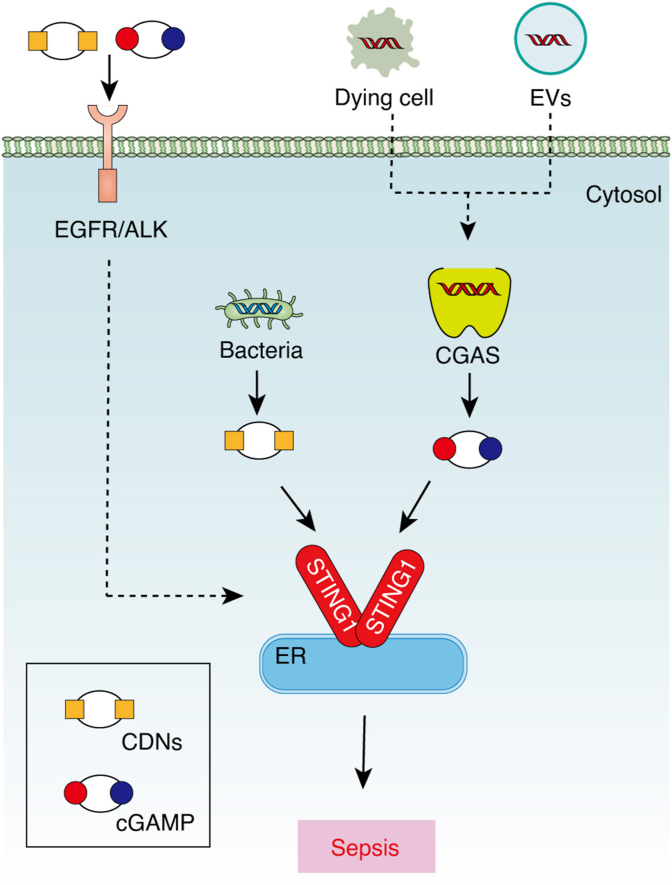
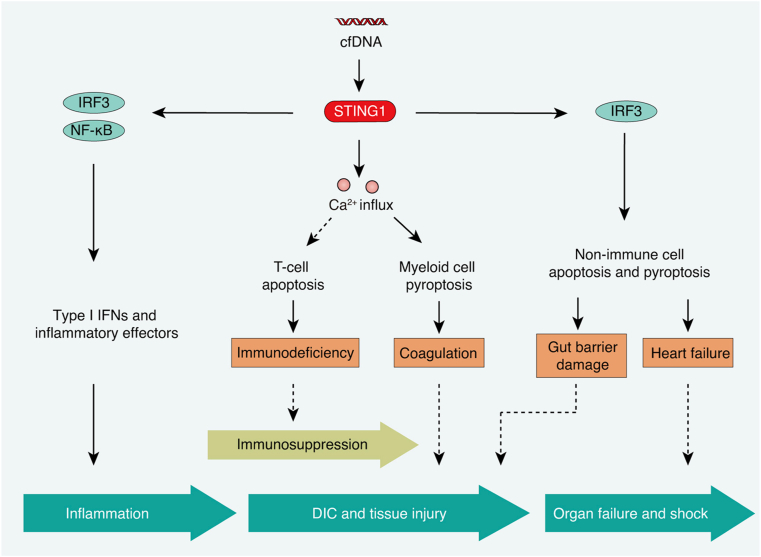
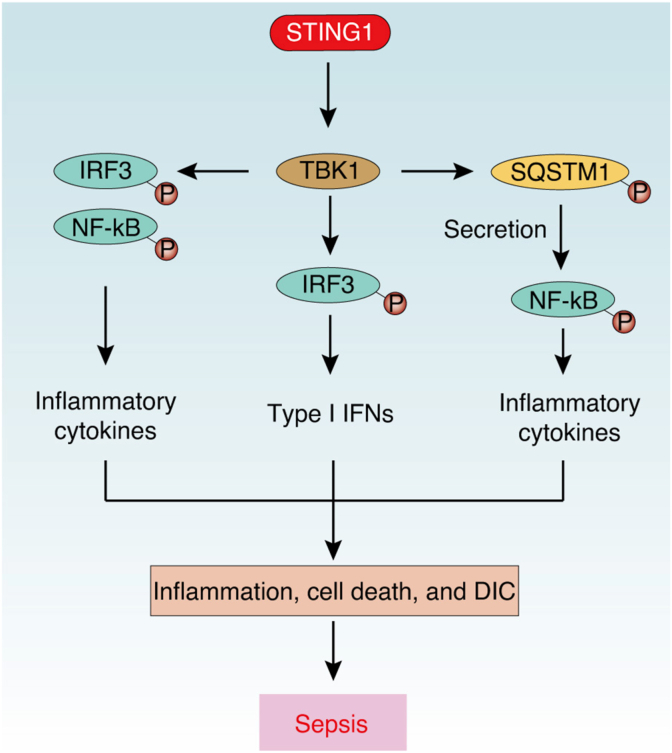
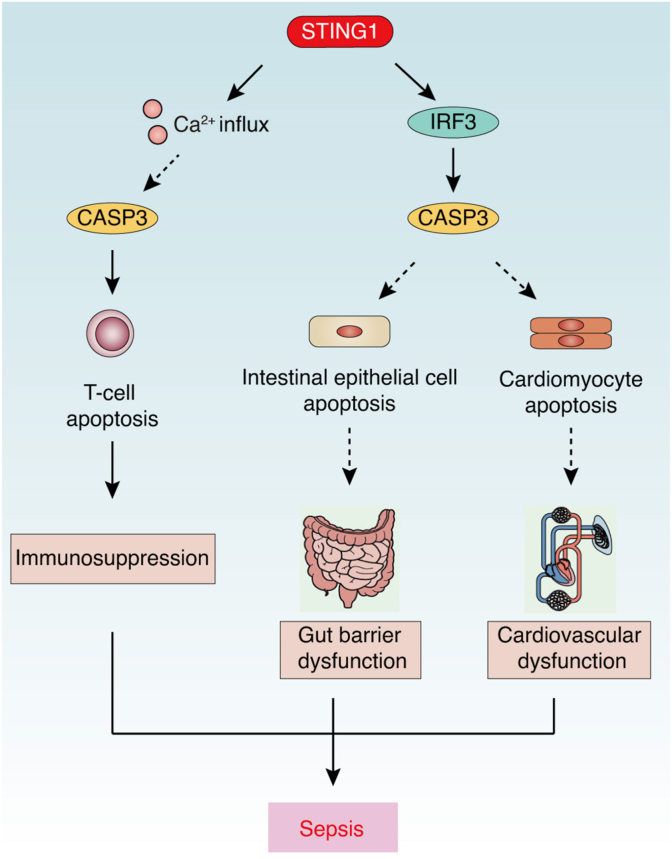
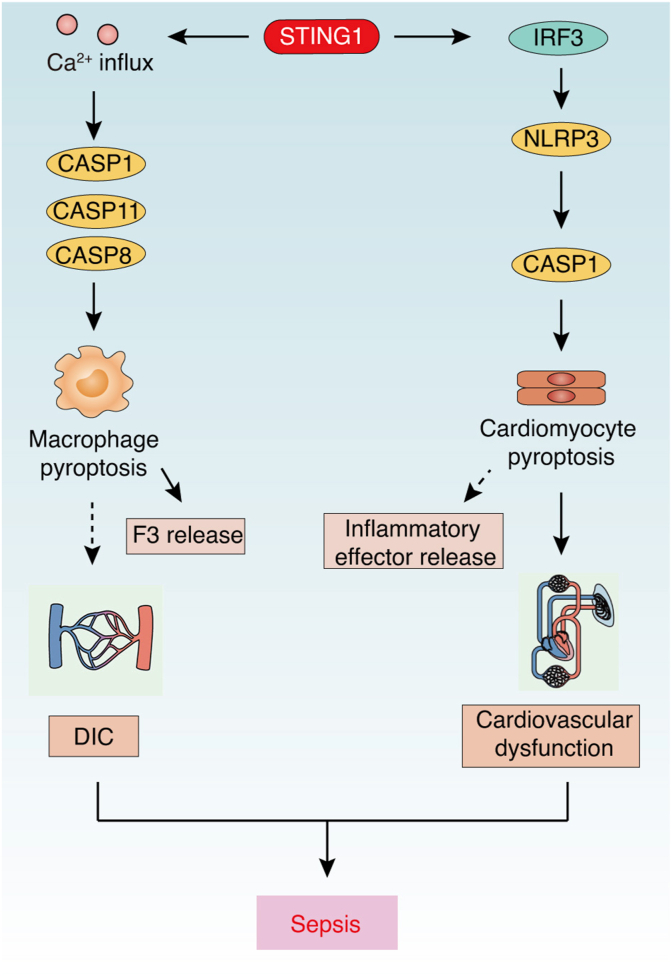
Sepsis is a life-threatening clinical syndrome and one of the most challenging health problems in the world. Pathologically, sepsis and septic shock are caused by a dysregulated host immune response to infection, which can eventually lead to multiple organ failure and even death. As an adaptor transporter between the endoplasmic reticulum and Golgi apparatus, stimulator of interferon response cGAMP interactor 1 (STING1, also known as STING or TMEM173) has been found to play a vital role at the intersection of innate immunity, inflammation, autophagy, and cell death in response to invading microbial pathogens or endogenous host damage. There is ample evidence that impaired STING1, through its immune and non-immune functions, is involved in the pathological process of sepsis. In this review, we discuss the regulation and function of the STING1 pathway in sepsis and highlight it as a suitable drug target for the treatment of lethal infection.
脓毒症是一种危及生命的临床综合征,也是世界上最具挑战性的健康问题之一。从病理上看,脓毒症和感染性休克是由宿主对感染的免疫反应失调引起的,最终可导致多器官衰竭甚至死亡。作为内质网和高尔基体之间的衔接转运蛋白,干扰素刺激基因 cGAMP 相互作用蛋白 1(STING1,也称为 STING 或 TMEM173)在先天免疫、炎症、自噬和细胞死亡反应中发挥重要作用,以应对入侵的微生物病原体或内源性宿主损伤。有充分的证据表明,STING1 的功能障碍通过其免疫和非免疫功能,参与了脓毒症的病理过程。在这篇综述中,我们讨论了 STING1 通路在脓毒症中的调节和功能,并强调其作为治疗致命感染的合适药物靶点。