Pivonello Rosario, Bancos Irina, Feelders Richard A, Kargi Atil Y, Kerr Janice M, Gordon Murray B, Mariash Cary N, Terzolo Massimo, Ellison Noel, Moraitis Andreas G
Dipartimento di Medicina Clinica e Chirurgia, Sezione di Endocrinologia, Università Federico II di Napoli, Naples, Italy.
Department of Internal Medicine, Division of Endocrinology, Diabetes, Metabolism, and Nutrition, Mayo Clinic, Rochester, MN, United States.
Front Endocrinol (Lausanne). 2021 Jul 14;12:662865. doi: 10.3389/fendo.2021.662865. eCollection 2021.
INTRODUCTION/PURPOSE: Relacorilant is a selective glucocorticoid receptor modulator (SGRM) with no progesterone receptor activity. We evaluated the efficacy and safety of relacorilant in patients with endogenous Cushing syndrome (CS).
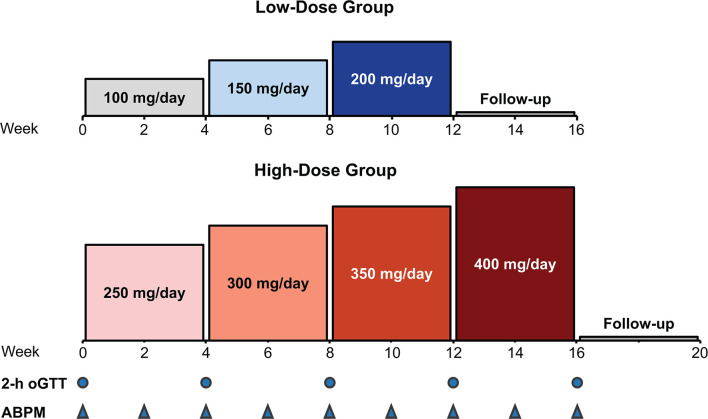
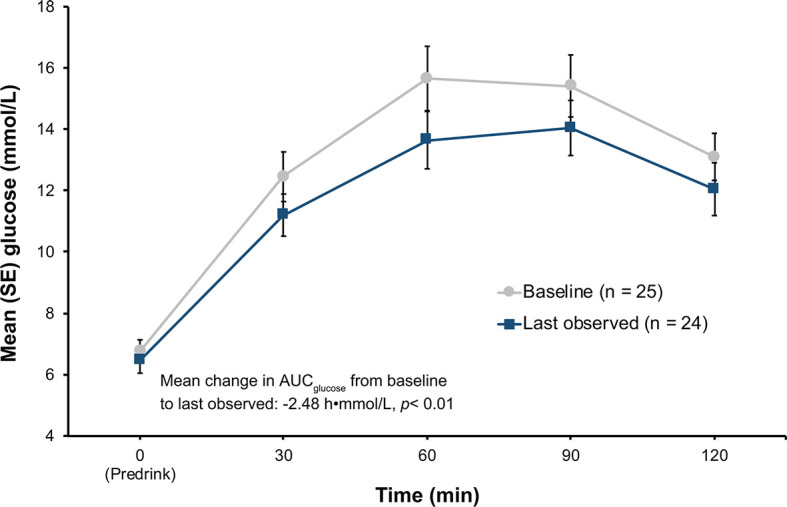
A single-arm, open-label, phase 2, dose-finding study with 2 dose groups (NCT02804750, https://clinicaltrials.gov/ct2/show/NCT02804750) was conducted at 19 sites in the U.S. and Europe. Low-dose relacorilant (100-200 mg/d; n = 17) was administered for 12 weeks or high-dose relacorilant (250-400 mg/d; n = 18) for 16 weeks; doses were up-titrated by 50 mg every 4 weeks. Outcome measures included proportion of patients with clinically meaningful changes in hypertension and/or hyperglycemia from baseline to last observed visit. For patients with hypertension, clinical response was defined as a ≥5-mmHg decrease in mean systolic or diastolic blood pressure, measured by a standardized and validated 24-h ABPM. For patients with hyperglycemia, clinical response was defined ad-hoc as ≥0.5% decrease in HbA1c, normalization or ≥50-mg/dL decrease in 2-h plasma glucose value on oral glucose tolerance test, or decrease in daily insulin (≥25%) or sulfonylurea dose (≥50%).
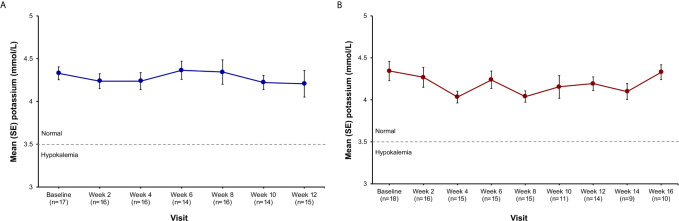
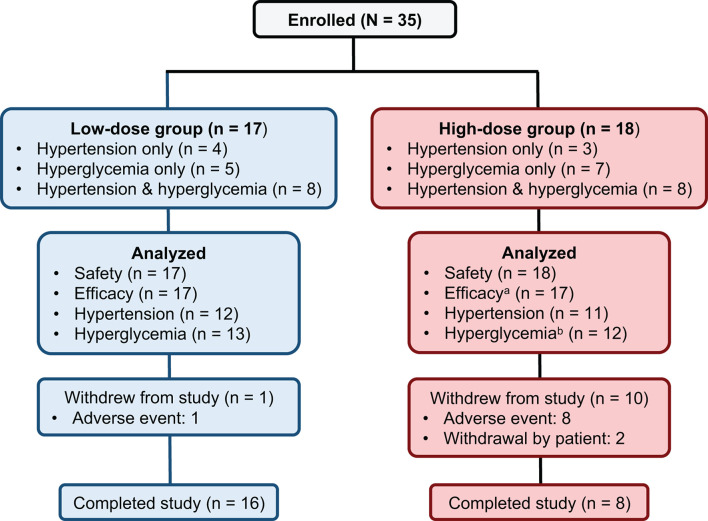
35 adults with CS and hypertension and/or hyperglycemia (impaired glucose tolerance or type 2 diabetes mellitus) were enrolled, of which 34 (24 women/10 men) received treatment and had postbaseline data. In the low-dose group, 5/12 patients (41.7%) with hypertension and 2/13 patients (15.4%) with hyperglycemia achieved response. In the high-dose group, 7/11 patients (63.6%) with hypertension and 6/12 patients (50%) with hyperglycemia achieved response. Common (≥20%) adverse events included back pain, headache, peripheral edema, nausea, pain at extremities, diarrhea, and dizziness. No drug-induced vaginal bleeding or hypokalemia occurred.
The SGRM relacorilant provided clinical benefit to patients with CS without undesirable antiprogesterone effects or drug-induced hypokalemia.
引言/目的:瑞拉克索仑是一种无孕激素受体活性的选择性糖皮质激素受体调节剂(SGRM)。我们评估了瑞拉克索仑在内源性库欣综合征(CS)患者中的疗效和安全性。
在美国和欧洲的19个地点进行了一项单臂、开放标签的2期剂量探索研究,有2个剂量组(NCT02804750,https://clinicaltrials.gov/ct2/show/NCT02804750)。低剂量瑞拉克索仑(100 - 200毫克/天;n = 17)给药12周,或高剂量瑞拉克索仑(250 - 400毫克/天;n = 18)给药16周;每4周剂量递增50毫克。观察指标包括从基线到最后一次观察访视时高血压和/或高血糖有临床意义变化的患者比例。对于高血压患者,临床反应定义为通过标准化且经过验证的24小时动态血压监测(ABPM)测量,平均收缩压或舒张压下降≥5毫米汞柱。对于高血糖患者,临床反应临时定义为糖化血红蛋白(HbA1c)下降≥0.5%、口服葡萄糖耐量试验中2小时血浆葡萄糖值正常化或下降≥50毫克/分升、或每日胰岛素剂量下降(≥25%)或磺脲类药物剂量下降(≥50%)。
35例患有CS且伴有高血压和/或高血糖(糖耐量受损或2型糖尿病)的成年人入组,其中34例(24名女性/10名男性)接受了治疗并拥有基线后数据。在低剂量组中,5/12例(41.7%)高血压患者和2/13例(15.4%)高血糖患者实现了反应。在高剂量组中,7/11例(63.6%)高血压患者和6/12例(50%)高血糖患者实现了反应。常见(≥20%)不良事件包括背痛、头痛、外周水肿、恶心、肢体疼痛、腹泻和头晕。未发生药物性阴道出血或低钾血症。
SGRM瑞拉克索仑为CS患者提供了临床益处,且无不良的抗孕激素作用或药物性低钾血症。