Tsai Keng-Chang, Lee Yu-Ching, Tseng Tien-Sheng
National Research Institute of Chinese Medicine, Ministry of Health and Welfare, Taipei, Taiwan.
Ph.D. Program in Medical Biotechnology, College of Medical Science and Technology, Taipei Medical University, Taipei, Taiwan.
Front Microbiol. 2021 Jul 15;12:698365. doi: 10.3389/fmicb.2021.698365. eCollection 2021.
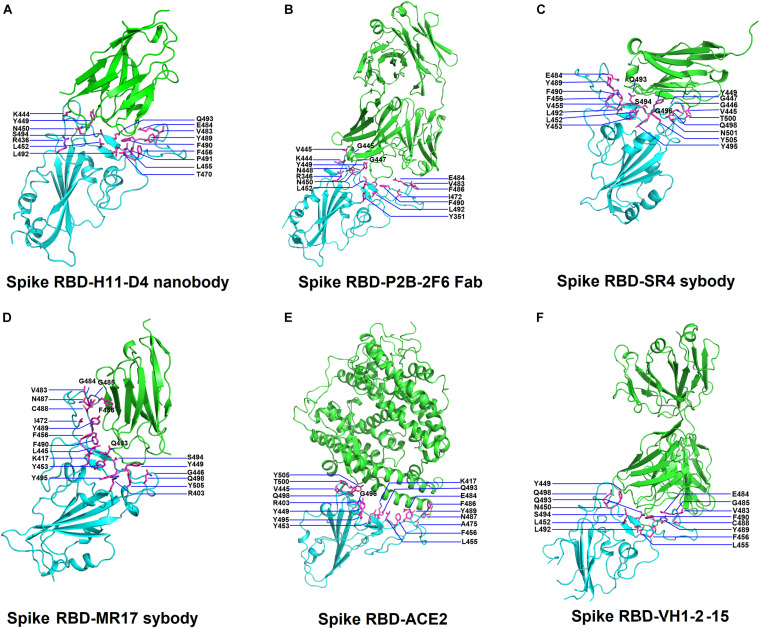
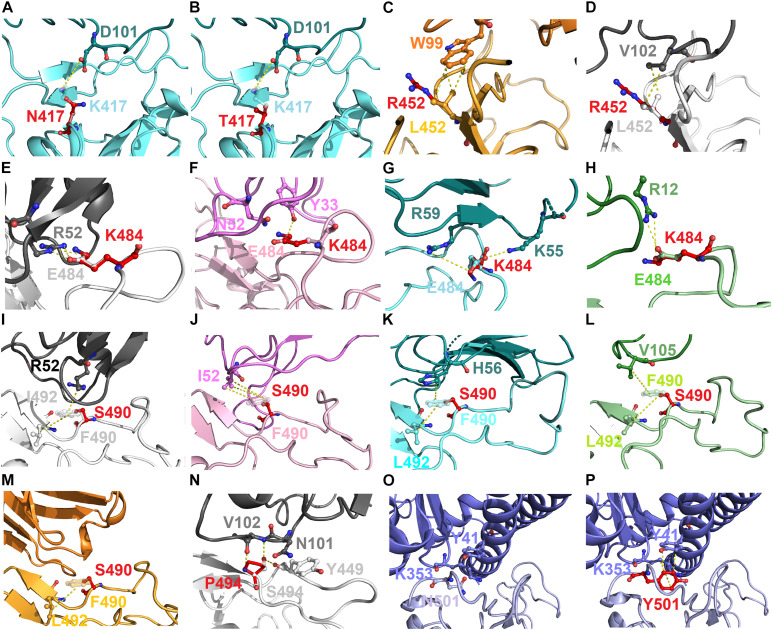
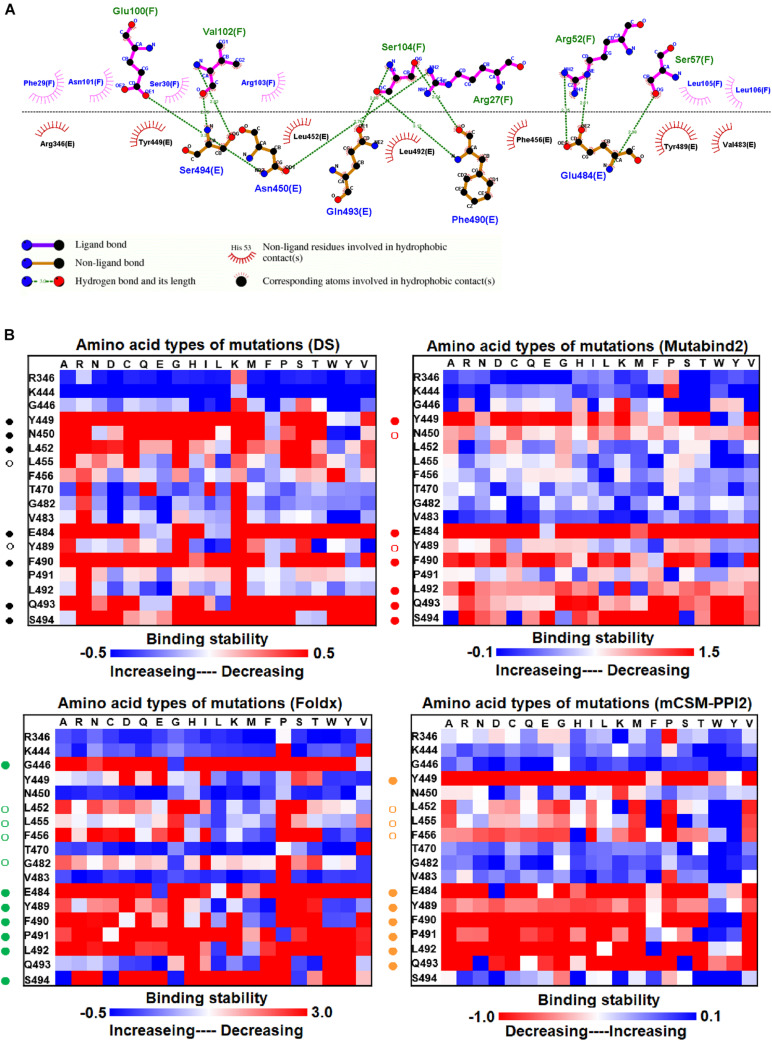
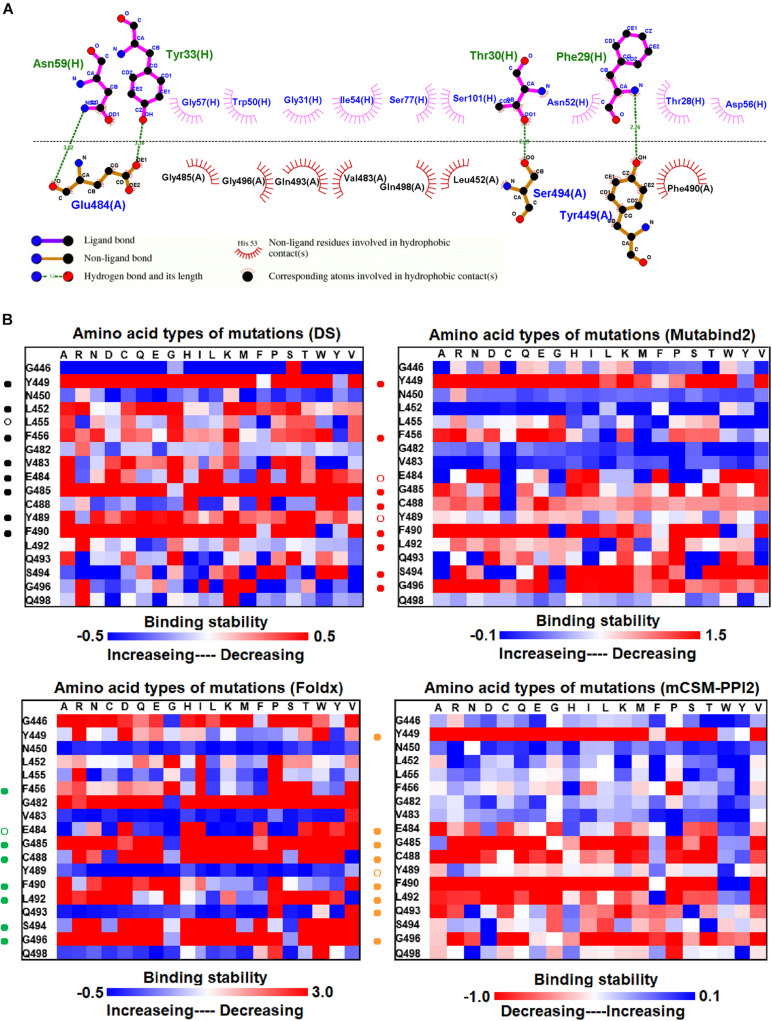
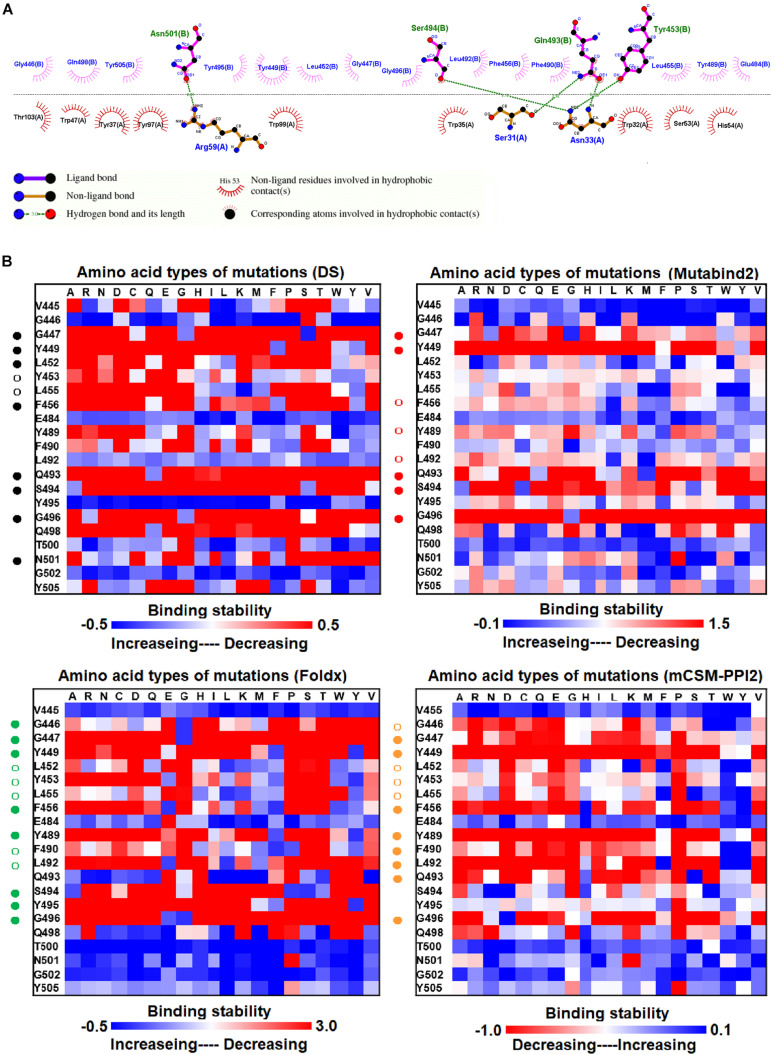
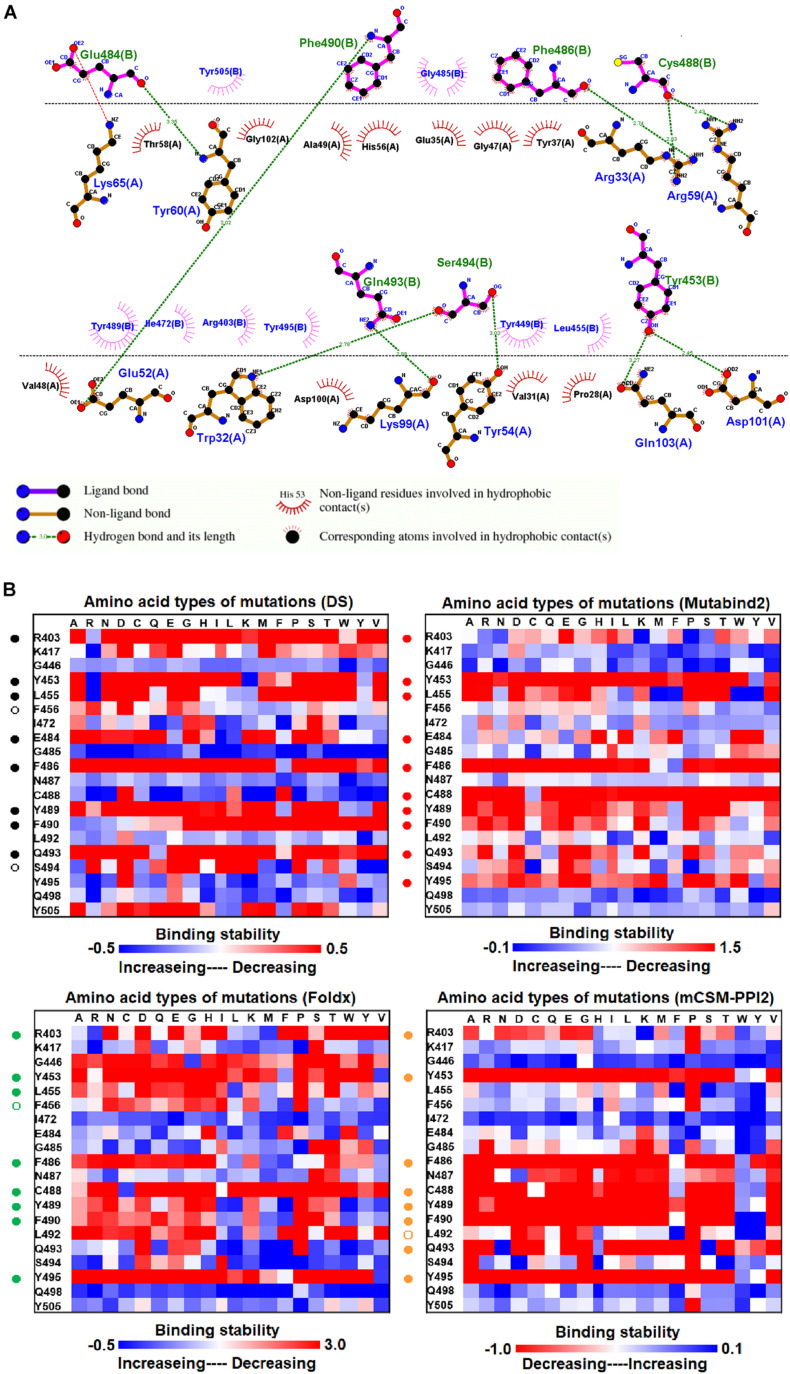
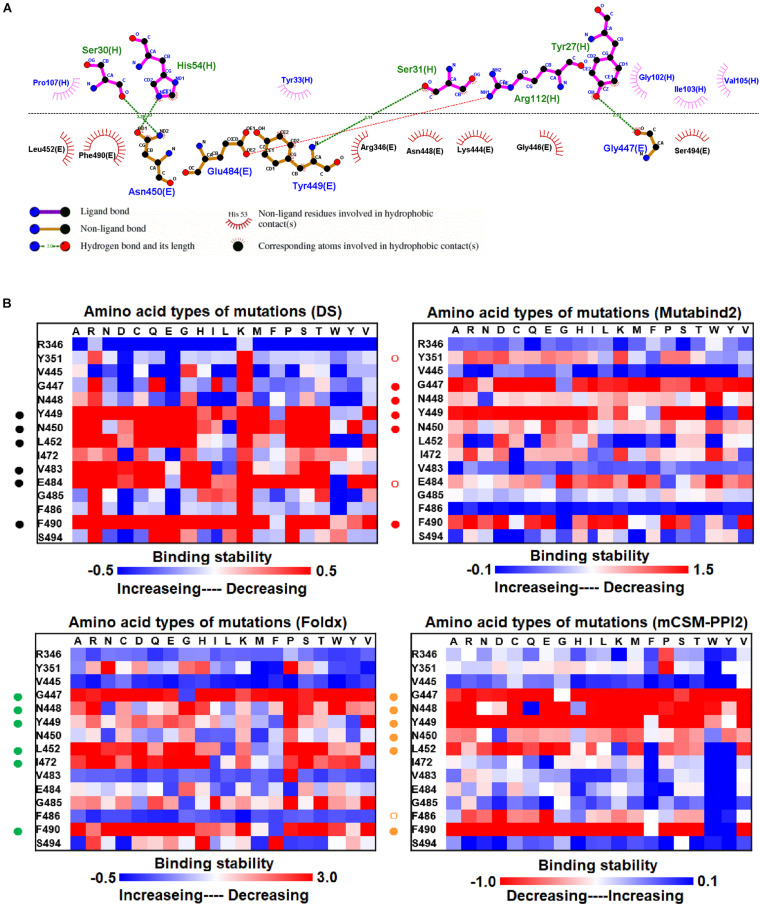
The rapid spread of SARS-CoV-2 has caused the COVID-19 pandemic, resulting in the collapse of medical care systems and economic depression worldwide. To combat COVID-19, neutralizing antibodies have been investigated and developed. However, the evolutions (mutations) of the receptor-binding domain (RBD) of SARS-CoV-2 enable escape from neutralization by these antibodies, further impairing recognition by the human immune system. Thus, it is critical to investigate and predict the putative mutations of RBD that escape neutralizing immune responses. Here, we employed computational analyses to comprehensively investigate the mutational effects of RBD on binding to neutralizing antibodies and angiotensin-converting enzyme 2 (ACE2) and demonstrated that the RBD residues K417, L452, L455, F456, E484, G485, F486, F490, Q493, and S494 were consistent with clinically emerging variants or experimental observations of attenuated neutralizations. We also revealed common hotspots, Y449, L455, and Y489, that exerted comparable destabilizing effects on binding to both ACE2 and neutralizing antibodies. Our results provide valuable information on the putative effects of RBD variants on interactions with neutralizing antibodies. These findings provide insights into possible evolutionary hotspots that can escape recognition by these antibodies. In addition, our study results will benefit the development and design of vaccines and antibodies to combat the newly emerging variants of SARS-CoV-2.
严重急性呼吸综合征冠状病毒2(SARS-CoV-2)的迅速传播引发了新型冠状病毒肺炎(COVID-19)大流行,导致全球医疗系统崩溃和经济衰退。为抗击COVID-19,人们对中和抗体进行了研究和开发。然而,SARS-CoV-2受体结合域(RBD)的进化(突变)使得这些抗体无法对其进行中和,进而削弱了人类免疫系统的识别能力。因此,研究和预测RBD逃避中和免疫反应的假定突变至关重要。在此,我们采用计算分析方法全面研究了RBD突变对其与中和抗体及血管紧张素转换酶2(ACE2)结合的影响,并证明RBD残基K417、L452、L455、F456、E484、G485、F486、F490、Q493和S494与临床上出现的变异体或中和作用减弱的实验观察结果一致。我们还发现了共同的热点区域Y449、L455和Y489,它们对与ACE2和中和抗体的结合均产生了类似的去稳定作用。我们的研究结果为RBD变异体与中和抗体相互作用的假定效应提供了有价值的信息。这些发现为可能逃避这些抗体识别的进化热点提供了见解。此外,我们的研究结果将有助于开发和设计抗击SARS-CoV-2新出现变异体的疫苗和抗体。