Chen Xi, Yan Lijun, Jiang Feng, Lu Yu, Zeng Ni, Yang Shufang, Ma Xianghua
Department of Endocrinology, The First Affiliated Hospital of Nanjing Medical University, Nanjing 210029, China.
Department of Endocrinology, Taizhou Clinical Medical School of Nanjing Medical University (Taizhou People's Hospital), Taizhou 225300, China.
Int J Endocrinol. 2021 Jul 20;2021:4654302. doi: 10.1155/2021/4654302. eCollection 2021.
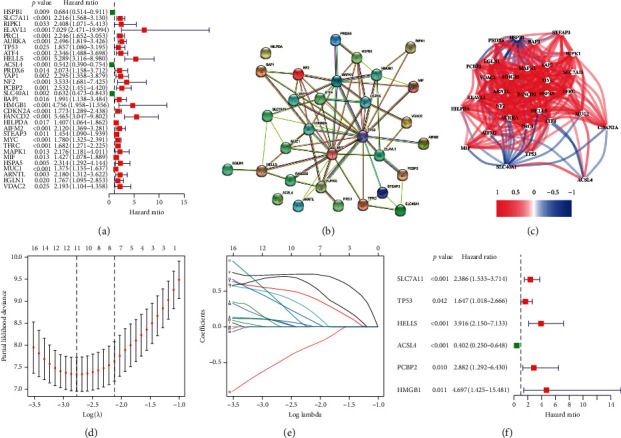
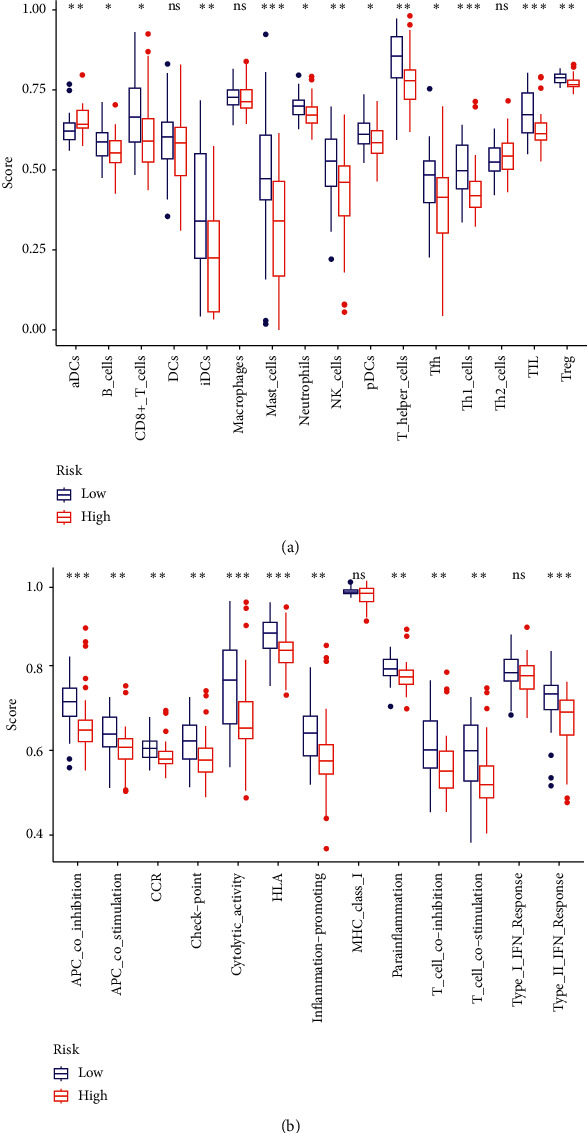
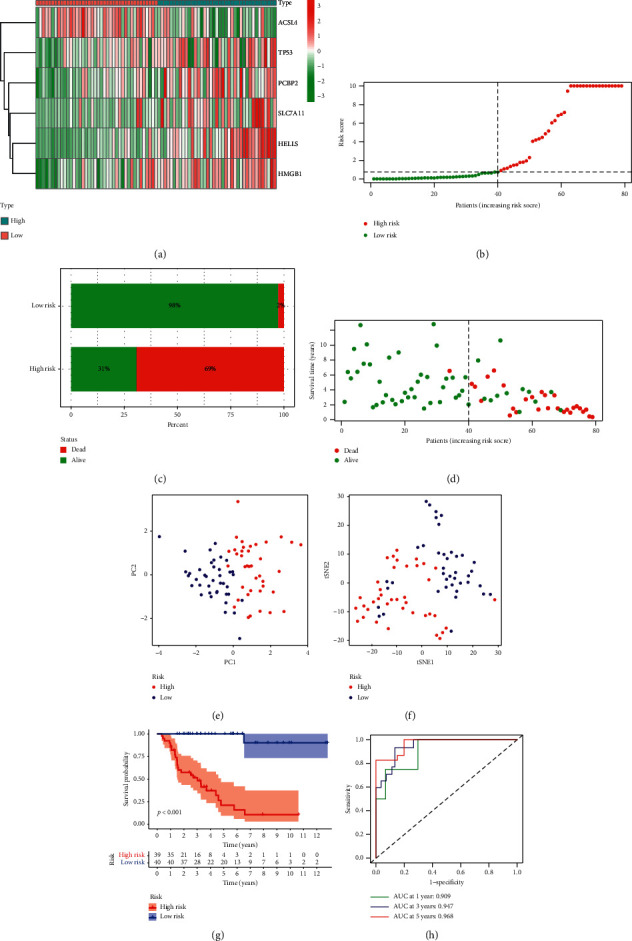
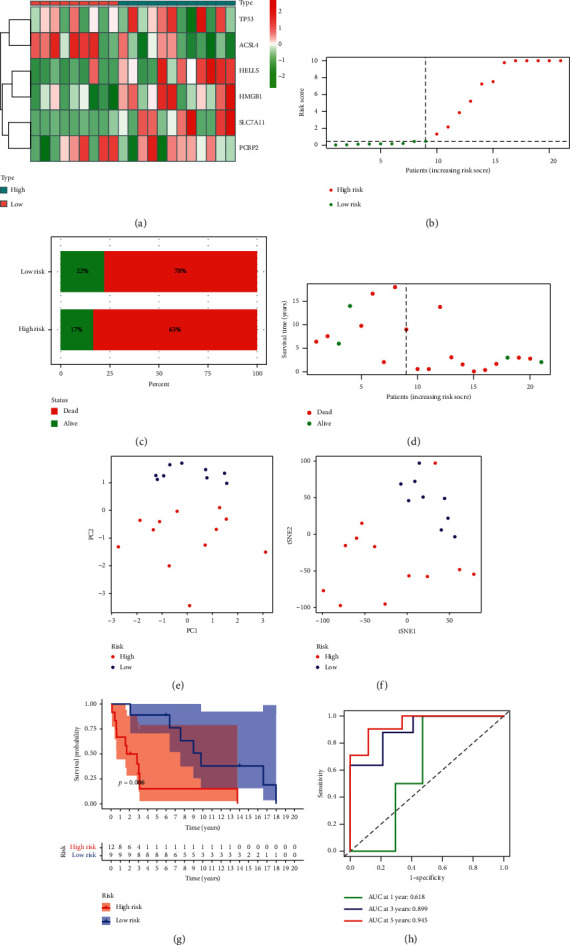
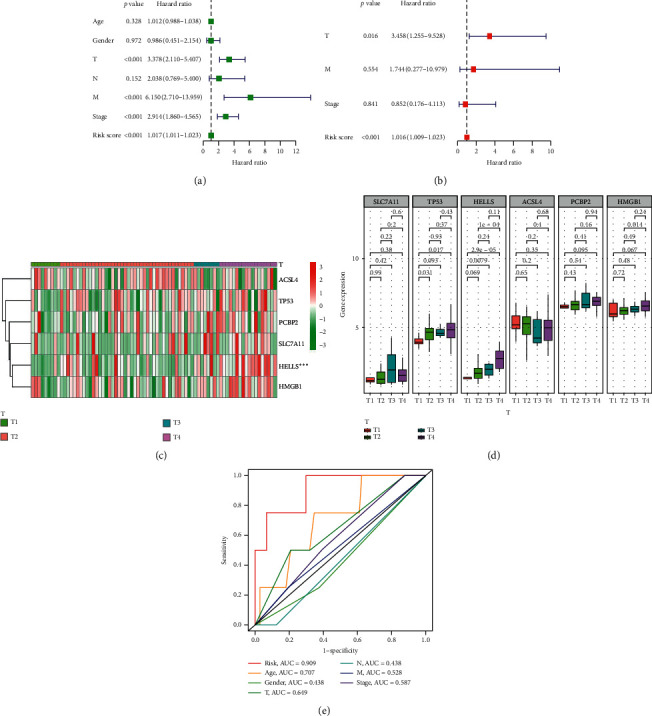
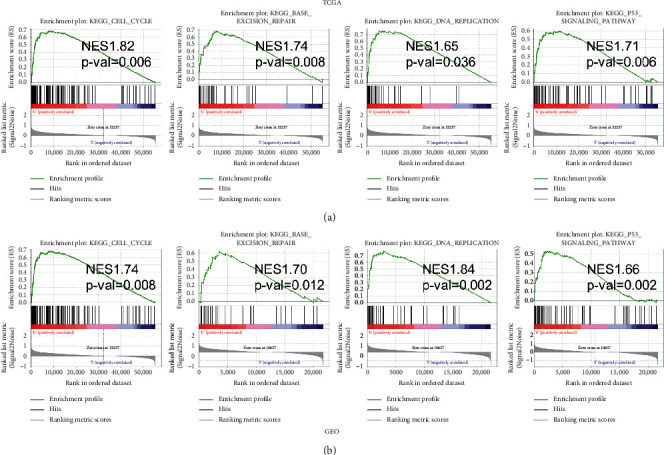
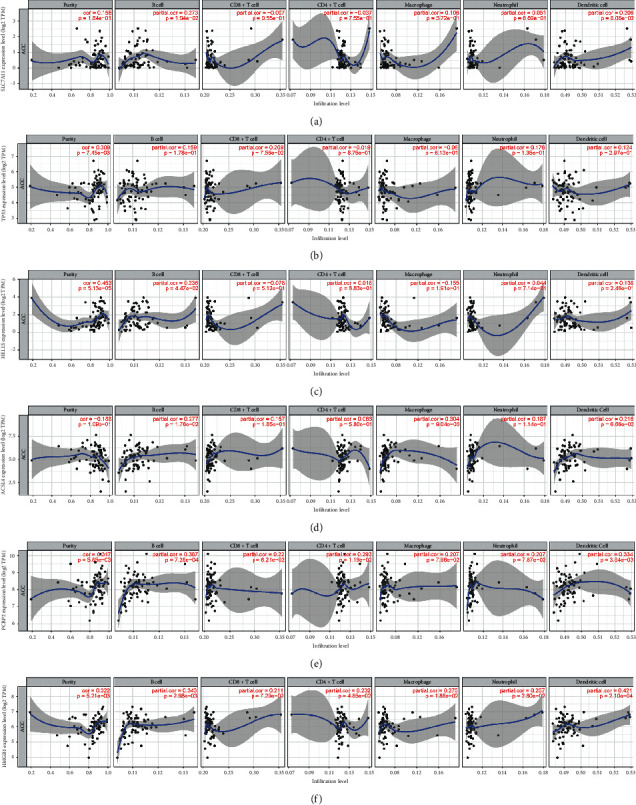
Adrenocortical carcinoma (ACC) is a rare malignant tumor with poor prognosis. Ferroptosis, a new form of cell death, differs from other forms of cell death and plays a vital role in tumor progress. Our study aimed to establish a ferroptosis-related signature with prognostic value in ACC. RNA-seq data and corresponding clinical characteristics for ACC were downloaded from TCGA and GEO databases. Genes included in ferroptosis risk signature were assessed by univariable and multivariable Cox regression analysis as well as lasso regression analysis. The prognostic value of the ferroptosis risk signature was assessed using K-M and ROC curves. Furthermore, we performed GSEA to discover the enriched gene sets in high-risk group. Additionally, TIMER website was applied to detect a possible connection between the signature and immune cells infiltration. ssGSEA was performed to evaluate scores of immune cells and immune-related pathways in two groups. A ferroptosis signature comprised of six genes (SLC7A11, TP53, HELLS, ACSL4, PCBP2, and HMGB1) was constructed to predict prognosis and reflect the immune infiltration in ACC. Patients in high-risk group were inclined to have worse prognosis. The ferroptosis model performed well in predicting prognosis and could be served as an independent indicator in ACC. GSEA revealed that gene sets correlated with biological processes including cell cycle, DNA replication, base excision repair, and P53 signaling pathway were highly enriched in high-risk group. In addition, we discovered that the expressional levels of hub genes were linked to six immune cells' infiltration in ACC tumor. ssGSEA revealed that contents of most immune cells significantly decreased in the high-risk group. In conclusion, the novel ferroptosis risk signature could be useful in predicting prognosis and reflecting immune infiltration in ACC. It also brings us new insights into the possible value of targeting ferroptosis during the therapy of ACC.
肾上腺皮质癌(ACC)是一种预后较差的罕见恶性肿瘤。铁死亡作为一种新的细胞死亡形式,与其他形式的细胞死亡不同,在肿瘤进展中起着至关重要的作用。我们的研究旨在建立一个在ACC中具有预后价值的铁死亡相关特征。从TCGA和GEO数据库下载了ACC的RNA测序数据及相应的临床特征。通过单变量和多变量Cox回归分析以及套索回归分析评估铁死亡风险特征中包含的基因。使用K-M曲线和ROC曲线评估铁死亡风险特征的预后价值。此外,我们进行了基因集富集分析(GSEA)以发现高危组中富集的基因集。另外,利用TIMER网站检测该特征与免疫细胞浸润之间的可能联系。进行单样本基因集富集分析(ssGSEA)以评估两组中免疫细胞和免疫相关通路的评分。构建了一个由六个基因(SLC7A11、TP53、HELLS、ACSL4、PCBP2和HMGB1)组成的铁死亡特征,以预测ACC的预后并反映免疫浸润情况。高危组患者的预后往往较差。铁死亡模型在预测预后方面表现良好,可作为ACC的独立指标。GSEA显示,与包括细胞周期、DNA复制、碱基切除修复和P53信号通路等生物学过程相关的基因集在高危组中高度富集。此外,我们发现核心基因的表达水平与ACC肿瘤中六种免疫细胞的浸润有关。ssGSEA显示,高危组中大多数免疫细胞的含量显著降低。总之,新的铁死亡风险特征可用于预测ACC的预后并反映免疫浸润情况。它也为ACC治疗期间靶向铁死亡的潜在价值带来了新的见解。