Chen Xi, Yan Lijun, Lu Yu, Jiang Feng, Zeng Ni, Yang Shufang, Ma Xianghua
Department of Endocrinology, Taizhou Clinical Medical School of Nanjing Medical University (Taizhou People's Hospital), Taizhou, Jiangsu, China.
Department of Hepatology, Nantong Third People's Hospital Affiliated to Nantong University, Nantong, Jiangsu, China.
J Oncol. 2021 Sep 21;2021:2298973. doi: 10.1155/2021/2298973. eCollection 2021.
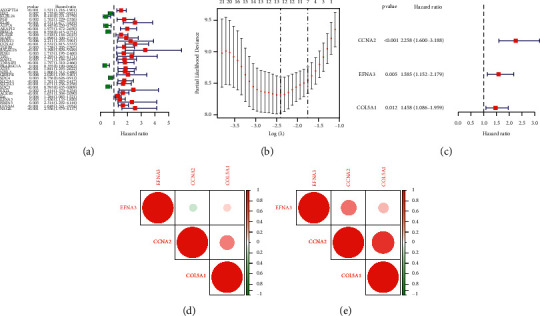
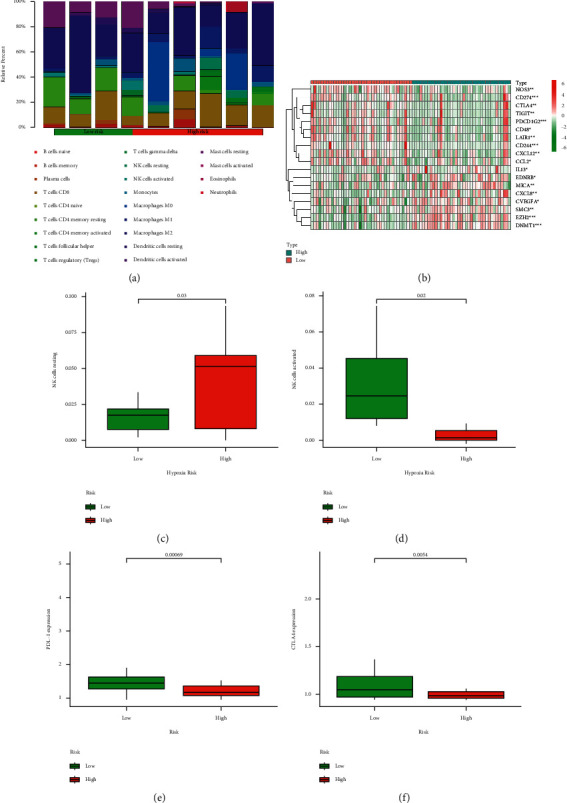
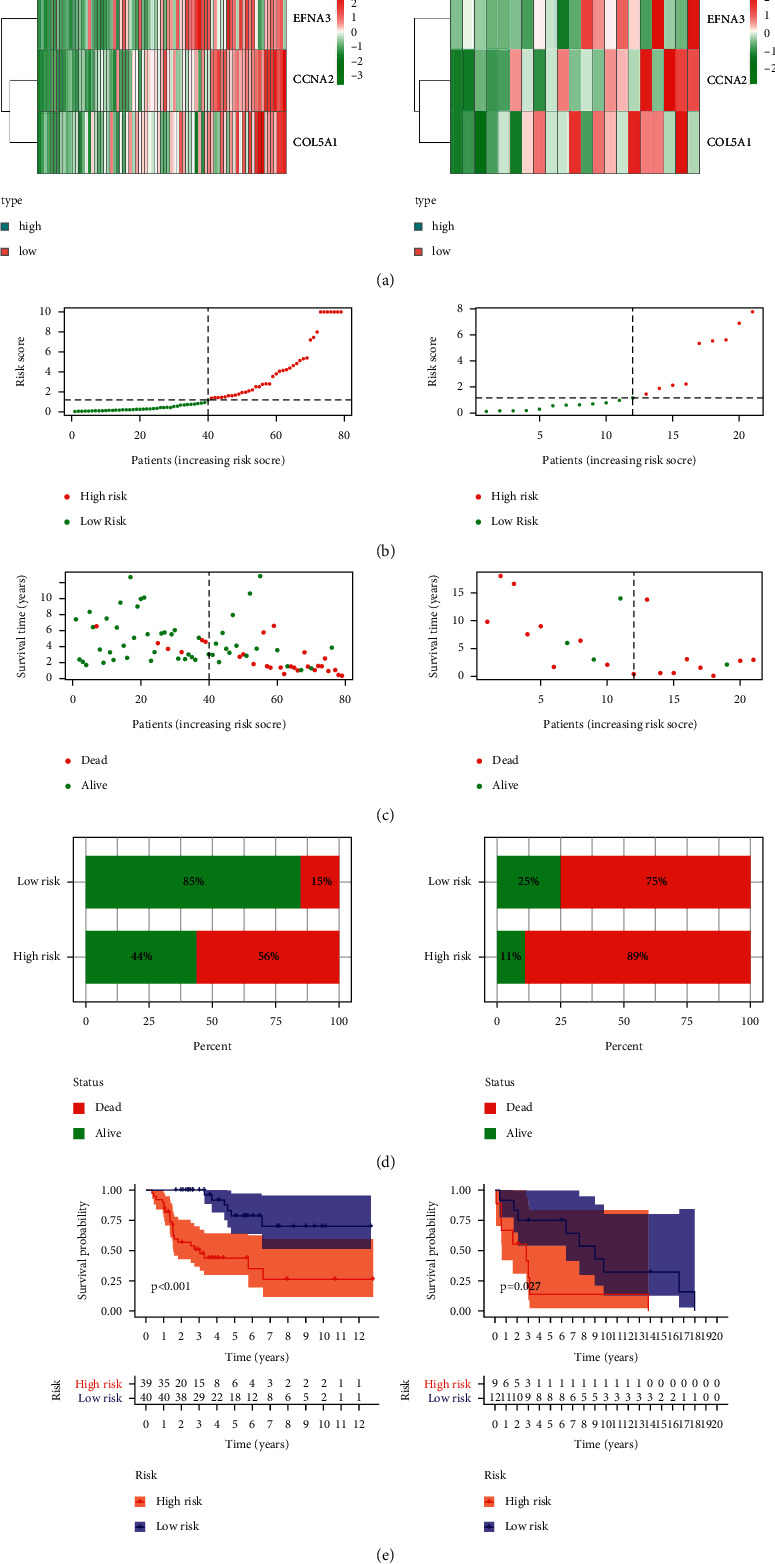
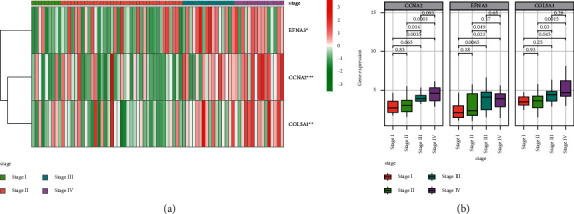
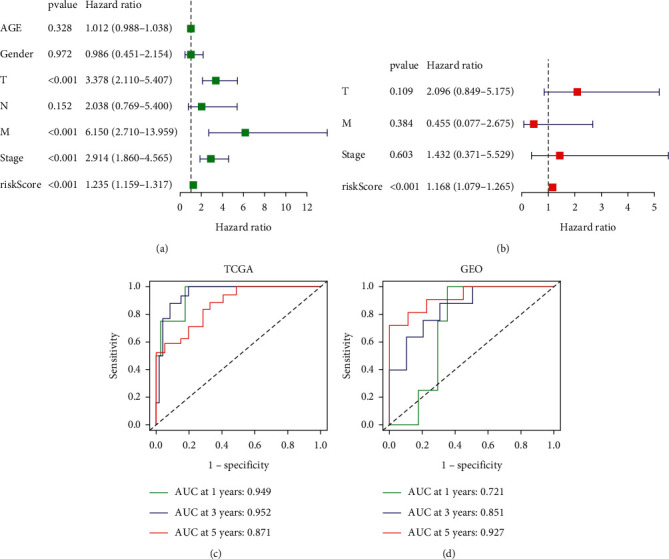
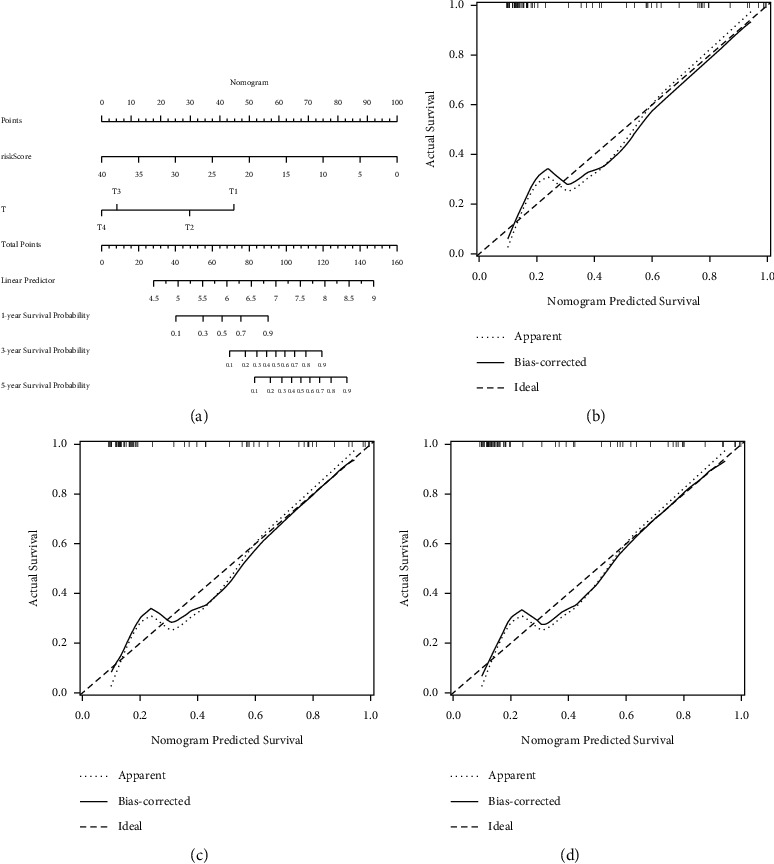
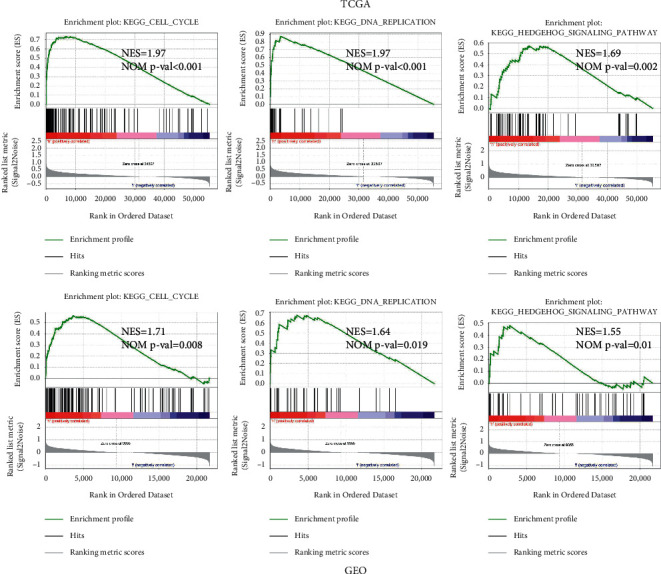
Adrenocortical carcinoma (ACC) is a rare malignancy with dismal prognosis. Hypoxia is one of characteristics of cancer leading to tumor progression. For ACC, however, no reliable prognostic signature on the basis of hypoxia genes has been built. Our study aimed to develop a hypoxia-associated gene signature in ACC. Data of ACC patients were obtained from TCGA and GEO databases. The genes included in hypoxia risk signature were identified using the Cox regression analysis as well as LASSO regression analysis. GSEA was applied to discover the enriched gene sets. To detect a possible connection between the gene signature and immune cells, the CIBERSORT technique was applied. In ACC, the hypoxia signature including three genes (CCNA2, COL5A1, and EFNA3) was built to predict prognosis and reflect the immune microenvironment. Patients with high-risk scores tended to have a poor prognosis. According to the multivariate regression analysis, the hypoxia signature could be served as an independent indicator in ACC patients. GSEA demonstrated that gene sets linked to cancer proliferation and cell cycle were differentially enriched in high-risk classes. Additionally, we found that PDL1 and CTLA4 expression were significantly lower in the high-risk group than in the low-risk group, and resting NK cells displayed a significant increase in the high-risk group. In summary, the hypoxia risk signature created in our study might predict prognosis and evaluate the tumor immune microenvironment for ACC.
肾上腺皮质癌(ACC)是一种预后不佳的罕见恶性肿瘤。缺氧是导致肿瘤进展的癌症特征之一。然而,对于ACC,尚未建立基于缺氧基因的可靠预后特征。我们的研究旨在开发一种ACC中与缺氧相关的基因特征。ACC患者的数据来自TCGA和GEO数据库。使用Cox回归分析以及LASSO回归分析确定缺氧风险特征中包含的基因。应用基因集富集分析(GSEA)来发现富集的基因集。为了检测基因特征与免疫细胞之间的可能联系,应用了CIBERSORT技术。在ACC中,构建了包含三个基因(CCNA2、COL5A1和EFNA3)的缺氧特征来预测预后并反映免疫微环境。高风险评分的患者往往预后较差。根据多变量回归分析,缺氧特征可作为ACC患者的独立指标。GSEA表明,与癌症增殖和细胞周期相关的基因集在高风险组中差异富集。此外,我们发现高风险组中PDL1和CTLA4的表达明显低于低风险组,并且静息NK细胞在高风险组中显著增加。总之,我们研究中创建的缺氧风险特征可能预测ACC的预后并评估肿瘤免疫微环境。