Ma Jianbo, Cheng Yan, Su Qiang, Ai Wen, Gong Ling, Wang Yueying, Li Linhao, Ma Zhongren, Pan Qiuwei, Qiao Zilin, Chen Kan
Key Laboratory of Biotechnology and Bioengineering of State Ethnic Affairs Commission, Biomedical Research Center, Northwest Minzu University, Lanzhou, Gansu 730030, P.R. China.
Experimental Center, Northwest Minzu University, Lanzhou, Gansu 730030, P.R. China.
Exp Ther Med. 2021 Sep;22(3):950. doi: 10.3892/etm.2021.10382. Epub 2021 Jul 5.
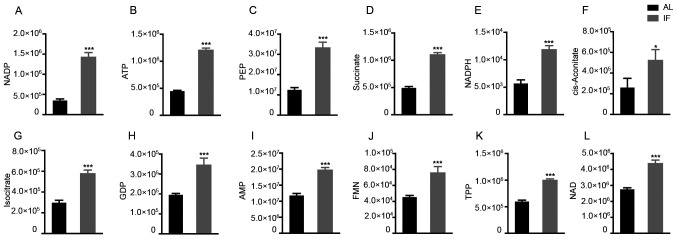
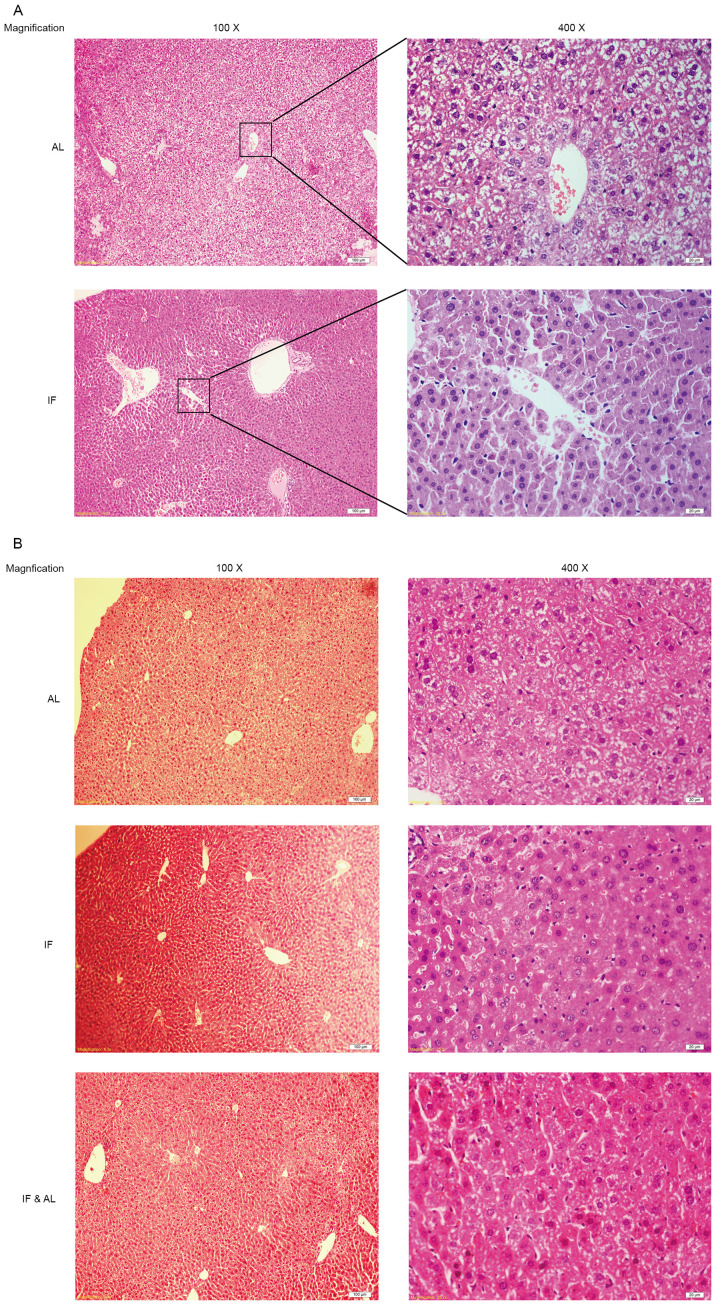
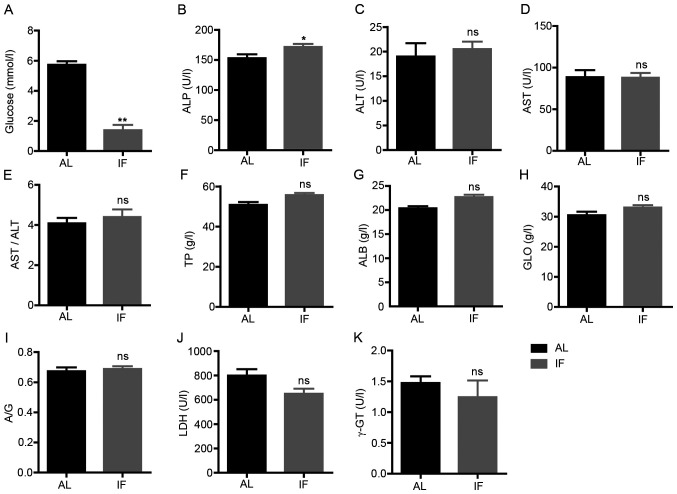
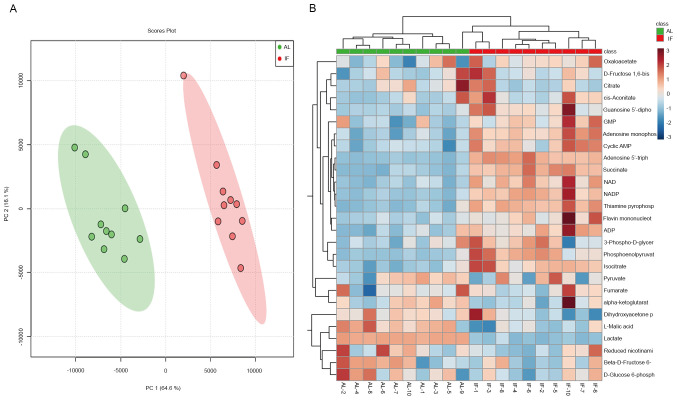
A broad spectrum of health benefits from intermittent fasting have been reported in studies on animal models and human subjects. However, the underlying mechanisms of these beneficial effects remain largely elusive. The present study aimed to explore the effects and potential mode of action of intermittent fasting in mouse models with a focus on the liver. C57BL/6 mice were subjected to intermittent fasting or feeding as controls. It was determined that 12 h of daily intermittent fasting for 30 days significantly reduced the cumulative food intake compared with that in mice with feeding. Fasting resulted in a significantly reduced liver mass but only had a minimal effect on bodyweight. The effects on the liver by 30 days of fasting were not reversed by subsequent refeeding for 30 days. Among the measured blood biochemical parameters, the levels of blood glucose were decreased, while the levels of alkaline phosphatase were increased in fasting mice. Of note, targeted metabolic profiling revealed global elevation of metabolites in the livers of fasting mice. These metabolic molecules included adenosine triphosphate, nicotinamide adenine dinucleotide phosphate (NADP), reduced NADP and succinate, which are essentially involved in the citric acid cycle and oxidative phosphorylation. Thus, it was concluded that daily 12 h of intermittent fasting for one month significantly reduced the liver weight of mice, which is associated with enhanced liver metabolism.
在对动物模型和人类受试者的研究中,已经报道了间歇性禁食对健康有广泛的益处。然而,这些有益效果的潜在机制在很大程度上仍然难以捉摸。本研究旨在探讨间歇性禁食在小鼠模型中的作用效果和潜在作用模式,重点关注肝脏。将C57BL/6小鼠进行间歇性禁食或作为对照进行喂食。结果发现,与持续喂食的小鼠相比,每天12小时的间歇性禁食持续30天可显著降低累积食物摄入量。禁食导致肝脏重量显著降低,但对体重的影响最小。禁食30天对肝脏的影响不会因随后30天的重新喂食而逆转。在所测量的血液生化参数中,禁食小鼠的血糖水平降低,而碱性磷酸酶水平升高。值得注意的是,靶向代谢谱分析显示禁食小鼠肝脏中的代谢物整体升高。这些代谢分子包括三磷酸腺苷、烟酰胺腺嘌呤二核苷酸磷酸(NADP)、还原型NADP和琥珀酸,它们主要参与柠檬酸循环和氧化磷酸化。因此,得出的结论是,每天12小时的间歇性禁食持续一个月可显著降低小鼠的肝脏重量,这与肝脏代谢增强有关。