Xu Guangxu, Kong Weimin, Fang Ziwei, Fan Yali, Yin Yajie, Sullivan Stephanie A, Tran Arthur-Quan, Clark Leslie H, Sun Wenchuan, Hao Tianran, Zhao Luyu, Zhou Chunxiao, Bae-Jump Victoria L
Department of Gynecology, Fengxian Hospital, Southern Medical University, Shanghai, China.
Division of Gynecologic Oncology, University of North Carolina at Chapel Hill, Chapel Hill, NC, United States.
Front Oncol. 2021 Jul 14;11:688461. doi: 10.3389/fonc.2021.688461. eCollection 2021.
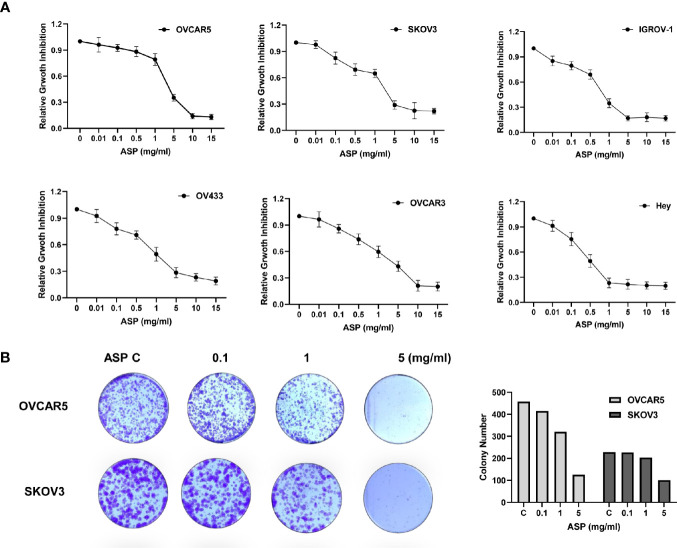
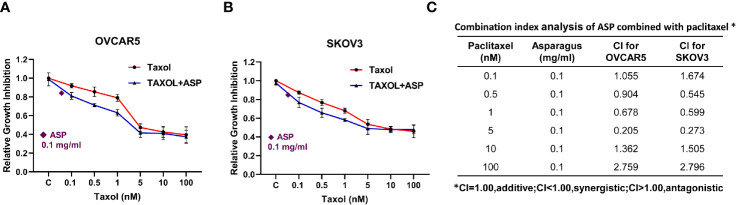
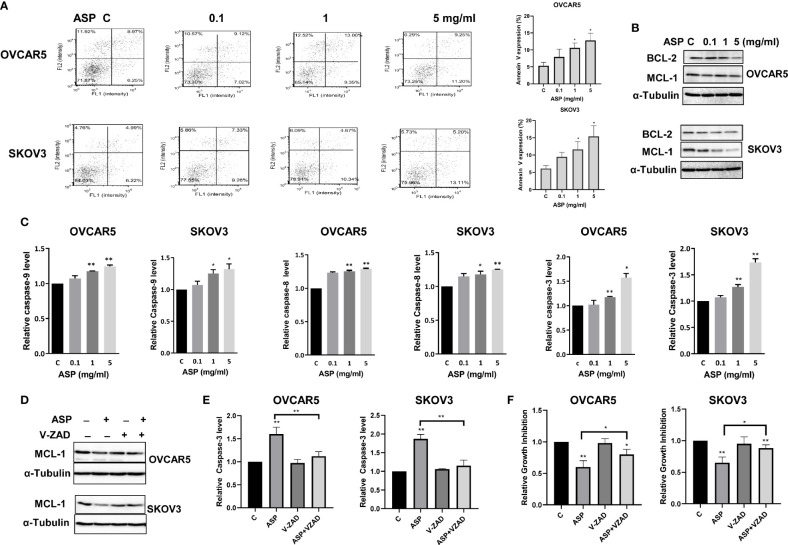
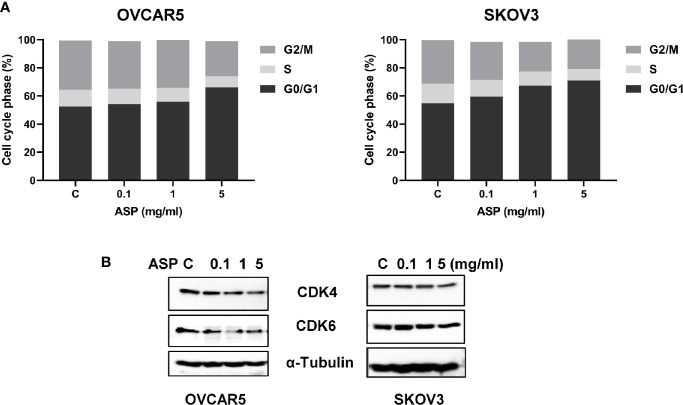
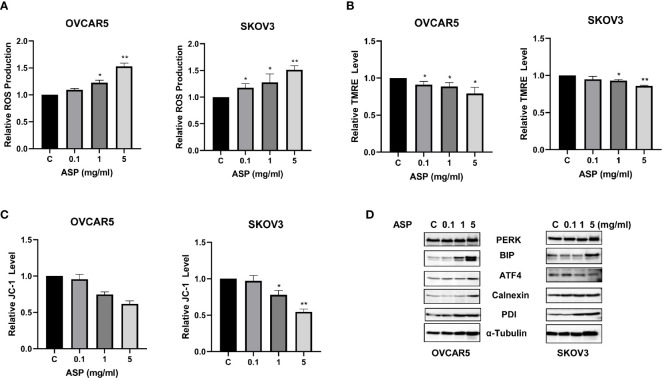
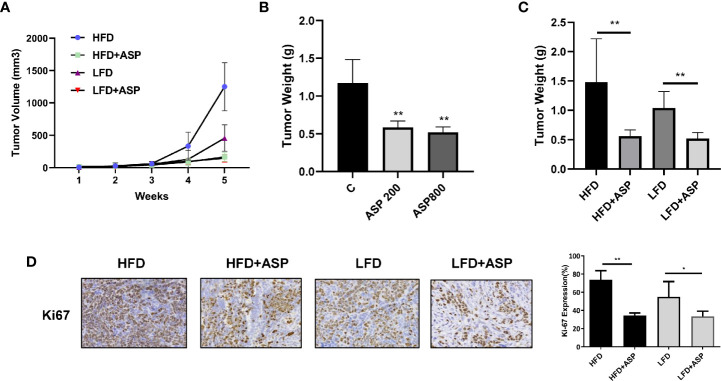
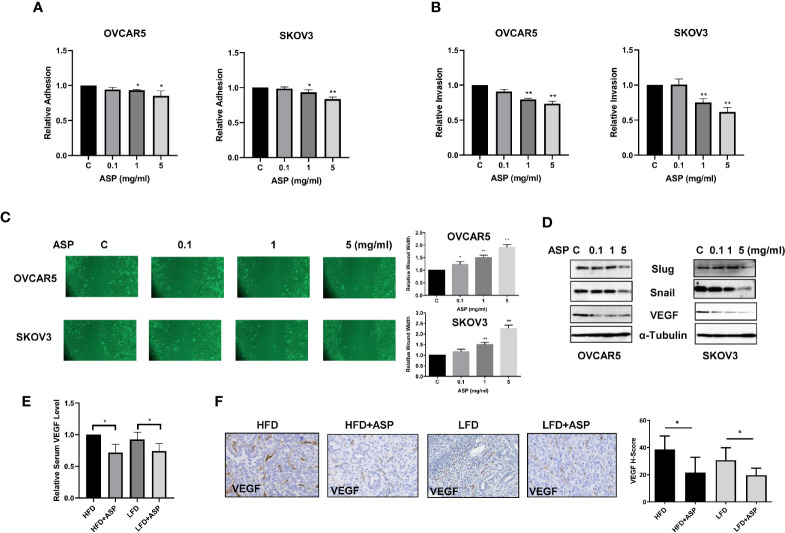
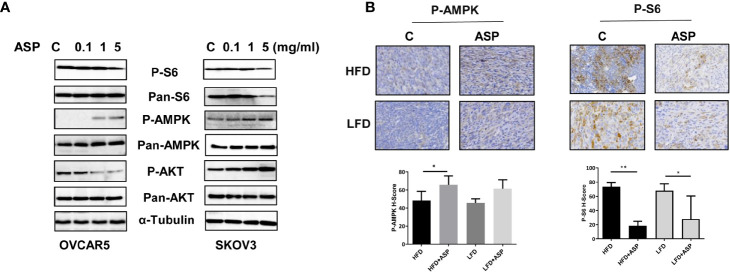
Ovarian cancer is one of the leading causes of female cancer death. Emerging evidence suggests that many dietary natural products have anti-tumorigenic activity, including that of asparagus officinalis. The current study aimed to assess the anti-tumorigenic and anti-metastatic effects of asparagus officinalis on serous ovarian cancer cell lines and a transgenic mouse model of high grade serous ovarian cancer. Asparagus officinalis decreased cellular viability, caused cell cycle G1 phase arrest and induced apoptosis in the OVCAR5 and SKOV3 cells. Induction of apoptosis and inhibition of cell proliferation was rescued by the pan-caspase inhibitor, Z-VAD-FMK, implying that its cytotoxic effects were mainly dependent on caspase pathways. Asparagus officinalis increased levels of ROS and decreased mitochondrial membrane potential with corresponding increases in PERK, Bip, Calnexin PDI and ATF4 in both cell lines. Treatment with asparagus officinalis also reduced ability of adhesion and invasion through epithelial-mesenchymal transition and reduction of VEGF expression. The combination of Asparagus officinalis with paclitaxel had synergistic anti-proliferative activity. Furthermore, Asparagus officinalis significantly inhibited tumor growth and reduced serum VEGF in a genetically engineered mouse model of ovarian cancer under obese and lean conditions, accompanied with a decrease in the expression of Ki67, VEGF and phosphorylated S6, and in an increase in phosphorylation of AMPK in the ovarian tumor tissues. Overall, our data provide a pre-clinical rationale for asparagus officinalis in the prevention and treatment of ovarian cancer as a novel natural product.
卵巢癌是女性癌症死亡的主要原因之一。新出现的证据表明,许多膳食天然产物具有抗肿瘤活性,包括芦笋。本研究旨在评估芦笋对浆液性卵巢癌细胞系和高级别浆液性卵巢癌转基因小鼠模型的抗肿瘤和抗转移作用。芦笋降低了细胞活力,导致细胞周期G1期停滞,并诱导OVCAR5和SKOV3细胞凋亡。泛半胱天冬酶抑制剂Z-VAD-FMK挽救了凋亡的诱导和细胞增殖的抑制,这意味着其细胞毒性作用主要依赖于半胱天冬酶途径。芦笋增加了两种细胞系中ROS的水平,降低了线粒体膜电位,同时PERK、Bip、钙连接蛋白PDI和ATF4相应增加。芦笋处理还通过上皮-间质转化和VEGF表达的降低降低了黏附和侵袭能力。芦笋与紫杉醇联合具有协同抗增殖活性。此外,在肥胖和瘦条件下的卵巢癌基因工程小鼠模型中,芦笋显著抑制肿瘤生长并降低血清VEGF,同时卵巢肿瘤组织中Ki67、VEGF和磷酸化S6的表达降低,而AMPK的磷酸化增加。总体而言,我们的数据为芦笋作为一种新型天然产物在卵巢癌预防和治疗中的应用提供了临床前依据。