Calado Maria Beatriz, da Silva Santana Crislayne Emilly, Crovella Sergio
Laboratory of Immunopathology Keizo Asami, Recife, Brazil.
Depatarment of Biology, Academic Center From Vitória, Vitória, Brazil.
Virusdisease. 2021 Sep;32(3):410-420. doi: 10.1007/s13337-021-00705-3. Epub 2021 Jul 26.
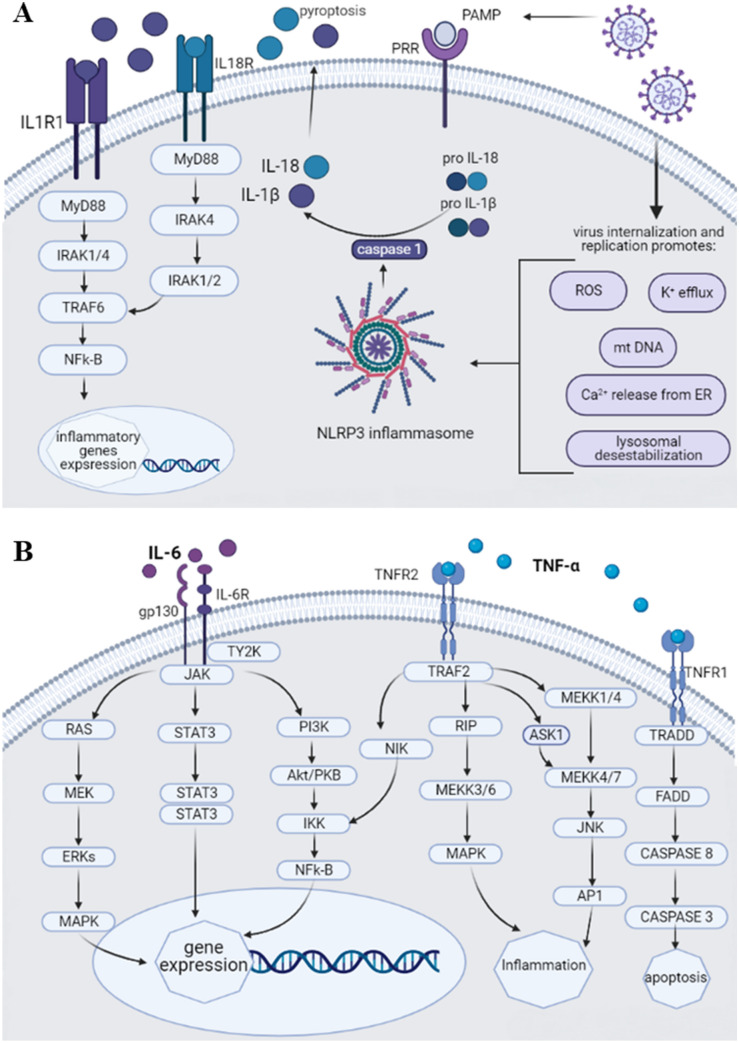
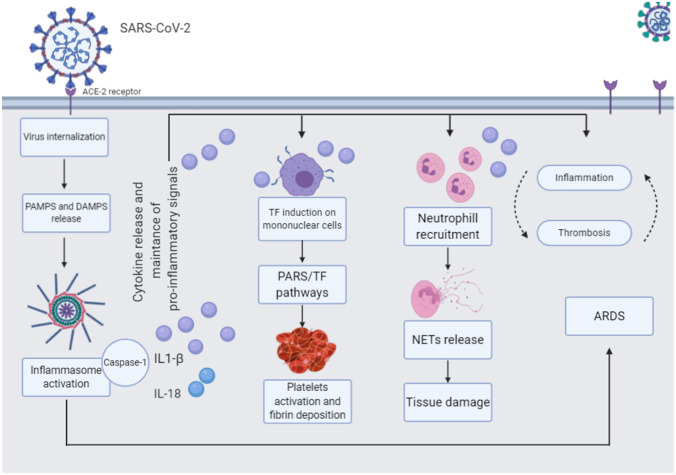
COVID-19 pandemic has proven to be a dramatic challenge, introducing huge clinical differences that demand extensive investigations. Severe and critical patients may present coagulopathies and microthrombi, which results in varied complications, or acute respiratory distress syndrome that leads to fatality. Although the lung to be the major site of clinical manifestations, COVID-19 has shown extrapulmonary manifestations, especially on the heart and kidney, directly linked to worse disease outcomes. According to the fast-moving of clinical description and scientific publications, the injuries in multiple organs and systemic inflammation appear to be caused by a deregulated immune response, and the NLRP3 inflammasome could be a relevant influencer in this imbalance. However, until now, the precise drivers of the pathophysiology of these injuries remain unknown. In this review, we discuss how inflammasome seems to be directly involved in the clinical profile of patients infected with SARS-CoV-2 and shed light on the mechanisms that lead to fatality.
事实证明,新冠疫情是一项严峻挑战,带来了巨大的临床差异,需要进行广泛研究。重症和危重症患者可能出现凝血功能障碍和微血栓,从而导致各种并发症,或引发导致死亡的急性呼吸窘迫综合征。尽管肺部是临床表现的主要部位,但新冠病毒感染已出现肺外表现,尤其是在心脏和肾脏,这些表现与更差的疾病结局直接相关。根据临床描述和科学出版物的快速更新,多器官损伤和全身炎症似乎是由失调的免疫反应引起的,而NLRP3炎性小体可能是这种失衡的一个相关影响因素。然而,到目前为止,这些损伤病理生理学的确切驱动因素仍然未知。在这篇综述中,我们讨论了炎性小体似乎如何直接参与感染新冠病毒患者的临床特征,并阐明了导致死亡的机制。