Beltrán-García Jesús, Osca-Verdegal Rebeca, Pallardó Federico V, Ferreres José, Rodríguez María, Mulet Sandra, Sanchis-Gomar Fabian, Carbonell Nieves, García-Giménez José Luis
Center for Biomedical Network Research on Rare Diseases (CIBERER), Institute of Health Carlos III, 46010 Valencia, Spain.
Department of Physiology, Faculty of Medicine & Dentistry, University of Valencia, 46010 Valencia, Spain.
Antioxidants (Basel). 2020 Sep 29;9(10):936. doi: 10.3390/antiox9100936.
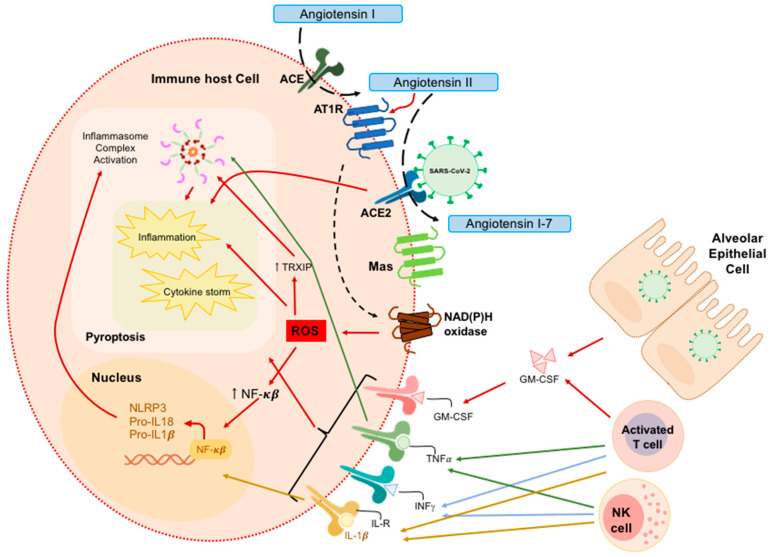
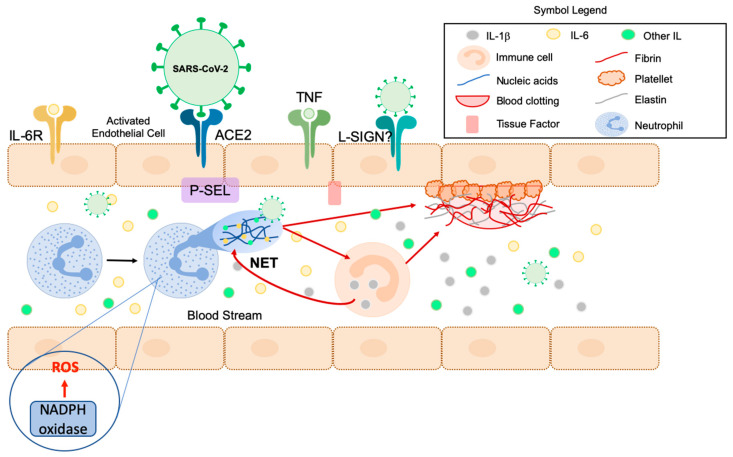
Since the severe acute respiratory syndrome coronavirus 2 (SARS-CoV-2) outbreak emerged, countless efforts are being made worldwide to understand the molecular mechanisms underlying the coronavirus disease 2019 (COVID-19) in an attempt to identify the specific clinical characteristics of critically ill COVID-19 patients involved in its pathogenesis and provide therapeutic alternatives to minimize COVID-19 severity. Recently, COVID-19 has been closely related to sepsis, which suggests that most deceases in intensive care units (ICU) may be a direct consequence of SARS-CoV-2 infection-induced sepsis. Understanding oxidative stress and the molecular inflammation mechanisms contributing to COVID-19 progression to severe phenotypes such as sepsis is a current clinical need in the effort to improve therapies in SARS-CoV-2 infected patients. This article aims to review the molecular pathogenesis of SARS-CoV-2 and its relationship with oxidative stress and inflammation, which can contribute to sepsis progression. We also provide an overview of potential antioxidant therapies and active clinical trials that might prevent disease progression or reduce its severity.
自严重急性呼吸综合征冠状病毒2(SARS-CoV-2)爆发以来,全球正在做出无数努力,以了解2019冠状病毒病(COVID-19)背后的分子机制,试图确定参与其发病机制的重症COVID-19患者的具体临床特征,并提供治疗选择,以尽量减轻COVID-19的严重程度。最近,COVID-19与脓毒症密切相关,这表明重症监护病房(ICU)中的大多数死亡可能是SARS-CoV-2感染引起的脓毒症的直接后果。了解导致COVID-19进展为脓毒症等严重表型的氧化应激和分子炎症机制是当前临床改善SARS-CoV-2感染患者治疗方法的需求。本文旨在综述SARS-CoV-2的分子发病机制及其与氧化应激和炎症的关系,这些因素可能导致脓毒症进展。我们还概述了可能预防疾病进展或减轻其严重程度的潜在抗氧化治疗方法和正在进行的临床试验。