B CUBE - Center for Molecular Bioengineering, Technische Universität Dresden, 01307, Dresden, Germany.
Department of Physics, University of California, Berkeley, CA, 94720, USA.
Adv Mater. 2021 Sep;33(37):e2101358. doi: 10.1002/adma.202101358. Epub 2021 Aug 1.
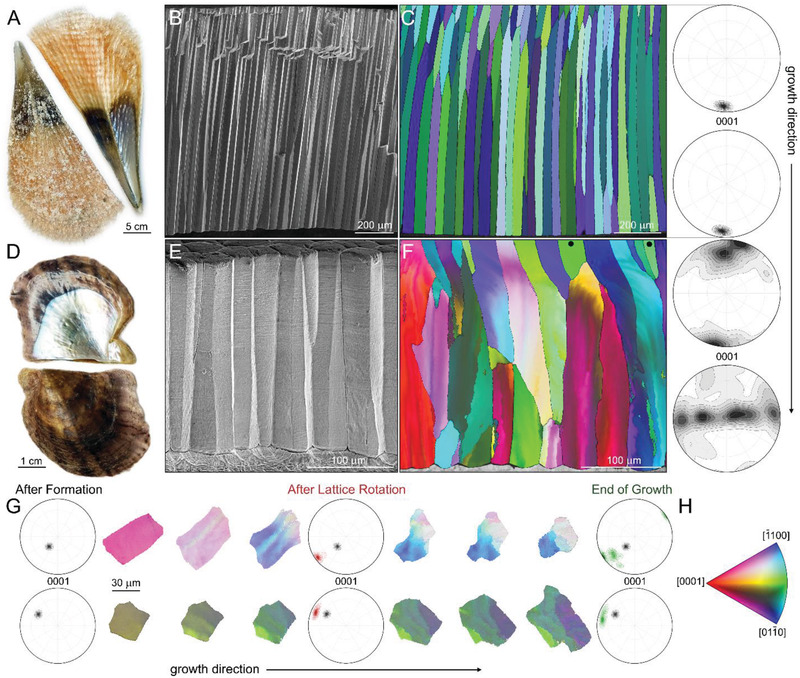
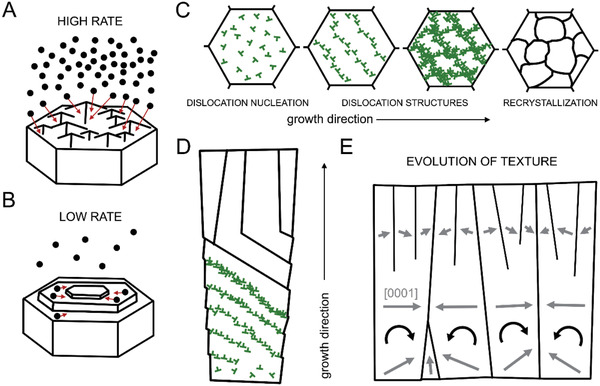
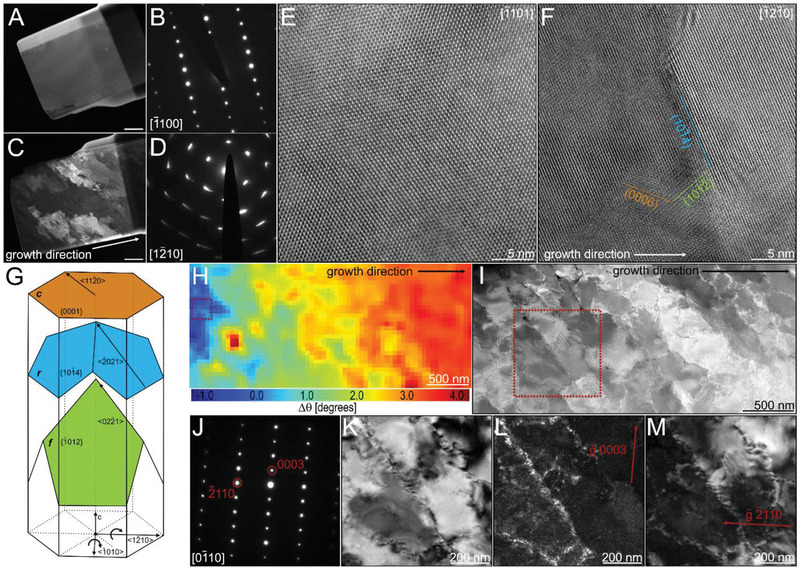
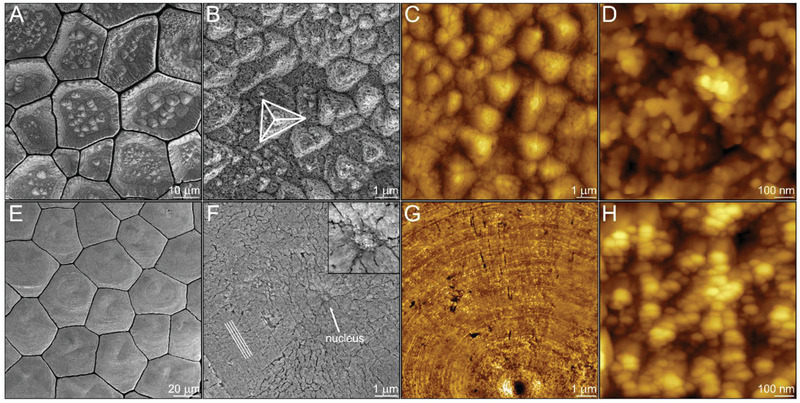
Crystallization by particle attachment (CPA) is a gradual process where each step has its own thermodynamic and kinetic constrains defining a unique pathway of crystal growth. An important example is biomineralization of calcium carbonate through amorphous precursors that are morphed into shapes and textural patterns that cannot be envisioned by the classical monomer-by-monomer approach. Here, a mechanistic link between the collective kinetics of mineral deposition and the emergence of crystallographic texture is established. Using the prismatic ultrastructure in bivalve shells as a model, a fundamental leap is made in the ability to analytically describe the evolution of form and texture of biological mineralized tissues and to design the structure and crystallographic properties of synthetic materials formed by CPA.
颗粒附着结晶(CPA)是一个渐进的过程,每个步骤都有其自身的热力学和动力学限制,定义了独特的晶体生长途径。一个重要的例子是通过无定形前体的碳酸钙生物矿化,这些前体转变成无法通过经典的单体-单体方法想象的形状和纹理模式。在这里,建立了矿物沉积的集体动力学与结晶纹理出现之间的机制联系。使用双壳类贝壳的棱柱形超微结构作为模型,在分析描述生物矿化组织的形态和纹理演变的能力方面取得了重大突破,并能够设计由 CPA 形成的合成材料的结构和结晶性质。