Key Laboratory of Environmental and Applied Microbiology, Environmental Microbiology Key Laboratory of Sichuan Province, Chengdu Institute of Biology, Chinese Academy of Science, Chengdu 610041, China.
College of Life Sciences, University of Chinese Academy of Sciences, Beijing 100049, China.
Biosci Rep. 2021 Aug 27;41(8). doi: 10.1042/BSR20211135.
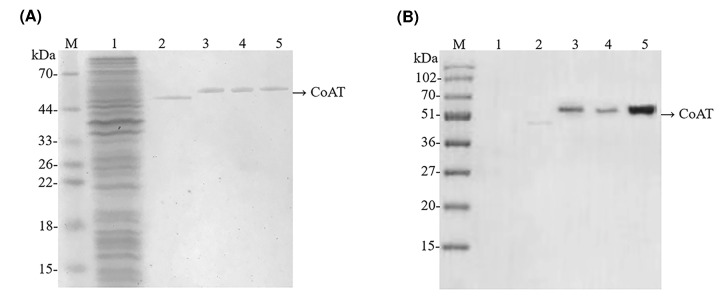
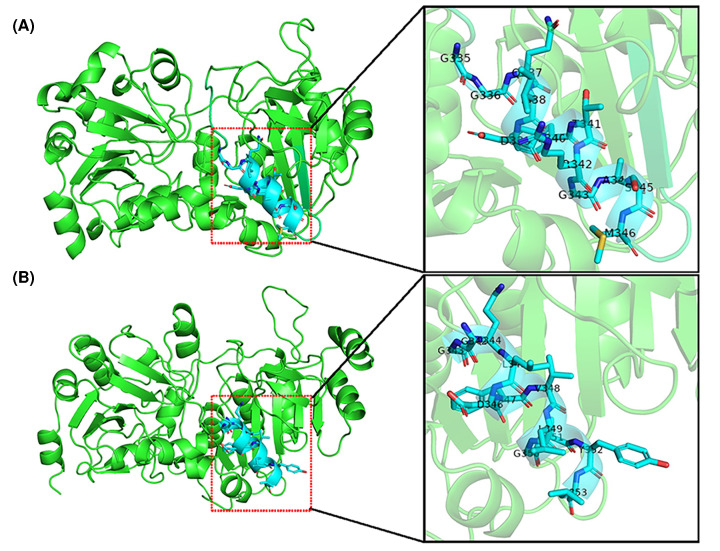
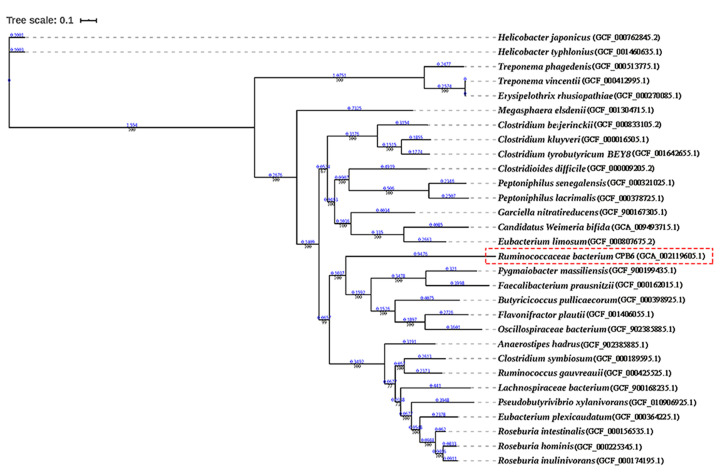
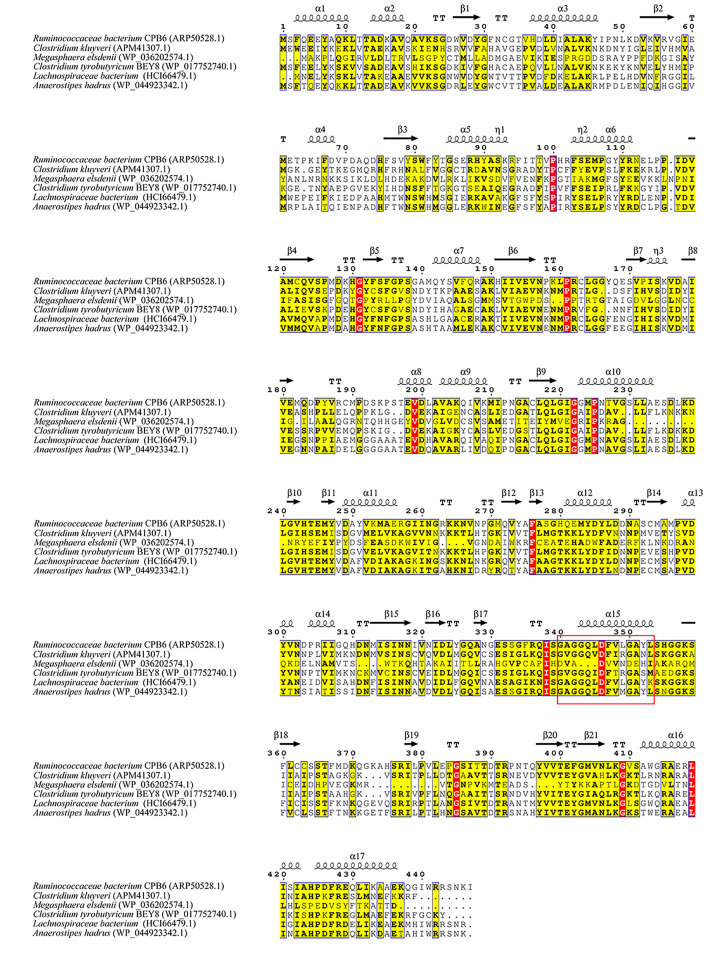
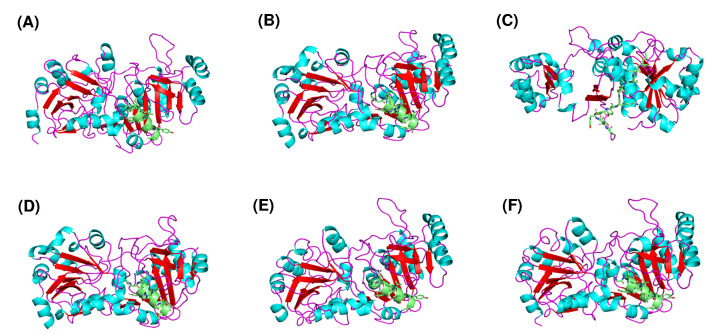
Coenzyme A transferases (CoATs) are important enzymes involved in carbon chain elongation, contributing to medium-chain fatty acid (MCFA) biosynthesis. For example, butyryl-CoA:acetate CoA transferase (BCoAT) is responsible for the final step of butyrate synthesis from butyryl-CoA. However, little is known about caproyl-CoA:acetate CoA-transferase (CCoAT), which is responsible for the final step of caproate synthesis from caproyl-CoA. In the present study, two CoAT genes from Ruminococcaceae bacterium CPB6 and Clostridium tyrobutyricum BEY8 were identified by gene cloning and expression analysis. Enzyme assays and kinetic studies were carried out using butyryl-CoA or caproyl-CoA as the substrate. CPB6-CoAT can catalyze the conversion of both butyryl-CoA into butyrate and caproyl-CoA into caproate, but its catalytic efficiency with caproyl-CoA as the substrate was 3.8-times higher than that with butyryl-CoA. In contrast, BEY8-CoAT had only BCoAT activity, not CCoAT activity. This demonstrated the existence of a specific CCoAT involved in chain elongation via the reverse β-oxidation pathway. Comparative bioinformatics analysis showed the presence of a highly conserved motif (GGQXDFXXGAXX) in CoATs, which is predicted to be the active center. Single point mutations in the conserved motif of CPB6-CoAT (Asp346 and Ala351) led to marked decreases in the activity for butyryl-CoA and caproyl-CoA, indicating that the conserved motif is the active center of CPB6-CoAT and that Asp346 and Ala351 have a significant impact on the enzymatic activity. This work provides insight into the function of CCoAT in caproic acid biosynthesis and improves understanding of the chain elongation pathway for MCFA production.
辅酶 A 转移酶(CoATs)是参与碳链延伸的重要酶,有助于中链脂肪酸(MCFA)的生物合成。例如,丁酰基辅酶 A:乙酸辅酶 A 转移酶(BCoAT)负责从丁酰基辅酶 A 合成丁酸的最后一步。然而,对于负责从己酰基辅酶 A 合成己酸的己酰基辅酶 A:乙酸辅酶 A 转移酶(CCoAT)知之甚少。在本研究中,通过基因克隆和表达分析,从瘤胃球菌科 CPB6 细菌和丁酸梭菌 BEY8 中鉴定出两种 CoAT 基因。使用丁酰基辅酶 A 或己酰基辅酶 A 作为底物进行酶测定和动力学研究。CPB6-CoAT 可以催化丁酰基辅酶 A 转化为丁酸和己酰基辅酶 A 转化为己酸,但以己酰基辅酶 A 为底物的催化效率比丁酰基辅酶 A 高 3.8 倍。相比之下,BEY8-CoAT 只有 BCoAT 活性,没有 CCoAT 活性。这表明存在一种特定的 CCoAT,通过反向β-氧化途径参与链延伸。比较生物信息学分析表明,CoATs 中存在一个高度保守的基序(GGQXDFXXGAXX),预测为活性中心。CPB6-CoAT 保守基序中的单点突变(Asp346 和 Ala351)导致对丁酰基辅酶 A 和己酰基辅酶 A 的活性显著降低,表明保守基序是 CPB6-CoAT 的活性中心,Asp346 和 Ala351 对酶活性有重大影响。这项工作深入了解了 CCoAT 在己酸生物合成中的功能,提高了对 MCFA 生产中链延伸途径的认识。