Department of Psychological and Brain Sciences, Dartmouth College, Hanover, NH, USA.
Department of Psychology, Glendon College, CVR York University, Toronto, ON, Canada.
J Vis. 2021 Aug 2;21(8):2. doi: 10.1167/jov.21.8.2.
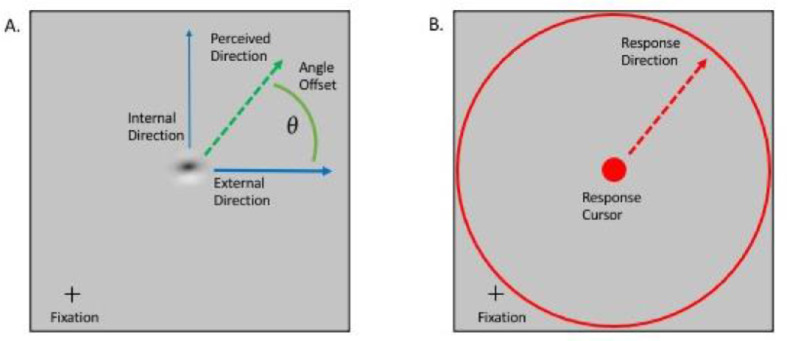
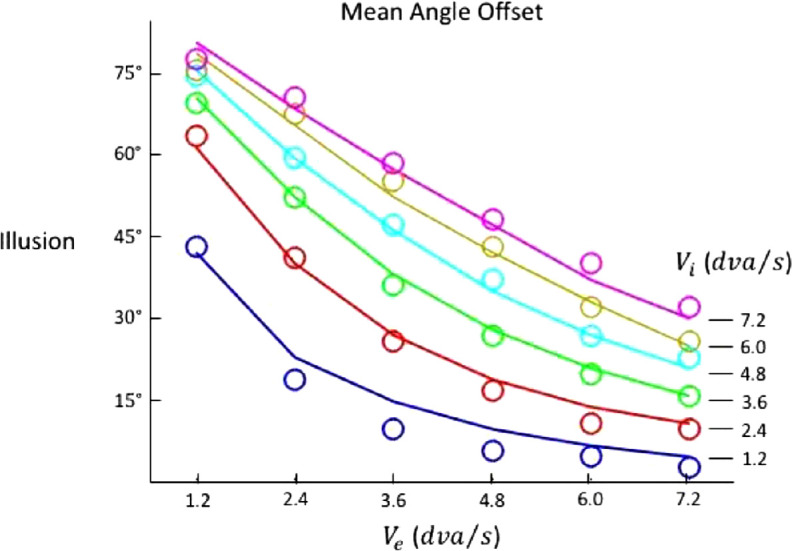
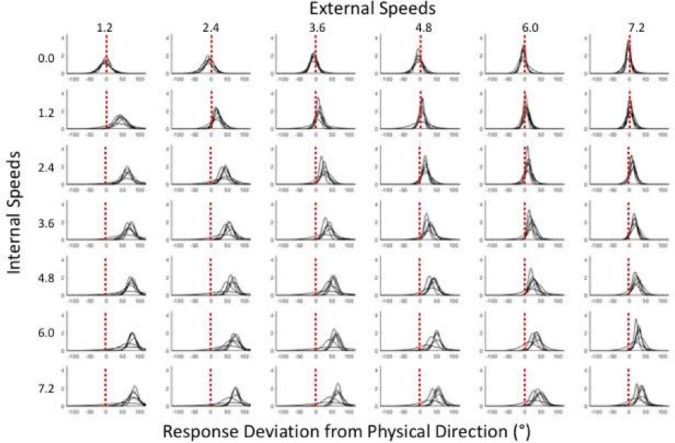
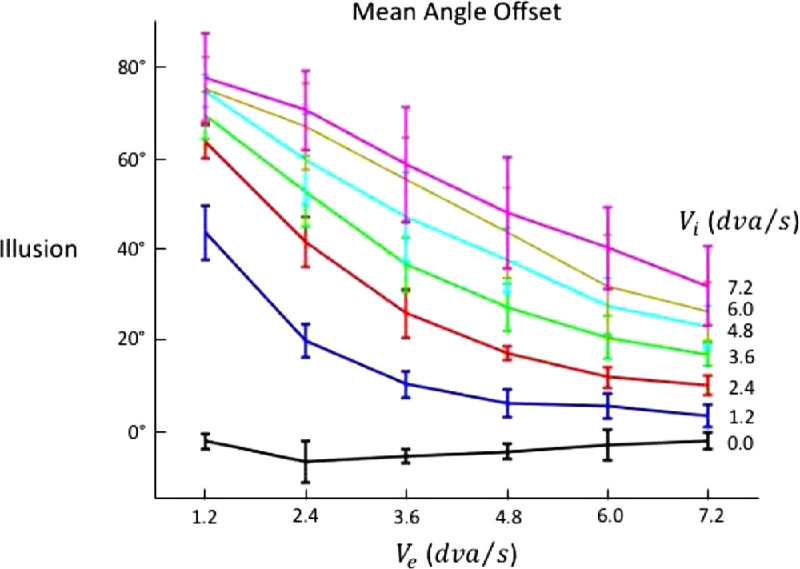
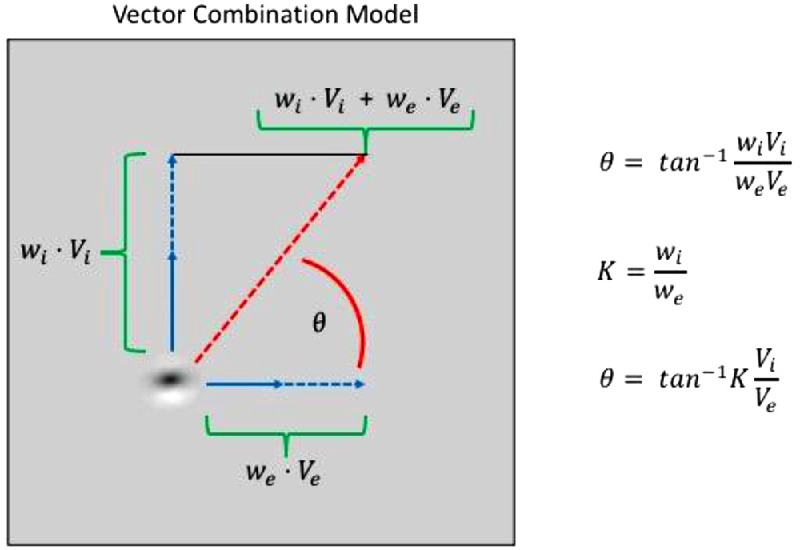
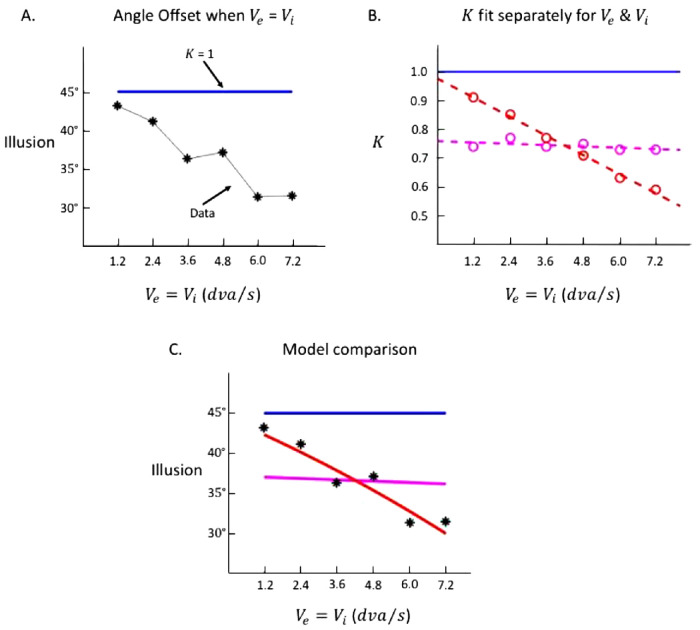
In the double-drift illusion, the combination of the internal and external motion vectors produces large misperceptions of both position and direction of motion. Here, we investigate the role that speed plays in determining how these two sources of motion are combined to produce the double-drift illusion. To address this question, we measure the size of the illusion at seven internal speeds combined with six external speeds. We find that the illusion increases with increasing internal speed and decreases with increasing external speed. We model this by combining the external and internal vectors to produce the resulting, illusory direction (Tse & Hsieh, 2006). The relative effect of the two vectors is specified by a constant K in this model and the data reveal that K decreases linearly as external speed increases. This critical role of external speed in modulating the vector combination uncovers new details about how the visual system combines different sources of motion information to produce a global motion percept.
在双重漂移错觉中,内部和外部运动向量的组合会导致位置和运动方向的大错觉。在这里,我们研究了速度在确定如何组合这两个运动源以产生双重漂移错觉中的作用。为了解决这个问题,我们测量了七种内部速度与六种外部速度相结合时错觉的大小。我们发现错觉随着内部速度的增加而增加,随着外部速度的增加而减小。我们通过将外部和内部向量结合起来产生最终的错觉方向来对其进行建模(Tse 和 Hsieh,2006)。在该模型中,两个向量的相对影响由常数 K 来指定,并且数据表明 K 随外部速度的增加呈线性下降。外部速度在调节向量组合中的这种关键作用揭示了视觉系统如何组合不同的运动信息来产生全局运动感知的新细节。