Department of Bioinformatics and Databases, Leibniz Institute DSMZ - German Collection of Microorganisms and Cell Cultures, Braunschweig, Germany.
Department of Vaccinology and Applied Microbiology, Helmholtz Centre for Infection Research, Braunschweig, Germany.
PLoS One. 2021 Aug 2;16(8):e0255622. doi: 10.1371/journal.pone.0255622. eCollection 2021.
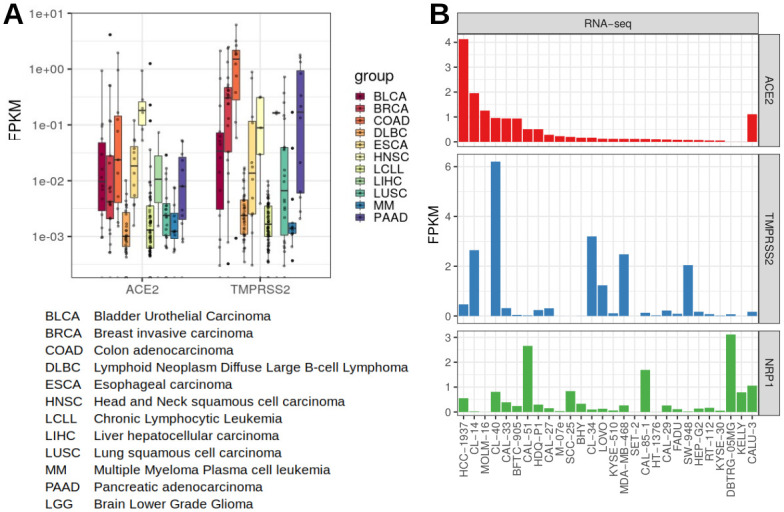
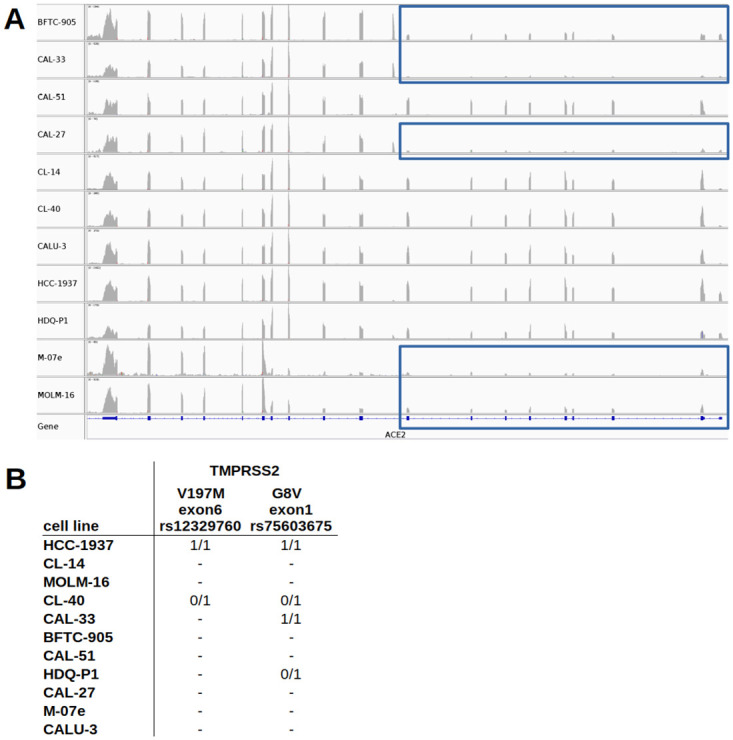
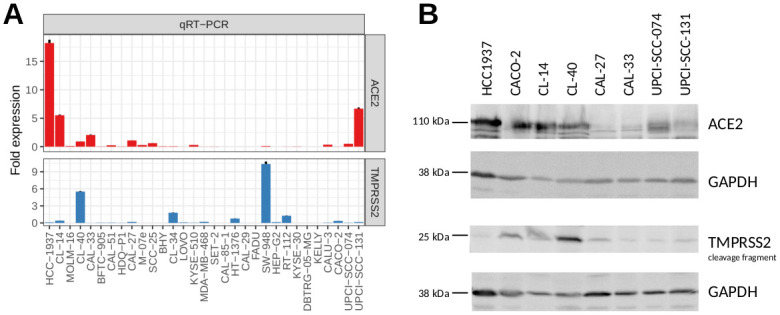
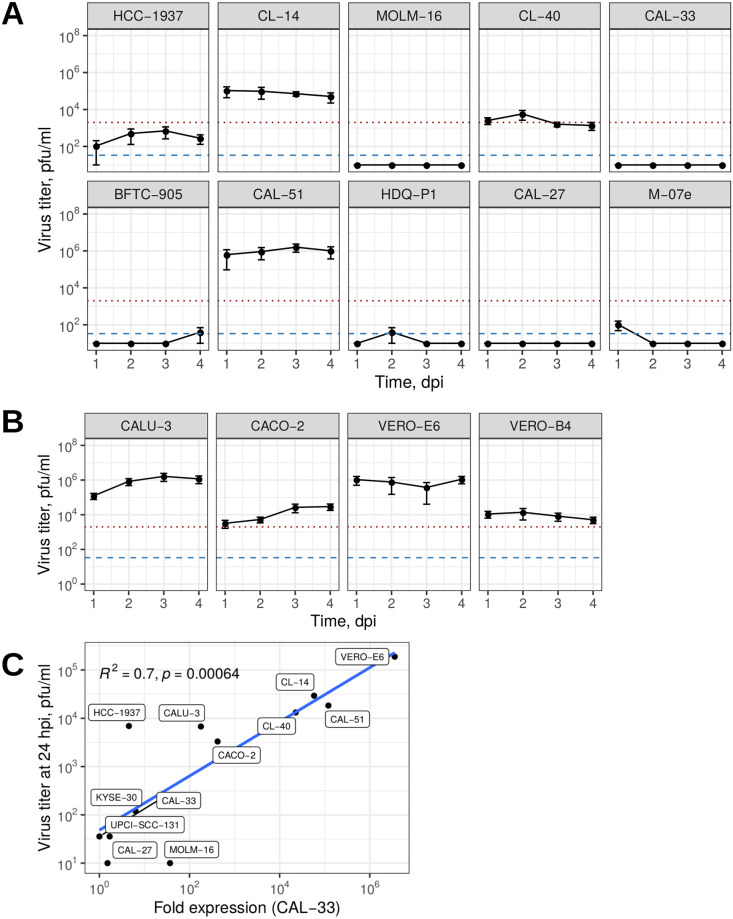
The SARS-CoV-2 pandemic is a major global threat that sparked global research efforts. Pre-clinical and biochemical SARS-CoV-2 studies firstly rely on cell culture experiments where the importance of choosing an appropriate cell culture model is often underestimated. We here present a bottom-up approach to identify suitable permissive cancer cell lines for drug screening and virus research. Human cancer cell lines were screened for the SARS-CoV-2 cellular entry factors ACE2 and TMPRSS2 based on RNA-seq data of the Cancer Cell Line Encyclopedia (CCLE). However, experimentally testing permissiveness towards SARS-CoV-2 infection, we found limited correlation between receptor expression and permissiveness. This underlines that permissiveness of cells towards viral infection is determined not only by the presence of entry receptors but is defined by the availability of cellular resources, intrinsic immunity, and apoptosis. Aside from established cell culture infection models CACO-2 and CALU-3, three highly permissive human cell lines, colon cancer cell lines CL-14 and CL-40 and the breast cancer cell line CAL-51 and several low permissive cell lines were identified. Cell lines were characterised in more detail offering a broader choice of non-overexpression in vitro infection models to the scientific community. For some cell lines a truncated ACE2 mRNA and missense variants in TMPRSS2 might hint at disturbed host susceptibility towards viral entry.
SARS-CoV-2 大流行是一项重大的全球威胁,引发了全球的研究努力。临床前和生化 SARS-CoV-2 研究首先依赖于细胞培养实验,而选择合适的细胞培养模型的重要性往往被低估。我们在这里采用自下而上的方法来确定适合药物筛选和病毒研究的许可癌细胞系。根据癌症细胞系百科全书 (CCLE) 的 RNA-seq 数据,基于人类癌细胞系对 SARS-CoV-2 细胞进入因子 ACE2 和 TMPRSS2 的表达,筛选出 SARS-CoV-2 的细胞进入因子 ACE2 和 TMPRSS2。然而,通过实验测试对 SARS-CoV-2 感染的易感性,我们发现受体表达与易感性之间的相关性有限。这表明细胞对病毒感染的易感性不仅取决于进入受体的存在,还取决于细胞资源的可用性、固有免疫和细胞凋亡。除了已建立的细胞培养感染模型 CACO-2 和 CALU-3 外,还鉴定了三种高度许可的人类细胞系,结肠癌细胞系 CL-14 和 CL-40 以及乳腺癌细胞系 CAL-51 和几种低许可细胞系。对细胞系进行了更详细的表征,为科学界提供了更广泛的非过表达体外感染模型选择。对于一些细胞系,ACE2 mRNA 的截断和 TMPRSS2 中的错义变体可能暗示宿主对病毒进入的易感性受到干扰。