Department of Chemistry-BMC, Science for Life Laboratory, Uppsala University, Box 599, 75124, Uppsala, Sweden.
Department for Digestive Diseases, Karolinska University Hospital, Stockholm, Sweden.
Angew Chem Int Ed Engl. 2021 Oct 18;60(43):23232-23240. doi: 10.1002/anie.202107101. Epub 2021 Sep 17.
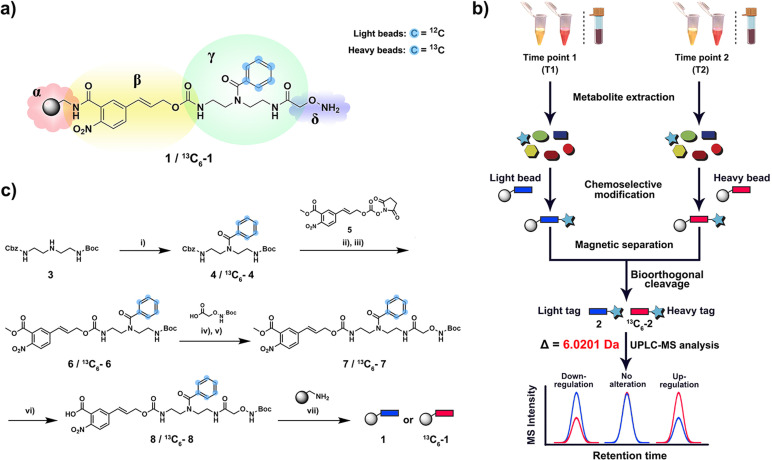
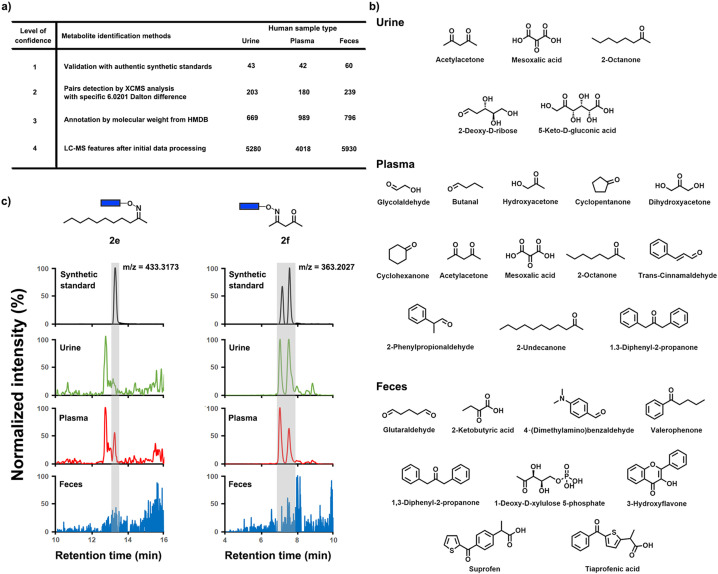
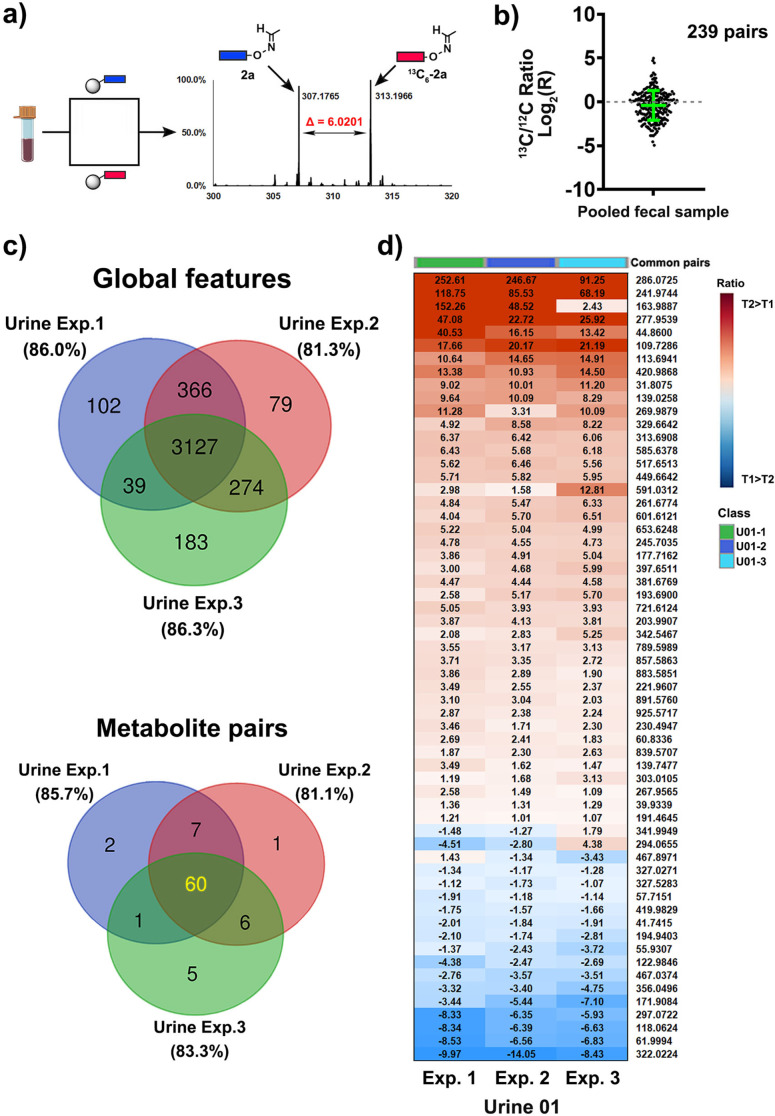
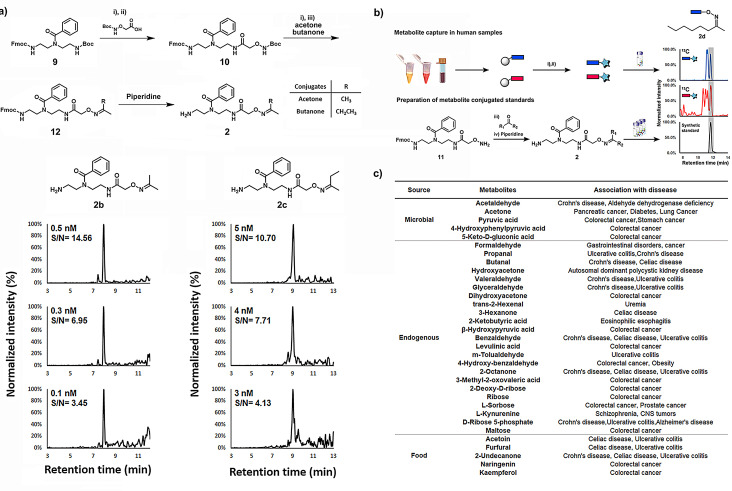
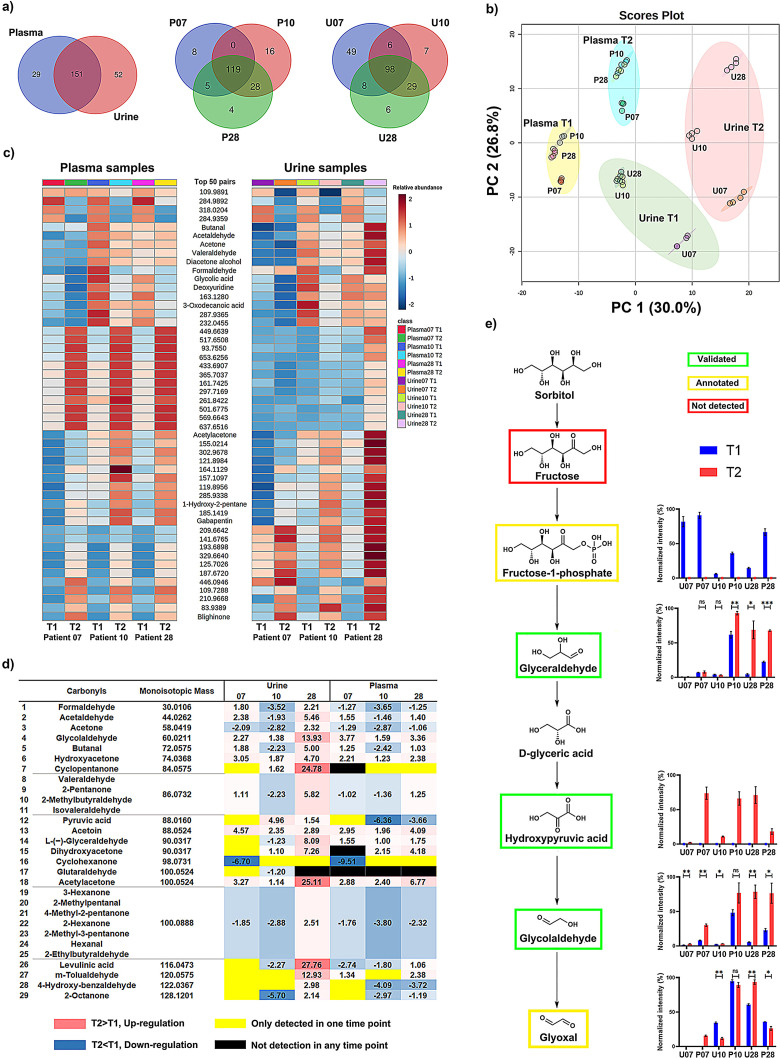
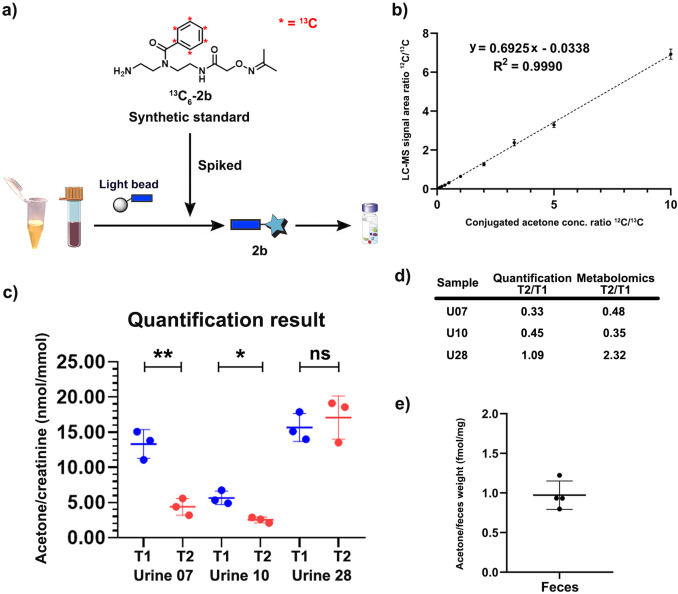
The microbiome has a fundamental impact on the human host's physiology through the production of highly reactive compounds that can lead to disease development. One class of such compounds are carbonyl-containing metabolites, which are involved in diverse biochemical processes. Mass spectrometry is the method of choice for analysis of metabolites but carbonyls are analytically challenging. Herein, we have developed a new chemical biology tool using chemoselective modification to overcome analytical limitations. Two isotopic probes allow for the simultaneous and semi-quantitative analysis at the femtomole level as well as qualitative analysis at attomole quantities that allows for detection of more than 200 metabolites in human fecal, urine and plasma samples. This comprehensive mass spectrometric analysis enhances the scope of metabolomics-driven biomarker discovery. We anticipate that our chemical biology tool will be of general use in metabolomics analysis to obtain a better understanding of microbial interactions with the human host and disease development.
微生物组通过产生高反应性化合物对人类宿主的生理学产生根本影响,这些化合物可能导致疾病的发展。此类化合物之一是含有羰基的代谢物,它们参与多种生化过程。质谱法是代谢物分析的首选方法,但羰基化合物具有分析挑战性。在此,我们开发了一种新的化学生物学工具,使用选择性化学修饰来克服分析限制。两种同位素探针可同时进行半定量分析,在飞摩尔水平以及对痕量物质的定性分析,可检测到 200 多种人粪便、尿液和血浆样本中的代谢物。这种全面的质谱分析增强了代谢组学驱动的生物标志物发现的范围。我们预计,我们的化学生物学工具将在代谢组学分析中具有普遍的用途,以更好地了解微生物与人类宿主的相互作用和疾病的发展。