• 文献检索
  • 文档翻译
  • 深度研究
  • 学术资讯
  • Suppr Zotero 插件Zotero 插件
  • 邀请有礼
  • 套餐&价格
  • 历史记录
应用&插件
Suppr Zotero 插件Zotero 插件浏览器插件Mac 客户端Windows 客户端微信小程序
定价
高级版会员购买积分包购买API积分包
服务
文献检索文档翻译深度研究API 文档MCP 服务
关于我们
关于 Suppr公司介绍联系我们用户协议隐私条款
关注我们

Suppr 超能文献

核心技术专利:CN118964589B侵权必究
粤ICP备2023148730 号-1Suppr @ 2026

文献检索

告别复杂PubMed语法,用中文像聊天一样搜索,搜遍4000万医学文献。AI智能推荐,让科研检索更轻松。

立即免费搜索

文件翻译

保留排版,准确专业,支持PDF/Word/PPT等文件格式,支持 12+语言互译。

免费翻译文档

深度研究

AI帮你快速写综述,25分钟生成高质量综述,智能提取关键信息,辅助科研写作。

立即免费体验

在印度的医院环境中,对低危阴道分娩后抗生素的使用进行合理化。

Rationalising antibiotic use after low-risk vaginal deliveries in a hospital setting in India.

机构信息

Obstetrics and Gynecology, Sitaram Bhartia Institute of Science and Research, New Delhi, Delhi, India.

Quality, Sitaram Bhartia Institute of Science and Research, New Delhi, Delhi, India.

出版信息

BMJ Open Qual. 2021 Jul;10(Suppl 1). doi: 10.1136/bmjoq-2021-001413.

DOI:10.1136/bmjoq-2021-001413
PMID:34344734
原文链接:https://pmc.ncbi.nlm.nih.gov/articles/PMC8336128/
Abstract

BACKGROUND

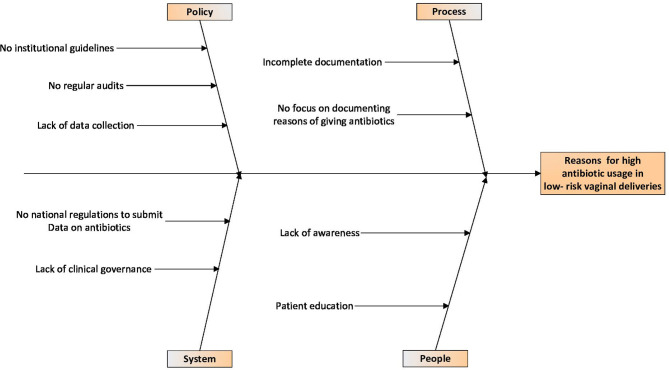
In 2017, a postoperative multidrug resistant case of urinary tract infection made obstetricians at Sitaram Bhartia Institute of Science and Research introspect the antibiotic usage in labouring mothers. Random case file reviews indicated overuse and variability of practice among care providers. This prompted us to explore ways to rationalise antibiotic use.

METHODS

A multidisciplinary team of obstetricians, paediatricians and quality officers was formed to run this improvement initiative at a private hospital facility in India. Review of literature advocated formulating a departmental antibiotic policy. Creating this policy and implementing it using improvement methodology helped us rationalise antibiotic usage.

INTERVENTIONS

We aimed to reduce the use of antibiotics from 42% to less than 10% in uncomplicated vaginal deliveries. We tested a series of sequential interventions using the improvement methodology of Plan-Do-Study-Act (PDSA) cycles, an approach recommended by the Institute for Healthcare Improvement. Learning from the PDSA cycle of the previous intervention helped decide the subsequent change ideas. The interventions included creation of a departmental antibiotic policy, staff engagement, and modification in documentation, concept of dual responsibility and team huddles as feedback opportunities. Information was analysed to understand the progress and improvement with change ideas.

RESULTS

Background analysis revealed that antibiotic usage ranged from 24% to 69% and average rate of antibiotic prophylaxis was high (42.28%) in low-risk uncomplicated vaginal deliveries. The sequential changes resulted in reduction in antibiotic usage to 10% in the target population by 4 months. Sustained improvement was noted in the following months.

CONCLUSION

We succeeded in implementing a departmental antibiotic policy aligning it with existing international guidelines and our local challenges. Antibiotic stewardship was one of the first major steps in our journey to avoid multidrug-resistant infections. Sustaining outcomes will involve continuous feedback to ensure engagement of all stakeholders in a hospital setting.

摘要

背景

2017 年,斯瑞曼·巴蒂亚研究所的妇产科医生对一例术后多重耐药的尿路感染病例进行了反思,认为在产妇分娩过程中抗生素的使用存在问题。随机病历审查显示,医护人员的实践存在过度使用和差异。这促使我们探索合理使用抗生素的方法。

方法

在印度的一家私立医院设施中,一个由妇产科医生、儿科医生和质量官员组成的多学科团队成立,负责开展这项改进计划。文献回顾主张制定部门抗生素政策。制定和实施该政策,采用改进方法,帮助我们合理使用抗生素。

干预措施

我们的目标是将复杂的阴道分娩中抗生素的使用从 42%减少到 10%以下。我们使用改进方法的计划-执行-研究-行动(PDSA)循环测试了一系列连续干预措施,该方法是由医疗保健改进研究所推荐的。从之前干预的 PDSA 循环中学习有助于决定后续的变更思路。这些干预措施包括制定部门抗生素政策、员工参与、修改文件、双重责任和团队会议的概念,作为反馈机会。通过分析信息了解进展和改进情况。

结果

背景分析显示,抗生素的使用范围从 24%到 69%不等,低风险的简单阴道分娩中抗生素预防的平均使用率很高(42.28%)。通过连续的变化,在 4 个月内将目标人群中的抗生素使用率降低到 10%。在接下来的几个月中,我们注意到持续的改进。

结论

我们成功地实施了一项部门抗生素政策,使其与现有的国际指南和我们当地的挑战保持一致。抗生素管理是我们避免多重耐药感染的旅程中的第一步。维持成果将涉及持续反馈,以确保医院环境中所有利益相关者的参与。
https://cdn.ncbi.nlm.nih.gov/pmc/blobs/b79d/8336128/5b176ac444e4/bmjoq-2021-001413f01.jpg

相似文献

1
Rationalising antibiotic use after low-risk vaginal deliveries in a hospital setting in India.在印度的医院环境中,对低危阴道分娩后抗生素的使用进行合理化。
BMJ Open Qual. 2021 Jul;10(Suppl 1). doi: 10.1136/bmjoq-2021-001413.
2
Implementing a triage tool to improve appropriateness of care for children coming to the emergency department in a small hospital in India.在印度一家小医院实施分诊工具,以提高来急诊科就诊的儿童的护理适宜性。
BMJ Open Qual. 2020 Oct;9(4). doi: 10.1136/bmjoq-2020-000935.
3
Rational use of antibiotics for major elective gynaecological and obstetrical surgical procedures: quality improvement journey from a tertiary care public facility.主要妇科和产科择期手术中抗生素的合理使用:来自三级保健公立机构的质量改进之旅。
BMJ Open Qual. 2022 May;11(Suppl 1). doi: 10.1136/bmjoq-2021-001438.
4
Antibiotic stewardship in a tertiary care NICU of northern India: a quality improvement initiative.印度北部一家三级新生儿重症监护病房的抗生素管理:一项质量改进计划。
BMJ Open Qual. 2021 Jul;10(Suppl 1). doi: 10.1136/bmjoq-2021-001470.
5
Institution of an antibiotic stewardship programme for rationalising antibiotic usage: a quality improvement project in the NICU of a public teaching hospital in rural central India.在农村中心地带的一家公立教学医院的 NICU 中实施抗生素管理计划以实现抗生素使用合理化:一项质量改进项目。
BMJ Open Qual. 2021 Jul;10(Suppl 1). doi: 10.1136/bmjoq-2021-001456.
6
The future of Cochrane Neonatal.考克兰新生儿协作网的未来。
Early Hum Dev. 2020 Nov;150:105191. doi: 10.1016/j.earlhumdev.2020.105191. Epub 2020 Sep 12.
7
Operationalising outpatient antimicrobial stewardship to reduce system-wide antibiotics for acute bronchitis.实施门急诊抗菌药物管理以减少急性支气管炎的系统抗生素用药。
BMJ Open Qual. 2021 Jul;10(3). doi: 10.1136/bmjoq-2020-001275.
8
Quality improvement initiative approach to decrease the unindicated usage of antibiotics in a neonatal intensive care unit of a tertiary care teaching hospital in Hyderabad, India.印度海得拉巴一家三级教学医院新生儿重症监护病房降低抗生素不指征使用的质量改进计划方法。
BMJ Open Qual. 2021 Jul;10(Suppl 1). doi: 10.1136/bmjoq-2021-001474.
9
Quality improvement initiative: improving obstetric triaging practices in a rural maternal hospital in central India.质量改进倡议:改善印度中部农村产妇医院的产科分诊实践。
BMJ Open Qual. 2024 May 7;13(Suppl 1):e001870. doi: 10.1136/bmjoq-2022-001870.
10
Establishing the practice of birth companion in labour ward of a tertiary care centre in India-a quality improvement initiative.在印度一家三级保健中心的产房实施分娩陪伴实践——一项质量改进举措。
BMJ Open Qual. 2021 Jul;10(Suppl 1). doi: 10.1136/bmjoq-2021-001409.

引用本文的文献

1
A systematic review of Perinatal Antibiotic Stewardship - where we are, where to go?围产期抗生素管理的系统评价——我们所处的位置,去向何方?
J Perinatol. 2025 Jan 20. doi: 10.1038/s41372-025-02209-0.
2
Overuse of medications in low- and middle-income countries: a scoping review.中低收入国家药物的过度使用:范围综述。
Bull World Health Organ. 2023 Jan 1;101(1):36-61D. doi: 10.2471/BLT.22.288293. Epub 2022 Oct 31.
3
Antibiotic Prescribing in Connection to Childbirth: An Observational Study in Two Districts in Lao PDR.与分娩相关的抗生素处方:老挝人民民主共和国两个地区的一项观察性研究。

本文引用的文献

1
Antibiotic Use Without Indication During Delivery Hospitalizations in the United States.美国分娩住院期间无指征使用抗生素。
Obstet Gynecol. 2019 Oct;134(4):718-725. doi: 10.1097/AOG.0000000000003485.
2
Prophylactic antibiotics in the prevention of infection after operative vaginal delivery (ANODE): a multicentre randomised controlled trial.剖宫产术后预防感染的预防性抗生素(ANODE):一项多中心随机对照试验。
Lancet. 2019 Jun 15;393(10189):2395-2403. doi: 10.1016/S0140-6736(19)30773-1. Epub 2019 May 13.
3
ACOG Practice Bulletin No. 199: Use of Prophylactic Antibiotics in Labor and Delivery.
Antibiotics (Basel). 2022 Mar 25;11(4):448. doi: 10.3390/antibiotics11040448.
ACOG 实践公告第 199 号:分娩和分娩中预防性使用抗生素。
Obstet Gynecol. 2018 Sep;132(3):e103-e119. doi: 10.1097/AOG.0000000000002833.
4
A Randomized, Open-labelled, Interventional Study to Evaluate the Incidence of Infection with or Without Use of Prophylactic Antibiotics in Patients of Episiotomy in a Normal Vaginal Delivery.一项随机、开放标签、干预性研究,旨在评估正常阴道分娩中行会阴切开术的患者使用或不使用预防性抗生素时的感染发生率。
J Obstet Gynaecol India. 2018 Aug;68(4):294-299. doi: 10.1007/s13224-017-1041-0. Epub 2017 Aug 11.
5
Routine antibiotic prophylaxis after normal vaginal birth for reducing maternal infectious morbidity.正常阴道分娩后进行常规抗生素预防以降低产妇感染发病率。
Cochrane Database Syst Rev. 2017 Nov 13;11(11):CD012137. doi: 10.1002/14651858.CD012137.pub2.
6
Implementation and outcomes of an antimicrobial stewardship program: Effectiveness of education.抗菌药物管理计划的实施和结果:教育的效果。
J Chin Med Assoc. 2017 Jun;80(6):353-359. doi: 10.1016/j.jcma.2016.09.012. Epub 2017 Apr 12.
7
India draws a red line under antibiotic misuse.印度对抗生素滥用划出红线。
BMJ. 2016 Feb 29;352:i1202. doi: 10.1136/bmj.i1202.
8
Antibiotic resistance: what, why, where, when and how?抗生素耐药性:是什么、为什么、在哪里、何时以及如何?
Br Med Bull. 2015;116:105-13. doi: 10.1093/bmb/ldv041. Epub 2015 Oct 21.
9
Antibiotic prescribing in women during and after delivery in a non-teaching, tertiary care hospital in Ujjain, India: a prospective cross-sectional study.印度乌贾因一家非教学型三级医院中产妇分娩期间及产后的抗生素处方情况:一项前瞻性横断面研究。
J Pharm Policy Pract. 2013 Nov 4;6:9. doi: 10.1186/2052-3211-6-9. eCollection 2013.
10
Run charts revisited: a simulation study of run chart rules for detection of non-random variation in health care processes.重温控制图:一项关于用于检测医疗保健过程中非随机变异的控制图规则的模拟研究。
PLoS One. 2014 Nov 25;9(11):e113825. doi: 10.1371/journal.pone.0113825. eCollection 2014.