Faculty of Health and Medical Sciences, School of Biosciences and Medicine, University of Surreygrid.5475.3, Guildford, United Kingdom.
Division of Virology, Department of Pathology, Addenbrooke's Hospital, University of Cambridgegrid.5335.0, Cambridge, United Kingdom.
J Virol. 2021 Sep 27;95(20):e0113421. doi: 10.1128/JVI.01134-21. Epub 2021 Aug 4.
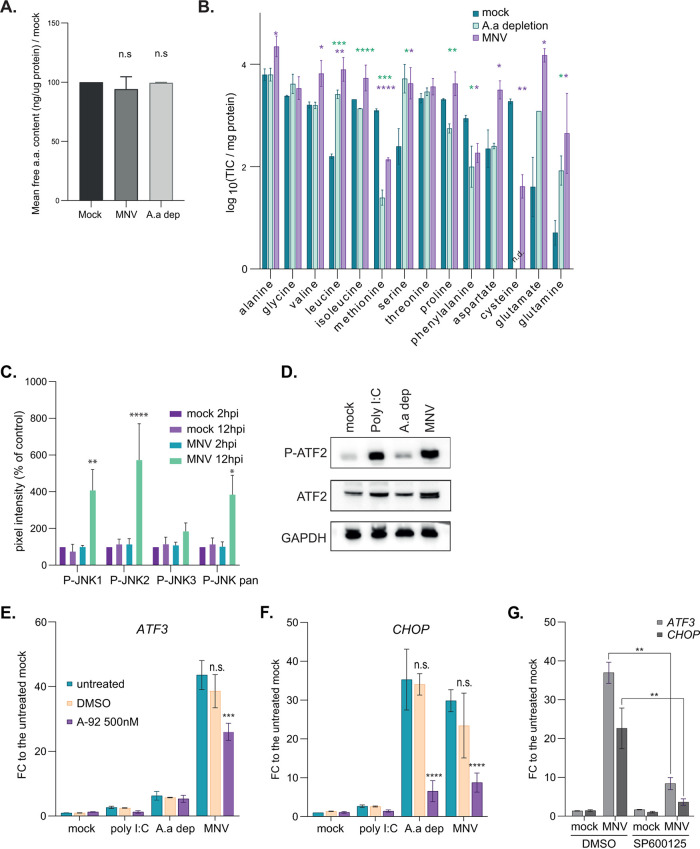
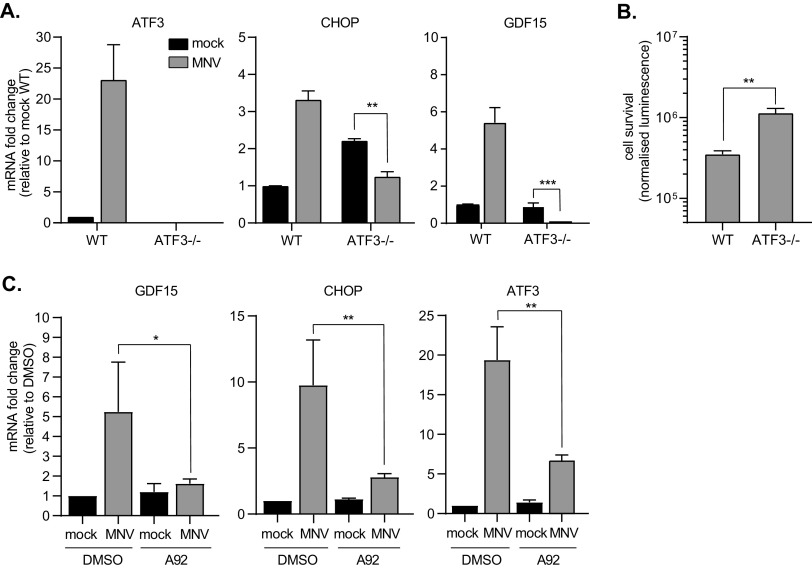
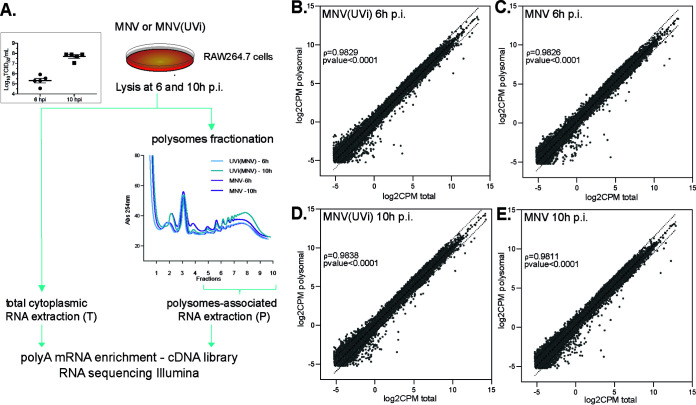
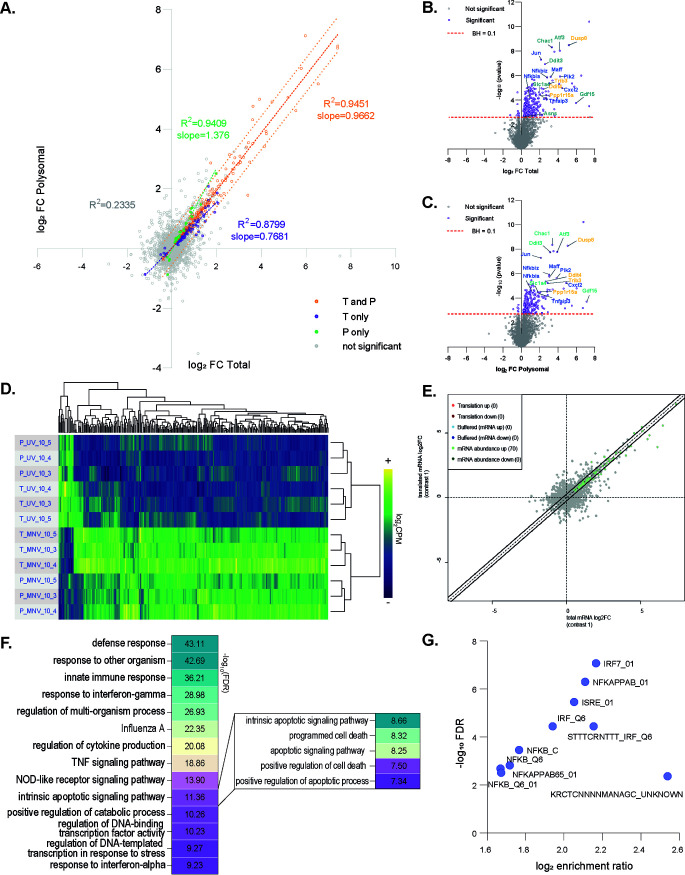
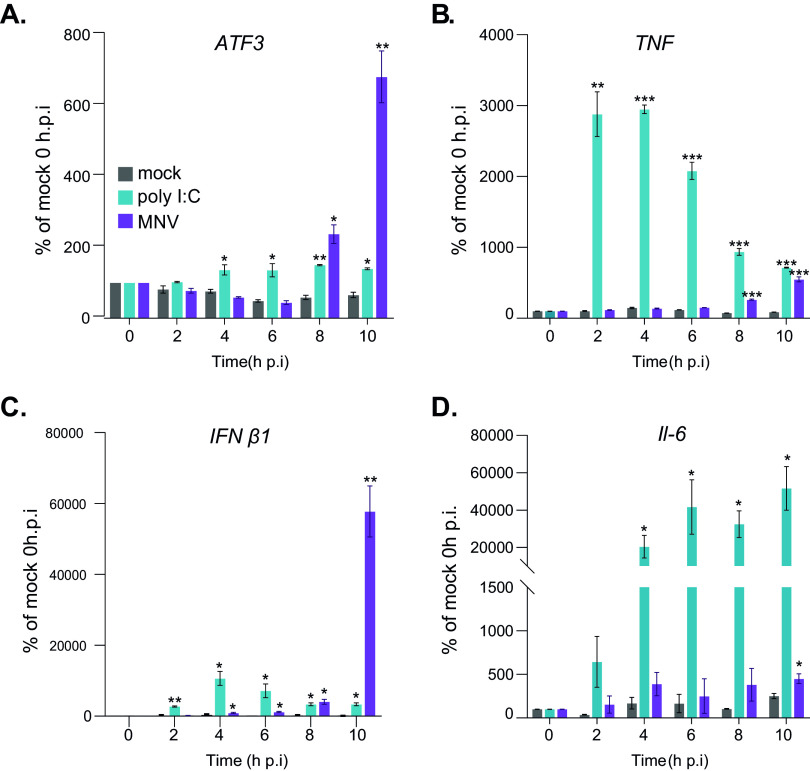
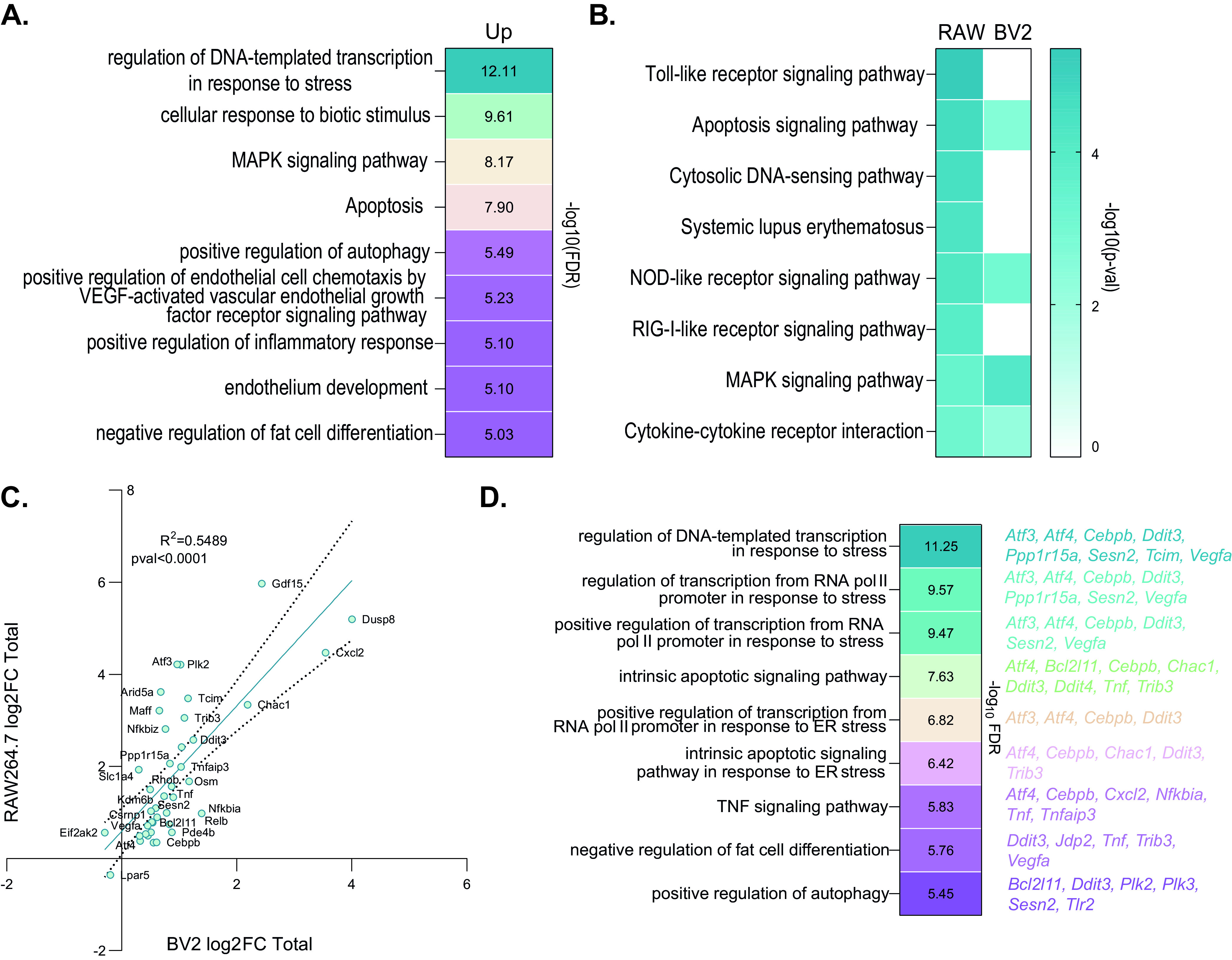
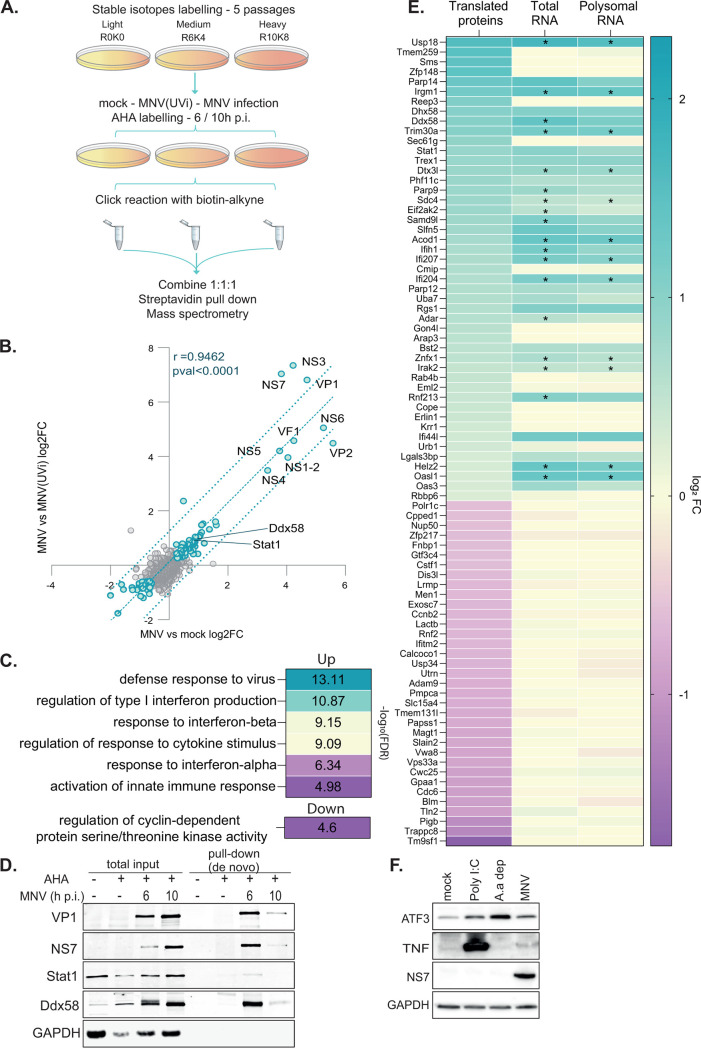
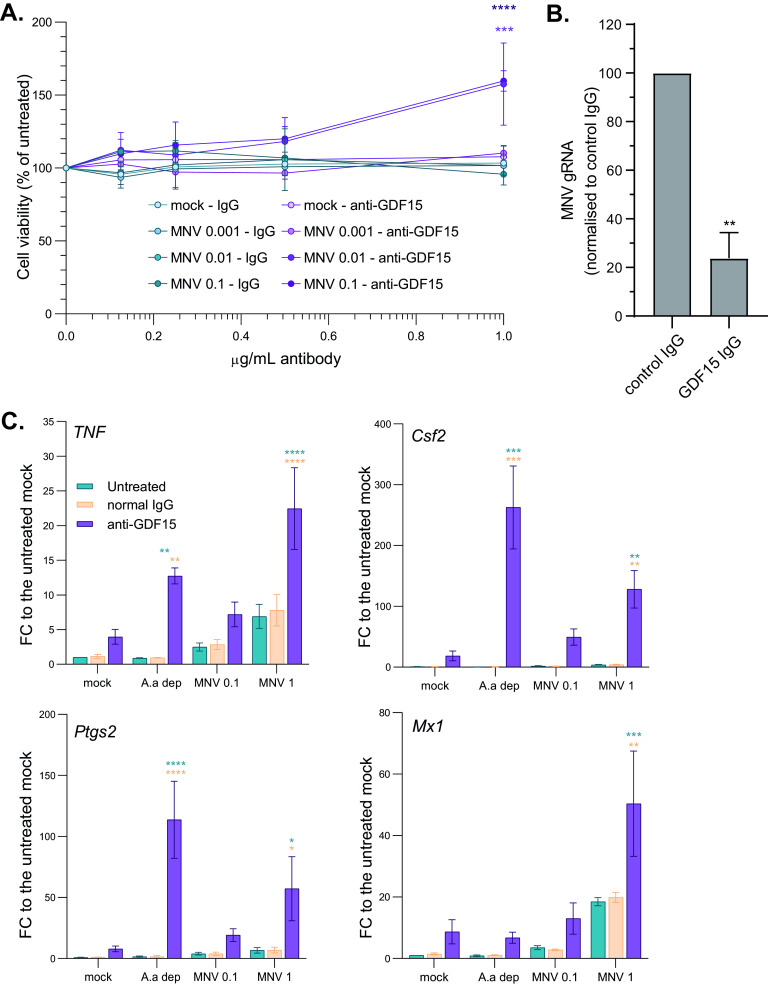
Murine norovirus (MNV) infection results in a late translation shutoff that is proposed to contribute to the attenuated and delayed innate immune response observed both and Recently, we further demonstrated the activation of the α subunit of eukaryotic initiation factor 2 (eIF2α) kinase GCN2 during MNV infection, which has been previously linked to immunomodulation and resistance to inflammatory signaling during metabolic stress. While viral infection is usually associated with activation of double-stranded RNA (dsRNA) binding pattern recognition receptor PKR, we hypothesized that the establishment of a metabolic stress in infected cells is a proviral event, exploited by MNV to promote replication through weakening the activation of the innate immune response. In this study, we used multi-omics approaches to characterize cellular responses during MNV replication. We demonstrate the activation of pathways related to the integrated stress response, a known driver of anti-inflammatory phenotypes in macrophages. In particular, MNV infection causes an amino acid imbalance that is associated with GCN2 and ATF2 signaling. Importantly, this reprogramming lacks the features of a typical innate immune response, with the ATF/CHOP target GDF15 contributing to the lack of antiviral responses. We propose that MNV-induced metabolic stress supports the establishment of host tolerance to viral replication and propagation. During viral infection, host defenses are typically characterized by the secretion of proinflammatory autocrine and paracrine cytokines, potentiation of the interferon (IFN) response, and induction of the antiviral response via activation of JAK and Stat signaling. To avoid these and propagate, viruses have evolved strategies to evade or counteract host sensing. In this study, we demonstrate that murine norovirus controls the antiviral response by activating a metabolic stress response that activates the amino acid response and impairs inflammatory signaling. This highlights novel tools in the viral countermeasures arsenal and demonstrates the importance of the currently poorly understood metabolic reprogramming occurring during viral infections.
鼠诺如病毒(MNV)感染会导致晚期翻译关闭,据推测这有助于减轻和延迟观察到的先天免疫反应,无论是在 还是 在最近,我们进一步证明了在 MNV 感染过程中真核起始因子 2(eIF2α)激酶 GCN2 的α亚基被激活,该激酶先前与代谢应激期间的免疫调节和对炎症信号的抵抗有关。虽然病毒感染通常与双链 RNA(dsRNA)结合模式识别受体 PKR 的激活有关,但我们假设感染细胞中建立代谢应激是一种促进病毒复制的有利事件,MNV 通过削弱先天免疫反应的激活来利用这种应激促进复制。在这项研究中,我们使用多组学方法来描述 MNV 复制过程中的细胞反应。我们证明了与整合应激反应相关的途径的激活,这是巨噬细胞中抗炎表型的已知驱动因素。特别是,MNV 感染会导致氨基酸失衡,与 GCN2 和 ATF2 信号有关。重要的是,这种重编程缺乏典型的先天免疫反应的特征,ATF/CHOP 靶标 GDF15 有助于缺乏抗病毒反应。我们提出,MNV 诱导的代谢应激支持宿主对病毒复制和传播的耐受性的建立。在病毒感染期间,宿主防御通常表现为促炎自分泌和旁分泌细胞因子的分泌、干扰素(IFN)反应的增强以及通过 JAK 和 Stat 信号的激活诱导抗病毒反应。为了避免这些并进行传播,病毒已经进化出逃避或对抗宿主感知的策略。在这项研究中,我们证明鼠诺如病毒通过激活代谢应激反应来控制抗病毒反应,该反应激活氨基酸反应并损害炎症信号。这突出了病毒对策库中的新工具,并证明了在病毒感染期间发生的目前了解甚少的代谢重编程的重要性。