Inflammation and Innate Immunity Unit, Laboratory of Clinical Immunology and Microbiology, National Institute of Allergy and Infectious Diseases, National Institutes of Health, Bethesda, MD.
Department of Scientific Research, Shanghai Public Health Clinical Center, Fudan University, Shanghai, China.
J Exp Med. 2021 Oct 4;218(10). doi: 10.1084/jem.20210469. Epub 2021 Aug 4.
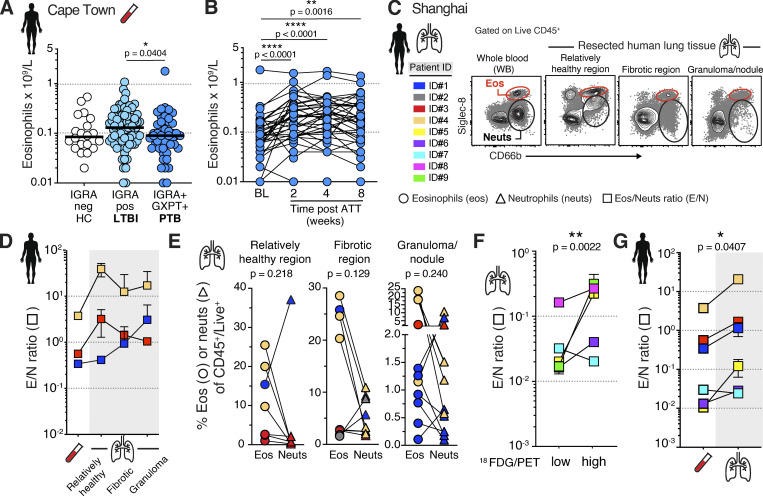
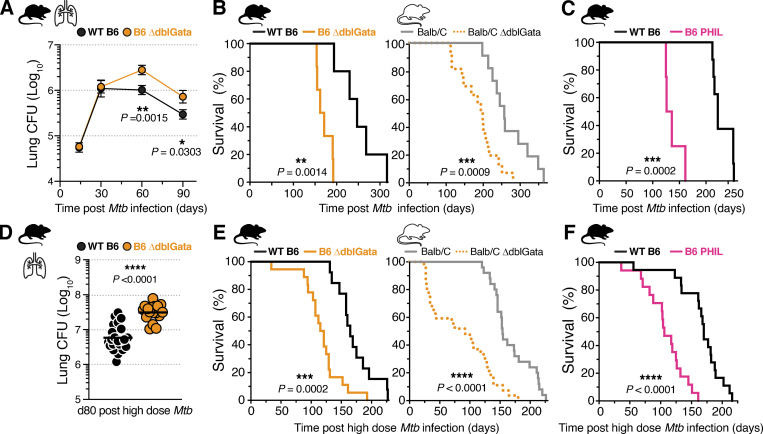
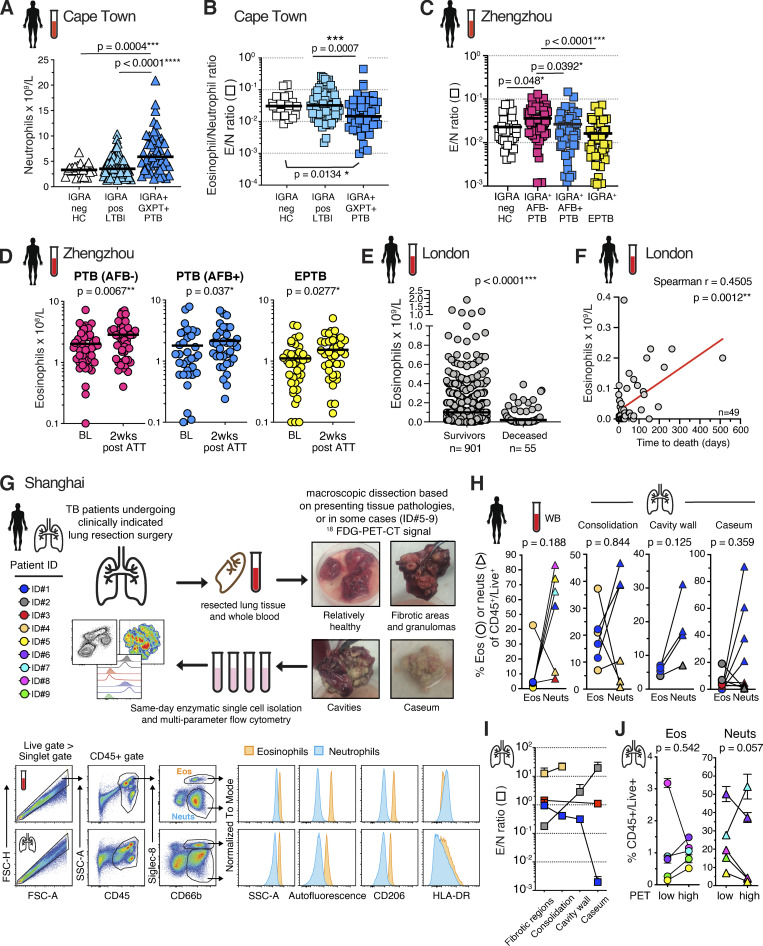
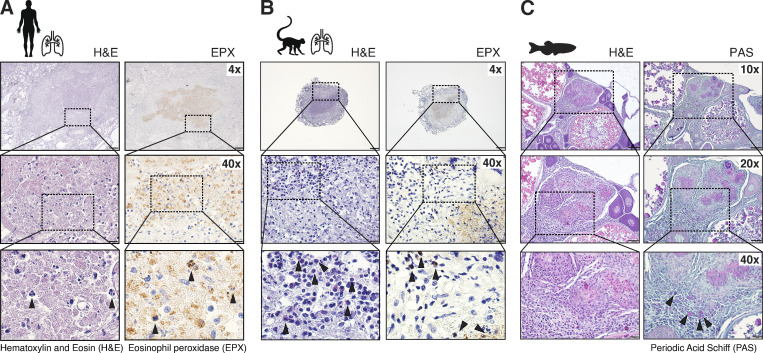
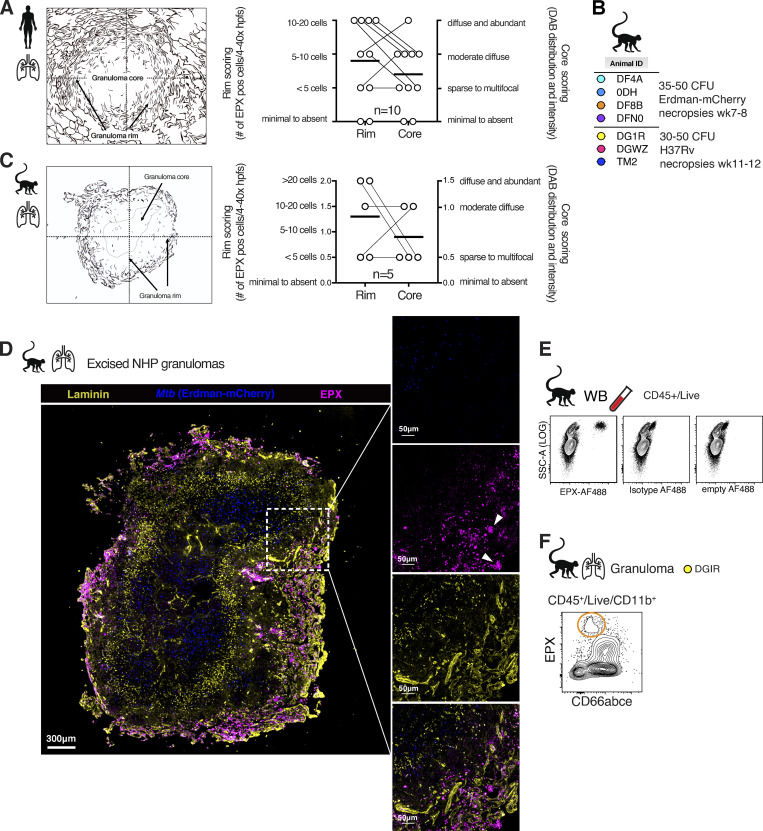
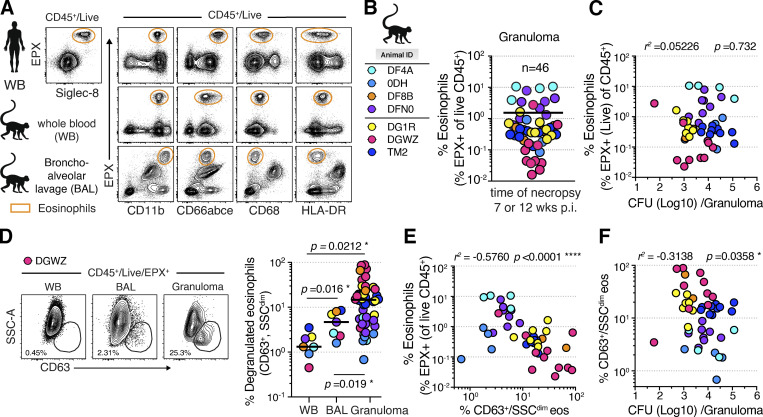
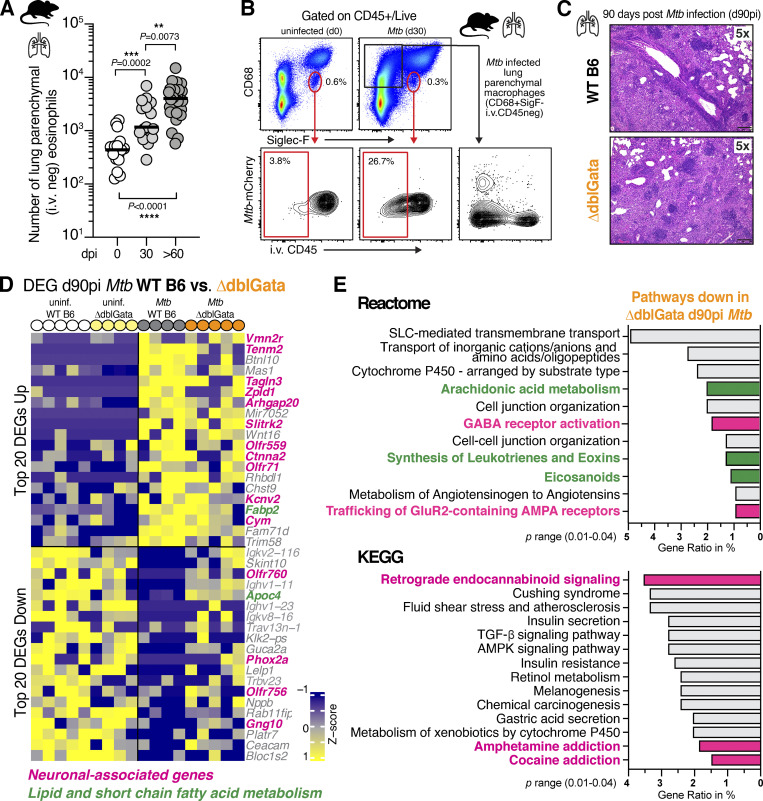
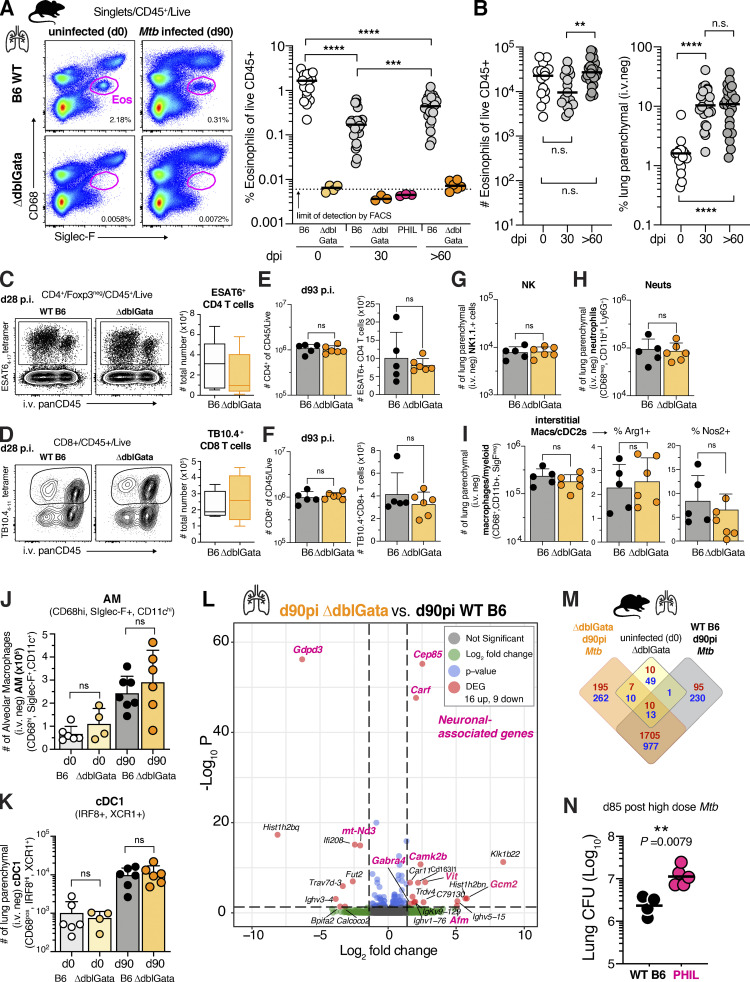
Host resistance to Mycobacterium tuberculosis (Mtb) infection requires the activities of multiple leukocyte subsets, yet the roles of the different innate effector cells during tuberculosis are incompletely understood. Here we uncover an unexpected association between eosinophils and Mtb infection. In humans, eosinophils are decreased in the blood but enriched in resected human tuberculosis lung lesions and autopsy granulomas. An influx of eosinophils is also evident in infected zebrafish, mice, and nonhuman primate granulomas, where they are functionally activated and degranulate. Importantly, using complementary genetic models of eosinophil deficiency, we demonstrate that in mice, eosinophils are required for optimal pulmonary bacterial control and host survival after Mtb infection. Collectively, our findings uncover an unexpected recruitment of eosinophils to the infected lung tissue and a protective role for these cells in the control of Mtb infection in mice.
宿主对结核分枝杆菌(Mtb)感染的抵抗力需要多种白细胞亚群的活性,但在结核病中不同先天效应细胞的作用尚不完全清楚。在这里,我们揭示了嗜酸性粒细胞与 Mtb 感染之间的意外关联。在人类中,嗜酸性粒细胞在血液中减少,但在切除的人类肺结核病变和尸检肉芽肿中富集。在感染的斑马鱼、小鼠和非人灵长类动物的肉芽肿中也可以明显观察到嗜酸性粒细胞的涌入,在这些动物中,它们被功能性激活并脱颗粒。重要的是,我们使用嗜酸性粒细胞缺乏的补充遗传模型证明,在小鼠中,嗜酸性粒细胞是控制肺部细菌和 Mtb 感染后宿主存活所必需的。总的来说,我们的研究结果揭示了嗜酸性粒细胞向感染肺部组织的意外募集,以及这些细胞在控制 Mtb 感染中的保护作用。