Department of Laboratory Medicine, Clinical Research Centre, Karolinska Institutet, Karolinska University Hospital, Huddinge, Sweden.
Centre for Rare Diseases, Department of Clinical Genetics, Karolinska University Hospital, Stockholm, Sweden.
Front Immunol. 2021 Jul 19;12:694853. doi: 10.3389/fimmu.2021.694853. eCollection 2021.
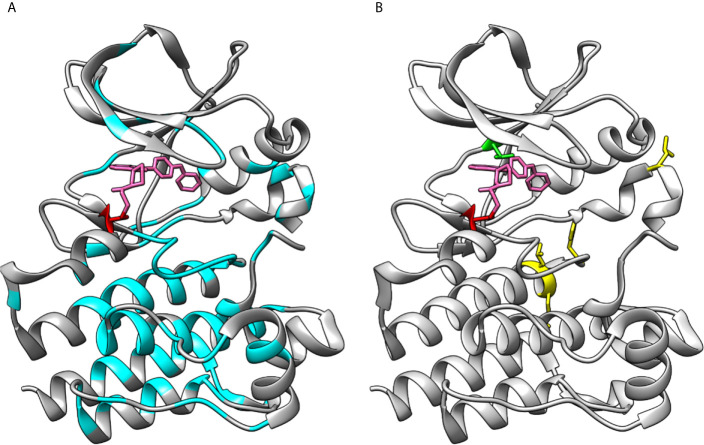
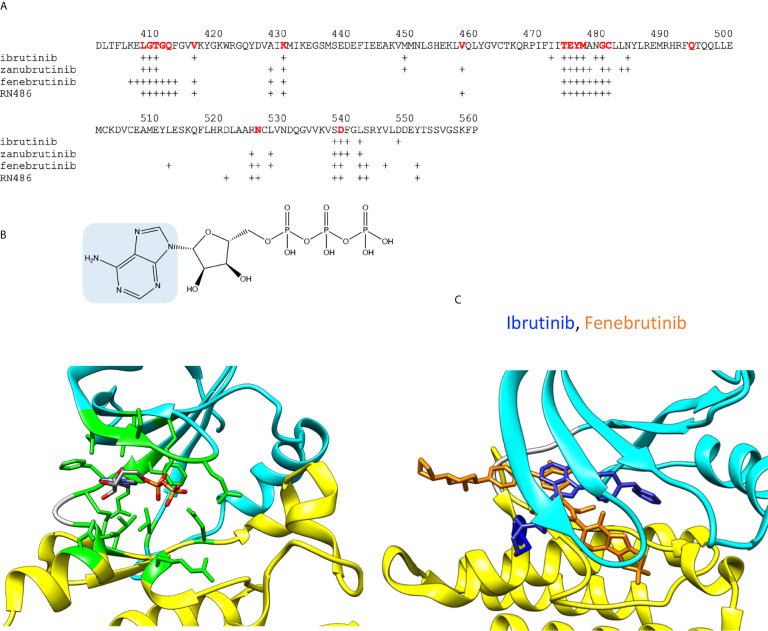
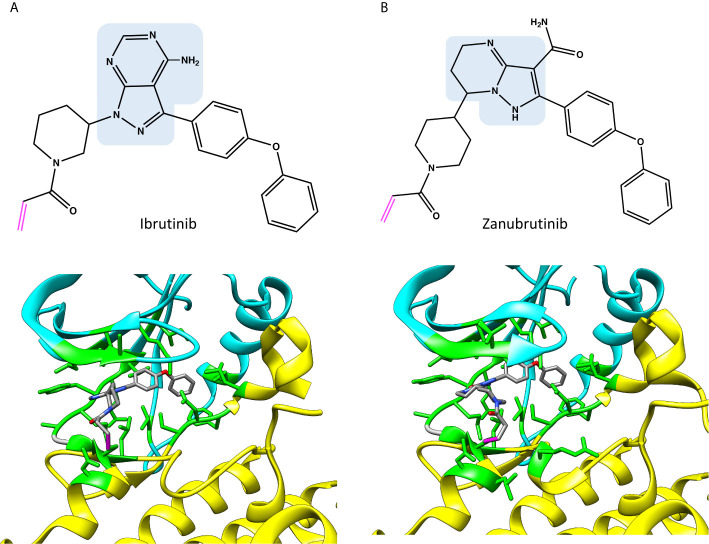
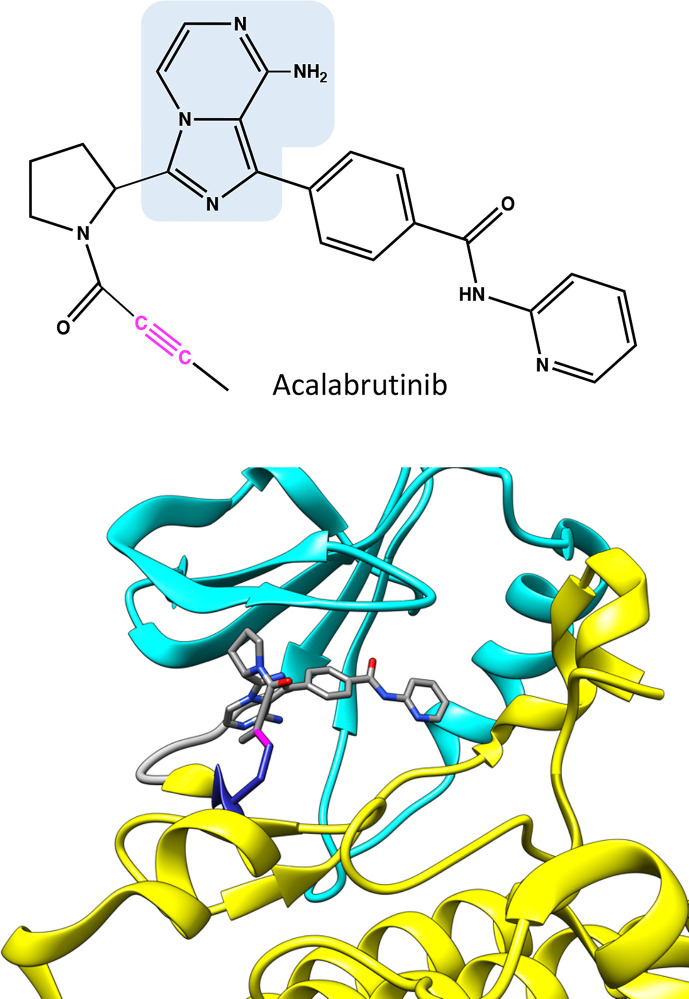
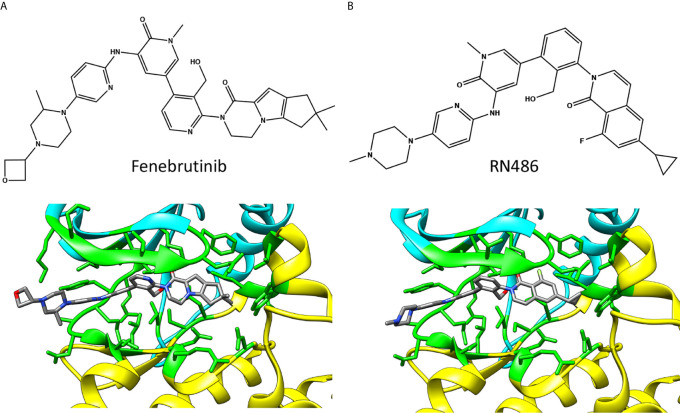
Low-molecular weight chemical compounds have a longstanding history as drugs. Target specificity and binding efficiency represent major obstacles for small molecules to become clinically relevant. Protein kinases are attractive cellular targets; however, they are challenging because they present one of the largest protein families and share structural similarities. Bruton tyrosine kinase (BTK), a cytoplasmic protein tyrosine kinase, has received much attention as a promising target for the treatment of B-cell malignancies and more recently autoimmune and inflammatory diseases. Here we describe the structural properties and binding modes of small-molecule BTK inhibitors, including irreversible and reversible inhibitors. Covalently binding compounds, such as ibrutinib, acalabrutinib and zanubrutinib, are discussed along with non-covalent inhibitors fenebrutinib and RN486. The focus of this review is on structure-function relationships.
小分子化合物作为药物具有悠久的历史。对于小分子药物来说,其成为临床相关药物的主要障碍是靶标特异性和结合效率。蛋白激酶是有吸引力的细胞靶标;然而,由于它们是最大的蛋白质家族之一,并且具有结构相似性,因此具有挑战性。布鲁顿酪氨酸激酶(BTK)是一种细胞质酪氨酸激酶,作为治疗 B 细胞恶性肿瘤以及最近的自身免疫和炎症性疾病的有前途的靶标受到了广泛关注。在这里,我们描述了小分子 BTK 抑制剂的结构特性和结合模式,包括不可逆和可逆抑制剂。本文还讨论了共价结合化合物,如伊布替尼、阿卡替尼和泽布替尼,以及非共价抑制剂芬纳布替尼和 RN486。本综述的重点是结构-功能关系。