Biotechnology Center (BIOTEC), Technische Universität Dresden, Dresden, Germany.
ESAT-STADIUS, KU Leuven, Heverlee, Belgium.
PLoS One. 2020 May 27;15(5):e0233089. doi: 10.1371/journal.pone.0233089. eCollection 2020.
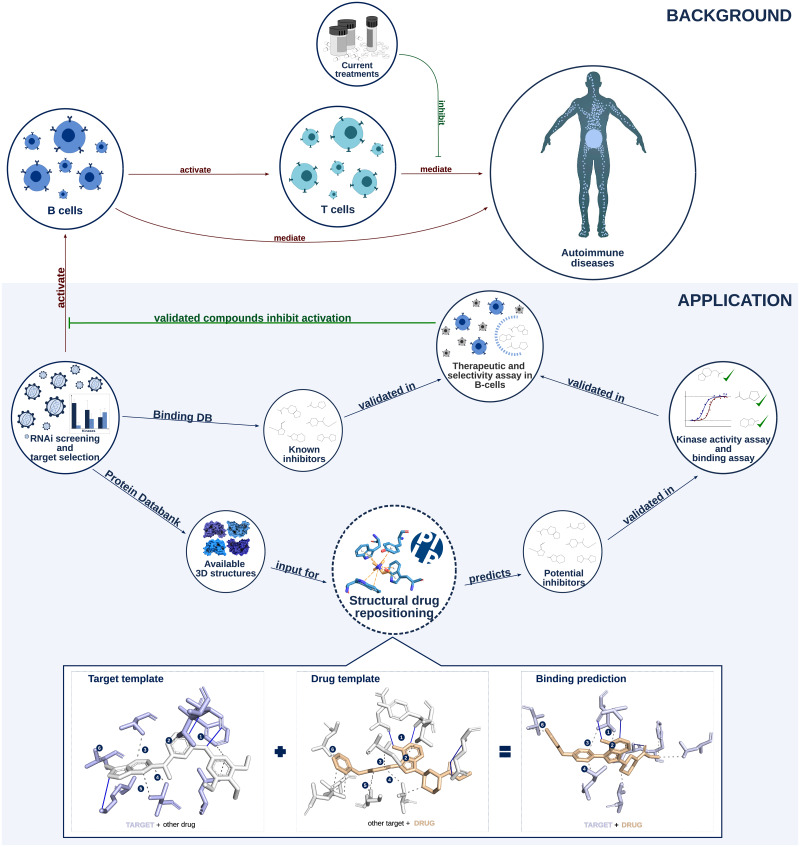
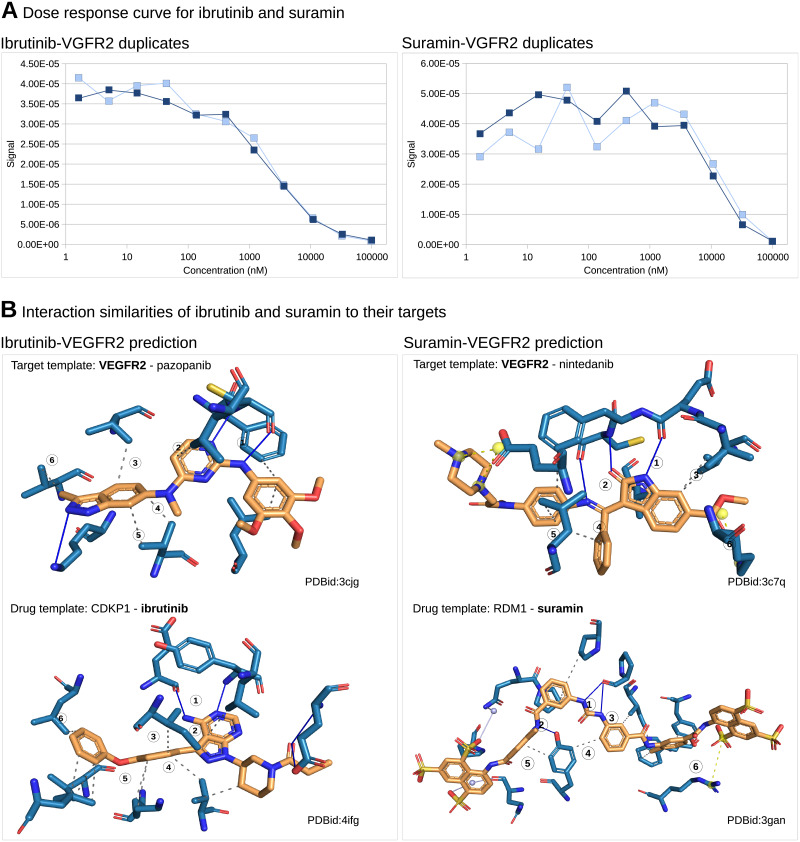
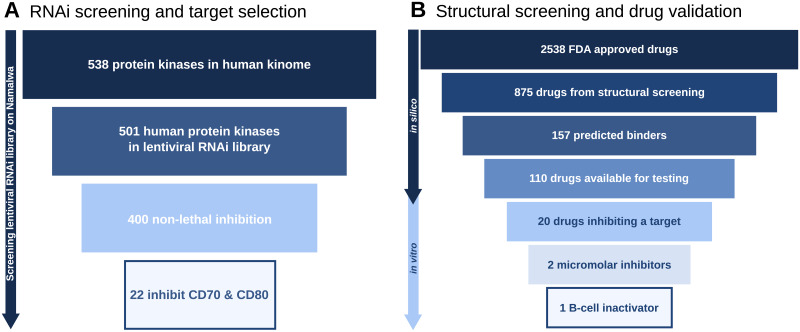
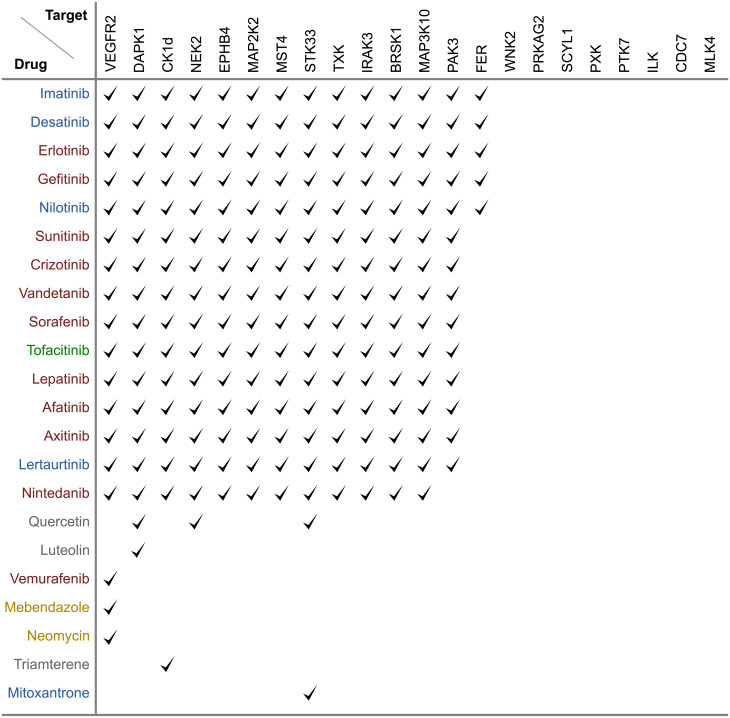
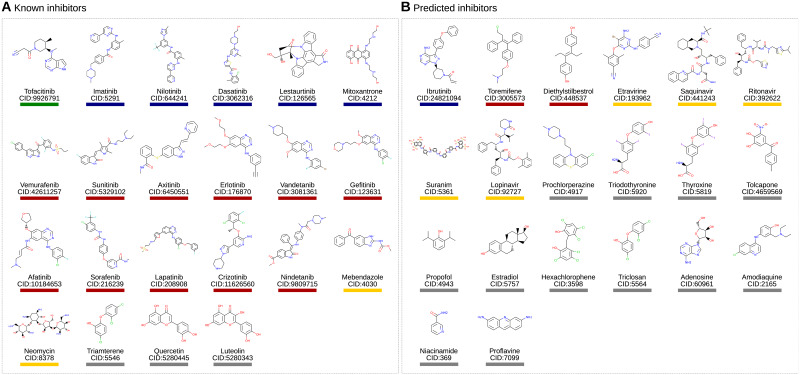
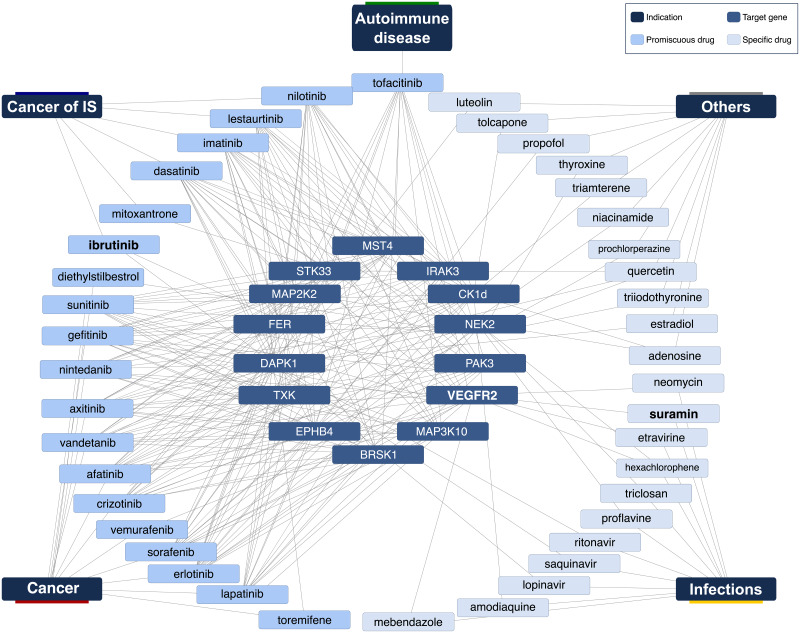
Many drugs are promiscuous and bind to multiple targets. On the one hand, these targets may be linked to unwanted side effects, but on the other, they may achieve a combined desired effect (polypharmacology) or represent multiple diseases (drug repositioning). With the growth of 3D structures of drug-target complexes, it is today possible to study drug promiscuity at the structural level and to screen vast amounts of drug-target interactions to predict side effects, polypharmacological potential, and repositioning opportunities. Here, we pursue such an approach to identify drugs inactivating B-cells, whose dysregulation can function as a driver of autoimmune diseases. Screening over 500 kinases, we identified 22 candidate targets, whose knock out impeded the activation of B-cells. Among these 22 is the gene KDR, whose gene product VEGFR2 is a prominent cancer target with anti-VEGFR2 drugs on the market for over a decade. The main result of this paper is that structure-based drug repositioning for the identified kinase targets identified the cancer drug ibrutinib as micromolar VEGFR2 inhibitor with a very high therapeutic index in B-cell inactivation. These findings prove that ibrutinib is not only acting on the Bruton's tyrosine kinase BTK, against which it was designed. Instead, it may be a polypharmacological drug, which additionally targets angiogenesis via inhibition of VEGFR2. Therefore ibrutinib carries potential to treat other VEGFR2 associated disease. Structure-based drug repositioning explains ibrutinib's anti VEGFR2 action through the conservation of a specific pattern of interactions of the drug with BTK and VEGFR2. Overall, structure-based drug repositioning was able to predict these findings at a fraction of the time and cost of a conventional screen.
许多药物具有混杂性,可以与多个靶点结合。一方面,这些靶点可能与不良副作用有关,但另一方面,它们可能产生联合的预期效果(多药理学)或代表多种疾病(药物重定位)。随着药物-靶标复合物 3D 结构的增长,现在可以在结构水平上研究药物混杂性,并筛选大量的药物-靶标相互作用,以预测副作用、多药理学潜力和重定位机会。在这里,我们采用这种方法来识别可使 B 细胞失活的药物,B 细胞失调可能作为自身免疫性疾病的驱动因素。我们对超过 500 种激酶进行了筛选,确定了 22 个候选靶点,这些靶点的敲除阻止了 B 细胞的激活。在这 22 个靶点中,有一个基因 KDR,其基因产物 VEGFR2 是一个著名的癌症靶点,市场上已有针对该靶点的抗 VEGFR2 药物超过十年。本文的主要结果是,基于结构的药物重定位确定了候选激酶靶点,发现了癌症药物伊布替尼是一种针对 VEGFR2 的微摩尔抑制剂,在 B 细胞失活方面具有很高的治疗指数。这些发现证明伊布替尼不仅作用于布鲁顿酪氨酸激酶 BTK,而且是针对 BTK 设计的。相反,它可能是一种多药理学药物,通过抑制 VEGFR2 来抑制血管生成。因此,伊布替尼可能具有治疗其他与 VEGFR2 相关疾病的潜力。基于结构的药物重定位通过药物与 BTK 和 VEGFR2 之间特定相互作用模式的保守性,解释了伊布替尼的抗 VEGFR2 作用。总的来说,基于结构的药物重定位能够以传统筛选的一小部分时间和成本预测这些发现。