Department of Medical Informatics, Faculty of Medicine, Mashhad University of Medical Sciences, Mashhad, Iran.
Department of Computer Engineering, Ayatollah Amoli University, Science and Research Branch, Amol, Iran.
Front Public Health. 2021 Jul 19;9:711762. doi: 10.3389/fpubh.2021.711762. eCollection 2021.
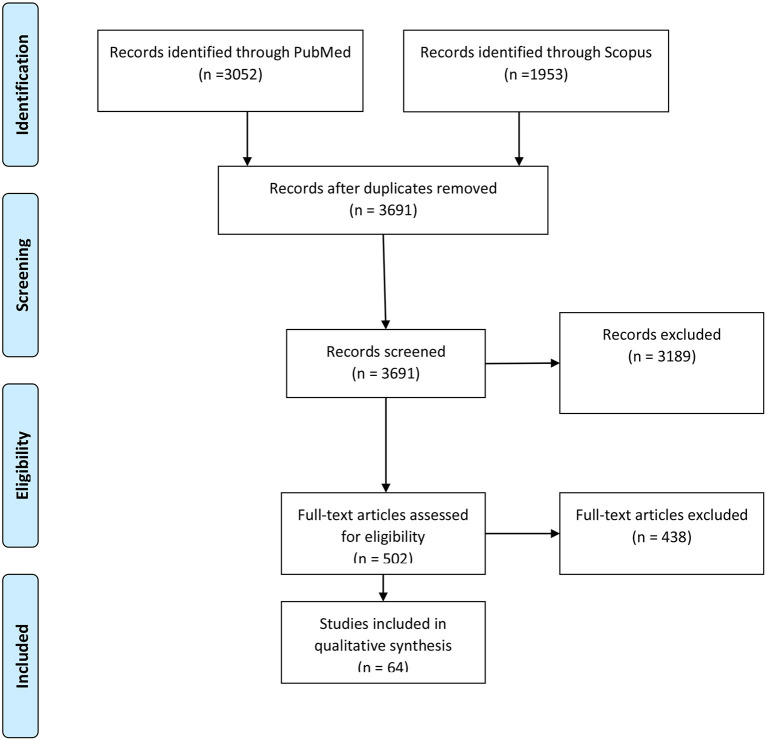
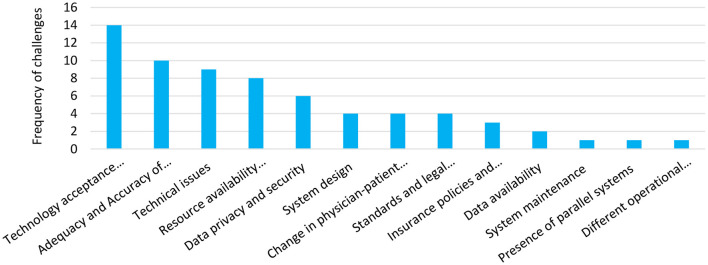
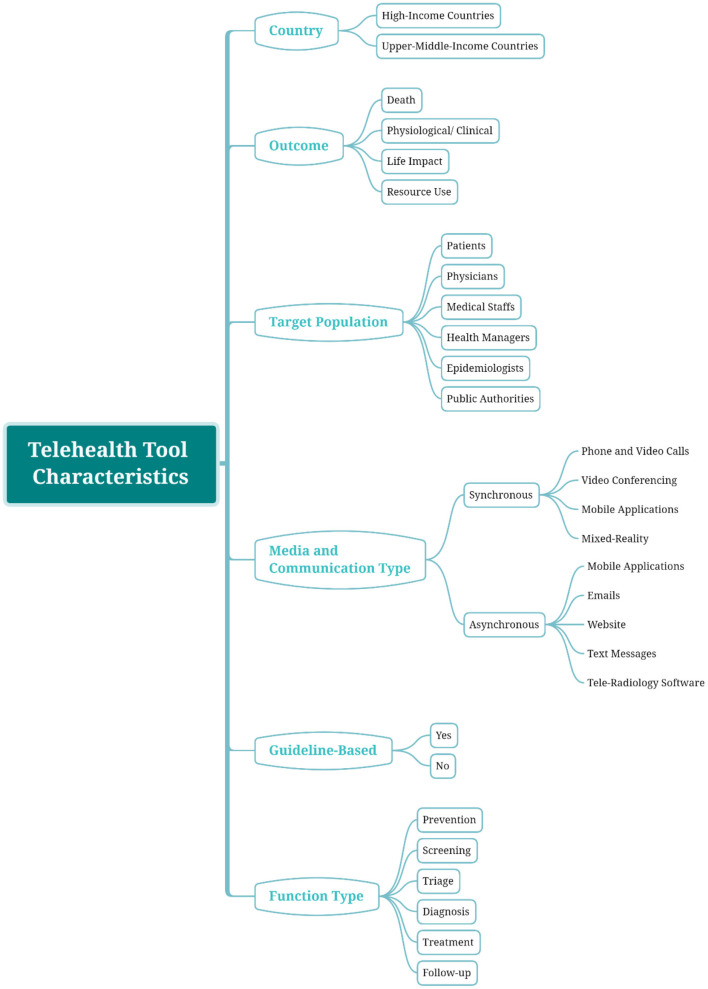
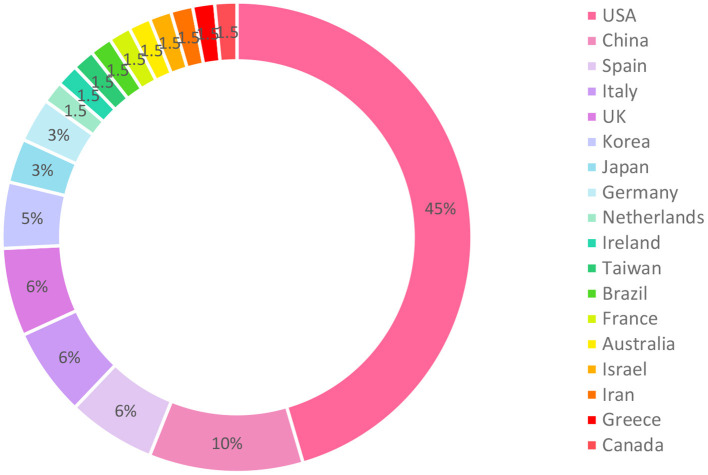
As an ever-growing popular service, telehealth catered for better access to high-quality healthcare services. It is more valuable and cost-effective, particularly in the middle of the current COVID-19 pandemic. Accordingly, this study aimed to systematically review the features and challenges of telehealth-based services developed to support COVID-19 patients and healthcare providers. A comprehensive search was done for the English language and peer-reviewed articles published until November 2020 using PubMed and Scopus electronic databases. In this review paper, only studies focusing on the telehealth-based service to support COVID-19 patients and healthcare providers were included. The first author's name, publication year, country of the research, study objectives, outcomes, function type including screening, triage, prevention, diagnosis, treatment or follow-up, target population, media, communication type, guideline-based design, main findings, and challenges were extracted, classified, and tabulated. Of the 5,005 studies identified initially, 64 met the eligibility criteria. The studies came from 18 countries. Most of them were conducted in the United States and China. Phone calls, mobile applications, videoconferencing or video calls, emails, websites, text messages, mixed-reality, and teleradiology software were used as the media for communication. The majority of studies used a synchronous communication. The articles addressed the prevention, screening, triage, diagnosis, treatment, and follow-up aspects of COVID-19 which the most common purpose was the patients' follow-up (34/64, 53%). Thirteen group barriers were identified in the literature, which technology acceptance and user adoption, concerns about the adequacy and accuracy of subjective patient assessment, and technical issues were the most frequent ones. This review revealed the usefulness of telehealth-based services during the COVID-19 outbreak and beyond. The features and challenges identified through the literature can be helpful for a better understanding of current telehealth approaches and pointed out the need for clear guidelines, scientific evidence, and innovative policies to implement successful telehealth projects.
作为一项日益流行的服务,远程医疗提供了更好地获得高质量医疗保健服务的机会。它更有价值且更具成本效益,尤其是在当前 COVID-19 大流行期间。因此,本研究旨在系统地回顾为支持 COVID-19 患者和医疗保健提供者而开发的基于远程医疗的服务的特点和挑战。使用 PubMed 和 Scopus 电子数据库,全面搜索了截至 2020 年 11 月发表的英文同行评议文章。在这篇综述论文中,仅纳入了专注于支持 COVID-19 患者和医疗保健提供者的基于远程医疗的服务的研究。提取、分类和制表了第一作者姓名、发表年份、研究国家、研究目标、结果、功能类型(包括筛查、分诊、预防、诊断、治疗或随访)、目标人群、媒体、通信类型、基于指南的设计、主要发现和挑战。在最初确定的 5005 项研究中,有 64 项符合入选标准。这些研究来自 18 个国家。其中大部分来自美国和中国。电话、移动应用程序、视频会议或视频通话、电子邮件、网站、短信、混合现实和远程放射学软件被用作通信媒体。大多数研究使用同步通信。这些文章涉及 COVID-19 的预防、筛查、分诊、诊断、治疗和随访方面,最常见的目的是患者随访(34/64,53%)。文献中确定了 13 组障碍,其中技术接受度和用户采用度、对主观患者评估的充分性和准确性的担忧以及技术问题是最常见的。本综述揭示了远程医疗服务在 COVID-19 爆发期间及之后的有用性。通过文献确定的特点和挑战有助于更好地了解当前的远程医疗方法,并指出需要明确的指南、科学证据和创新政策来实施成功的远程医疗项目。