Department of general surgery, Xiangya Hospital Central South University, Central South University, Changsha, China.
Department of General, Visceral, Cancer and Transplantation Surgery, University Hospital Cologne, Cologne, Germany.
BMC Cancer. 2021 Aug 5;21(1):891. doi: 10.1186/s12885-021-08627-5.
Colon cancer is largely implicated in elderly patients (age ≥ 60 years). The prognosis of patients diagnosed with the M1b stage is vastly poor. Marital and insurance status has been considered important prognostic factors in various cancer types. However, how these factors influence elderly patients with stage M1b colon cancer remains to be explored. This study aims to uncover the role of marital and insurance status in the survival of elderly patients with stage M1b colon cancer.
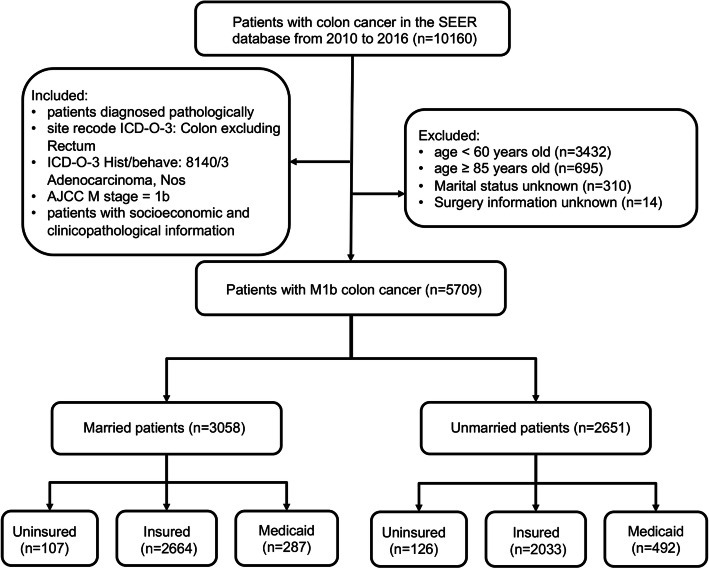
We retrieved data for patients diagnosed with stage M1b colon cancer between 2010 and 2016 from the Surveillance, Epidemiology, and End Results (SEER) database. Our analysis of the clinicopathological features, overall survival (OS), and cancer-specific survival (CSS) was based on the marital and insurance status, respectively.
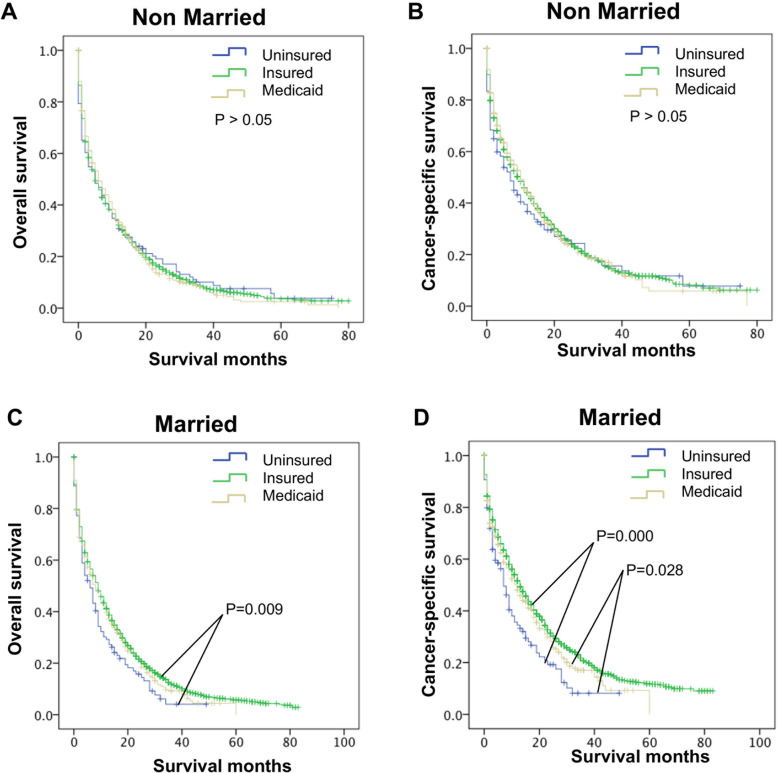
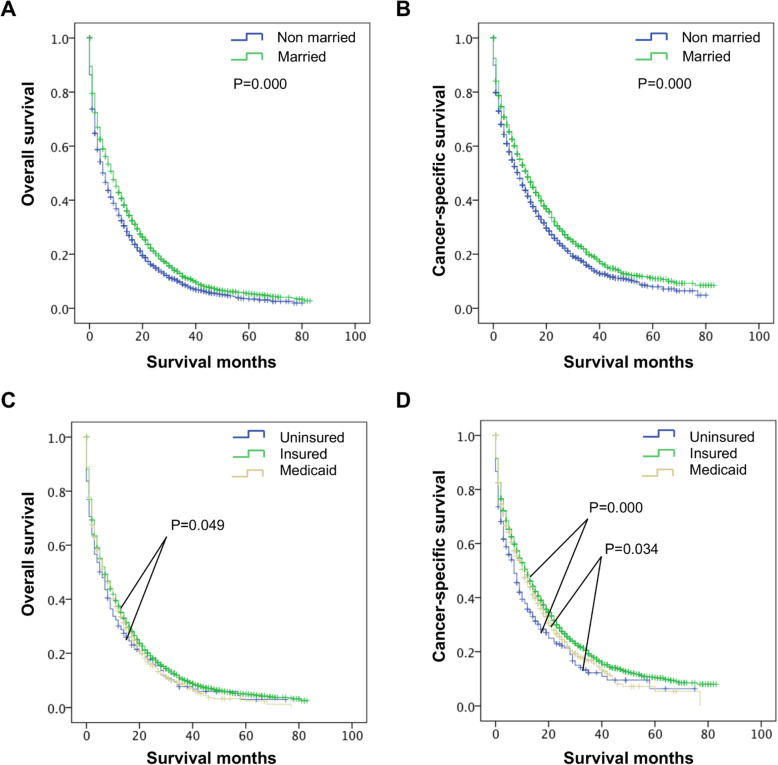
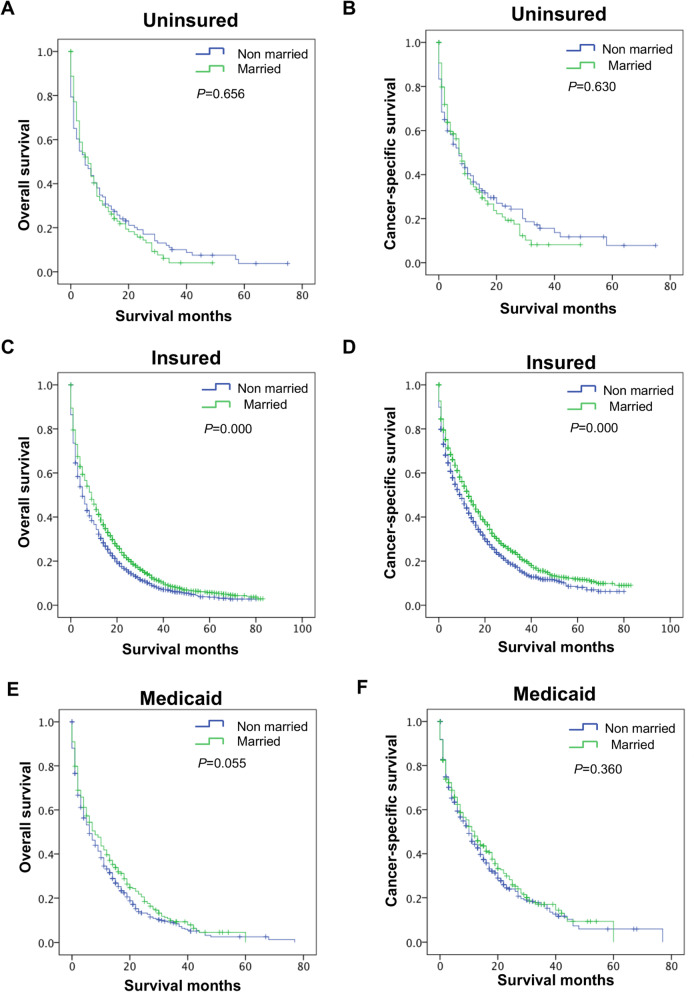
In sum, 5709 stage M1b colon cancer patients with complete information from SEER were enrolled for analysis. The OS and CSS of the Non-married group were poorer compared to that of the Married group. The OS and CSS of the Uninsured group were poorer than both of the Insured group and Medicaid group. However, OS was comparable between Uninsured group and Medicaid groups. The findings allude that marital and insurance status potentially impact the long-term survival of elderly patients with M1b colon cancer. The subgroup survival analyses revealed the lowest risk for death among the Insured Married group based on the comparison of the OS and CSS across all other groups. Moreover, Univariate and multivariate analyses revealed race, marital status, surgery, and chemotherapy as independent predictors for OS, whereas insurance status, surgery,and chemotherapy were independent predictors for CSS in elderly patients with M1b colon cancer.
The marital and insurance status greatly impact the survival of elderly patients with M1b colon cancer. Therefore, it is imperative to provide more support to this vulnerable patient group who are lonely and uninsured, particularly in the psychological and health insurance aspect.
结肠癌在老年患者(年龄≥60 岁)中发病率较高。M1b 期患者的预后极差。婚姻状况和保险状况已被认为是各种癌症类型的重要预后因素。然而,这些因素如何影响 M1b 期结肠癌的老年患者仍有待探讨。本研究旨在揭示婚姻和保险状况在 M1b 期结肠癌老年患者生存中的作用。
我们从 SEER 数据库中检索了 2010 年至 2016 年间诊断为 M1b 期结肠癌的患者数据。我们分别根据婚姻和保险状况对临床病理特征、总生存期(OS)和癌症特异性生存期(CSS)进行了分析。
共有 5709 例来自 SEER 的 M1b 期结肠癌患者的信息完整,被纳入分析。非已婚组的 OS 和 CSS 均差于已婚组。未参保组的 OS 和 CSS 均差于参保组和医疗补助组。然而,未参保组和医疗补助组的 OS 无差异。这些发现表明,婚姻和保险状况可能会影响 M1b 期结肠癌老年患者的长期生存。亚组生存分析显示,在比较所有其他组的 OS 和 CSS 时,参保已婚组的死亡风险最低。此外,单因素和多因素分析显示,种族、婚姻状况、手术和化疗是 OS 的独立预测因素,而保险状况、手术和化疗是 CSS 的独立预测因素。
婚姻和保险状况极大地影响了 M1b 期结肠癌老年患者的生存。因此,必须为这些孤独和没有保险的弱势患者群体提供更多支持,特别是在心理和健康保险方面。