• 文献检索
  • 文档翻译
  • 深度研究
  • 学术资讯
  • Suppr Zotero 插件Zotero 插件
  • 邀请有礼
  • 套餐&价格
  • 历史记录
应用&插件
Suppr Zotero 插件Zotero 插件浏览器插件Mac 客户端Windows 客户端微信小程序
定价
高级版会员购买积分包购买API积分包
服务
文献检索文档翻译深度研究API 文档MCP 服务
关于我们
关于 Suppr公司介绍联系我们用户协议隐私条款
关注我们

Suppr 超能文献

核心技术专利:CN118964589B侵权必究
粤ICP备2023148730 号-1Suppr @ 2026

文献检索

告别复杂PubMed语法,用中文像聊天一样搜索,搜遍4000万医学文献。AI智能推荐,让科研检索更轻松。

立即免费搜索

文件翻译

保留排版,准确专业,支持PDF/Word/PPT等文件格式,支持 12+语言互译。

免费翻译文档

深度研究

AI帮你快速写综述,25分钟生成高质量综述,智能提取关键信息,辅助科研写作。

立即免费体验

心肌梗死后患者的药物依从性及其决定因素。

Medication adherence and its determinants in patients after myocardial infarction.

机构信息

Department of Health Promotion, Collegium Medicum, Nicolaus Copernicus University, Curie Skłodowskiej St. 9, 85-094, Bydgoszcz, Poland.

Department of Cardiology and Internal Diseases, Collegium Medicum, Nicolaus Copernicus University, Bydgoszcz, Poland.

出版信息

Sci Rep. 2020 Jul 21;10(1):12028. doi: 10.1038/s41598-020-68915-1.

DOI:10.1038/s41598-020-68915-1
PMID:32694522
原文链接:https://pmc.ncbi.nlm.nih.gov/articles/PMC7374107/
Abstract

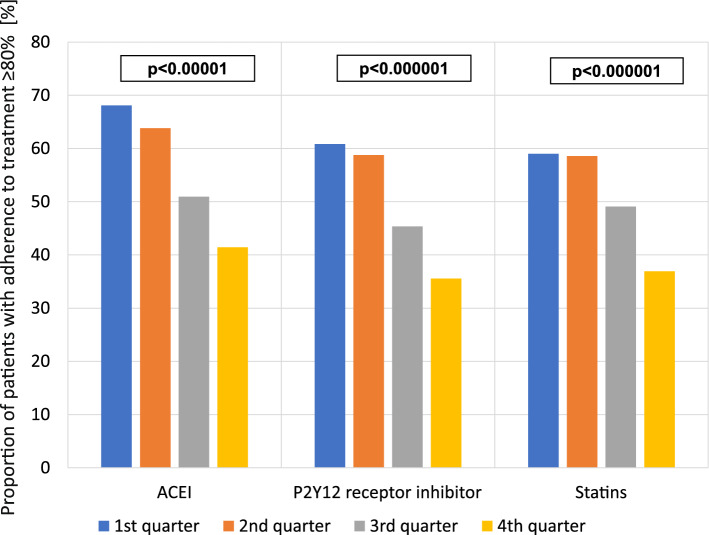
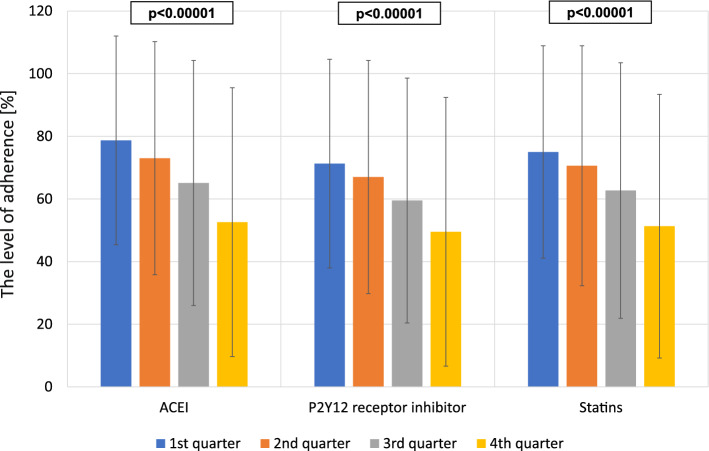
Non-adherence to prescribed medication is a serious limitation of long-term treatment in patients after myocardial infarction (MI), which can be associated with medical, social and economical consequences. Improvement of medication adherence has been shown to be a challenge for healthcare providers. The aim of this study was to evaluate changes in medication adherence and variability of adherence determinants during follow-up in patients after MI. A single-center, cohort observational study was conducted in 225 post-MI patients treated with primary coronary intervention (PCI) (27% women and 73% men) aged 30-91 years. Adherence was defined as availability of evaluated drugs within 1-year after discharge from hospital, based on completed prescriptions data obtained from the National Health Fund. The analysis of therapeutic plan realization (adherence to medication prescribed at discharge from hospital) embraced only reimbursed drugs: ACEIs (ramipril, perindopril), P2Y12 receptor inhibitors (clopidogrel) and statins (atorvastatin, simvastatin, rosuvastatin). Sufficient adherence was defined as ≥ 80%. During 1-year follow-up, adherence for all three drug classes was 64 ± 25%, with 67 ± 32% for ACEIs, 62 ± 34% for P2Y12 receptor inhibitor and 64 ± 32% for statins. A gradual decline in adherence was observed from 65% ± 26% in the first quarter of follow-up to 51% ± 34% in the last quarter of follow-up (p < 0.00001). Sufficient adherence for all drugs classes was found only in 29% of patients throughout the whole follow-up period (44% for ACEI, 36% for P2Y12 receptor inhibitor and 41% for statins). According to a multivariate analysis, age, prior CABG, level of education, place of residence, economic status and marital status were independent predictors of drug adherence. Whereas patients > 65 years and having a history of prior CABG more often had an insufficient adherence to drugs, married and hypertensive patients, city inhabitants and patients with higher education tended to have a sufficient drug adherence. Adherence to pharmacotherapy after myocardial infarction decreases over time in a similar manner for all pivotal groups of drugs prescribed after MI. A number of socioeconomic and clinical factors have been identified to affect medication adherence over time.

摘要

不遵医嘱服药是心肌梗死后长期治疗的一个严重限制因素,这可能会导致医疗、社会和经济方面的后果。改善用药依从性一直是医疗保健提供者面临的挑战。本研究旨在评估心肌梗死后患者在随访期间用药依从性的变化和用药依从性决定因素的变化。这是一项单中心、队列观察性研究,纳入了 225 名接受直接经皮冠状动脉介入治疗(PCI)的心肌梗死后患者(27%为女性,73%为男性),年龄为 30-91 岁。根据从国家健康基金获得的完整处方数据,将出院后 1 年内可获得评估药物定义为用药依从性。出院时治疗方案的实现(即服用出院时开具的药物)分析仅纳入报销药物:血管紧张素转换酶抑制剂(赖诺普利、培哚普利)、P2Y12 受体抑制剂(氯吡格雷)和他汀类药物(阿托伐他汀、辛伐他汀、瑞舒伐他汀)。足够的依从性定义为≥80%。在 1 年的随访期间,所有 3 类药物的依从率为 64±25%,血管紧张素转换酶抑制剂为 67±32%,P2Y12 受体抑制剂为 62±34%,他汀类药物为 64±32%。从随访第 1 季度的 65%±26%到第 4 季度的 51%±34%,观察到依从率逐渐下降(p<0.00001)。在整个随访期间,只有 29%的患者所有药物类别的依从率均达到足够水平(血管紧张素转换酶抑制剂为 44%,P2Y12 受体抑制剂为 36%,他汀类药物为 41%)。多变量分析显示,年龄、既往 CABG、教育程度、居住地、经济状况和婚姻状况是药物依从性的独立预测因素。年龄>65 岁和既往 CABG 的患者更常出现药物依从性不足,而已婚和高血压患者、城市居民和受教育程度较高的患者更倾向于药物依从性良好。心肌梗死后,随着时间的推移,所有主要药物组的药物治疗依从性呈相似的下降趋势。一些社会经济和临床因素已被确定会随时间影响药物的依从性。
https://cdn.ncbi.nlm.nih.gov/pmc/blobs/294b/7374107/a6aca3137ac0/41598_2020_68915_Fig2_HTML.jpg
https://cdn.ncbi.nlm.nih.gov/pmc/blobs/294b/7374107/d2dbea5fb440/41598_2020_68915_Fig1_HTML.jpg
https://cdn.ncbi.nlm.nih.gov/pmc/blobs/294b/7374107/a6aca3137ac0/41598_2020_68915_Fig2_HTML.jpg
https://cdn.ncbi.nlm.nih.gov/pmc/blobs/294b/7374107/d2dbea5fb440/41598_2020_68915_Fig1_HTML.jpg
https://cdn.ncbi.nlm.nih.gov/pmc/blobs/294b/7374107/a6aca3137ac0/41598_2020_68915_Fig2_HTML.jpg

相似文献

1
Medication adherence and its determinants in patients after myocardial infarction.心肌梗死后患者的药物依从性及其决定因素。
Sci Rep. 2020 Jul 21;10(1):12028. doi: 10.1038/s41598-020-68915-1.
2
Difference in Medication Adherence Between Patients Prescribed a 30-Day Versus 90-Day Supply After Acute Myocardial Infarction.急性心肌梗死后,开具 30 天和 90 天供应量处方的患者在用药依从性方面的差异。
J Am Heart Assoc. 2021 Jan 5;10(1):e016215. doi: 10.1161/JAHA.119.016215. Epub 2020 Dec 21.
3
Long-term medication adherence in patients with ST-elevation myocardial infarction and primary percutaneous coronary intervention.ST 段抬高型心肌梗死患者经皮冠状动脉介入治疗后的长期药物依从性。
Eur J Prev Cardiol. 2015 Jul;22(7):890-8. doi: 10.1177/2047487314540385. Epub 2014 Jun 17.
4
Timing of First Postdischarge Follow-up and Medication Adherence After Acute Myocardial Infarction.急性心肌梗死后首次出院后随访和药物依从性的时间。
JAMA Cardiol. 2016 May 1;1(2):147-55. doi: 10.1001/jamacardio.2016.0001.
5
The influence of patient expectations on adherence to treatment regimen after myocardial infarction.心肌梗死后患者期望对治疗方案依从性的影响。
Patient Educ Couns. 2022 Feb;105(2):426-431. doi: 10.1016/j.pec.2021.05.030. Epub 2021 May 23.
6
The association of pre- and posthospital medication adherence in myocardial infarction patients.心肌梗死患者住院前后用药依从性的相关性。
Am Heart J. 2019 Feb;208:74-80. doi: 10.1016/j.ahj.2018.11.004. Epub 2018 Nov 15.
7
Statins reduce new-onset atrial fibrillation in a first-time myocardial infarction population: a nationwide propensity score-matched study.他汀类药物可降低首次心肌梗死人群新发房颤的发生率:一项全国性倾向评分匹配研究。
Eur J Prev Cardiol. 2014 Mar;21(3):330-8. doi: 10.1177/2047487312462804. Epub 2012 Sep 25.
8
Adherence to evidence-based drug therapies after myocardial infarction: is geographic variation related to hospital of discharge or primary care providers? A cross-classified multilevel design.心肌梗死后对循证药物治疗的依从性:地区差异与出院医院或初级保健提供者有关吗?一项交叉分类多级设计。
BMJ Open. 2016 Apr 4;6(4):e010926. doi: 10.1136/bmjopen-2015-010926.
9
Medication Adherence In Post Myocardial Infarction Patients.心肌梗死后患者的药物依从性
J Ayub Med Coll Abbottabad. 2018 Oct-Dec;30(4):552-557.
10
Discrepancies in assessment of adherence to antiplatelet treatment after myocardial infarction.心肌梗死后抗血小板治疗依从性评估中的差异。
Pharmacology. 2015;95(1-2):50-8. doi: 10.1159/000371392. Epub 2015 Jan 15.

引用本文的文献

1
Medication Adherence in the Real World: Lessons from the Diuretic Comparison Project.现实世界中的药物依从性:利尿剂比较项目的经验教训。
J Clin Med. 2025 Aug 12;14(16):5695. doi: 10.3390/jcm14165695.
2
Assessing patients' knowledge immediately after obtaining the antibacterial drug azithromycin: a community pharmacy-based cross-sectional study.获取抗菌药物阿奇霉素后立即评估患者的知识水平:一项基于社区药房的横断面研究。
BMC Res Notes. 2025 Aug 18;18(1):358. doi: 10.1186/s13104-025-07447-1.
3
Association Between Depression and Medication Adherence Among Post-myocardial Infarction Patients in a South Asian Clinical Setting.

本文引用的文献

1
Adherence Tradeoff to Multiple Preventive Therapies and All-Cause Mortality After Acute Myocardial Infarction.急性心肌梗死后多种预防性治疗的依从性权衡与全因死亡率
J Am Coll Cardiol. 2017 Sep 26;70(13):1543-1554. doi: 10.1016/j.jacc.2017.07.783.
2
2017 ESC Guidelines for the management of acute myocardial infarction in patients presenting with ST-segment elevation: The Task Force for the management of acute myocardial infarction in patients presenting with ST-segment elevation of the European Society of Cardiology (ESC).2017年欧洲心脏病学会(ESC)ST段抬高型急性心肌梗死患者管理指南:欧洲心脏病学会(ESC)ST段抬高型急性心肌梗死患者管理工作组
Eur Heart J. 2018 Jan 7;39(2):119-177. doi: 10.1093/eurheartj/ehx393.
3
南亚临床环境下心肌梗死后患者抑郁与药物依从性之间的关联
Cureus. 2025 Jul 5;17(7):e87344. doi: 10.7759/cureus.87344. eCollection 2025 Jul.
4
Molecular mechanisms and intervention approaches of heart failure (Review).心力衰竭的分子机制及干预方法(综述)
Int J Mol Med. 2025 Aug;56(2). doi: 10.3892/ijmm.2025.5566. Epub 2025 Jun 13.
5
Socioeconomic Disparities and In-Hospital Outcomes in Acute Myocardial Infarction: A Case-Control Study.急性心肌梗死的社会经济差异与院内结局:一项病例对照研究。
Cureus. 2025 May 6;17(5):e83551. doi: 10.7759/cureus.83551. eCollection 2025 May.
6
MBLSTM is a contextual interaction refined method for time series prediction.门控循环单元长短期记忆网络(MBLSTM)是一种用于时间序列预测的上下文交互优化方法。
Sci Rep. 2025 May 27;15(1):18563. doi: 10.1038/s41598-025-03243-w.
7
Extended dual antithrombotic therapy in patients with chronic coronary syndrome - which agent should be added to aspirin?慢性冠状动脉综合征患者的延长双联抗栓治疗——阿司匹林应联合哪种药物?
Cardiol J. 2025;32(3):321-327. doi: 10.5603/cj.104821. Epub 2025 May 22.
8
Prevalence and determinants of medication adherence among hypertensive patients: An institution-based cross-sectional study.高血压患者药物治疗依从性的患病率及影响因素:一项基于机构的横断面研究。
PLoS One. 2025 May 20;20(5):e0321449. doi: 10.1371/journal.pone.0321449. eCollection 2025.
9
Depressive and Anxiety Symptoms, Defense Mechanisms, and Mentalized Affectivity in Individuals with Myocardial Infarction: An Empirical Investigation.心肌梗死患者的抑郁和焦虑症状、防御机制及心理化情感:一项实证研究。
Behav Sci (Basel). 2025 Apr 14;15(4):528. doi: 10.3390/bs15040528.
10
Part 2-Cardiac Rehabilitation After an Acute Myocardial Infarction: Timing and Gender Differences in Adherence; Where Do We Stand?第2部分——急性心肌梗死后的心脏康复:依从性的时机和性别差异;我们目前的情况如何?
J Clin Med. 2025 Feb 11;14(4):1189. doi: 10.3390/jcm14041189.
[Adherence to medication after myocardial infarction and its impact on outcome: a registry-based analysis from the Hungarian Myocardial Infarction Registry].
[心肌梗死后药物治疗依从性及其对预后的影响:基于匈牙利心肌梗死登记处的分析]
Orv Hetil. 2017 Jul;158(27):1051-1057. doi: 10.1556/650.2017.30795.
4
Assessing the Impact of Medication Adherence on Long-Term Cardiovascular Outcomes.评估药物依从性对长期心血管结局的影响。
J Am Coll Cardiol. 2016 Aug 23;68(8):789-801. doi: 10.1016/j.jacc.2016.06.005.
5
Prediction of high risk of non-adherence to antiplatelet treatment.抗血小板治疗不依从高风险的预测
Kardiol Pol. 2016;74(1):61-7. doi: 10.5603/KP.a2015.0117. Epub 2015 Jun 23.
6
Persistence with secondary prevention medications after acute myocardial infarction: Insights from the TRANSLATE-ACS study.急性心肌梗死后二级预防药物的持续使用情况:来自TRANSLATE-ACS研究的见解。
Am Heart J. 2015 Jul;170(1):62-9. doi: 10.1016/j.ahj.2015.03.019. Epub 2015 Apr 2.
7
Adherence to evidence-based secondary prevention pharmacotherapy in patients after an acute coronary syndrome: A systematic review.急性冠状动脉综合征后患者对循证二级预防药物治疗的依从性:一项系统评价。
Heart Lung. 2015 Jul-Aug;44(4):299-308. doi: 10.1016/j.hrtlng.2015.02.004. Epub 2015 Mar 10.
8
Discrepancies in assessment of adherence to antiplatelet treatment after myocardial infarction.心肌梗死后抗血小板治疗依从性评估中的差异。
Pharmacology. 2015;95(1-2):50-8. doi: 10.1159/000371392. Epub 2015 Jan 15.
9
Determinants of medication adherence and blood pressure control among hypertensive patients in Hong Kong: a cross-sectional study.香港高血压患者药物依从性和血压控制的决定因素:一项横断面研究。
Int J Cardiol. 2015 Mar 1;182:250-7. doi: 10.1016/j.ijcard.2014.12.064. Epub 2014 Dec 23.
10
Medication non-adherence after myocardial infarction: an exploration of modifying factors.心肌梗死后的药物治疗不依从性:影响因素探究
J Gen Intern Med. 2015 Jan;30(1):83-90. doi: 10.1007/s11606-014-3072-x.