de Vries Lisanne, Guevara-Rozo Sydne, Cho MiJung, Liu Li-Yang, Renneckar Scott, Mansfield Shawn D
Department of Wood Science, Faculty of Forestry, University of British Columbia, Vancouver, BC, V6T 1Z4, Canada.
US Department of Energy (DOE) Great Lakes Bioenergy Research Center, the Wisconsin Energy Institute, University of Wisconsin - Madison, Madison, WI , 53726, USA.
Biotechnol Biofuels. 2021 Aug 5;14(1):167. doi: 10.1186/s13068-021-02010-z.
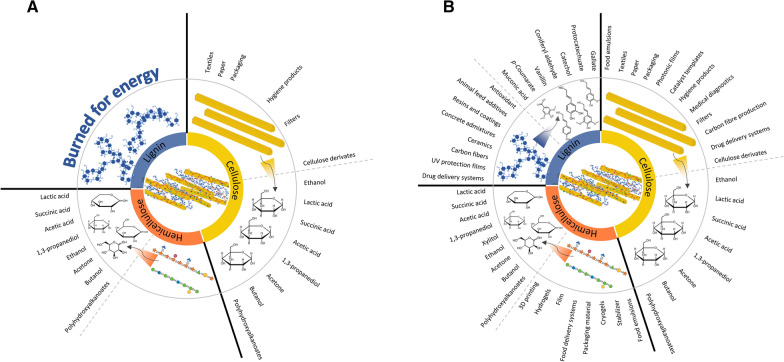
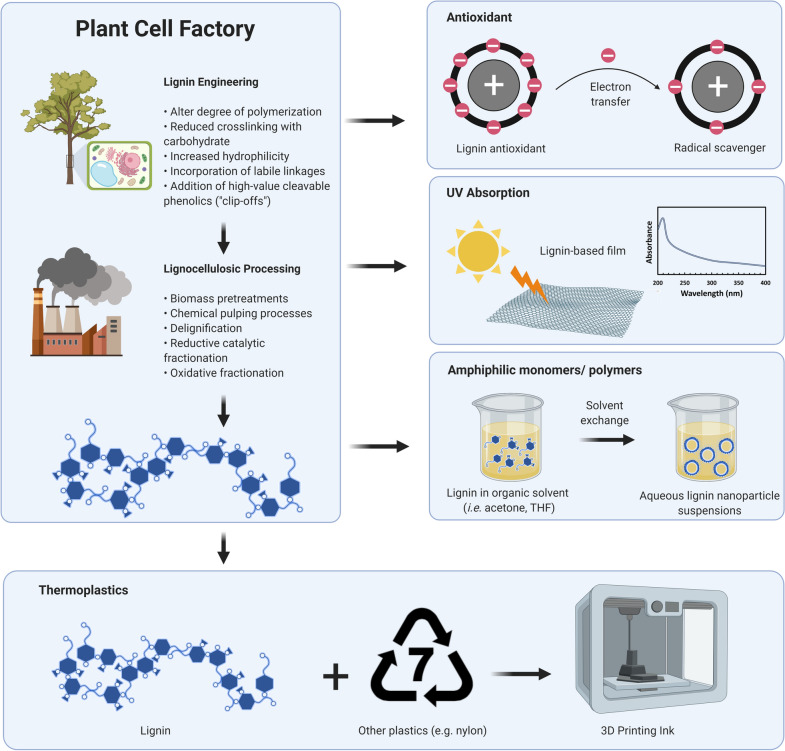
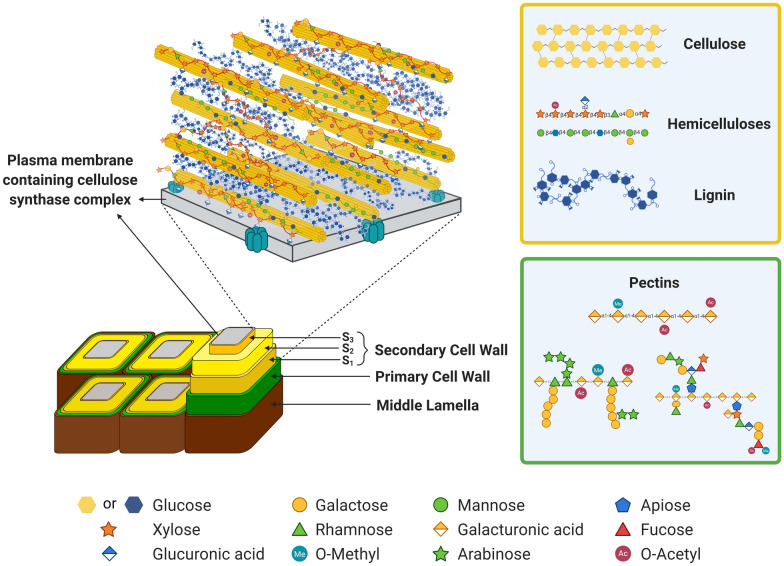
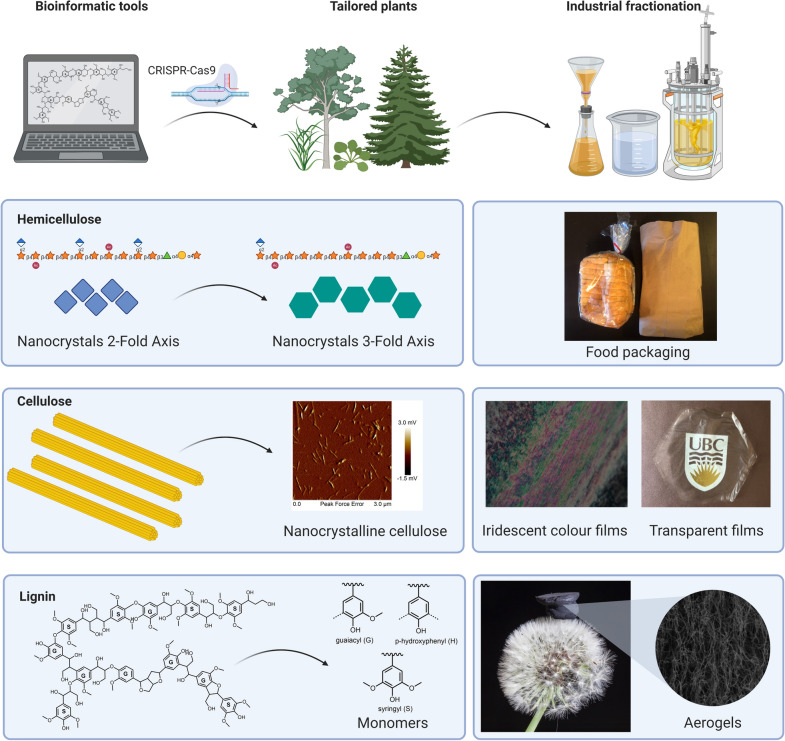
Plants inherently display a rich diversity in cell wall chemistry, as they synthesize an array of polysaccharides along with lignin, a polyphenolic that can vary dramatically in subunit composition and interunit linkage complexity. These same cell wall chemical constituents play essential roles in our society, having been isolated by a variety of evolving industrial processes and employed in the production of an array of commodity products to which humans are reliant. However, these polymers are inherently synthesized and intricately packaged into complex structures that facilitate plant survival and adaptation to local biogeoclimatic regions and stresses, not for ease of deconstruction and commercial product development. Herein, we describe evolving techniques and strategies for altering the metabolic pathways related to plant cell wall biosynthesis, and highlight the resulting impact on chemistry, architecture, and polymer interactions. Furthermore, this review illustrates how these unique targeted cell wall modifications could significantly extend the number, diversity, and value of products generated in existing and emerging biorefineries. These modifications can further target the ability for processing of engineered wood into advanced high performance materials. In doing so, we attempt to illuminate the complex connection on how polymer chemistry and structure can be tailored to advance renewable material applications, using all the chemical constituents of plant-derived biopolymers, including pectins, hemicelluloses, cellulose, and lignins.
植物在细胞壁化学方面天然地呈现出丰富的多样性,因为它们合成了一系列多糖以及木质素,木质素是一种多酚类物质,其亚基组成和亚基间连接复杂性可能会有很大差异。这些相同的细胞壁化学成分在我们的社会中发挥着重要作用,它们已通过各种不断发展的工业工艺被分离出来,并用于生产人类所依赖的一系列商品。然而,这些聚合物是天然合成的,并被复杂地包装成复杂的结构,以促进植物的生存以及对当地生物地球气候区域和压力的适应,而不是为了便于解构和商业产品开发。在此,我们描述了改变与植物细胞壁生物合成相关代谢途径的不断发展的技术和策略,并强调了其对化学、结构和聚合物相互作用的影响。此外,本综述说明了这些独特的靶向细胞壁修饰如何能够显著增加现有和新兴生物精炼厂中产生的产品数量、多样性和价值。这些修饰还可以进一步针对将工程木材加工成先进高性能材料的能力。通过这样做,我们试图阐明如何利用植物源生物聚合物的所有化学成分,包括果胶、半纤维素、纤维素和木质素,来定制聚合物化学和结构以推进可再生材料应用的复杂联系。