Wierzbicki Martin P, Maloney Victoria, Mizrachi Eshchar, Myburg Alexander A
Department of Biochemistry, Genetics and Microbiology, Forestry and Agricultural Biotechnology Institute (FABI), University of Pretoria, Pretoria, South Africa.
Front Plant Sci. 2019 Feb 25;10:176. doi: 10.3389/fpls.2019.00176. eCollection 2019.
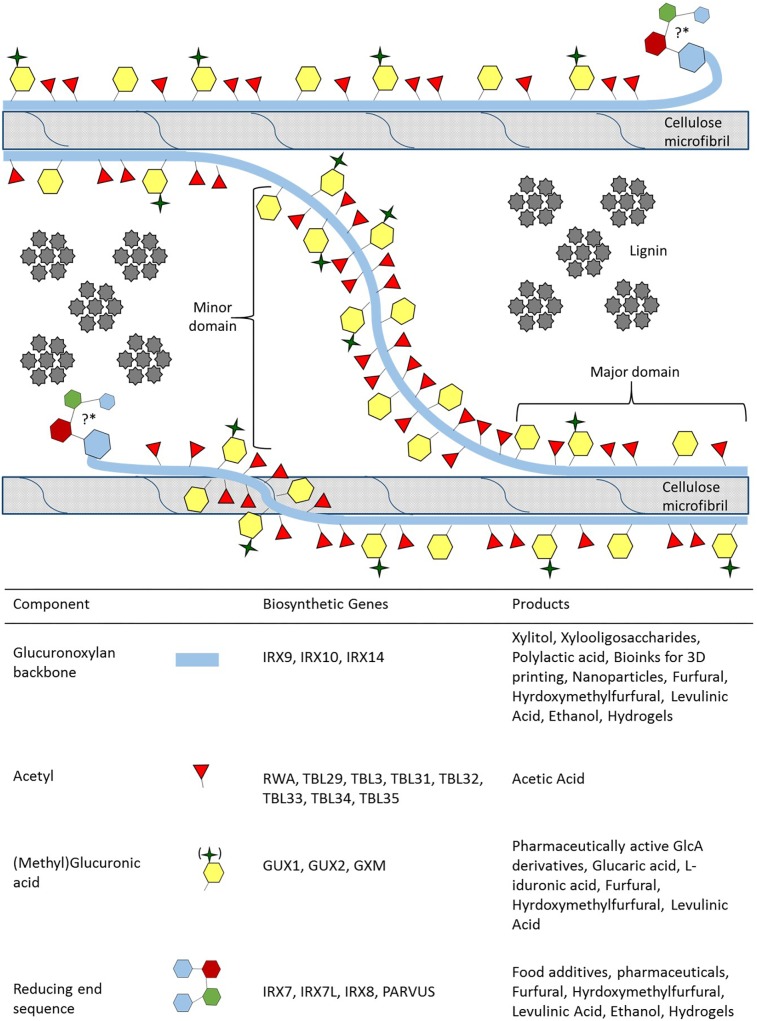
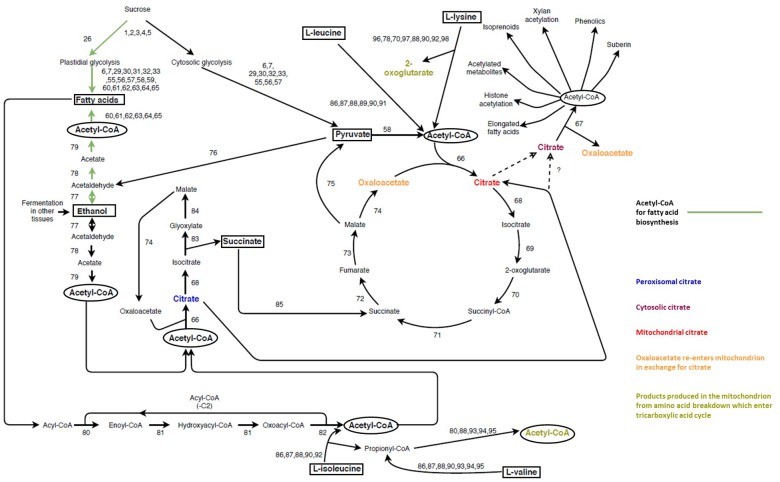
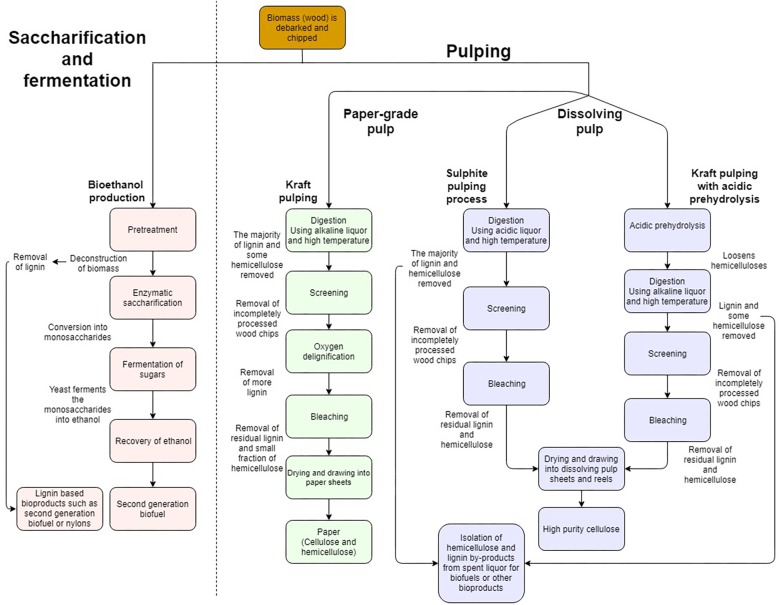
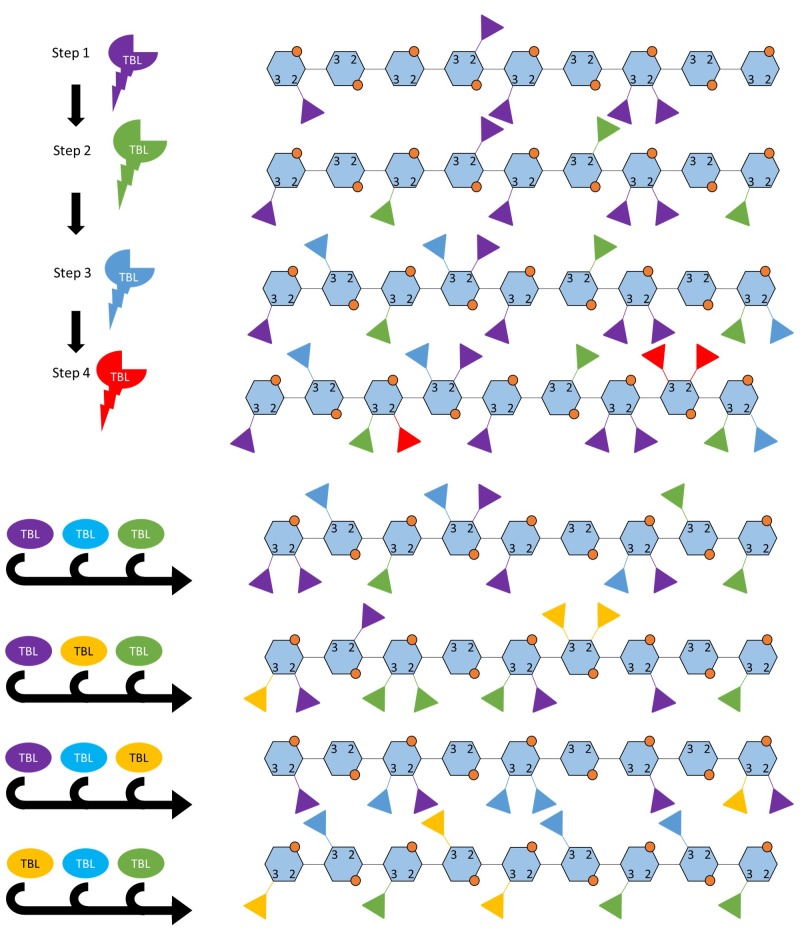
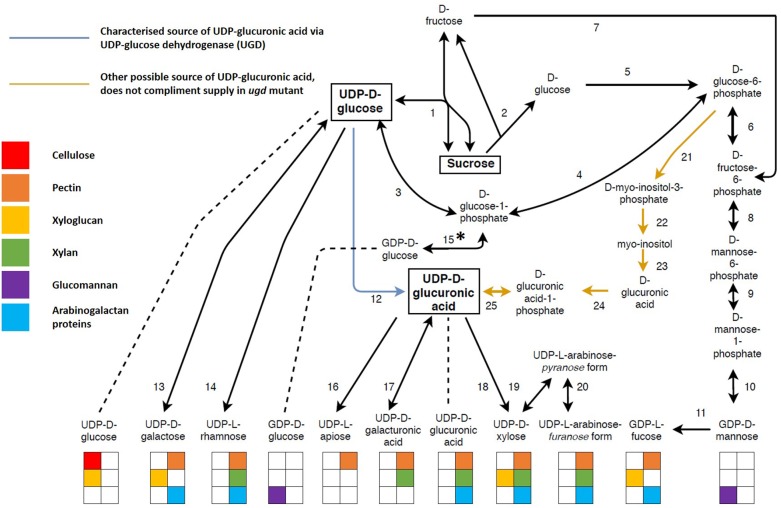
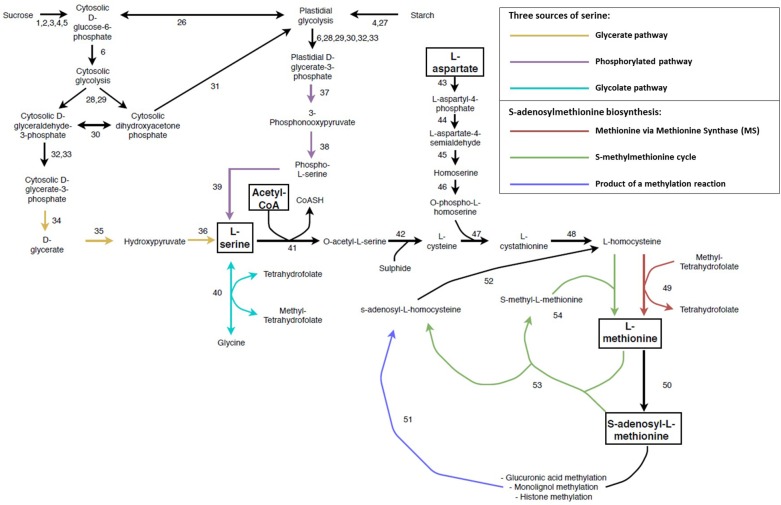
Lignocellulosic biomass, encompassing cellulose, lignin and hemicellulose in plant secondary cell walls (SCWs), is the most abundant source of renewable materials on earth. Currently, fast-growing woody dicots such as and trees are major lignocellulosic (wood fiber) feedstocks for bioproducts such as pulp, paper, cellulose, textiles, bioplastics and other biomaterials. Processing wood for these products entails separating the biomass into its three main components as efficiently as possible without compromising yield. Glucuronoxylan (xylan), the main hemicellulose present in the SCWs of hardwood trees carries chemical modifications that are associated with SCW composition and ultrastructure, and affect the recalcitrance of woody biomass to industrial processing. In this review we highlight the importance of xylan properties for industrial wood fiber processing and how gaining a greater understanding of xylan biosynthesis, specifically xylan modification, could yield novel biotechnology approaches to reduce recalcitrance or introduce novel processing traits. Altering xylan modification patterns has recently become a focus of plant SCW studies due to early findings that altered modification patterns can yield beneficial biomass processing traits. Additionally, it has been noted that plants with altered xylan composition display metabolic differences linked to changes in precursor usage. We explore the possibility of using systems biology and systems genetics approaches to gain insight into the coordination of SCW formation with other interdependent biological processes. Acetyl-CoA, s-adenosylmethionine and nucleotide sugars are precursors needed for xylan modification, however, the pathways which produce metabolic pools during different stages of fiber cell wall formation still have to be identified and their co-regulation during SCW formation elucidated. The crucial dependence on precursor metabolism provides an opportunity to alter xylan modification patterns through metabolic engineering of one or more of these interdependent pathways. The complexity of xylan biosynthesis and modification is currently a stumbling point, but it may provide new avenues for woody biomass engineering that are not possible for other biopolymers.
木质纤维素生物质包含植物次生细胞壁(SCW)中的纤维素、木质素和半纤维素,是地球上最丰富的可再生材料来源。目前,速生木本双子叶植物,如杨树和柳树,是用于生产纸浆、纸张、纤维素、纺织品、生物塑料和其他生物材料等生物产品的主要木质纤维素(木纤维)原料。将木材加工成这些产品需要在不影响产量的前提下,尽可能高效地将生物质分离成其三个主要成分。葡糖醛酸木聚糖(木聚糖)是硬木树SCW中存在的主要半纤维素,它带有与SCW组成和超微结构相关的化学修饰,并影响木质生物质对工业加工的抗性。在本综述中,我们强调了木聚糖特性对工业木纤维加工的重要性,以及深入了解木聚糖生物合成,特别是木聚糖修饰,如何能产生新的生物技术方法来降低抗性或引入新的加工特性。由于早期发现改变修饰模式可产生有益的生物质加工特性,改变木聚糖修饰模式最近已成为植物SCW研究的重点。此外,已经注意到木聚糖组成改变的植物表现出与前体使用变化相关的代谢差异。我们探讨了使用系统生物学和系统遗传学方法来深入了解SCW形成与其他相互依赖的生物过程之间协调的可能性。乙酰辅酶A、S-腺苷甲硫氨酸和核苷酸糖是木聚糖修饰所需的前体,然而,在纤维细胞壁形成的不同阶段产生代谢库的途径仍有待确定,并且它们在SCW形成过程中的共同调节也有待阐明。对前体代谢的关键依赖为通过对这些相互依赖途径中的一个或多个进行代谢工程来改变木聚糖修饰模式提供了机会。木聚糖生物合成和修饰的复杂性目前是一个绊脚石,但它可能为木质生物质工程提供其他生物聚合物无法实现的新途径。