Ring Sandra S, Cupovic Jovana, Onder Lucas, Lütge Mechthild, Perez-Shibayama Christian, Gil-Cruz Cristina, Scandella Elke, De Martin Angelina, Mörbe Urs, Hartmann Fabienne, Wenger Robert, Spiegl Matthias, Besse Andrej, Bonilla Weldy V, Stemeseder Felix, Schmidt Sarah, Orlinger Klaus K, Krebs Philippe, Ludewig Burkhard, Flatz Lukas
Institute of Immunobiology, Kantonsspital St.Gallen, St.Gallen, Switzerland.
Max Planck Institute of Immunology and Epigenetics, Freiburg, Germany.
Nat Commun. 2021 Aug 5;12(1):4734. doi: 10.1038/s41467-021-25057-w.
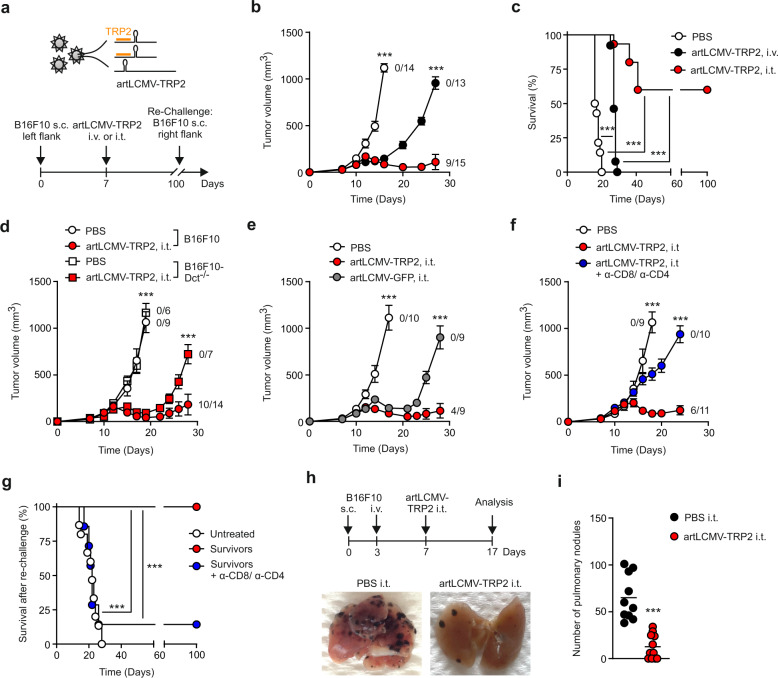
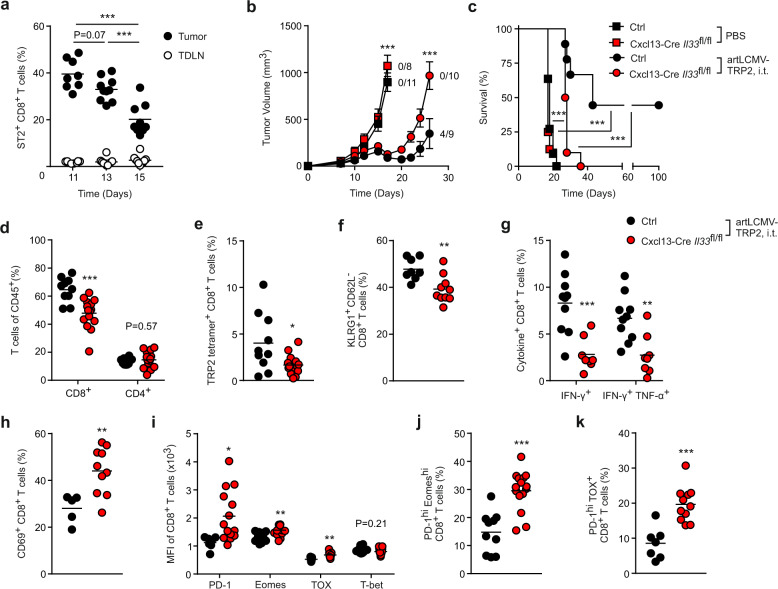
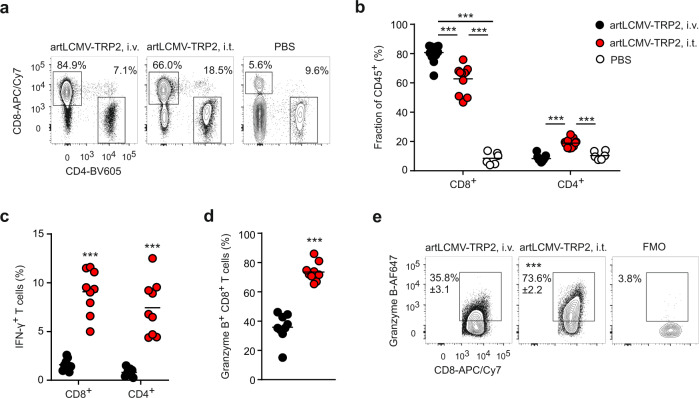
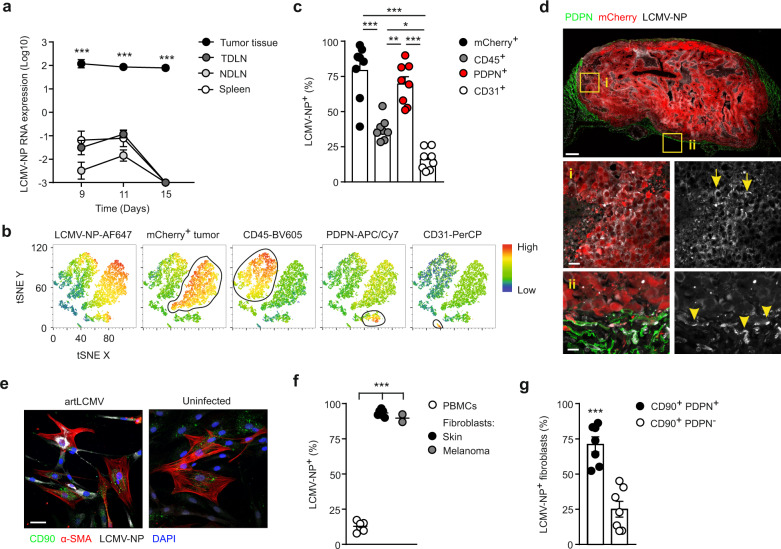
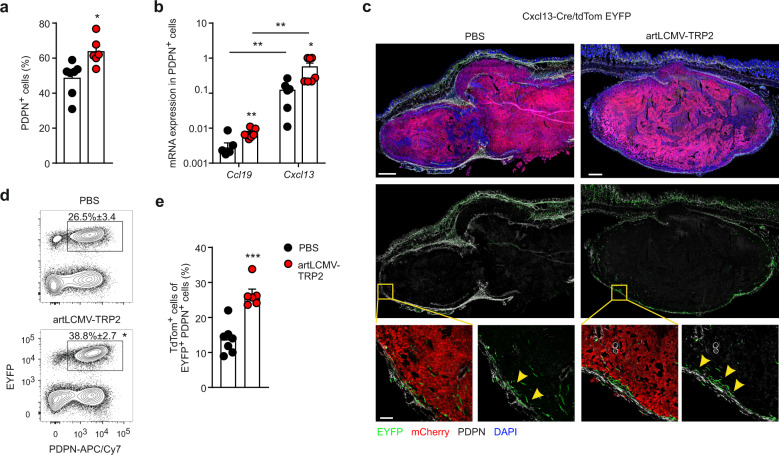
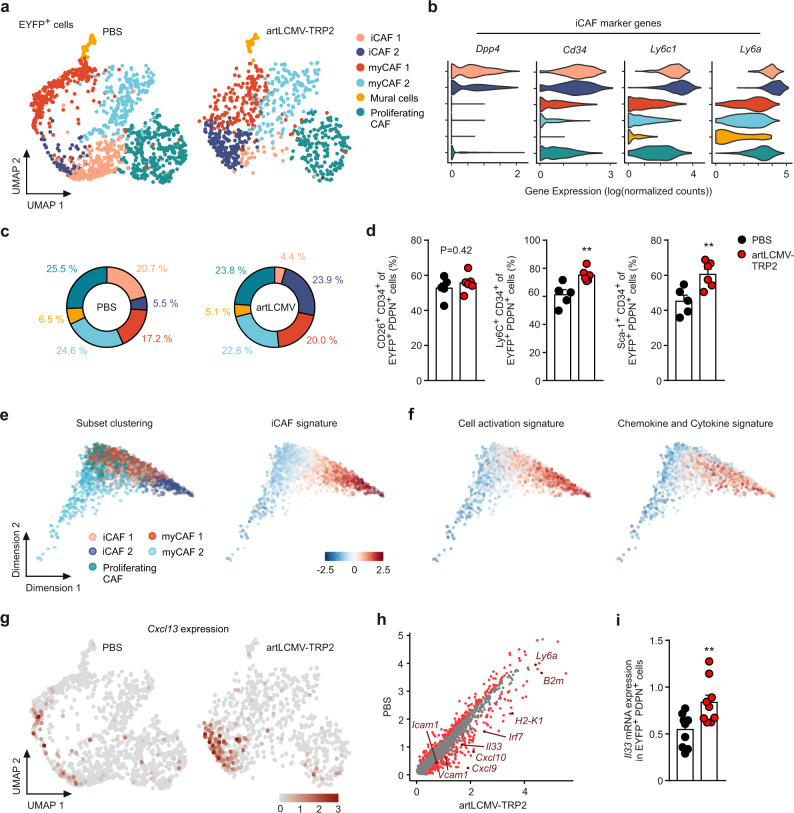
The tumor microenvironment (TME) is a complex amalgam of tumor cells, immune cells, endothelial cells and fibroblastic stromal cells (FSC). Cancer-associated fibroblasts are generally seen as tumor-promoting entity. However, it is conceivable that particular FSC populations within the TME contribute to immune-mediated tumor control. Here, we show that intratumoral treatment of mice with a recombinant lymphocytic choriomeningitis virus-based vaccine vector expressing a melanocyte differentiation antigen resulted in T cell-dependent long-term control of melanomas. Using single-cell RNA-seq analysis, we demonstrate that viral vector-mediated transduction reprogrammed and activated a Cxcl13-expressing FSC subset that show a pronounced immunostimulatory signature and increased expression of the inflammatory cytokine IL-33. Ablation of Il33 gene expression in Cxcl13-Cre-positive FSCs reduces the functionality of intratumoral T cells and unleashes tumor growth. Thus, reprogramming of FSCs by a self-antigen-expressing viral vector in the TME is critical for curative melanoma treatment by locally sustaining the activity of tumor-specific T cells.
肿瘤微环境(TME)是肿瘤细胞、免疫细胞、内皮细胞和成纤维细胞基质细胞(FSC)的复杂混合体。癌症相关成纤维细胞通常被视为促进肿瘤的实体。然而,可以想象,TME内特定的FSC群体有助于免疫介导的肿瘤控制。在这里,我们表明,用表达黑色素细胞分化抗原的重组淋巴细胞性脉络丛脑膜炎病毒疫苗载体对小鼠进行瘤内治疗,可导致T细胞依赖性的黑色素瘤长期控制。通过单细胞RNA测序分析,我们证明病毒载体介导的转导对表达Cxcl13的FSC亚群进行了重编程和激活,该亚群显示出明显的免疫刺激特征,并增加了炎性细胞因子IL-33的表达。在Cxcl13-Cre阳性FSC中敲除Il33基因表达会降低瘤内T细胞的功能,并导致肿瘤生长。因此,通过在TME中表达自身抗原的病毒载体对FSC进行重编程,对于通过局部维持肿瘤特异性T细胞的活性来治愈黑色素瘤至关重要。