Zhong Aifang, Ding Ning, Zhou Yang, Yang Guifang, Peng Zhenyu, Zhang Hongliang, Chai Xiangping
Department of Emergency Medicine, The Second Xiangya Hospital, Central South University, Changsha, Hunan, People's Republic of China.
Trauma center, The Second Xiangya Hospital, Central South University, Changsha, Hunan, People's Republic of China.
Int J Gen Med. 2021 Jul 30;14:4039-4050. doi: 10.2147/IJGM.S320396. eCollection 2021.
At present, the pathogenesis of intracranial aneurysms (IA) remains unclear, which significantly hinders the development of novel strategies for the clinical treatment. In this study, bioinformatics methods were used to identify the potential hub genes and pathways associated with the pathogenesis of IA.
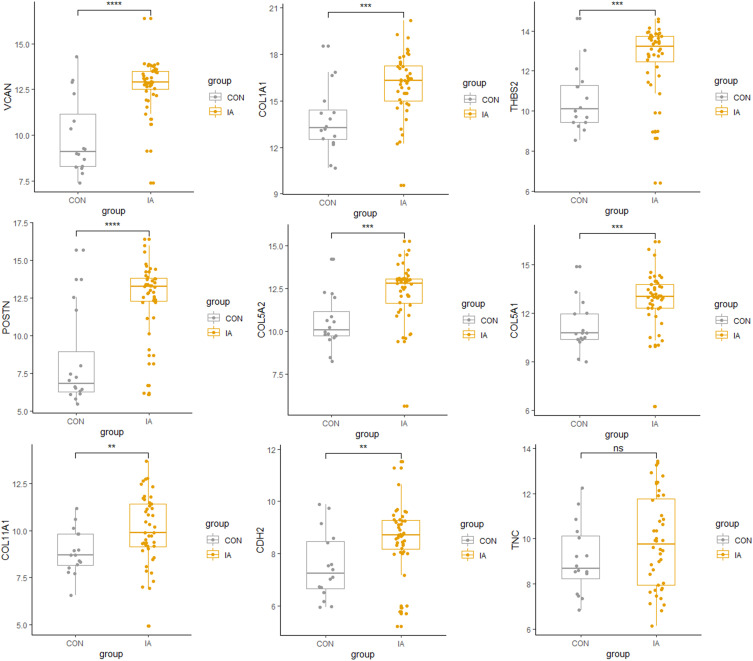
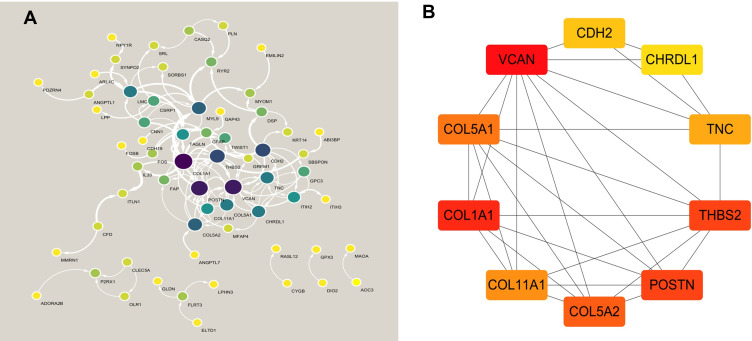
The gene expression datasets of patients with intracranial aneurysm were downloaded from the Gene Expression Database (GEO), and the different data sets were integrated by the robust rank aggregation (RRA) method to identify the differentially expressed genes between patients with intracranial aneurysm and the controls. The functional enrichment analyses of the significant differentially expressed genes (DEGs) were performed and the protein-protein interaction (PPI) network was constructed; thereafter, the hub genes were screened by cytoHubba plug-in of Cytoscape, and finally sequencing dataset GSE122897 was used to verify the hub genes.
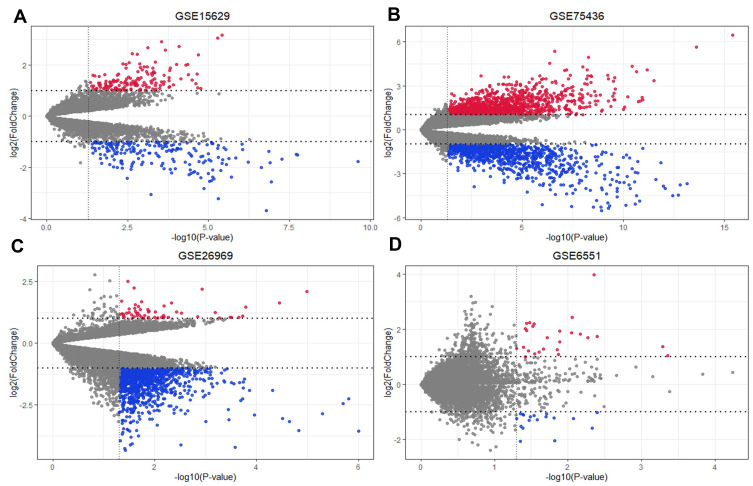
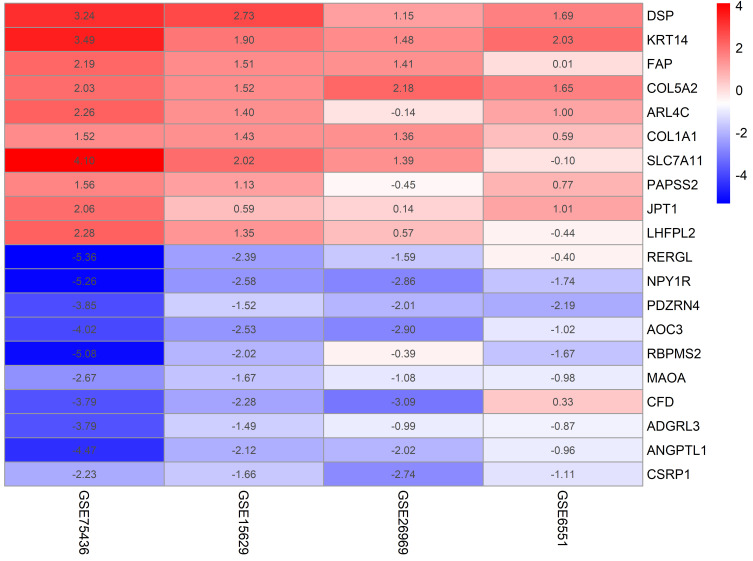
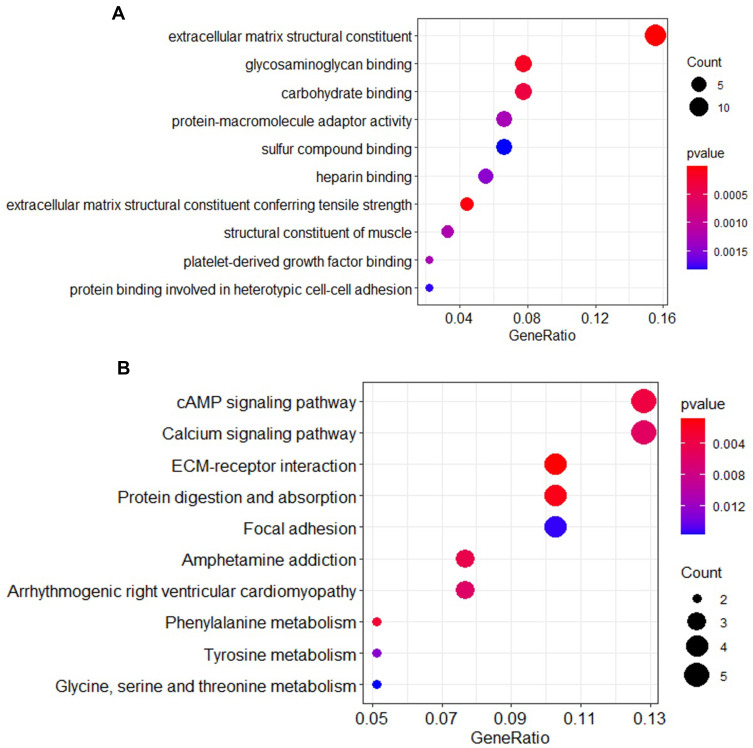
The GSE15629, GSE75436, GSE26969, and GSE6551 expression profiles have been included in this study, including 34 intracranial aneurysm samples and 26 control samples. The four datasets obtained 136 significant DEGs (45 up-regulated, 91 down-regulated). Enrichment analysis showed that the extracellular matrix structural constituent and the ECM-receptor interaction were closely related to the occurrence of IA. It was finally determined that eight hub genes associated with the development of IA, including , and .
The discovery of potential hub genes and pathways could enhance the understanding of the molecular mechanisms associated with the development of IA. These hub genes may be potential therapeutic targets for the management and new biomarker for the diagnosis of IA.
目前,颅内动脉瘤(IA)的发病机制仍不清楚,这严重阻碍了临床治疗新策略的发展。在本研究中,采用生物信息学方法来识别与IA发病机制相关的潜在枢纽基因和通路。
从基因表达数据库(GEO)下载颅内动脉瘤患者的基因表达数据集,并通过稳健秩聚合(RRA)方法整合不同数据集,以识别颅内动脉瘤患者与对照组之间的差异表达基因。对显著差异表达基因(DEG)进行功能富集分析并构建蛋白质-蛋白质相互作用(PPI)网络;此后,通过Cytoscape的cytoHubba插件筛选枢纽基因,最后使用测序数据集GSE122897验证枢纽基因。
本研究纳入了GSE15629、GSE75436、GSE26969和GSE6551表达谱,包括34个颅内动脉瘤样本和26个对照样本。这四个数据集共获得136个显著的DEG(45个上调,91个下调)。富集分析表明,细胞外基质结构成分和ECM-受体相互作用与IA的发生密切相关。最终确定了8个与IA发展相关的枢纽基因,包括 、 和 。
潜在枢纽基因和通路的发现可增强对与IA发展相关分子机制的理解。这些枢纽基因可能是IA管理的潜在治疗靶点和诊断的新生物标志物。