Junkins Emily N, Stevenson Bradley S
Department of Microbiology and Plant Biology, University of Oklahoma, Norman, OK, United States.
Front Microbiol. 2021 Jul 20;12:675798. doi: 10.3389/fmicb.2021.675798. eCollection 2021.
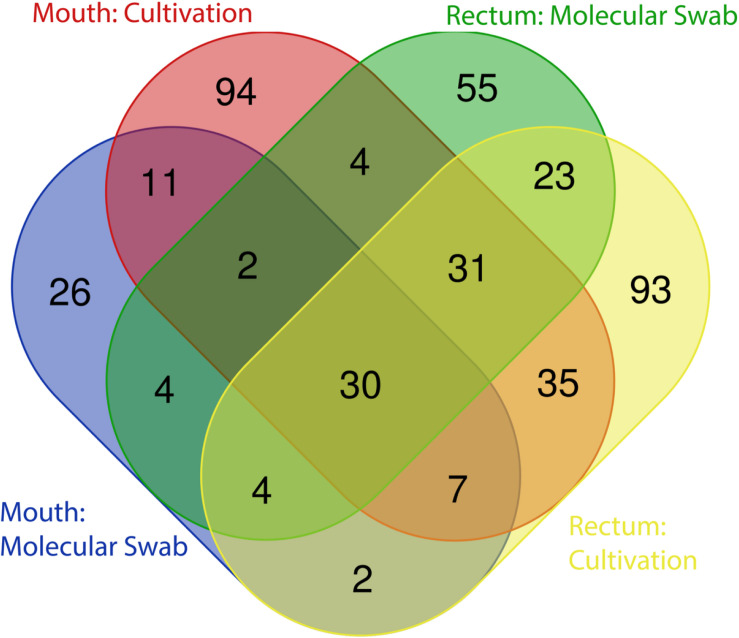
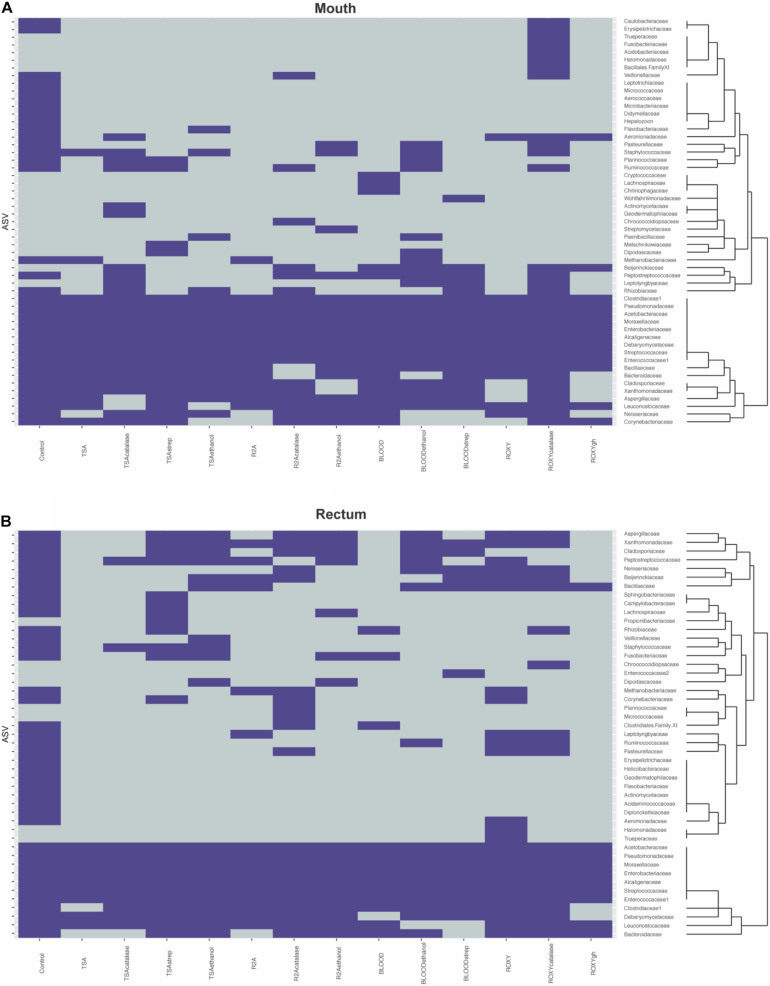
Molecular techniques continue to reveal a growing disparity between the immense diversity of microbial life and the small proportion that is in pure culture. The disparity, originally dubbed "the great plate count anomaly" by Staley and Konopka, has become even more vexing given our increased understanding of the importance of microbiomes to a host and the role of microorganisms in the vital biogeochemical functions of our biosphere. Searching for novel antimicrobial drug targets often focuses on screening a broad diversity of microorganisms. If diverse microorganisms are to be screened, they need to be cultivated. Recent innovative research has used molecular techniques to assess the efficacy of cultivation efforts, providing invaluable feedback to cultivation strategies for isolating targeted and/or novel microorganisms. Here, we aimed to determine the efficiency of cultivating representative microorganisms from a non-human, mammalian microbiome, identify those microorganisms, and determine the bioactivity of isolates. Sequence-based data indicated that around 57% of the ASVs detected in the original inoculum were cultivated in our experiments, but nearly 53% of the total ASVs that were present in our cultivation experiments were detected in the original inoculum. In light of our controls, our data suggests that when molecular tools were used to characterize our cultivation efforts, they provided a more complete and more complex, understanding of which organisms were present compared to what was eventually detected during cultivation. Lastly, about 3% of the isolates collected from our cultivation experiments showed inhibitory bioactivity against an multidrug-resistant pathogen panel, further highlighting the importance of informing and directing future cultivation efforts with molecular tools.
分子技术不断揭示出微生物生命的巨大多样性与纯培养中所占小比例之间日益增大的差距。这种差距最初被斯泰利和科诺普卡称为“平板计数大异常”,鉴于我们对微生物群落对宿主的重要性以及微生物在生物圈重要生物地球化学功能中的作用有了更多了解,这一差距变得更加棘手。寻找新型抗菌药物靶点通常侧重于筛选广泛多样的微生物。如果要筛选多样的微生物,就需要对它们进行培养。最近的创新性研究利用分子技术评估培养工作的成效,为分离目标微生物和/或新型微生物的培养策略提供了宝贵的反馈。在此,我们旨在确定从非人类哺乳动物微生物群落中培养代表性微生物的效率,鉴定这些微生物,并确定分离物的生物活性。基于序列的数据表明,在我们的实验中,原接种物中检测到的约57%的扩增子序列变体(ASVs)得到了培养,但在我们的培养实验中出现的所有ASVs中,近53%在原接种物中就已被检测到。根据我们的对照实验,我们的数据表明,当使用分子工具来描述我们的培养工作时,与培养过程中最终检测到的情况相比,它们能提供关于存在哪些生物体的更完整、更复杂的认识。最后,从我们的培养实验中收集的约3%的分离物对一组耐多药病原体显示出抑制生物活性,这进一步凸显了利用分子工具为未来培养工作提供信息和指导的重要性。