Tang Guoyi, Xu Yu, Zhang Cheng, Wang Ning, Li Huabin, Feng Yibin
School of Chinese Medicine, Li Ka Shing Faculty of Medicine, The University of Hong Kong, 10 Sassoon Road, Pokfulam, Hong Kong, China.
School of Public Health, Sun Yat-sen University, Guangzhou 510080, China.
Antioxidants (Basel). 2021 Jul 5;10(7):1076. doi: 10.3390/antiox10071076.
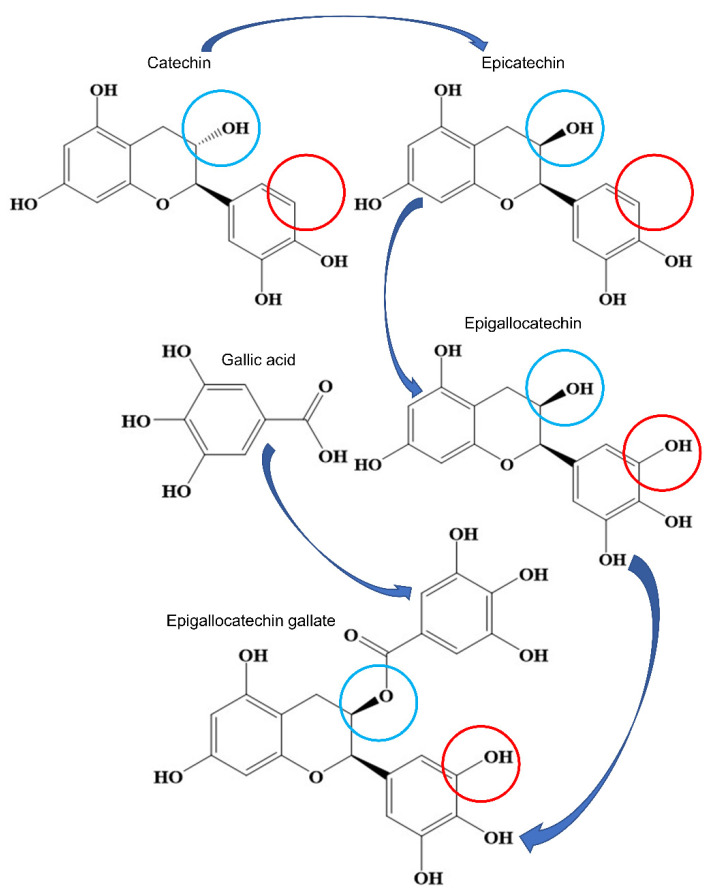
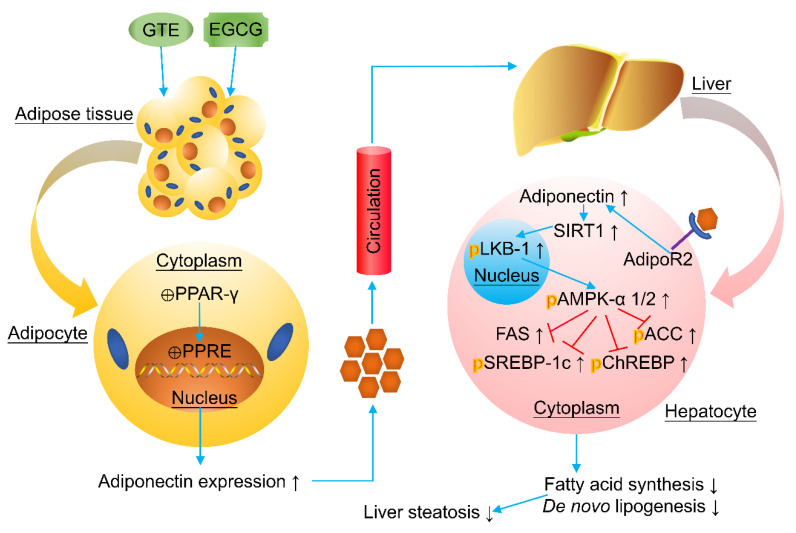
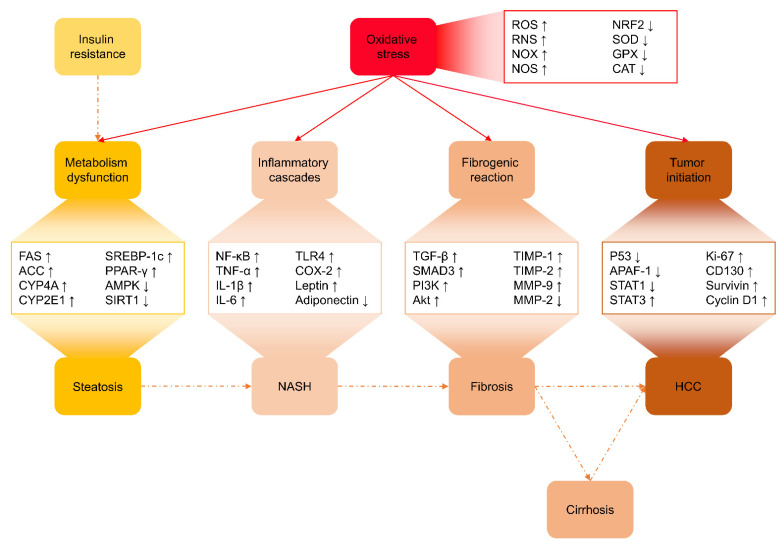
Nonalcoholic fatty liver diseases (NAFLD) represent a set of liver disorders progressing from steatosis to steatohepatitis, fibrosis, cirrhosis, and hepatocellular carcinoma, which induce huge burden to human health. Many pathophysiological factors are considered to influence NAFLD in a parallel pattern, involving insulin resistance, oxidative stress, lipotoxicity, mitochondrial dysfunction, endoplasmic reticulum stress, inflammatory cascades, fibrogenic reaction, etc. However, the underlying mechanisms, including those that induce NAFLD development, have not been fully understood. Specifically, oxidative stress, mainly mediated by excessive accumulation of reactive oxygen species, has participated in the multiple NAFLD-related signaling by serving as an accelerator. Ameliorating oxidative stress and maintaining redox homeostasis may be a promising approach for the management of NAFLD. Green tea is one of the most important dietary resources of natural antioxidants, above which epigallocatechin gallate (EGCG) notably contributes to its antioxidative action. Accumulative evidence from randomized clinical trials, systematic reviews, and meta-analysis has revealed the beneficial functions of green tea and EGCG in preventing and managing NAFLD, with acceptable safety in the patients. Abundant animal and cellular studies have demonstrated that green tea and EGCG may protect against NAFLD initiation and development by alleviating oxidative stress and the related metabolism dysfunction, inflammation, fibrosis, and tumorigenesis. The targeted signaling pathways may include, but are not limited to, NRF2, AMPK, SIRT1, NF-κB, TLR4/MYD88, TGF-β/SMAD, and PI3K/Akt/FoxO1, etc. In this review, we thoroughly discuss the oxidative stress-related mechanisms involved in NAFLD development, as well as summarize the protective effects and underlying mechanisms of green tea and EGCG against NAFLD.
非酒精性脂肪性肝病(NAFLD)是一组从脂肪变性发展为脂肪性肝炎、纤维化、肝硬化和肝细胞癌的肝脏疾病,给人类健康带来巨大负担。许多病理生理因素被认为以平行模式影响NAFLD,包括胰岛素抵抗、氧化应激、脂毒性、线粒体功能障碍、内质网应激、炎症级联反应、纤维化反应等。然而,其潜在机制,包括那些诱导NAFLD发生发展的机制,尚未完全明确。具体而言,氧化应激主要由活性氧的过度积累介导,作为一个促进因素参与了多种与NAFLD相关的信号传导。减轻氧化应激并维持氧化还原稳态可能是管理NAFLD的一种有前景的方法。绿茶是天然抗氧化剂最重要的饮食来源之一,其中表没食子儿茶素没食子酸酯(EGCG)对其抗氧化作用有显著贡献。来自随机临床试验、系统评价和荟萃分析的累积证据表明,绿茶和EGCG在预防和管理NAFLD方面具有有益作用,且在患者中安全性可接受。大量动物和细胞研究表明,绿茶和EGCG可能通过减轻氧化应激及相关代谢功能障碍、炎症、纤维化和肿瘤发生来预防NAFLD的发生和发展。其靶向的信号通路可能包括但不限于NRF2、AMPK、SIRT1、NF-κB、TLR4/MYD88、TGF-β/SMAD和PI3K/Akt/FoxO1等。在本综述中,我们深入讨论了NAFLD发生发展中涉及的氧化应激相关机制,并总结了绿茶和EGCG对NAFLD的保护作用及潜在机制。