Theofilis Panagiotis, Sagris Marios, Oikonomou Evangelos, Antonopoulos Alexios S, Siasos Gerasimos, Tsioufis Costas, Tousoulis Dimitris
1st Department of Cardiology, Hippokration General Hospital, University of Athens Medical School, 11527 Athens, Greece.
3rd Department of Cardiology, Thoracic Diseases General Hospital Sotiria, University of Athens Medical School, 11527 Athens, Greece.
Biomedicines. 2021 Jul 6;9(7):781. doi: 10.3390/biomedicines9070781.
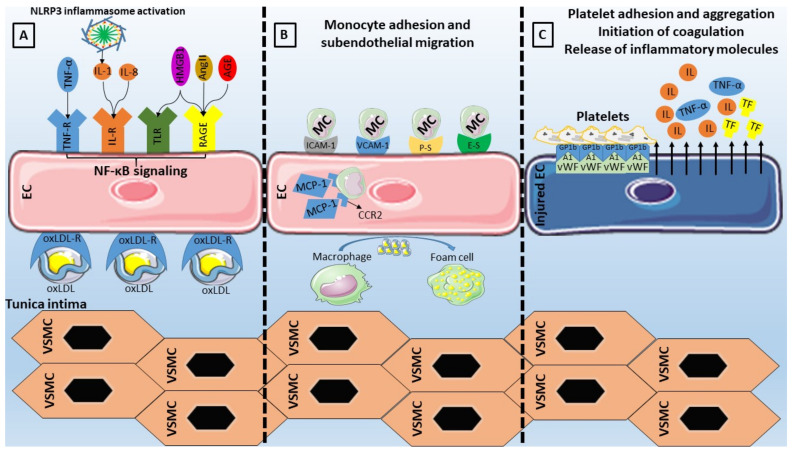
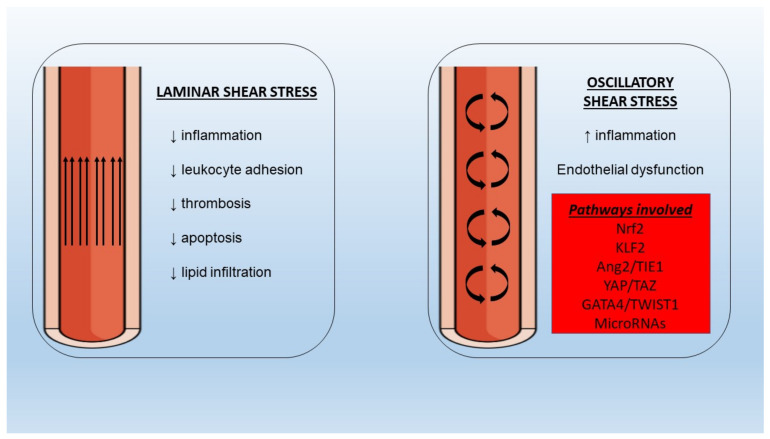
Maintenance of endothelial cell integrity is an important component of human health and disease since the endothelium can perform various functions including regulation of vascular tone, control of hemostasis and thrombosis, cellular adhesion, smooth muscle cell proliferation, and vascular inflammation. Endothelial dysfunction is encompassed by complex pathophysiology that is based on endothelial nitric oxide synthase uncoupling and endothelial activation following stimulation from various inflammatory mediators (molecular patterns, oxidized lipoproteins, cytokines). The downstream signaling via nuclear factor-κB leads to overexpression of adhesion molecules, selectins, and chemokines that facilitate leukocyte adhesion, rolling, and transmigration to the subendothelial space. Moreover, oscillatory shear stress leads to pro-inflammatory endothelial activation with increased monocyte adhesion and endothelial cell apoptosis, an effect that is dependent on multiple pathways and flow-sensitive microRNA regulation. Moreover, the role of neutrophil extracellular traps and NLRP3 inflammasome as inflammatory mechanisms contributing to endothelial dysfunction has recently been unveiled and is under further investigation. Consequently, and following their activation, injured endothelial cells release inflammatory mediators and enter a pro-thrombotic state through activation of coagulation pathways, downregulation of thrombomodulin, and an increase in platelet adhesion and aggregation owing to the action of von-Willebrand factor, ultimately promoting atherosclerosis progression.
维持内皮细胞完整性是人类健康和疾病的重要组成部分,因为内皮细胞可以执行多种功能,包括调节血管张力、控制止血和血栓形成、细胞粘附、平滑肌细胞增殖以及血管炎症。内皮功能障碍包含复杂的病理生理学,其基于内皮型一氧化氮合酶解偶联以及在各种炎症介质(分子模式、氧化脂蛋白、细胞因子)刺激后的内皮激活。通过核因子-κB的下游信号传导导致粘附分子、选择素和趋化因子的过度表达,这些分子促进白细胞粘附、滚动并迁移至内皮下空间。此外,振荡剪切应力导致促炎性内皮激活,单核细胞粘附增加和内皮细胞凋亡,这种效应依赖于多种途径和对流量敏感的微小RNA调节。此外,中性粒细胞胞外陷阱和NLRP3炎性小体作为导致内皮功能障碍的炎症机制的作用最近已被揭示,并且正在进一步研究中。因此,在激活后,受损的内皮细胞释放炎症介质,并通过激活凝血途径、下调血栓调节蛋白以及由于血管性血友病因子的作用导致血小板粘附和聚集增加而进入促血栓形成状态,最终促进动脉粥样硬化进展。