Parente Raffaella, Possetti Valentina, Schiavone Maria Lucia, Campodoni Elisabetta, Menale Ciro, Loppini Mattia, Doni Andrea, Bottazzi Barbara, Mantovani Alberto, Sandri Monica, Tampieri Anna, Sobacchi Cristina, Inforzato Antonio
IRCCS Humanitas Research Hospital, 20089 Rozzano, Italy.
National Research Council-Institute for Genetic and Biomedical Research (CNR-IRGB), Milan Unit, 20089 Rozzano, Italy.
Pathogens. 2021 Jul 3;10(7):837. doi: 10.3390/pathogens10070837.
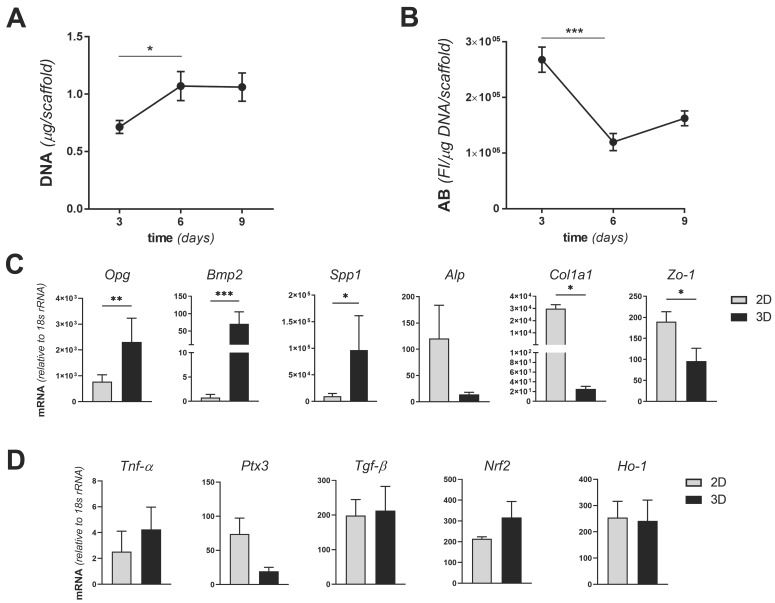
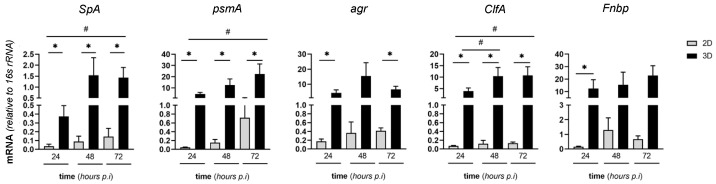
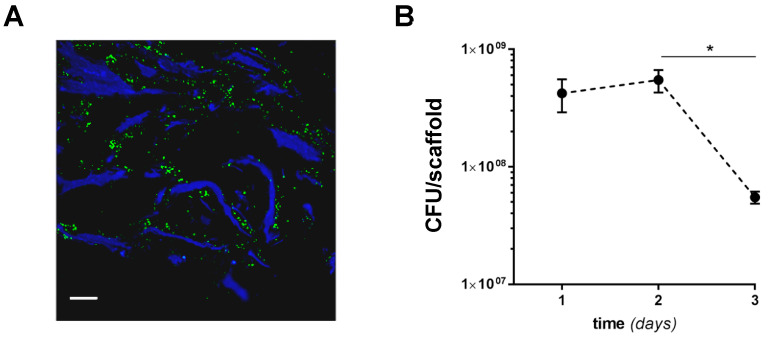
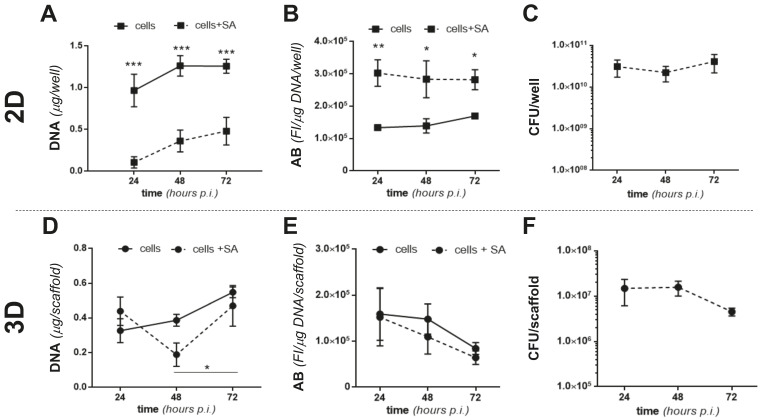
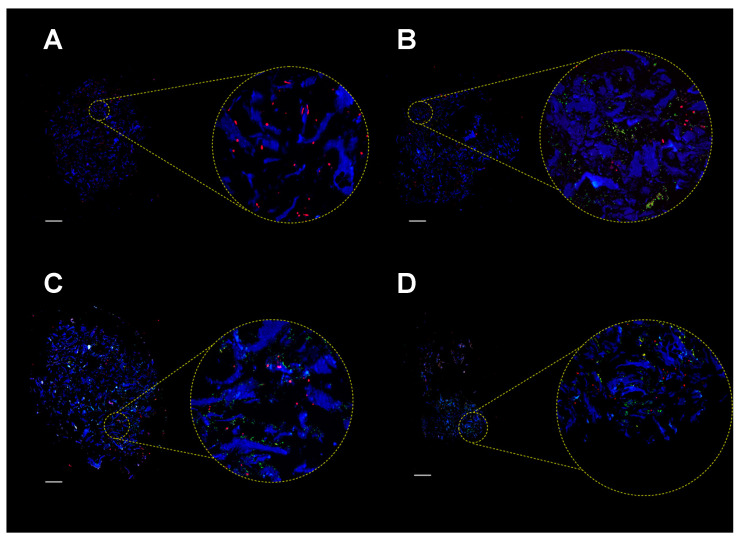
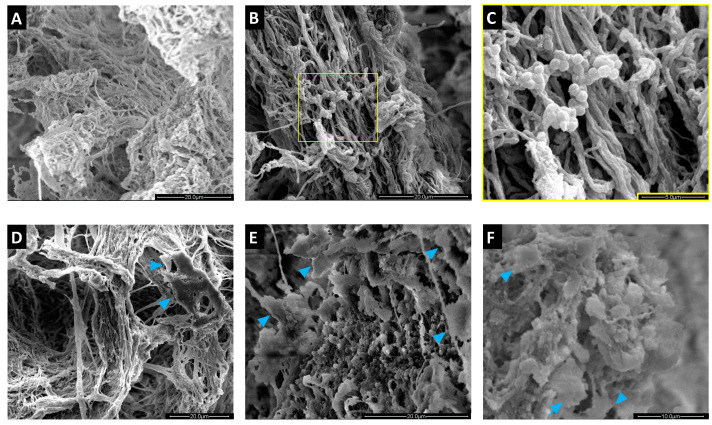
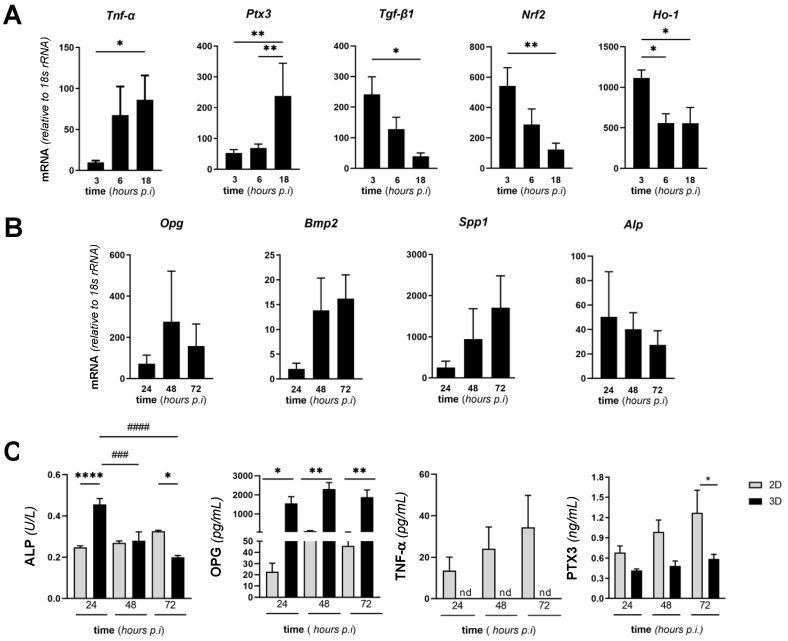
Osteomyelitis (OM) is an infectious disease of the bone primarily caused by the opportunistic pathogen (SA). This Gram-positive bacterium has evolved a number of strategies to evade the immune response and subvert bone homeostasis, yet the underlying mechanisms remain poorly understood. OM has been modeled in vitro to challenge pathogenetic hypotheses in controlled conditions, thus providing guidance and support to animal experimentation. In this regard, traditional 2D models of OM inherently lack the spatial complexity of bone architecture. Three-dimensional models of the disease overcome this limitation; however, they poorly reproduce composition and texture of the natural bone. Here, we developed a new 3D model of OM based on cocultures of SA and murine osteoblastic MC3T3-E1 cells on magnesium-doped hydroxyapatite/collagen I (MgHA/Col) scaffolds that closely recapitulate the bone extracellular matrix. In this model, matrix-dependent effects were observed in proliferation, gene transcription, protein expression, and cell-matrix interactions both of the osteoblastic cell line and of bacterium. Additionally, these had distinct metabolic and gene expression profiles, compared to conventional 2D settings, when grown on MgHA/Col scaffolds in separate monocultures. Our study points to MgHA/Col scaffolds as biocompatible and bioactive matrices and provides a novel and close-to-physiology tool to address the pathogenetic mechanisms of OM at the host-pathogen interface.
骨髓炎(OM)是一种主要由机会致病菌(金黄色葡萄球菌,SA)引起的骨感染性疾病。这种革兰氏阳性菌已经进化出多种策略来逃避免疫反应并破坏骨稳态,但其潜在机制仍知之甚少。OM已在体外建模,以在可控条件下验证致病假说,从而为动物实验提供指导和支持。在这方面,传统的二维OM模型本质上缺乏骨结构的空间复杂性。该疾病的三维模型克服了这一局限性;然而,它们难以重现天然骨的组成和质地。在此,我们基于SA与小鼠成骨细胞MC3T3-E1细胞在掺镁羟基磷灰石/ I型胶原蛋白(MgHA/Col)支架上的共培养,开发了一种新的OM三维模型,该支架能紧密模拟骨细胞外基质。在这个模型中,在成骨细胞系和细菌的增殖、基因转录、蛋白质表达以及细胞与基质的相互作用中都观察到了基质依赖性效应。此外,当在MgHA/Col支架上单独进行单培养时,与传统的二维培养环境相比,它们具有不同的代谢和基因表达谱。我们的研究表明MgHA/Col支架是生物相容性和生物活性基质,并提供了一种新颖且接近生理状态的工具,以研究宿主-病原体界面处OM的致病机制。