Broad Institute, Cambridge, MA, USA.
Center for the Development of Therapeutics, Broad Institute, Cambridge, MA, USA.
Mol Cell. 2021 Sep 2;81(17):3481-3495.e7. doi: 10.1016/j.molcel.2021.07.019. Epub 2021 Aug 5.
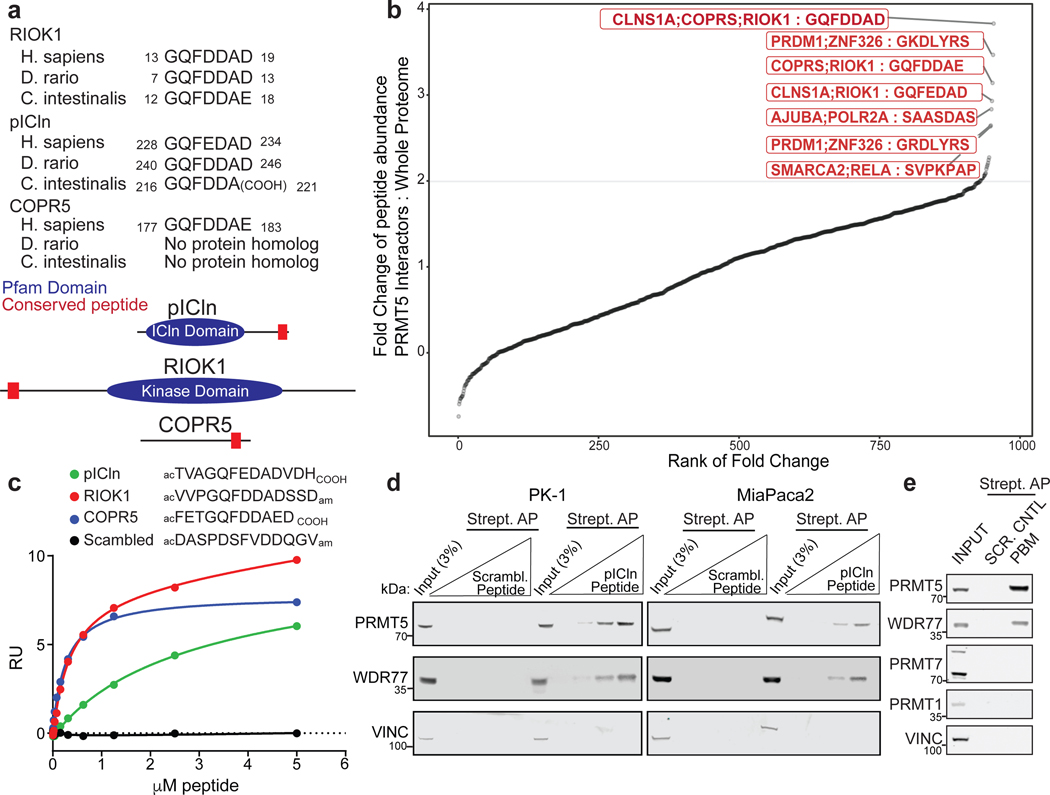
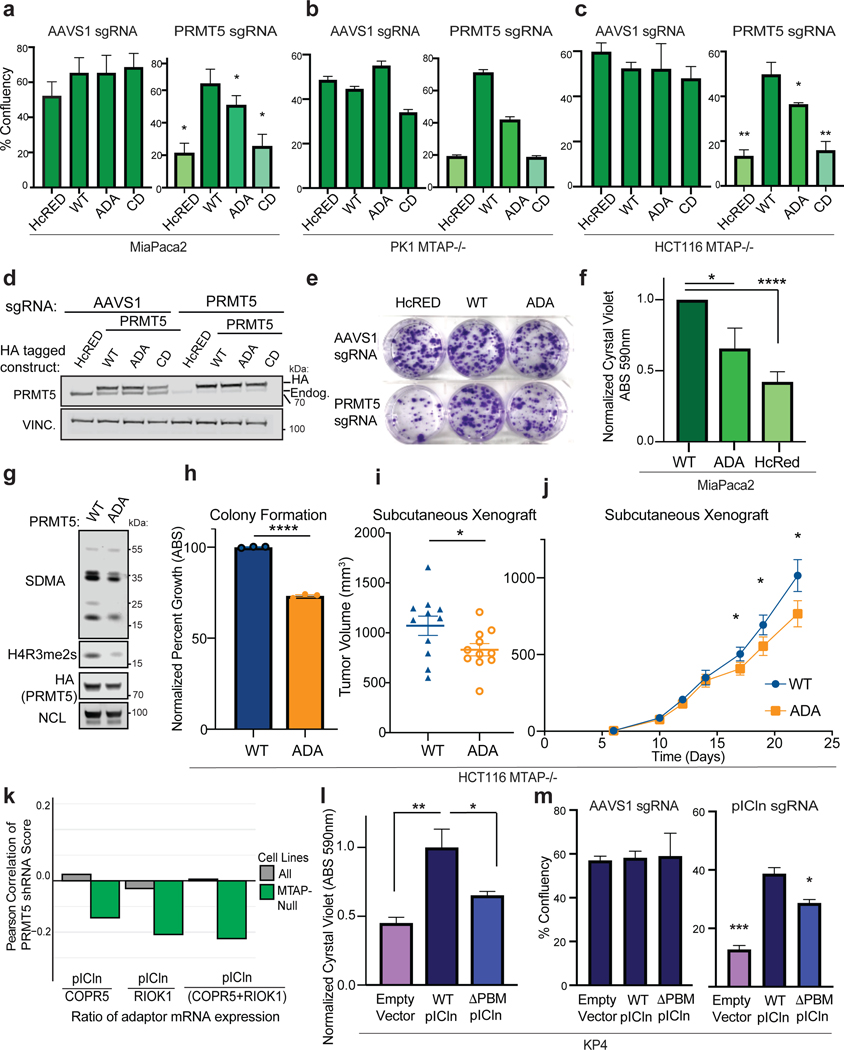
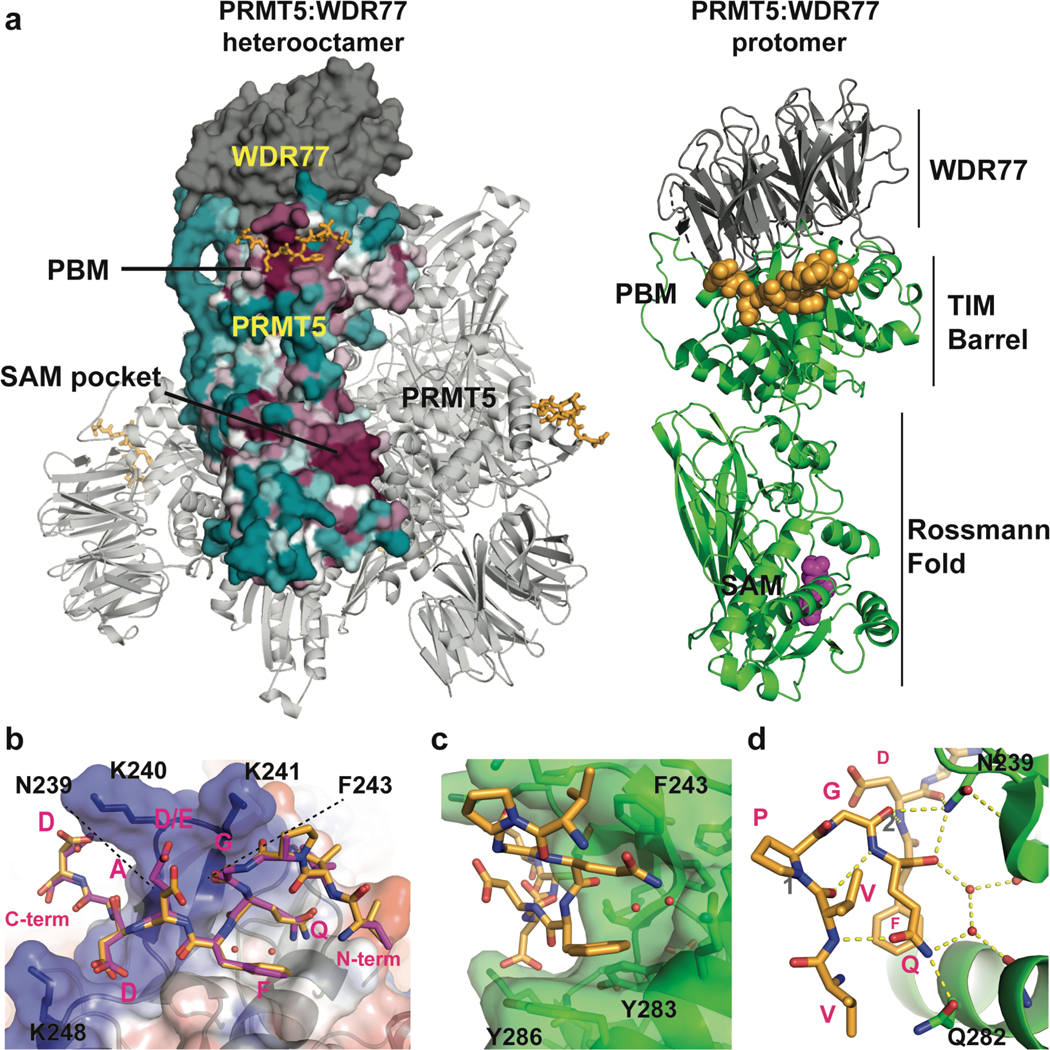
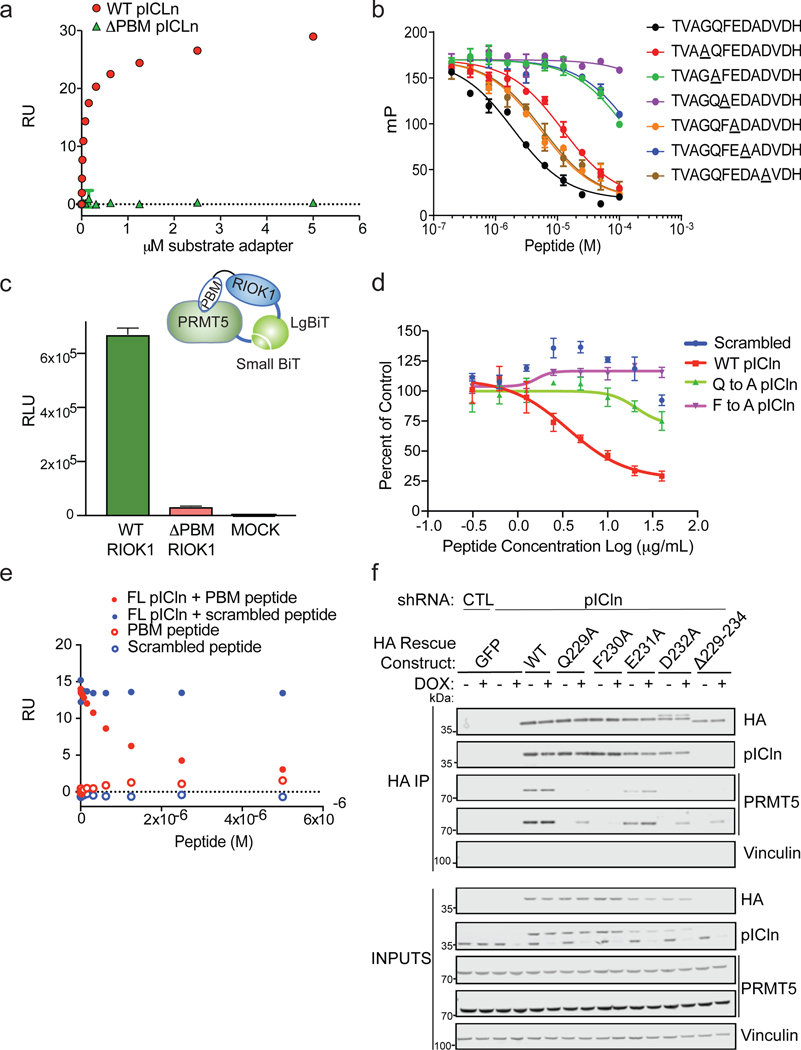
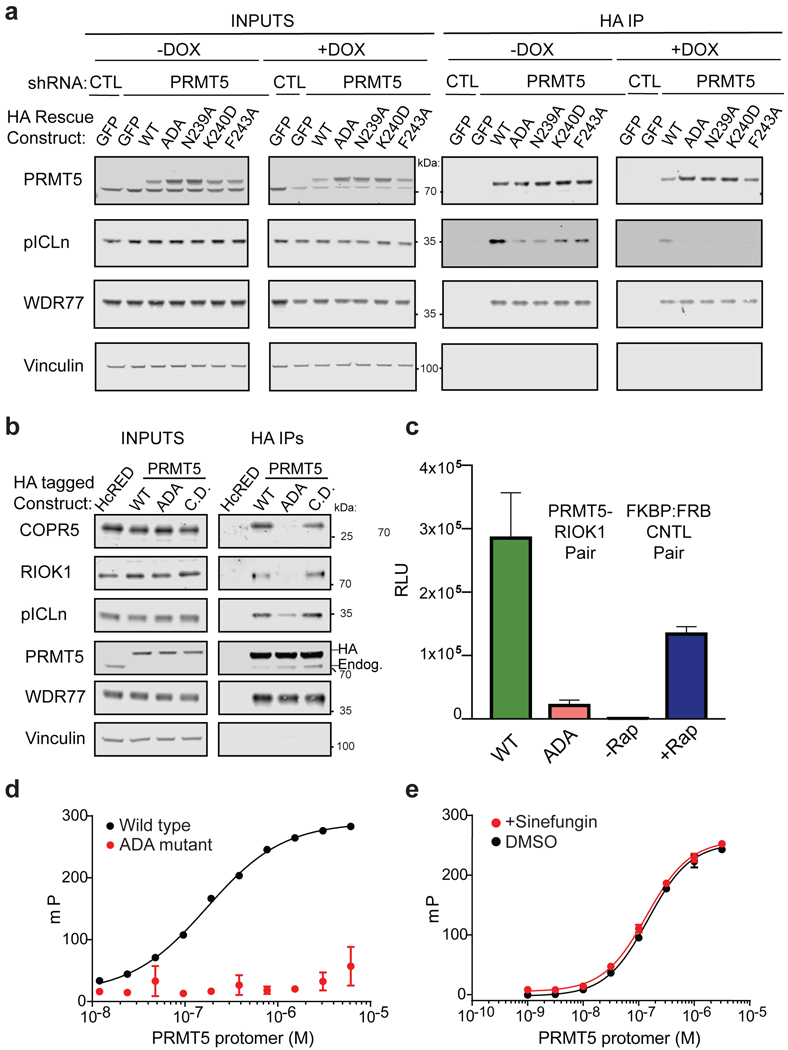
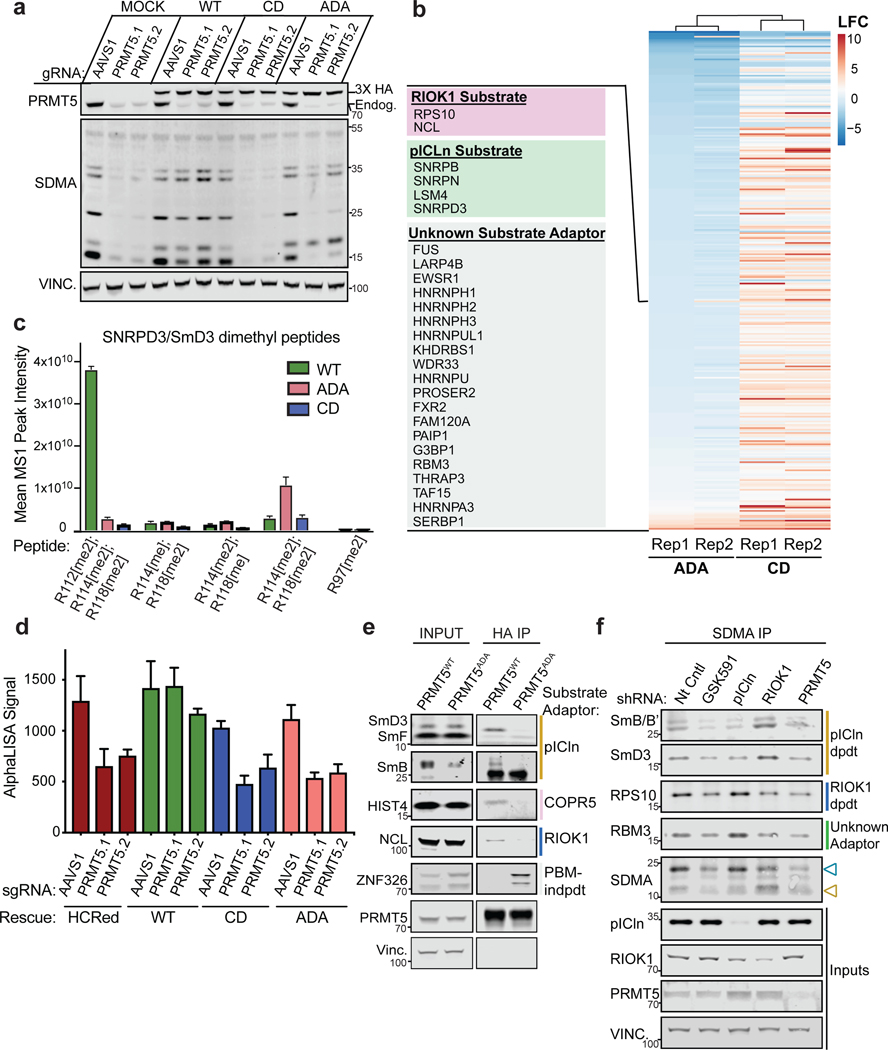
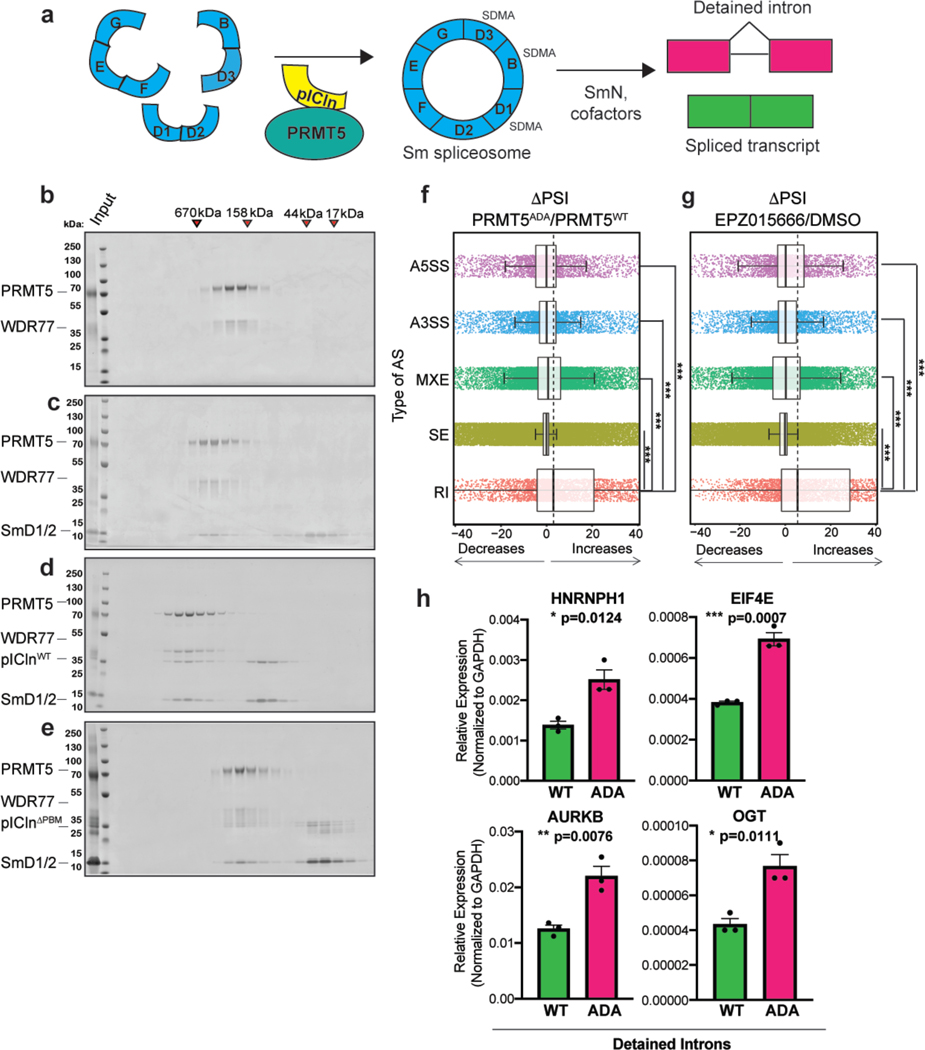
PRMT5 is an essential arginine methyltransferase and a therapeutic target in MTAP-null cancers. PRMT5 uses adaptor proteins for substrate recruitment through a previously undefined mechanism. Here, we identify an evolutionarily conserved peptide sequence shared among the three known substrate adaptors (CLNS1A, RIOK1, and COPR5) and show that it is necessary and sufficient for interaction with PRMT5. We demonstrate that PRMT5 uses modular adaptor proteins containing a common binding motif for substrate recruitment, comparable with other enzyme classes such as kinases and E3 ligases. We structurally resolve the interface with PRMT5 and show via genetic perturbation that it is required for methylation of adaptor-recruited substrates including the spliceosome, histones, and ribosomal complexes. Furthermore, disruption of this site affects Sm spliceosome activity, leading to intron retention. Genetic disruption of the PRMT5-substrate adaptor interface impairs growth of MTAP-null tumor cells and is thus a site for development of therapeutic inhibitors of PRMT5.
PRMT5 是一种必需的精氨酸甲基转移酶,也是 MTAP 缺失型癌症的治疗靶点。PRMT5 通过以前未定义的机制利用衔接蛋白募集底物。在这里,我们鉴定了三个已知底物衔接蛋白(CLNS1A、RIOK1 和 COPR5)共有的进化保守肽序列,并证明它对于与 PRMT5 的相互作用是必需且充分的。我们证明 PRMT5 使用含有常见结合基序的模块化衔接蛋白来募集底物,类似于其他酶类,如激酶和 E3 连接酶。我们通过结构解析确定了与 PRMT5 的界面,并通过遗传干扰表明它是衔接蛋白募集的底物(包括剪接体、组蛋白和核糖体复合物)甲基化所必需的。此外,该位点的破坏会影响 Sm 剪接体的活性,导致内含子保留。PRMT5-底物衔接蛋白界面的遗传破坏会损害 MTAP 缺失型肿瘤细胞的生长,因此是开发 PRMT5 治疗抑制剂的靶点。