Shahid Imran, Alzahrani Abdullah R, Al-Ghamdi Saeed S, Alanazi Ibrahim M, Rehman Sidra, Hassan Sajida
Department of Pharmacology and Toxicology, Faculty of Medicine, Umm Al-Qura University, Al-Abidiyah, P.O. Box 13578, Makkah 21955, Saudi Arabia.
Functional Genomics Laboratory, Department of Biosciences, COMSATS University Islamabad (CUI), Islamabad 45550, Pakistan.
Diagnostics (Basel). 2021 Jul 13;11(7):1253. doi: 10.3390/diagnostics11071253.
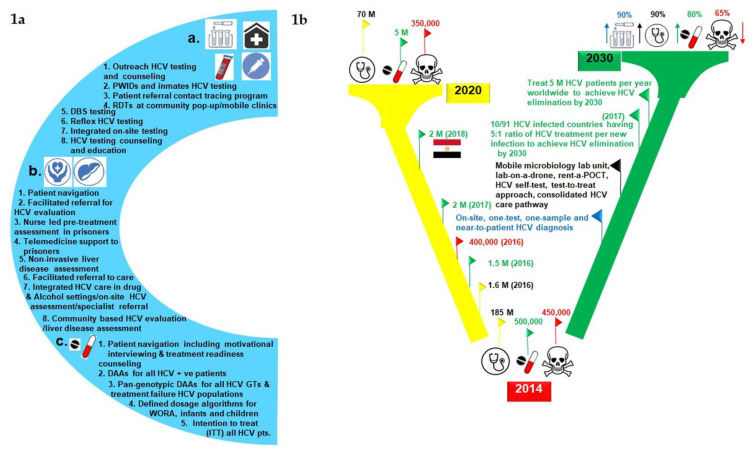
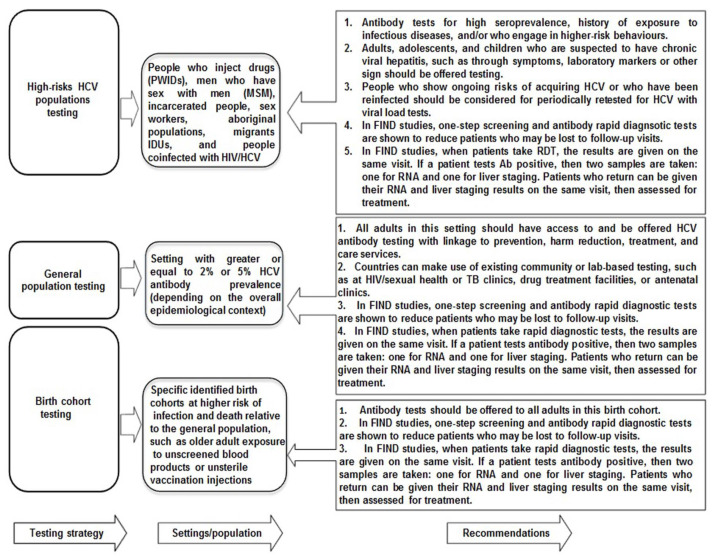
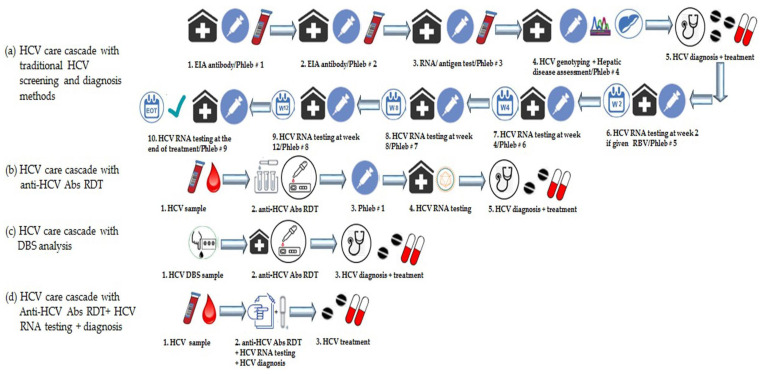
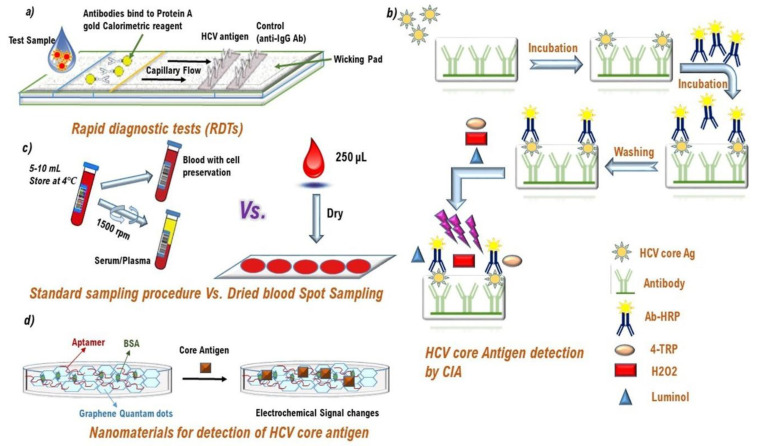
The simplification of current hepatitis C diagnostic algorithms and the emergence of digital diagnostic devices will be very crucial to achieving the WHO's set goals of hepatitis C diagnosis (i.e., 90%) by 2030. From the last decade, hepatitis C diagnosis has been revolutionized by the advent and approval of state-of-the-art HCV diagnostic platforms which have been efficiently implemented in high-risk HCV populations in developed nations as well as in some low-to-middle income countries (LMICs) to identify millions of undiagnosed hepatitis C-infected individuals. Point-of-care (POC) rapid diagnostic tests (RDTs; POC-RDTs), RNA reflex testing, hepatitis C self-test assays, and dried blood spot (DBS) sample analysis have been proven their diagnostic worth in real-world clinical experiences both at centralized and decentralized diagnostic settings, in mass hepatitis C screening campaigns, and hard-to-reach aboriginal hepatitis C populations in remote areas. The present review article overviews the significance of current and emerging hepatitis C diagnostic packages to subvert the public health care burden of this 'silent epidemic' worldwide. We also highlight the challenges that remain to be met about the affordability, accessibility, and health system-related barriers to overcome while modulating the hepatitis C care cascade to adopt a 'test and treat' strategy for every hepatitis C-affected individual. We also elaborate some key measures and strategies in terms of policy and progress to be part of hepatitis C care plans to effectively link diagnosis to care cascade for rapid treatment uptake and, consequently, hepatitis C cure.
当前丙型肝炎诊断算法的简化以及数字诊断设备的出现,对于实现世界卫生组织设定的到2030年丙型肝炎诊断率达到90%的目标至关重要。在过去十年中,先进的丙型肝炎病毒(HCV)诊断平台的出现和获批彻底改变了丙型肝炎的诊断方式,这些平台已在发达国家以及一些中低收入国家(LMICs)的高危HCV人群中得到有效应用,从而识别出数百万未被诊断的丙型肝炎感染者。即时检测(POC)快速诊断测试(RDTs;POC-RDTs)、RNA反射检测、丙型肝炎自我检测分析以及干血斑(DBS)样本分析,已在集中式和分散式诊断环境、大规模丙型肝炎筛查活动以及偏远地区难以接触到的原住民丙型肝炎人群的实际临床经验中证明了其诊断价值。本综述文章概述了当前及新兴丙型肝炎诊断方案对于颠覆全球这一“沉默流行病”的公共卫生负担的重要性。我们还强调了在调整丙型肝炎治疗流程以对每一位受丙型肝炎影响的个体采取“检测和治疗”策略时,在可负担性、可及性以及与卫生系统相关的障碍方面仍有待克服的挑战。我们还阐述了一些关键措施和策略,涉及政策和进展,这些应成为丙型肝炎护理计划的一部分,以有效地将诊断与治疗流程相联系,从而迅速接受治疗并最终治愈丙型肝炎。