Ho Rachel L Y, Ho Ivy A W
National Neuroscience Institute, Singapore 308433, Singapore.
Department of Physiology, National University of Singapore, Singapore 117593, Singapore.
Cancers (Basel). 2021 Jul 22;13(15):3686. doi: 10.3390/cancers13153686.
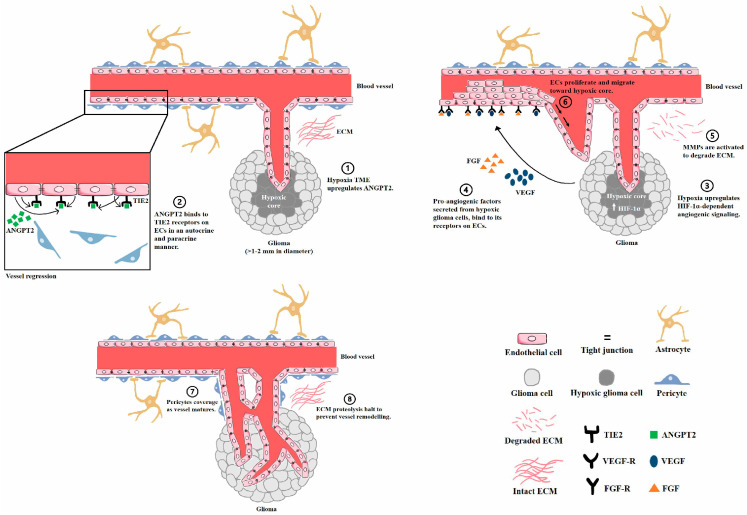
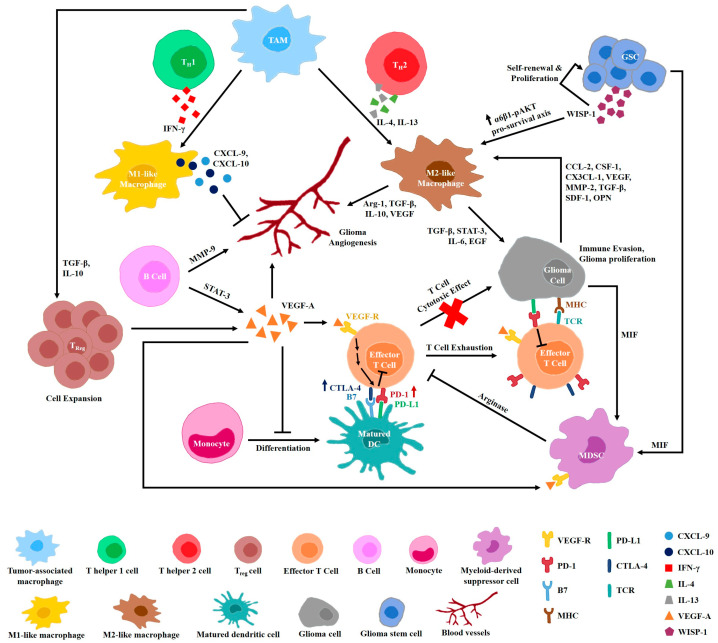
Glioblastoma (GBM) accounts for more than 50% of all primary malignancies of the brain. Current standard treatment regimen for GBM includes maximal surgical resection followed by radiation and adjuvant chemotherapy. However, due to the heterogeneity of the tumor cells, tumor recurrence is often inevitable. The prognosis of patients with glioma is, thus, dismal. Glioma is a highly angiogenic tumor yet immunologically cold. As such, evolving studies have focused on designing strategies that specifically target the tyrosine kinase receptors of angiokines and encourage immune infiltration. Recent promising results from immunotherapies on other cancer types have prompted further investigations of this therapy in GBM. In this article, we reviewed the pathological angiogenesis and immune reactivity in glioma, as well as its target for drug development, and we discussed future directions in glioma therapy.
胶质母细胞瘤(GBM)占所有原发性脑恶性肿瘤的50%以上。目前GBM的标准治疗方案包括最大程度的手术切除,随后进行放疗和辅助化疗。然而,由于肿瘤细胞的异质性,肿瘤复发往往不可避免。因此,胶质瘤患者的预后很差。胶质瘤是一种血管生成高度活跃但免疫原性低的肿瘤。因此,越来越多的研究集中在设计特异性靶向血管生成因子酪氨酸激酶受体并促进免疫浸润的策略上。其他癌症类型免疫疗法最近取得的有前景的结果促使人们对GBM的这种疗法进行进一步研究。在本文中,我们综述了胶质瘤中的病理性血管生成和免疫反应性及其药物开发靶点,并讨论了胶质瘤治疗的未来方向。