
miRNA-132/212 基因缺失加重氧葡萄糖剥夺对雌性小鼠海马突触功能的影响。
miRNA-132/212 Gene-Deletion Aggravates the Effect of Oxygen-Glucose Deprivation on Synaptic Functions in the Female Mouse Hippocampus.
机构信息
Center for Physiology and Pharmacology, Department of Neurophysiology and Neuropharmacology, Medical University of Vienna, Schwarzspanierstraße 17, 1090 Vienna, Austria.
Laboratory for Cardiac and Thoracic Diagnosis, Department of Surgery, Regeneration and Applied Immunology, Medical University of Vienna, Research Laboratories Vienna General Hospital, Waehringer Guertel 18-20, 1090 Vienna, Austria.
出版信息
Cells. 2021 Jul 6;10(7):1709. doi: 10.3390/cells10071709.
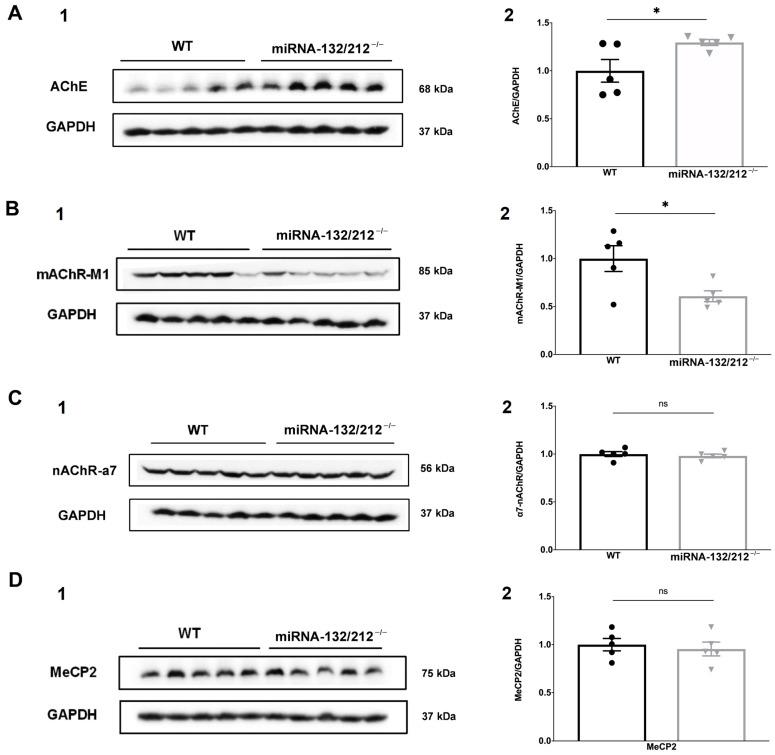
Cerebral ischemia and its sequelae, which include memory impairment, constitute a leading cause of disability worldwide. Micro-RNAs (miRNA) are evolutionarily conserved short-length/noncoding RNA molecules recently implicated in adaptive/maladaptive neuronal responses to ischemia. Previous research independently implicated the miRNA-132/212 cluster in cholinergic signaling and synaptic transmission, and in adaptive/protective mechanisms of neuronal responses to hypoxia. However, the putative role of miRNA-132/212 in the response of synaptic transmission to ischemia remained unexplored. Using hippocampal slices from female miRNA-132/212 double-knockout mice in an established electrophysiological model of ischemia, we here describe that miRNA-132/212 gene-deletion aggravated the deleterious effect of repeated oxygen-glucose deprivation insults on synaptic transmission in the dentate gyrus, a brain region crucial for learning and memory functions. We also examined the effect of miRNA-132/212 gene-deletion on the expression of key mediators in cholinergic signaling that are implicated in both adaptive responses to ischemia and hippocampal neural signaling. miRNA-132/212 gene-deletion significantly altered hippocampal AChE and mAChR-M1, but not α7-nAChR or MeCP2 expression. The effects of miRNA-132/212 gene-deletion on hippocampal synaptic transmission and levels of cholinergic-signaling elements suggest the existence of a miRNA-132/212-dependent adaptive mechanism safeguarding the functional integrity of synaptic functions in the acute phase of cerebral ischemia.
脑缺血及其后遗症,包括记忆障碍,构成了全球残疾的主要原因。微小 RNA(miRNA)是最近被认为在适应/适应不良的神经元对缺血的反应中起作用的进化保守的短长度/非编码 RNA 分子。以前的研究独立地暗示了 miRNA-132/212 簇在胆碱能信号传递和突触传递中,以及在缺氧对神经元反应的适应/保护机制中。然而,miRNA-132/212 在突触传递对缺血的反应中的作用仍然未知。在建立的缺血电生理模型中,使用来自雌性 miRNA-132/212 双敲除小鼠的海马切片,我们在这里描述了 miRNA-132/212 基因缺失加重了反复氧葡萄糖剥夺对齿状回突触传递的有害影响,齿状回是学习和记忆功能的关键脑区。我们还研究了 miRNA-132/212 基因缺失对参与缺血适应反应和海马神经信号的关键胆碱能信号转导介质表达的影响。miRNA-132/212 基因缺失显著改变了海马 AChE 和 mAChR-M1,但不改变α7-nAChR 或 MeCP2 的表达。miRNA-132/212 基因缺失对海马突触传递和胆碱能信号转导元件水平的影响表明存在一种 miRNA-132/212 依赖性的适应机制,可保护脑缺血急性期突触功能的完整性。


 Zotero 插件