Department of Medicine, Wake Forest School of Medicine, Winston-Salem, NC 27106, USA.
The Rowan School of Osteopathic Medicine, Stratford, NJ 08084, USA.
Int J Mol Sci. 2021 Jul 21;22(15):7785. doi: 10.3390/ijms22157785.
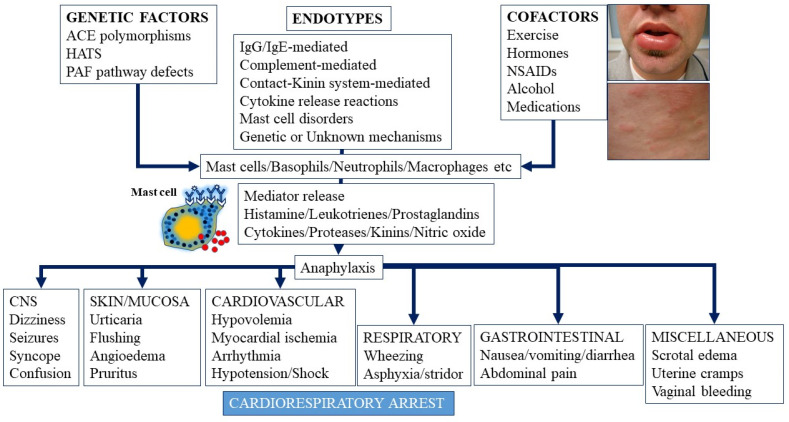
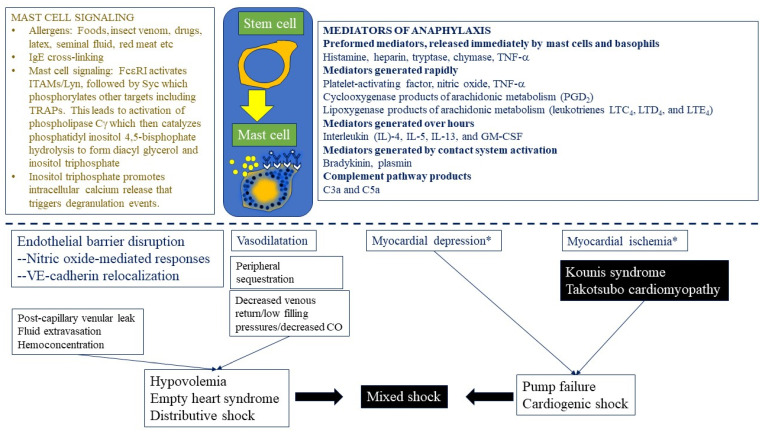
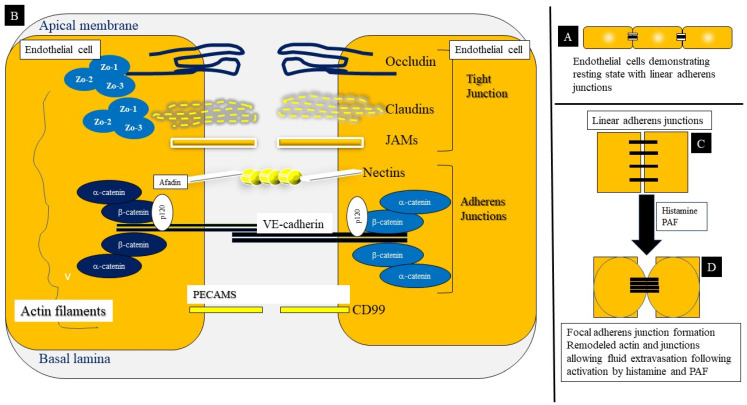
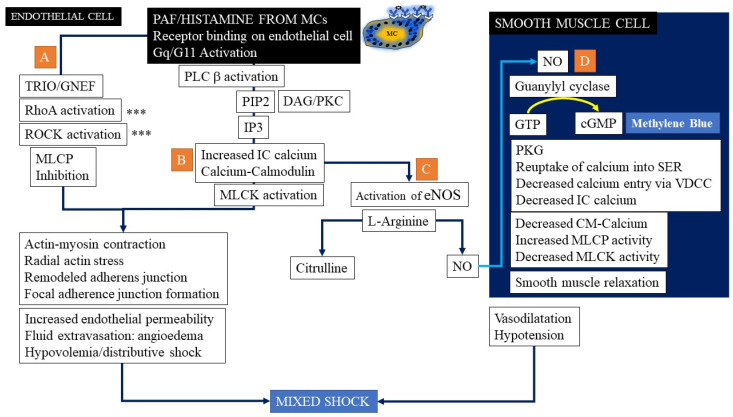
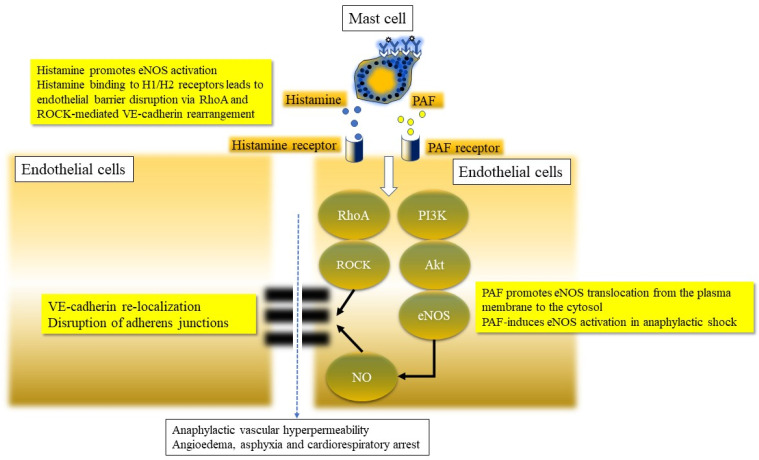
Anaphylaxis is a severe, acute, life-threatening multisystem allergic reaction resulting from the release of a plethora of mediators from mast cells culminating in serious respiratory, cardiovascular and mucocutaneous manifestations that can be fatal. Medications, foods, latex, exercise, hormones (progesterone), and clonal mast cell disorders may be responsible. More recently, novel syndromes such as delayed reactions to red meat and hereditary alpha tryptasemia have been described. Anaphylaxis manifests as sudden onset urticaria, pruritus, flushing, erythema, angioedema (lips, tongue, airways, periphery), myocardial dysfunction (hypovolemia, distributive or mixed shock and arrhythmias), rhinitis, wheezing and stridor. Vomiting, diarrhea, scrotal edema, uterine cramps, vaginal bleeding, urinary incontinence, dizziness, seizures, confusion, and syncope may occur. The traditional (or classical) pathway is mediated via T cells, Th2 cytokines (such as IL-4 and 5), B cell production of IgE and subsequent crosslinking of the high affinity IgE receptor (FcεRI) on mast cells and basophils by IgE-antigen complexes, culminating in mast cell and basophil degranulation. Degranulation results in the release of preformed mediators (histamine, heparin, tryptase, chymase, carboxypeptidase, cathepsin G and tumor necrosis factor alpha (TNF-α), and of de novo synthesized ones such as lipid mediators (cysteinyl leukotrienes), platelet activating factor (PAF), cytokines and growth factors such as vascular endothelial growth factor (VEGF). Of these, histamine, tryptase, cathepsin G, TNF-α, LTC, PAF and VEGF can increase vascular permeability. Recent data suggest that mast cell-derived histamine and PAF can activate nitric oxide production from endothelium and set into motion a signaling cascade that leads to dilatation of blood vessels and dysfunction of the endothelial barrier. The latter, characterized by the opening of adherens junctions, leads to increased capillary permeability and fluid extravasation. These changes contribute to airway edema, hypovolemia, and distributive shock, with potentially fatal consequences. In this review, besides mechanisms (endotypes) underlying IgE-mediated anaphylaxis, we also provide a brief overview of IgG-, complement-, contact system-, cytokine- and mast cell-mediated reactions that can result in phenotypes resembling IgE-mediated anaphylaxis. Such classifications can lead the way to precision medicine approaches to the management of this complex disease.
过敏反应是一种严重的、急性的、危及生命的多系统过敏反应,由肥大细胞释放大量介质引起,最终导致严重的呼吸、心血管和黏膜表现,可能致命。药物、食物、乳胶、运动、激素(孕酮)和克隆性肥大细胞疾病可能是病因。最近,还描述了一些新的综合征,如对红肉的迟发性反应和遗传性α-胰蛋白酶血症。过敏反应表现为突发性荨麻疹、瘙痒、潮红、红斑、血管性水肿(嘴唇、舌头、气道、周围组织)、心肌功能障碍(低血容量、分布性或混合性休克和心律失常)、鼻炎、喘息和喉鸣。呕吐、腹泻、阴囊水肿、子宫痉挛、阴道出血、尿失禁、头晕、癫痫发作、意识混乱和晕厥也可能发生。传统(或经典)途径通过 T 细胞、Th2 细胞因子(如 IL-4 和 5)、B 细胞产生 IgE 以及随后 IgE-抗原复合物交联高亲和力 IgE 受体(FcεRI)在肥大细胞和嗜碱性粒细胞中进行介导,最终导致肥大细胞和嗜碱性粒细胞脱颗粒。脱颗粒导致预先形成的介质(组胺、肝素、胰蛋白酶、糜蛋白酶、羧肽酶、组织蛋白酶 G 和肿瘤坏死因子-α(TNF-α))和新合成的介质(脂质介质(半胱氨酰白三烯))的释放、血小板激活因子(PAF)、细胞因子和生长因子,如血管内皮生长因子(VEGF)。其中,组胺、胰蛋白酶、组织蛋白酶 G、TNF-α、LTC、PAF 和 VEGF 可增加血管通透性。最近的数据表明,肥大细胞衍生的组胺和 PAF 可以激活内皮细胞产生一氧化氮,并启动信号级联反应,导致血管扩张和内皮屏障功能障碍。后者的特征是黏附连接的开放,导致毛细血管通透性增加和液体渗出。这些变化导致气道水肿、低血容量和分布性休克,可能导致致命后果。在这篇综述中,除了 IgE 介导的过敏反应的机制(内型)外,我们还简要概述了 IgG、补体、接触系统、细胞因子和肥大细胞介导的反应,这些反应可能导致类似于 IgE 介导的过敏反应的表型。这种分类可以为这种复杂疾病的精准医疗管理方法开辟道路。