Butchbach Matthew E R
Center for Applied Clinical Genomics, Nemours Children's Health Delaware, Wilmington, DE 19803, USA.
Center for Pediatric Research, Nemours Children's Health Delaware, Wilmington, DE 19803, USA.
Int J Mol Sci. 2021 Jul 23;22(15):7896. doi: 10.3390/ijms22157896.
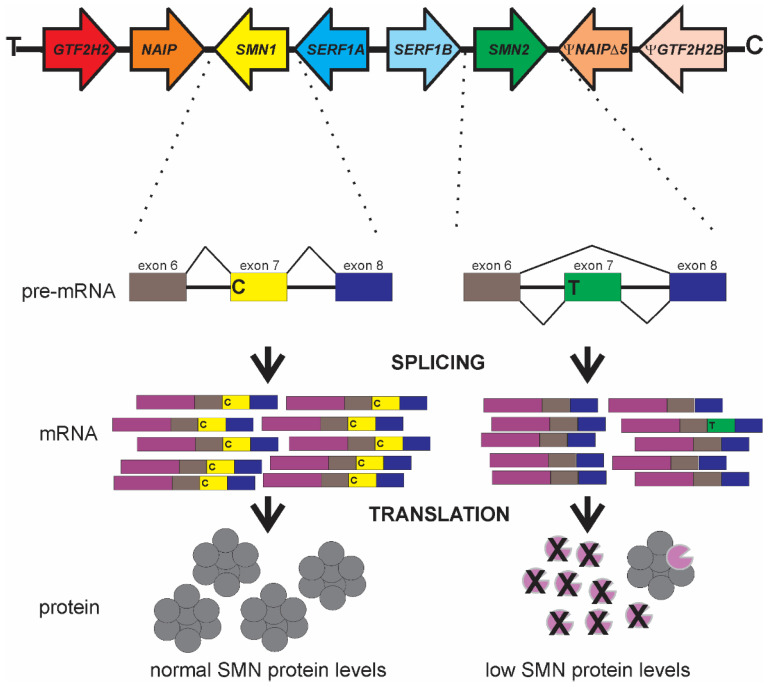
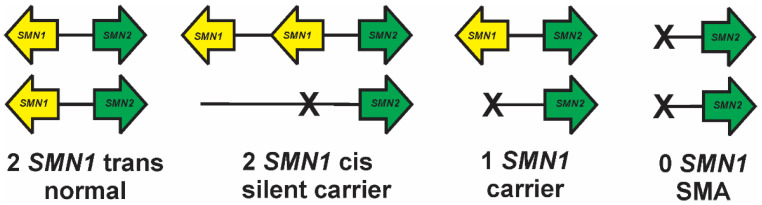
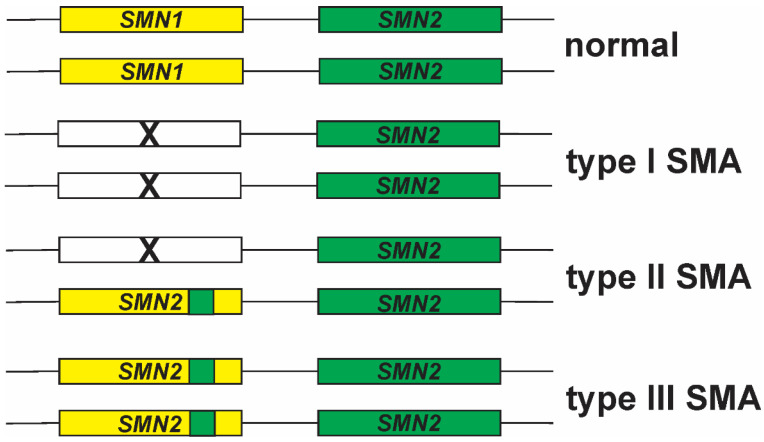
Spinal muscular atrophy (SMA) is a leading genetic cause of infant death worldwide that is characterized by loss of spinal motor neurons leading to muscle weakness and atrophy. SMA results from the loss of () gene but retention of its paralog . The copy numbers of and are variable within the human population with copy number inversely correlating with SMA severity. Current therapeutic options for SMA focus on increasing expression and alternative splicing so as to increase the amount of SMN protein. Recent work has demonstrated that not all , or genes are equivalent and there is a high degree of genomic heterogeneity with respect to the genes. Because SMA is now an actionable disease with being the primary target, it is imperative to have a comprehensive understanding of this genomic heterogeneity with respect to hybrid - genes generated by gene conversion events as well as partial deletions of the genes. This review will describe this genetic heterogeneity in SMA and its impact on disease phenotype as well as therapeutic efficacy.
脊髓性肌萎缩症(SMA)是全球婴儿死亡的主要遗传原因,其特征是脊髓运动神经元丧失,导致肌肉无力和萎缩。SMA是由于()基因缺失但其旁系同源基因保留所致。在人类群体中,和的拷贝数是可变的,其中拷贝数与SMA严重程度呈负相关。目前SMA的治疗选择集中在增加表达和可变剪接,以增加SMN蛋白的量。最近的研究表明,并非所有的或基因都是等同的,并且在基因方面存在高度的基因组异质性。由于SMA现在是一种可治疗的疾病,且是主要靶点,因此必须全面了解这种基因组异质性,包括基因转换事件产生的杂交基因以及基因的部分缺失。本综述将描述SMA中的这种遗传异质性及其对疾病表型和治疗效果的影响。