SKKU Advanced Institute of Nanotechnology (SAINT), Department of Nano Engineering and School of Chemical Engineering, Sungkyunkwan University (SKKU), 2066 Seobu-ro, Jangan-gu, Suwon, Gyeonggi-do, 16419, Republic of Korea.
Adv Sci (Weinh). 2021 Oct;8(19):e2102043. doi: 10.1002/advs.202102043. Epub 2021 Aug 7.
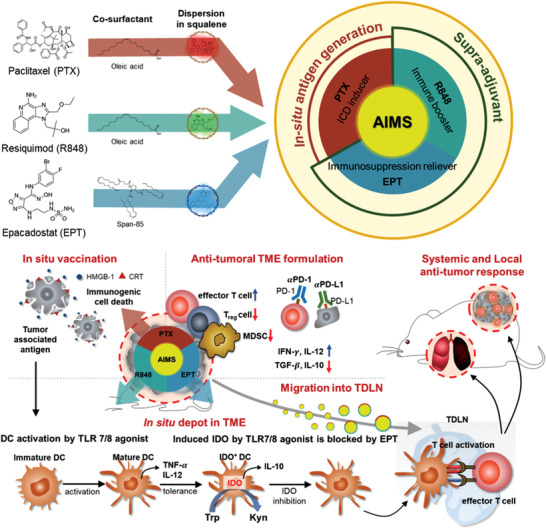
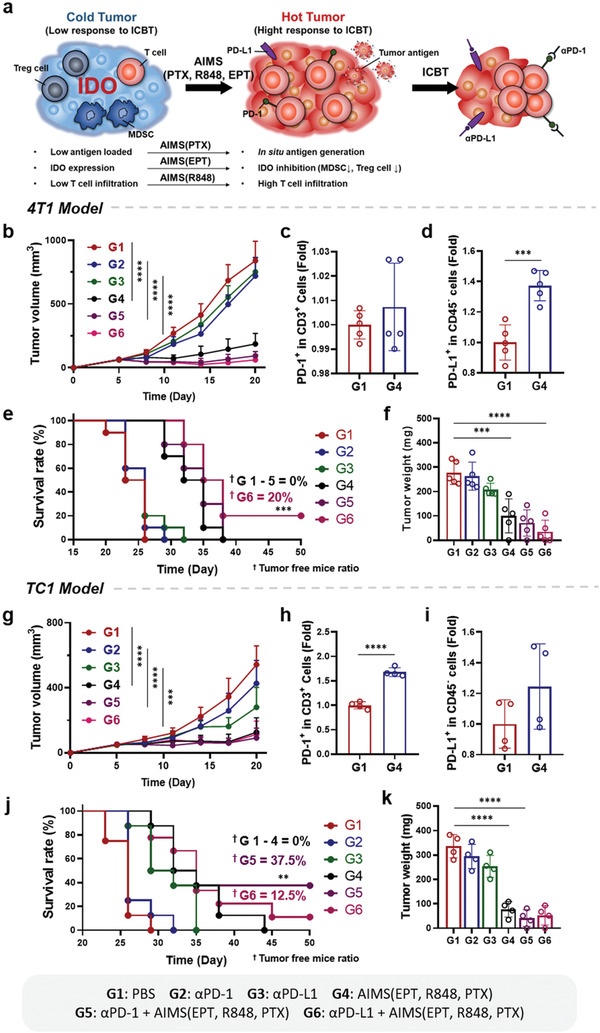
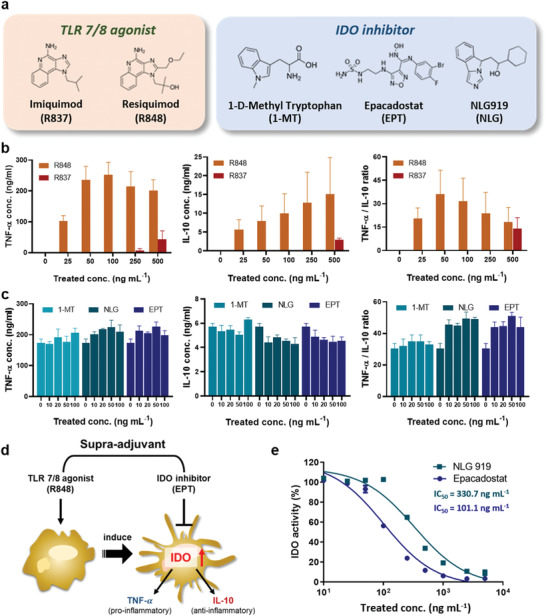
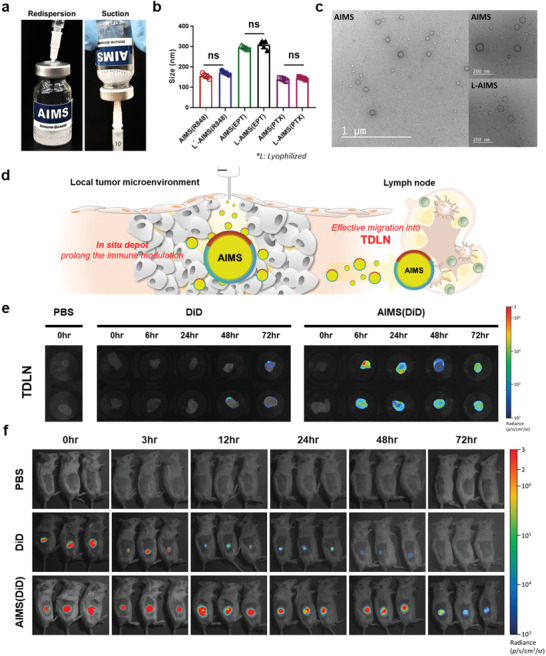
The deficiency of antigen-specific T cells and the induction of various treatment-induced immunosuppressions still limits the clinical benefit of cancer immunotherapy. Although the chemo-immunotherapy adjuvanted with Toll-like receptor 7/8 agonist (TLR 7/8a) induces immunogenic cell death (ICD) and in situ vaccination effect, indoleamine 2,3-dioxygenase (IDO) is also significantly increased in the tumor microenvironment (TME) and tumor-draining lymph node (TDLN), which offsets the activated antitumor immunity. To address the treatment-induced immunosuppression, an assemblable immune modulating suspension (AIMS) containing ICD inducer (paclitaxel) and supra-adjuvant (immune booster; R848 as a TLR 7/8a, immunosuppression reliever; epacadostat as an IDO inhibitor) is suggested and shows that it increases cytotoxic T lymphocytes and relieves the IDO-related immunosuppression (TGF-β, IL-10, myeloid-derived suppressor cells, and regulatory T cells) in both TME and TDLN, by the formation of in situ depot in tumor bed as well as by the efficient migration into TDLN. Local administration of AIMS increases T cell infiltration in both local and distant tumors and significantly inhibits the metastasis of tumors to the lung. Reverting treatment-induced secondary immunosuppression and reshaping "cold tumor" into "hot tumor" by AIMS also increases the response rate of immune checkpoint blockade therapy, which promises a new nanotheranostic strategy in cancer immunotherapy.
抗原特异性 T 细胞的缺乏和各种治疗诱导的免疫抑制的诱导仍然限制了癌症免疫治疗的临床获益。虽然用 Toll 样受体 7/8 激动剂(TLR 7/8a)佐剂的化疗免疫疗法诱导了免疫原性细胞死亡(ICD)和原位疫苗接种效应,但在肿瘤微环境(TME)和肿瘤引流淋巴结(TDLN)中,吲哚胺 2,3-双加氧酶(IDO)也显著增加,从而抵消了激活的抗肿瘤免疫。为了解决治疗诱导的免疫抑制问题,提出了一种包含 ICD 诱导剂(紫杉醇)和超佐剂(免疫增强剂;R848 作为 TLR 7/8a,免疫抑制缓解剂;epacadostat 作为 IDO 抑制剂)的可组装免疫调节悬浮液(AIMS),并表明它通过在肿瘤床原位形成储存库以及有效地迁移到 TDLN 中,增加细胞毒性 T 淋巴细胞并缓解 TME 和 TDLN 中的 IDO 相关免疫抑制(TGF-β、IL-10、髓源性抑制细胞和调节性 T 细胞)。AIMS 的局部给药增加了局部和远处肿瘤中的 T 细胞浸润,并显著抑制了肿瘤向肺部的转移。通过 AIMS 逆转治疗诱导的继发性免疫抑制并将“冷肿瘤”重塑为“热肿瘤”,也增加了免疫检查点阻断治疗的反应率,这为癌症免疫治疗提供了一种新的纳米治疗策略。