Department of Neurobiology, Stanford University School of Medicine, Stanford, CA, USA; Wu Tsai Neurosciences Institute, Stanford University, Stanford, CA, USA.
Wu Tsai Neurosciences Institute, Stanford University, Stanford, CA, USA; Department of Statistics, Stanford University, Stanford, CA, USA.
Neuron. 2021 Sep 15;109(18):2967-2980.e11. doi: 10.1016/j.neuron.2021.07.005. Epub 2021 Aug 6.
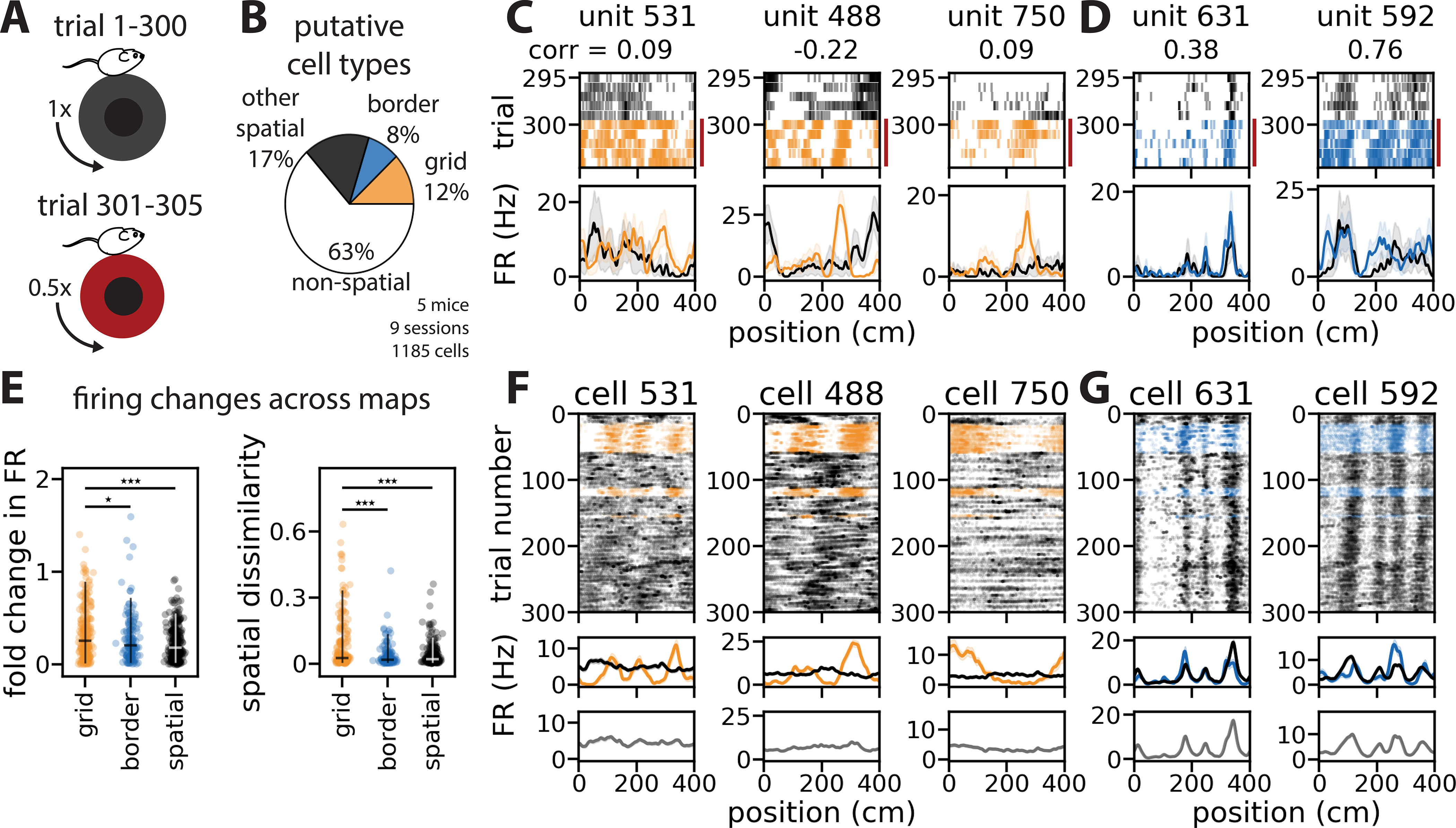
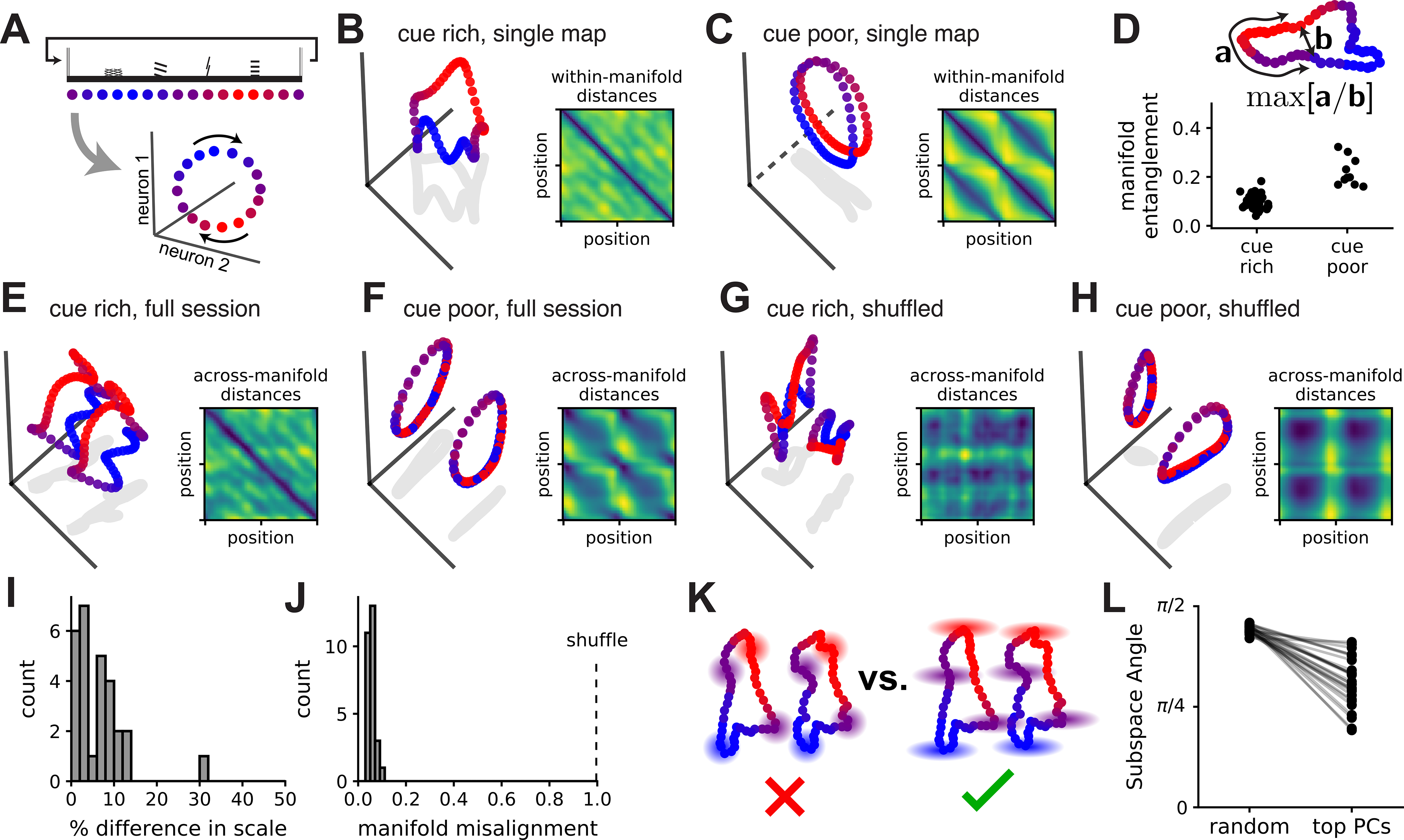
Neurons in the medial entorhinal cortex alter their firing properties in response to environmental changes. This flexibility in neural coding is hypothesized to support navigation and memory by dividing sensory experience into unique episodes. However, it is unknown how the entorhinal circuit as a whole transitions between different representations when sensory information is not delineated into discrete contexts. Here we describe rapid and reversible transitions between multiple spatial maps of an unchanging task and environment. These remapping events were synchronized across hundreds of neurons, differentially affected navigational cell types, and correlated with changes in running speed. Despite widespread changes in spatial coding, remapping comprised a translation along a single dimension in population-level activity space, enabling simple decoding strategies. These findings provoke reconsideration of how the medial entorhinal cortex dynamically represents space and suggest a remarkable capacity of cortical circuits to rapidly and substantially reorganize their neural representations.
内嗅皮层中的神经元会根据环境变化改变其放电特性。这种神经编码的灵活性被假设为通过将感觉体验划分为独特的片段来支持导航和记忆。然而,当感觉信息没有划分为离散的上下文时,内嗅皮层回路作为一个整体如何在不同的表示之间转换尚不清楚。在这里,我们描述了在不变的任务和环境下,多个空间图谱之间的快速和可逆的转换。这些重映射事件在数百个神经元中是同步的,对导航细胞类型有不同的影响,并与跑步速度的变化相关。尽管空间编码发生了广泛的变化,但重映射包括在群体活动空间中单维的平移,从而能够实现简单的解码策略。这些发现促使人们重新考虑内嗅皮层皮层如何动态地表示空间,并表明皮质回路具有快速而显著地重新组织其神经表示的能力。