Kim Yuri, Cheon Shinhyea, Jeong Hyeongseok, Park Uni, Ha Na-Young, Lee Jooyeon, Sohn Kyung Mok, Kim Yeon-Sook, Cho Nam-Hyuk
Department of Microbiology and Immunology, College of Medicine, Seoul National University, Seoul, South Korea.
Medical Research Center, Institute of Endemic Diseases, Seoul National University, Seoul, South Korea.
Front Microbiol. 2021 Jul 23;12:712260. doi: 10.3389/fmicb.2021.712260. eCollection 2021.
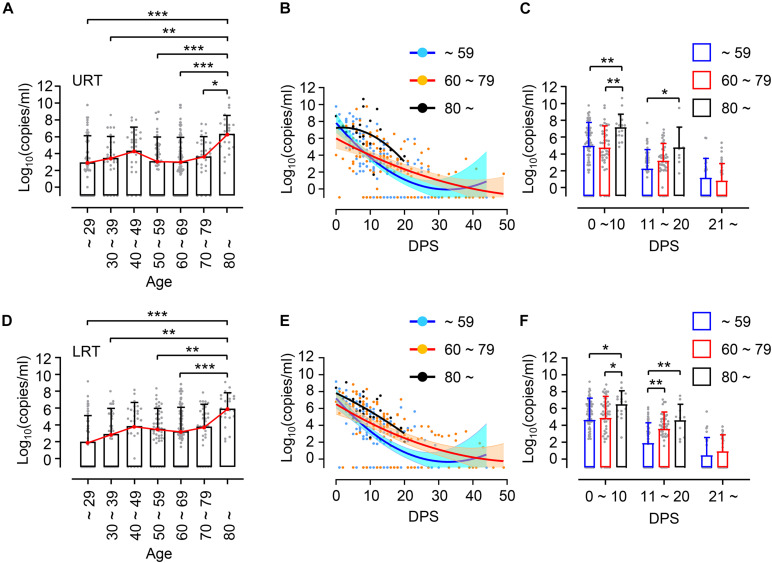
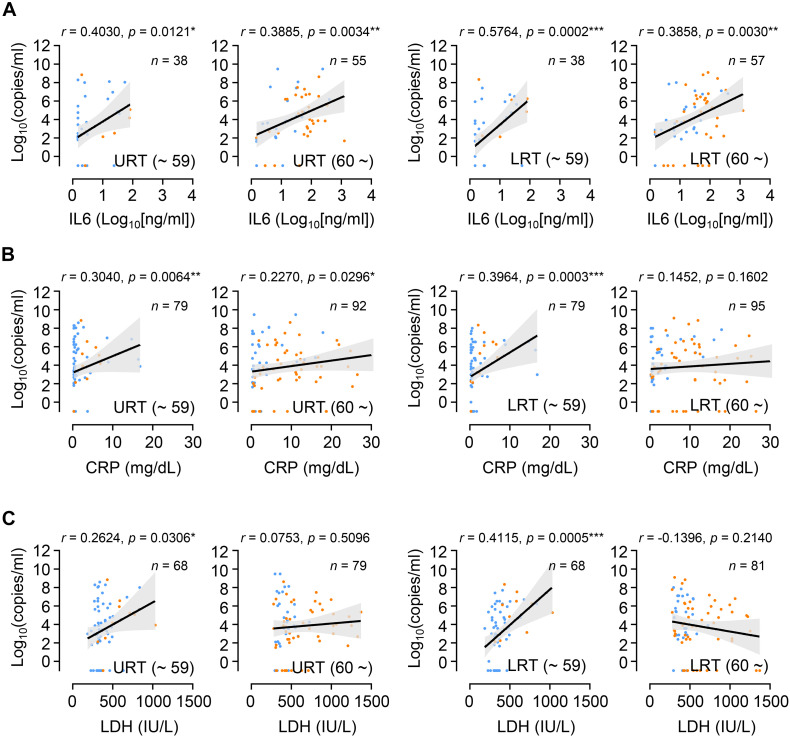
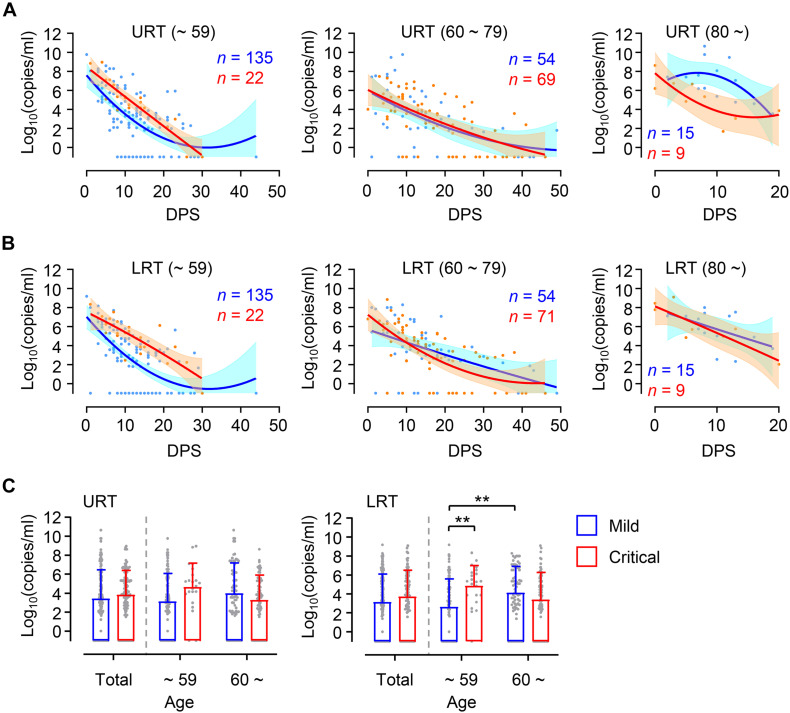
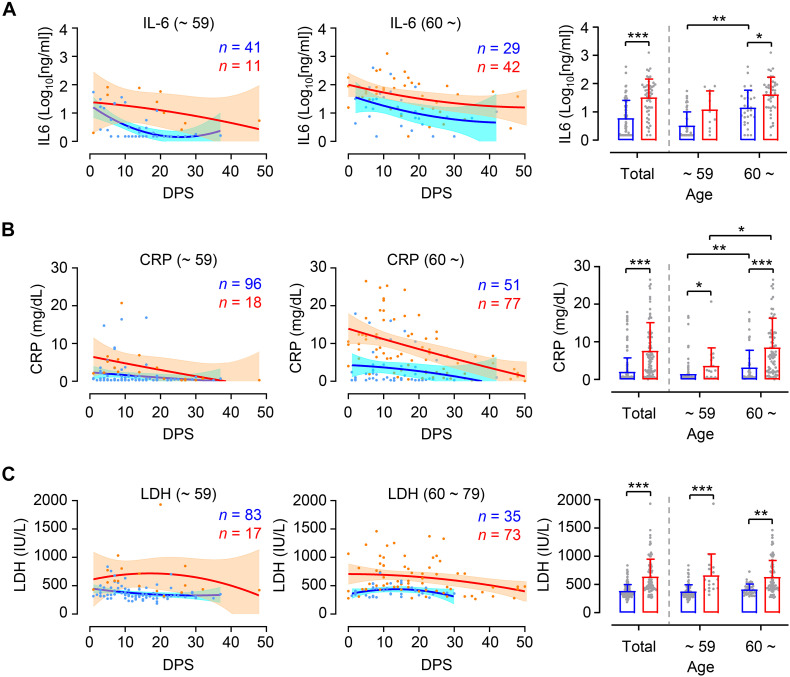
Despite a clear association of patient's age with COVID-19 severity, there has been conflicting data on the association of viral load with disease severity. Here, we investigated the association of viral load dynamics with patient's age and severity of COVID-19 using a set of respiratory specimens longitudinally collected (mean: 4.8 times/patient) from 64 patients with broad distribution of clinical severity and age during acute phase. Higher viral burden was positively associated with inflammatory responses, as assessed by IL-6, C-reactive protein, and lactate dehydrogenase levels in patients' plasma collected on the same day, primarily in the younger cohort (≤59 years old) and in mild cases of all ages, whereas these were barely detectable in elderly patients (≥60 years old) with critical disease. In addition, viral load dynamics in elderly patients were not significantly different between mild and critical cases, even though more enhanced inflammation was consistently observed in the elderly group when compared to the younger group during the acute phase of infection. The positive correlation of viral load with disease severity in younger patients may explain the increased therapeutic responsiveness to current antiviral drugs and neutralizing antibody therapies in younger patients compared to elderly patients. More careful intervention against aging-associated inflammation might be required to mitigate severe disease progression and reduce fatality in COVID-19 patients more than 60 years old.
尽管患者年龄与新冠病毒疾病严重程度之间存在明确关联,但关于病毒载量与疾病严重程度之间的关联,数据一直存在矛盾。在此,我们使用一组在急性期从64例临床严重程度和年龄分布广泛的患者纵向收集的呼吸道标本(平均:每位患者4.8次),研究了病毒载量动态与患者年龄及新冠病毒疾病严重程度之间的关联。较高的病毒载量与炎症反应呈正相关,这通过同日采集的患者血浆中白细胞介素-6、C反应蛋白和乳酸脱氢酶水平来评估,主要见于较年轻队列(≤59岁)以及各年龄段的轻症病例,而在患有危重症的老年患者(≥60岁)中这些指标几乎检测不到。此外,老年患者中轻症和危重症病例的病毒载量动态并无显著差异,尽管在感染急性期,与年轻组相比,老年组中炎症反应持续更强烈。年轻患者中病毒载量与疾病严重程度的正相关可能解释了与老年患者相比,年轻患者对当前抗病毒药物和中和抗体疗法的治疗反应性更高。对于60岁以上的新冠患者,可能需要更谨慎地干预与衰老相关的炎症,以减轻严重疾病进展并降低死亡率。