Lei Yanna, Cui Qingsong, Yang Guang, Piao Limei, Inoue Aiko, Wu Hongxian, Li Xiang, Kuzuya Masafumi, Cheng Xian Wu
Department of Intensive Care Unit, Yanbian University Hospital, Yanjin, China.
Department of Cardiology and Hypertension, Yanbian University Hospital, Yanjin, China.
Front Cell Dev Biol. 2021 Jul 21;9:687868. doi: 10.3389/fcell.2021.687868. eCollection 2021.
Exposure to chronic psychosocial stress is a risk factor for atherosclerotic cardiovascular diseases. Given that the 3-hydroxy-3-methylglutaryl-coenzyme reductase inhibitor statins prevent atherogenesis, we evaluated whether pitavastatin prevents chronic stress- and high fat diet-induced vascular senescence and atherogenesis in apolipoprotein -deficient ( ) mice, with a special focus on glucagon-like peptide-1 (GLP-1)/adiponectin (APN) axis.
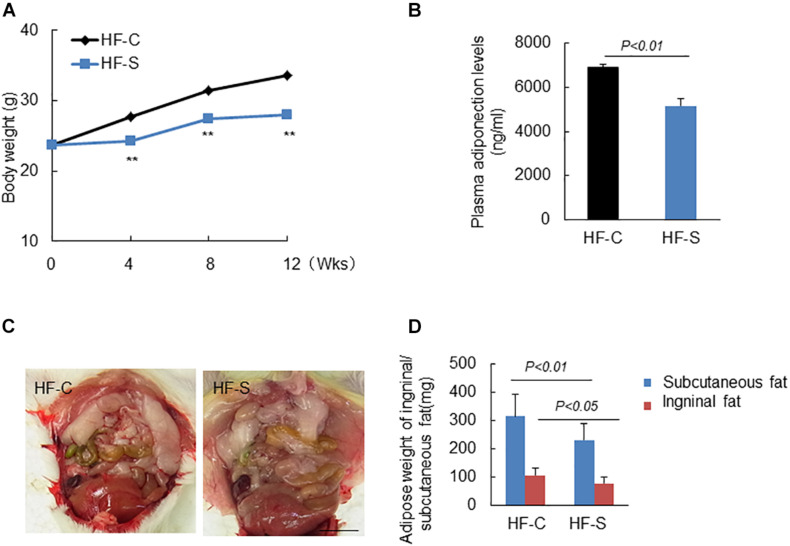
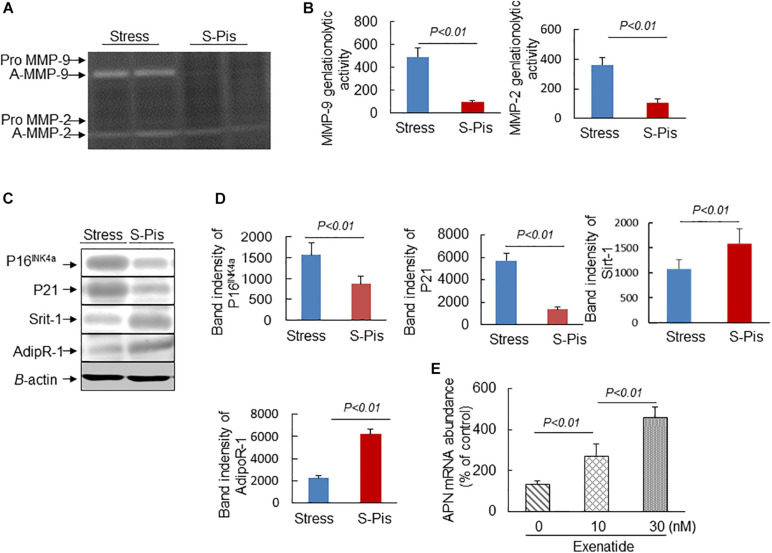
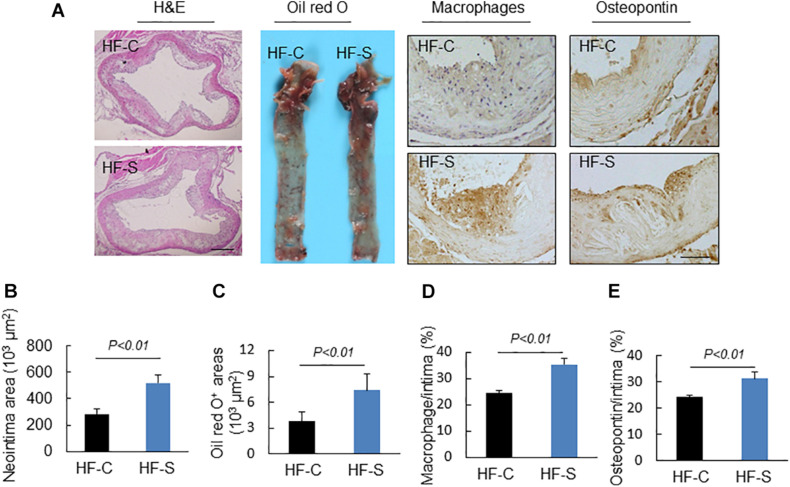
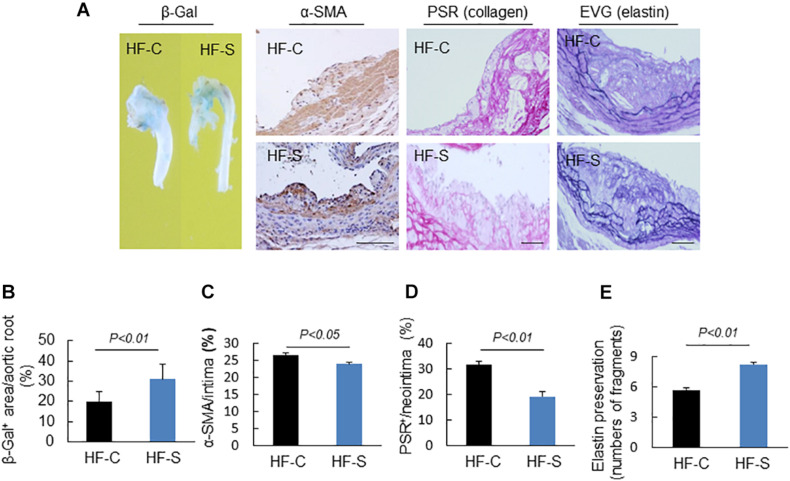
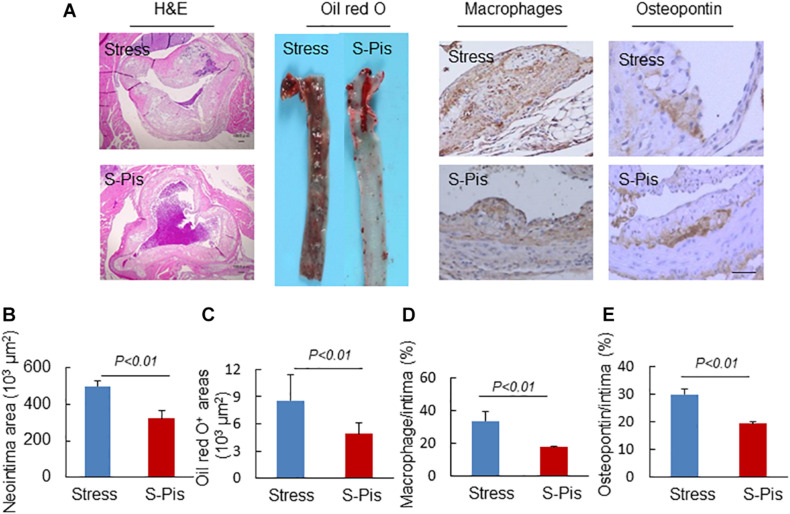
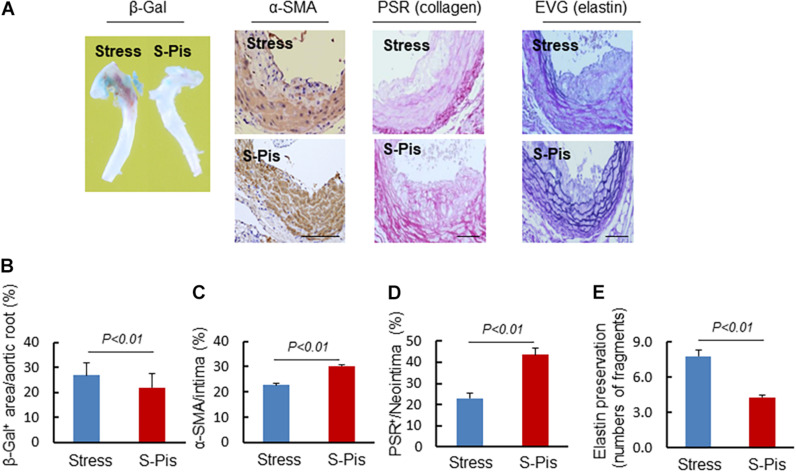
6-week-old mice loaded a high-fat diet were randomly assigned into non-stress ( = 12) and stress ( = 13) groups for 12 weeks. Non-stress control mice were left undisturbed. Chronic stress accelerated high fat diet-induce arterial senescence and atherosclerotic plaque growth. The chronic stress lowered the levels of circulating GLP-1 as well as adipose and plasma APN. As compared with the stress alone mice, the pitavastatin-treated mice had reduced macrophage infiltration, elastin fragments, and increased plaque collagen volume, and lowered levels of osteopontin, toll-like receptor-2/-4, macrophage chemoattractant protein-1, C-X-C chemokine receptor-4, p47 , p47 , gp91 , cathepsins S, p16, and p21, mRNAs and/or proteins. Pitavastatin increased plasma GLP-1 and APN levels and suppressed matrix metalloproteinase-2/-9 gene expressions and activities in the aortas. Finally, the protective effect of pitavastatin was abrogated by APN blocking.
These findings suggested that the pitavastatin-mediated pleiotropic vasculoprotective effects are likely attributable, at least in part, to the elevation of GLP-1 and APN levels and the inhibition of diet-induced plaque inflammation, oxidative stress, and proteolysis in mice received chronic stress conditions.
长期暴露于心理社会压力是动脉粥样硬化性心血管疾病的一个危险因素。鉴于3-羟基-3-甲基戊二酰辅酶A还原酶抑制剂他汀类药物可预防动脉粥样硬化的发生,我们评估了匹伐他汀是否能预防载脂蛋白E缺陷( )小鼠因慢性应激和高脂饮食诱导的血管衰老及动脉粥样硬化的发生,特别关注胰高血糖素样肽-1(GLP-1)/脂联素(APN)轴。
将6周龄的高脂饮食喂养的 小鼠随机分为非应激组( = 12)和应激组( = 13),持续12周。非应激对照小鼠不做处理。慢性应激加速了高脂饮食诱导的动脉衰老和动脉粥样硬化斑块的生长。慢性应激降低了循环中GLP-1以及脂肪组织和血浆中APN的水平。与单纯应激组小鼠相比,匹伐他汀治疗组小鼠的巨噬细胞浸润、弹性蛋白片段减少,斑块胶原体积增加,骨桥蛋白、Toll样受体-2/-4、巨噬细胞趋化蛋白-1、C-X-C趋化因子受体-4、p47 、p47 、gp91 、组织蛋白酶S、p16和p21的mRNA和/或蛋白水平降低。匹伐他汀增加了血浆GLP-1和APN水平,并抑制了主动脉中基质金属蛋白酶-2/-9的基因表达和活性。最后,APN阻断消除了匹伐他汀的保护作用。
这些发现表明,在接受慢性应激的 小鼠中,匹伐他汀介导的多效性血管保护作用可能至少部分归因于GLP-1和APN水平的升高以及对饮食诱导的斑块炎症、氧化应激和蛋白水解的抑制。