• 文献检索
  • 文档翻译
  • 深度研究
  • 学术资讯
  • Suppr Zotero 插件Zotero 插件
  • 邀请有礼
  • 套餐&价格
  • 历史记录
应用&插件
Suppr Zotero 插件Zotero 插件浏览器插件Mac 客户端Windows 客户端微信小程序
定价
高级版会员购买积分包购买API积分包
服务
文献检索文档翻译深度研究API 文档MCP 服务
关于我们
关于 Suppr公司介绍联系我们用户协议隐私条款
关注我们

Suppr 超能文献

核心技术专利:CN118964589B侵权必究
粤ICP备2023148730 号-1Suppr @ 2026

文献检索

告别复杂PubMed语法,用中文像聊天一样搜索,搜遍4000万医学文献。AI智能推荐,让科研检索更轻松。

立即免费搜索

文件翻译

保留排版,准确专业,支持PDF/Word/PPT等文件格式,支持 12+语言互译。

免费翻译文档

深度研究

AI帮你快速写综述,25分钟生成高质量综述,智能提取关键信息,辅助科研写作。

立即免费体验

日本人对接种新冠疫苗意愿不确定或不愿意的原因:一项大型全国性横断面调查。

Reasons for being unsure or unwilling regarding intention to take COVID-19 vaccine among Japanese people: A large cross-sectional national survey.

作者信息

Nomura Shuhei, Eguchi Akifumi, Yoneoka Daisuke, Kawashima Takayuki, Tanoue Yuta, Murakami Michio, Sakamoto Haruka, Maruyama-Sakurai Keiko, Gilmour Stuart, Shi Shoi, Kunishima Hiroyuki, Kaneko Satoshi, Adachi Megumi, Shimada Koki, Yamamoto Yoshiko, Miyata Hiroaki

机构信息

Department of Health Policy and Management, School of Medicine, Keio University, Tokyo, Japan.

Department of Global Health Policy, Graduate School of Medicine, The University of Tokyo, Tokyo, Japan.

出版信息

Lancet Reg Health West Pac. 2021 Sep;14:100223. doi: 10.1016/j.lanwpc.2021.100223. Epub 2021 Jul 31.

DOI:10.1016/j.lanwpc.2021.100223
PMID:34368797
原文链接:https://pmc.ncbi.nlm.nih.gov/articles/PMC8324415/
Abstract

BACKGROUND

Identifying and understanding reasons for being unsure or unwilling regarding intention to be vaccinated against coronavirus disease (COVID-19) may help to inform future public health messages aimed at increasing vaccination coverage. We analyzed a broad array of individual's psychological dispositions with regard to decision-making about COVID-19 vaccination in Japan.

METHODS

A nationally representative cross-sectional web survey was conducted with 30053 Japanese adults aged 20 years or older at the end of February 2021. In addition to the question on the individual's intention to be vaccinated against COVID-19, respondents were asked about their sociodemographic, health-related, and psychological characteristics as well as information sources about COVID-19 and their levels of trust. Also, those who responded 'not sure' or 'no' regarding intention to take COVID-19 vaccine were asked why. Multinomial logistic regression with sparse group Lasso (Least Absolute Shrinkage and Selection Operator) penalty was used to compute adjusted odds ratios for factors associated with the intention (not sure/no versus yes).

FINDINGS

The percentages of respondents who answered 'not sure' or 'no' regarding intention to be vaccinated against COVID-19 vaccine were 32.9% and 11.0%, respectively. After adjusting for covariates, the perceived risks of COVID-19, perceived risk of a COVID-19 vaccine, perceived benefits of a COVID-19 vaccine, trust in scientists and public authorities, and the belief that healthcare workers should be vaccinated were significantly associated with vaccination intention. Several sources of information about COVID-19 were also significantly associated with vaccination intention, including physicians, nurses, and television, medical information sites with lower odds of being unsure or unwilling, and internet news sites, YouTube, family members, and scientists and researchers with higher odds. The higher the level of trust in television as a source of COVID-19 information, the higher the odds of responding 'not sure' (odds ratio 1.11, 95% confidence interval 1.01-1.21). We also demonstrated that many respondents presented concerns about the side effects and safety of a COVID-19 vaccine as a major reason for being unsure or unwilling. To decide whether or not to get the vaccine, many respondents requested more information about the compatibilities between the vaccine and their personal health conditions, whether other people had been vaccinated, the effectiveness of vaccines against variants, and doctors' recommendations.

INTERPRETATION

Our findings suggest that public health messaging based on the sociodemographic and psychological characteristics of those who are unsure or unwilling regarding intention to be vaccinated against COVID-19 vaccine may help to increase vaccine uptake amongst this population.

FUNDING

The present work was supported in part by a grant from the Ministry of Health, Labour and Welfare of Japan (H29-Gantaisaku-ippan-009).

摘要

背景

识别并理解对于接种冠状病毒病(COVID-19)疫苗不确定或不愿意的原因,可能有助于为未来旨在提高疫苗接种覆盖率的公共卫生信息提供参考。我们分析了日本民众在COVID-19疫苗接种决策方面的一系列广泛心理倾向。

方法

2021年2月底,对30053名20岁及以上的日本成年人进行了一项具有全国代表性的横断面网络调查。除了询问个人接种COVID-19疫苗的意愿外,还询问了受访者的社会人口统计学、健康相关和心理特征,以及关于COVID-19的信息来源和他们的信任程度。此外,对于那些回答接种COVID-19疫苗意愿为“不确定”或“不愿意”的人,询问了原因。采用带有稀疏组套索(最小绝对收缩和选择算子)惩罚的多项逻辑回归来计算与接种意愿相关因素的调整比值比(不确定/不愿意与愿意相比)。

结果

回答接种COVID-19疫苗意愿为“不确定”或“不愿意”的受访者比例分别为32.9%和11.0%。在调整协变量后,对COVID-19的感知风险、对COVID-19疫苗的感知风险、对COVID-19疫苗的感知益处、对科学家和公共当局的信任,以及认为医护人员应接种疫苗的信念与接种意愿显著相关。关于COVID-19的几个信息来源也与接种意愿显著相关,包括医生、护士和电视,医学信息网站不确定或不愿意的几率较低,以及互联网新闻网站、YouTube、家庭成员以及科学家和研究人员,其不确定或不愿意的几率较高。作为COVID-19信息来源,对电视的信任程度越高,回答“不确定”的几率越高(比值比1.11,95%置信区间1.01 - 1.21)。我们还表明,许多受访者表示担心COVID-19疫苗的副作用和安全性是不确定或不愿意接种的主要原因。为了决定是否接种疫苗,许多受访者要求提供更多关于疫苗与个人健康状况的兼容性、其他人是否接种过疫苗、疫苗对变异株的有效性以及医生建议的信息。

解读

我们的研究结果表明,基于那些对接种COVID-19疫苗不确定或不愿意的人的社会人口统计学和心理特征开展公共卫生宣传,可能有助于提高这部分人群的疫苗接种率。

资助

本研究部分得到了日本厚生劳动省的资助(H29 - がんたいさく - いっぱん - 009)。
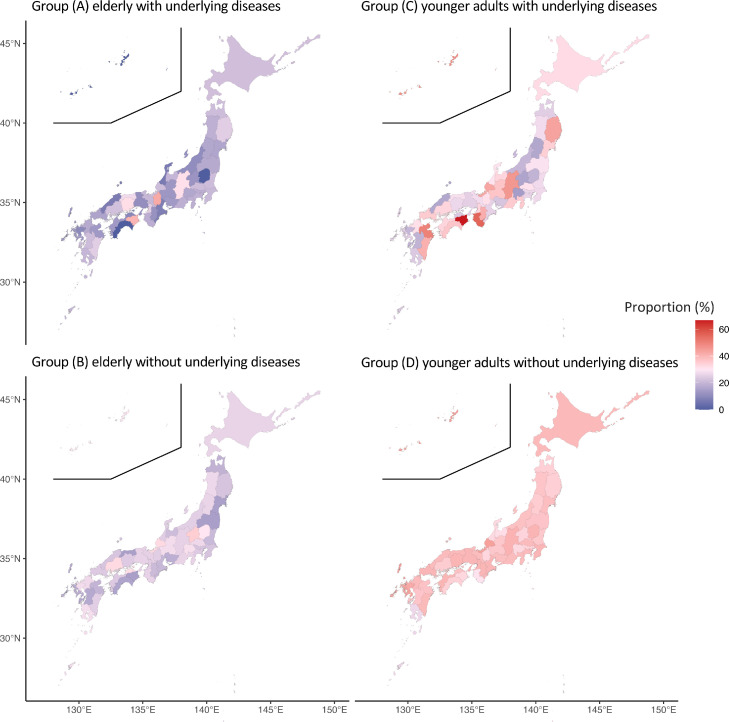
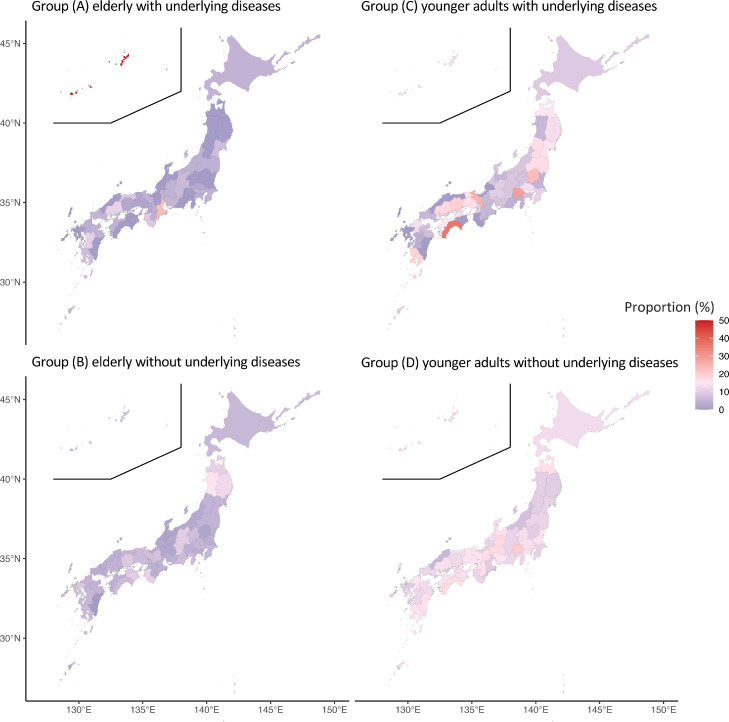
https://cdn.ncbi.nlm.nih.gov/pmc/blobs/4904/8342950/2e965cf3de9e/gr2.jpg
https://cdn.ncbi.nlm.nih.gov/pmc/blobs/4904/8342950/e20d88a5c1f7/gr1.jpg
https://cdn.ncbi.nlm.nih.gov/pmc/blobs/4904/8342950/2e965cf3de9e/gr2.jpg
https://cdn.ncbi.nlm.nih.gov/pmc/blobs/4904/8342950/e20d88a5c1f7/gr1.jpg
https://cdn.ncbi.nlm.nih.gov/pmc/blobs/4904/8342950/2e965cf3de9e/gr2.jpg

相似文献

1
Reasons for being unsure or unwilling regarding intention to take COVID-19 vaccine among Japanese people: A large cross-sectional national survey.日本人对接种新冠疫苗意愿不确定或不愿意的原因:一项大型全国性横断面调查。
Lancet Reg Health West Pac. 2021 Sep;14:100223. doi: 10.1016/j.lanwpc.2021.100223. Epub 2021 Jul 31.
2
Identification of optimum combinations of media channels for approaching COVID-19 vaccine unsure and unwilling groups in Japan.确定针对日本新冠疫苗接种犹豫和不愿意接种群体的最佳媒体渠道组合。
Lancet Reg Health West Pac. 2022 Jan;18:100330. doi: 10.1016/j.lanwpc.2021.100330. Epub 2021 Dec 11.
3
Characterising reasons for reversals of COVID-19 vaccination hesitancy among Japanese people: One-year follow-up survey.剖析日本民众新冠疫苗接种犹豫态度转变的原因:一年期随访调查
Lancet Reg Health West Pac. 2022 Oct;27:100541. doi: 10.1016/j.lanwpc.2022.100541. Epub 2022 Jul 21.
4
Attitudes and Intentions of US Veterans Regarding COVID-19 Vaccination.美国退伍军人对 COVID-19 疫苗接种的态度和意向。
JAMA Netw Open. 2021 Nov 1;4(11):e2132548. doi: 10.1001/jamanetworkopen.2021.32548.
5
The impact of information sources on COVID-19 vaccine hesitancy and resistance in sub-Saharan Africa.信息来源对撒哈拉以南非洲 COVID-19 疫苗犹豫和抵制的影响。
BMC Public Health. 2023 Jan 6;23(1):38. doi: 10.1186/s12889-022-14972-2.
6
The Impact of Priority Settings at the Start of COVID-19 Mass Vaccination on Subsequent Vaccine Uptake in Japan: One-Year Prospective Cohort Study.COVID-19 大规模疫苗接种开始时的优先设置对日本随后疫苗接种率的影响:一项为期一年的前瞻性队列研究。
JMIR Public Health Surveill. 2023 Jul 10;9:e42143. doi: 10.2196/42143.
7
Factors associated with the unwillingness of Jordanians, Palestinians and Syrians to be vaccinated against COVID-19.与约旦人、巴勒斯坦人和叙利亚人不愿接种 COVID-19 疫苗相关的因素。
PLoS Negl Trop Dis. 2021 Dec 9;15(12):e0009957. doi: 10.1371/journal.pntd.0009957. eCollection 2021 Dec.
8
Mandatory vaccination support and intentions to get vaccinated for COVID-19: Results from a nationally representative general population survey in October 2020 in Greece.对新冠病毒疫苗强制接种的支持及接种意愿:2020年10月希腊一项全国代表性普通人群调查的结果
J Eval Clin Pract. 2021 Aug;27(4):996-1003. doi: 10.1111/jep.13588. Epub 2021 Jun 1.
9
Caregivers' intentions to COVID-19 vaccination for their children in China: a cross-sectional survey.中国照顾者对其子女进行 COVID-19 疫苗接种的意愿:一项横断面调查。
Hum Vaccin Immunother. 2021 Dec 2;17(12):4799-4805. doi: 10.1080/21645515.2021.1985355. Epub 2021 Nov 10.
10
Attitudes towards COVID-19 vaccination, vaccine hesitancy and intention to take the vaccine.对新冠疫苗接种的态度、疫苗犹豫及接种意愿
Pharm Pract (Granada). 2021 Jan-Mar;19(1):2317. doi: 10.18549/PharmPract.2021.1.2317. Epub 2021 Mar 22.

引用本文的文献

1
Enablers and Barriers of COVID-19 Vaccination in the Philippines.菲律宾新冠疫苗接种的推动因素与障碍
Vaccines (Basel). 2025 Jul 1;13(7):719. doi: 10.3390/vaccines13070719.
2
Loneliness, but not social isolation, is a risk factor for COVID-19 vaccine hesitancy in university students in Tokyo, Japan.在日本东京的大学生中,孤独而非社交隔离是新冠疫苗犹豫情绪的一个风险因素。
Sci Rep. 2025 May 21;15(1):17562. doi: 10.1038/s41598-025-01110-2.
3
Twitter communities are associated with changing user's opinion towards COVID-19 vaccine in Japan.

本文引用的文献

1
Attitudes towards vaccines and intention to vaccinate against COVID-19: Implications for public health communications.对疫苗的态度及接种新冠疫苗的意愿:对公共卫生传播的启示
Lancet Reg Health Eur. 2021 Feb;1:100012. doi: 10.1016/j.lanepe.2020.100012.
2
Acceptance of a COVID-19 Vaccine in Japan during the COVID-19 Pandemic.新冠疫情期间日本民众对新冠疫苗的接受情况。
Vaccines (Basel). 2021 Mar 3;9(3):210. doi: 10.3390/vaccines9030210.
3
International estimates of intended uptake and refusal of COVID-19 vaccines: A rapid systematic review and meta-analysis of large nationally representative samples.
在日本,推特社群与改变用户对新冠疫苗的看法有关。
Sci Rep. 2025 Apr 5;15(1):11716. doi: 10.1038/s41598-025-95595-6.
4
Vaccination decisions and social capital in Japan.日本的疫苗接种决策与社会资本
SSM Popul Health. 2025 Feb 26;30:101769. doi: 10.1016/j.ssmph.2025.101769. eCollection 2025 Jun.
5
Understanding COVID-19 Vaccine Hesitancy among the General Population in Japan from Public Health Ethical Perspectives: Findings from a Narrative Review.从公共卫生伦理视角理解日本普通民众对新冠疫苗的犹豫态度:一项叙述性综述的结果
Asian Bioeth Rev. 2024 Oct 24;17(1):141-165. doi: 10.1007/s41649-024-00310-8. eCollection 2025 Jan.
6
Analyzing information sharing behaviors during stance formation on COVID-19 vaccination among Japanese Twitter users.分析日本推特用户在新冠疫苗接种立场形成过程中的信息分享行为。
PLoS One. 2024 Dec 31;19(12):e0299935. doi: 10.1371/journal.pone.0299935. eCollection 2024.
7
The individual and ecological characteristics of parental COVID-19 vaccination decisions.父母对 COVID-19 疫苗接种决策的个体和生态特征。
Sci Rep. 2024 Oct 15;14(1):24194. doi: 10.1038/s41598-024-74963-8.
8
Development and validation of the COVID-19 vaccine beliefs scale for the Chinese population.开发并验证针对中国人群的 COVID-19 疫苗信念量表。
BMC Public Health. 2024 Sep 10;24(1):2467. doi: 10.1186/s12889-024-19928-2.
9
COVID-19 vaccination intention among internally displaced persons in complex humanitarian emergency context, Northeast Nigeria.在复杂人道主义紧急情况下,尼日利亚东北部境内流离失所者的 COVID-19 疫苗接种意愿。
PLoS One. 2024 Aug 30;19(8):e0308139. doi: 10.1371/journal.pone.0308139. eCollection 2024.
10
Factors influencing parental COVID-19 vaccination willingness for children in Japan.影响日本父母为孩子接种新冠疫苗意愿的因素。
Vaccine X. 2024 Jul 18;19:100528. doi: 10.1016/j.jvacx.2024.100528. eCollection 2024 Aug.
国际上对 COVID-19 疫苗接种意愿和拒绝率的估计:基于大样本的全国代表性快速系统评价和荟萃分析。
Vaccine. 2021 Apr 8;39(15):2024-2034. doi: 10.1016/j.vaccine.2021.02.005. Epub 2021 Feb 6.
4
Hesitant or Not? The Association of Age, Gender, and Education with Potential Acceptance of a COVID-19 Vaccine: A Country-level Analysis.犹豫不决?年龄、性别和教育程度与潜在的 COVID-19 疫苗接种意愿的关联:基于国家层面的分析。
J Health Commun. 2020 Oct 2;25(10):799-807. doi: 10.1080/10810730.2020.1868630.
5
Looking inside the 'black box' of vaccine hesitancy: unlocking the effect of psychological attitudes and beliefs on COVID-19 vaccine acceptance and implications for public health communication.透视疫苗犹豫的“黑匣子”:揭示心理态度和信念对新冠疫苗接种接受度的影响及对公共卫生传播的启示
Psychol Med. 2023 Feb;53(3):1120-1121. doi: 10.1017/S003329172100101X. Epub 2021 Mar 8.
6
A comparison of perceived effectiveness of preventive behaviors against COVID-19 between the public and medical experts: Not so different in means, but in distributions.公众和医学专家对预防 COVID-19 行为的感知效果比较:手段上差异不大,但分布上不同。
J Health Psychol. 2022 Apr;27(5):1267-1272. doi: 10.1177/1359105321999701. Epub 2021 Mar 3.
7
Measuring the impact of COVID-19 vaccine misinformation on vaccination intent in the UK and USA.测量 COVID-19 疫苗错误信息对英国和美国疫苗接种意愿的影响。
Nat Hum Behav. 2021 Mar;5(3):337-348. doi: 10.1038/s41562-021-01056-1. Epub 2021 Feb 5.
8
Psychological characteristics associated with COVID-19 vaccine hesitancy and resistance in Ireland and the United Kingdom.爱尔兰和英国与新冠疫苗犹豫及抵触相关的心理特征。
Nat Commun. 2021 Jan 4;12(1):29. doi: 10.1038/s41467-020-20226-9.
9
Confidence and Receptivity for COVID-19 Vaccines: A Rapid Systematic Review.对新冠疫苗的信心和接受度:一项快速系统评价
Vaccines (Basel). 2020 Dec 30;9(1):16. doi: 10.3390/vaccines9010016.
10
COVID-19 vaccination intention in the UK: results from the COVID-19 vaccination acceptability study (CoVAccS), a nationally representative cross-sectional survey.英国的 COVID-19 疫苗接种意愿:来自 COVID-19 疫苗可接受性研究(CoVAccS)的结果,这是一项全国代表性的横断面调查。
Hum Vaccin Immunother. 2021 Jun 3;17(6):1612-1621. doi: 10.1080/21645515.2020.1846397. Epub 2020 Nov 26.