Tohluebaji Nikruesong, Thainiramit Panu, Putson Chatchai, Muensit Nantakan
Faculty of Science and Technology, Princess of Naradhiwas University, Narathiwat 96000, Thailand.
Division of Physical Science (Physics), Faculty of Science, Prince of Songkla University, Songkhla 90112, Thailand.
Polymers (Basel). 2021 Jul 31;13(15):2565. doi: 10.3390/polym13152565.
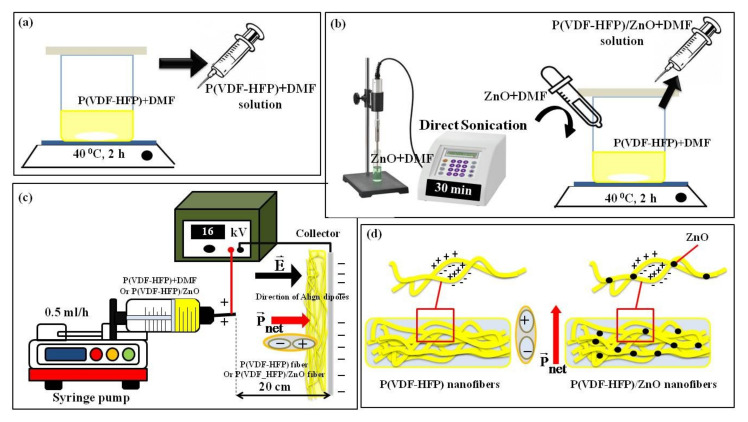
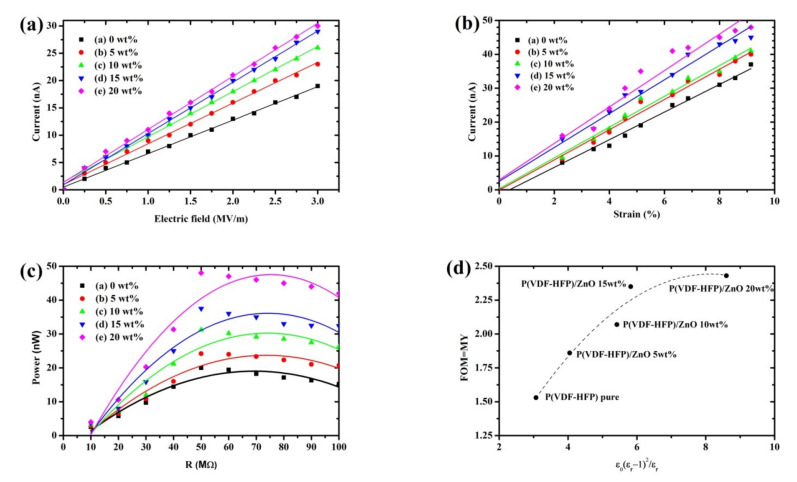
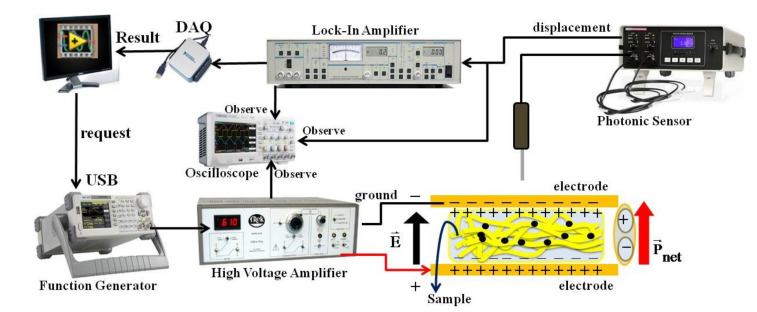
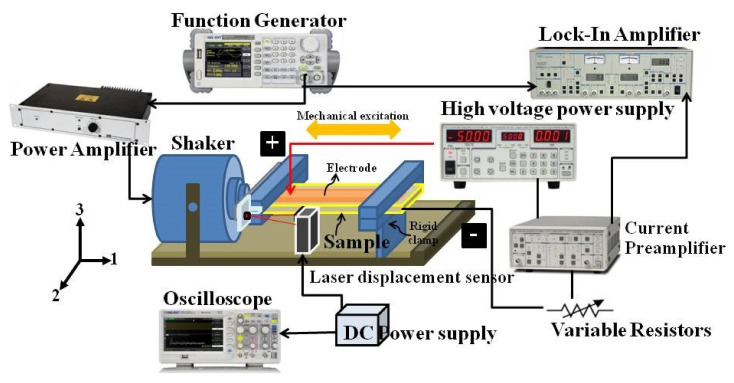
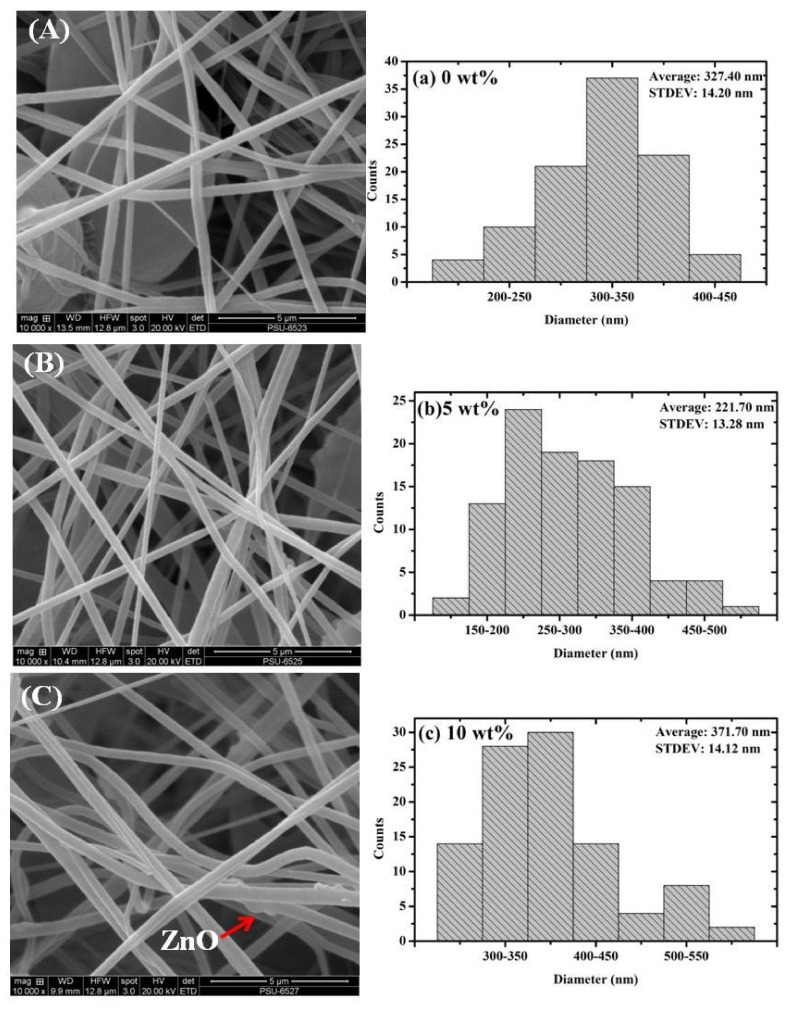
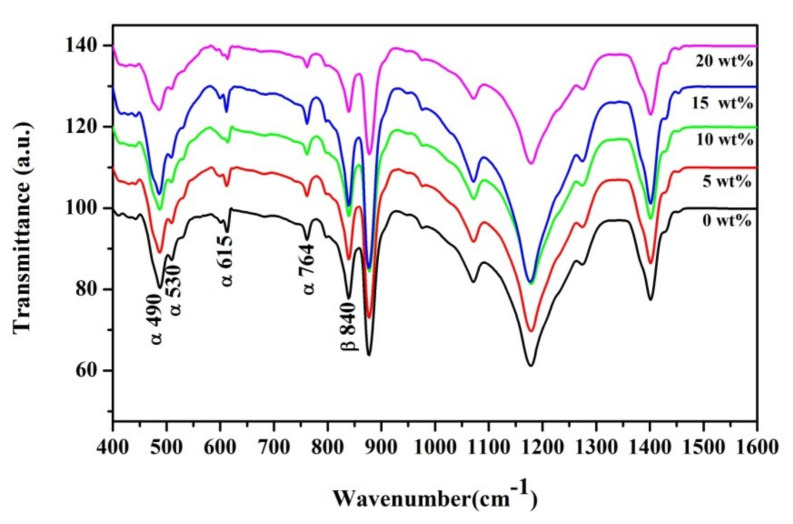
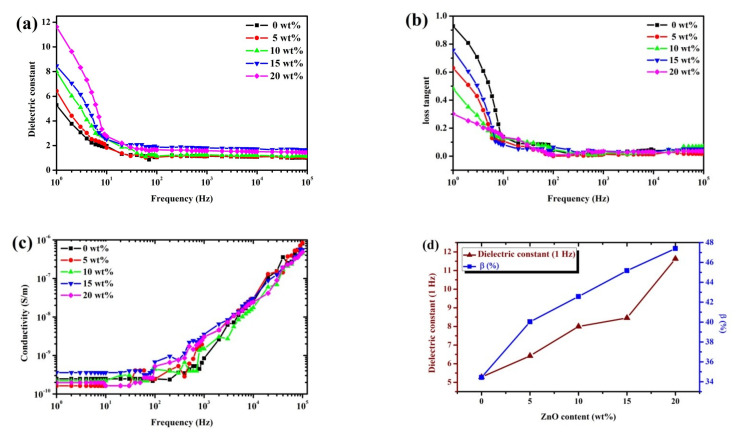
In this work, we improved the electromechanical properties, electrostrictive behavior and energy-harvesting performance of poly(vinylidenefluoridene-hexafluoropropylene) P(VDF-HFP)/zinc oxide (ZnO) composite nanofibers. The main factor in increasing their electromechanical performance and harvesting power based on electrostrictive behavior is an improved coefficient with a modified crystallinity phase and tuning the polarizability of material. These blends were fabricated by using a simple electrospinning method with varied ZnO contents (0, 5, 10, 15 and 20 wt%). The effects of the ZnO nanoparticle size and content on the phase transformation, dielectric permittivity, strain response and vibration energy harvesting were investigated. The characteristics of these structures were evaluated utilizing SEM, EDX, XRD, FT-IR and DMA. The electrical properties of the fabrication samples were examined by LCR meter as a function of the concentration of the ZnO and frequency. The strain response from the electric field was observed by the photonic displacement apparatus and lock-in amplifier along the thickness direction at a low frequency of 1 Hz. Moreover, the energy conversion behavior was determined by an energy-harvesting setup measuring the current induced in the composite nanofibers. The results showed that the ZnO nanoparticles' component effectively achieves a strain response and the energy-harvesting capabilities of these P(VDF-HFP)/ZnO composites nanofibers. The electrostriction coefficient tended to increase with a higher ZnO content and an increasing dielectric constant. The generated current increased with the ZnO content when the external electric field was applied at a vibration of 20 Hz. Consequently, the ZnO nanoparticles dispersed into electrostrictive P(VDF-HFP) nanofibers, which offer a large power density and excellent efficiency of energy harvesting.
在这项工作中,我们改善了聚(偏二氟乙烯 - 六氟丙烯)P(VDF - HFP)/氧化锌(ZnO)复合纳米纤维的机电性能、电致伸缩行为和能量收集性能。基于电致伸缩行为提高其机电性能和收集功率的主要因素是通过改变结晶相来提高系数以及调节材料的极化率。这些共混物采用简单的电纺丝方法制备,其中ZnO含量不同(0、5、10、15和20 wt%)。研究了ZnO纳米颗粒尺寸和含量对相变、介电常数、应变响应和振动能量收集的影响。利用扫描电子显微镜(SEM)、能量色散X射线光谱仪(EDX)、X射线衍射仪(XRD)、傅里叶变换红外光谱仪(FT - IR)和动态热机械分析仪(DMA)对这些结构的特性进行了评估。通过LCR仪表作为ZnO浓度和频率的函数来检测制备样品的电学性能,并在1 Hz的低频下,使用光子位移装置和锁相放大器沿厚度方向观察电场引起的应变响应。此外,通过能量收集装置测量复合纳米纤维中感应的电流来确定能量转换行为。结果表明,ZnO纳米颗粒成分有效地实现了这些P(VDF - HFP)/ZnO复合纳米纤维的应变响应和能量收集能力,并随着ZnO含量增加以及介电常数增加,电致伸缩系数趋于增大;当在20 Hz振动下施加外部电场时,产生的电流随ZnO含量增加而增大。因此,分散到电致伸缩P(VDF - HFP)纳米纤维中的ZnO纳米颗粒具有高功率密度和优异能量收集效率。