Istituto di Ricerche Farmacologiche Mario Negri IRCCS, Milan, Italy.
Department of Mathematics "Tullio Levi-Civita", University of Padova, Padova, Italy.
Mol Neurodegener. 2021 Aug 10;16(1):52. doi: 10.1186/s13024-021-00470-3.
Amyotrophic lateral sclerosis (ALS) is a multifactorial, multisystem motor neuron disease for which currently there is no effective treatment. There is an urgent need to identify biomarkers to tackle the disease's complexity and help in early diagnosis, prognosis, and therapy. Extracellular vesicles (EVs) are nanostructures released by any cell type into body fluids. Their biophysical and biochemical characteristics vary with the parent cell's physiological and pathological state and make them an attractive source of multidimensional data for patient classification and stratification.
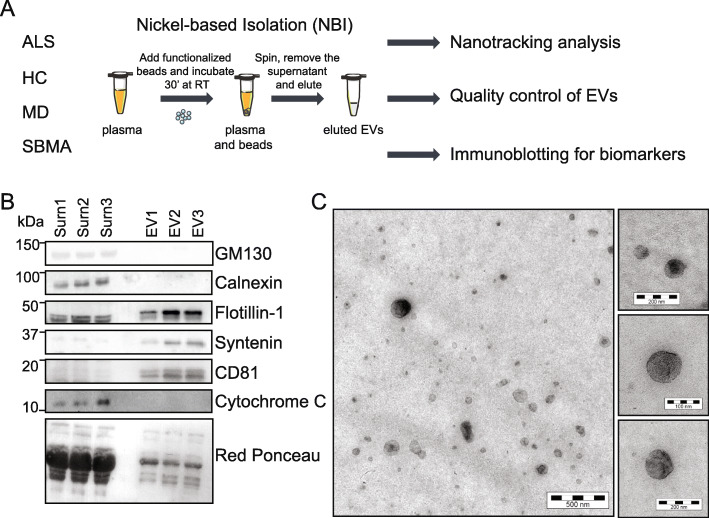
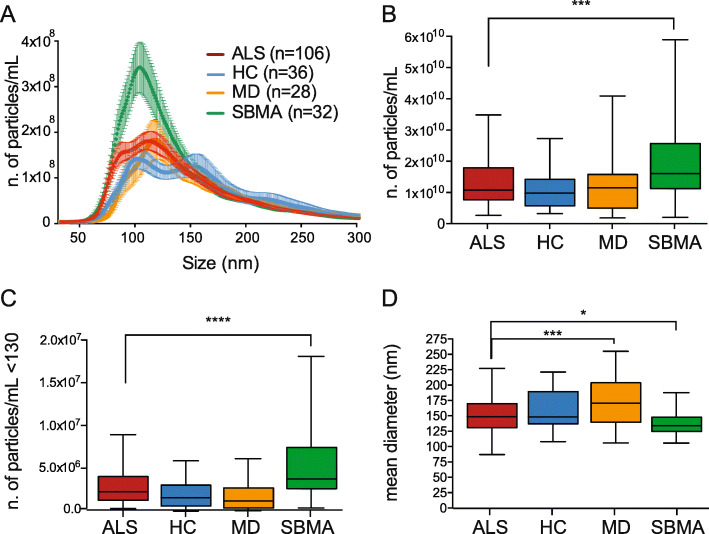
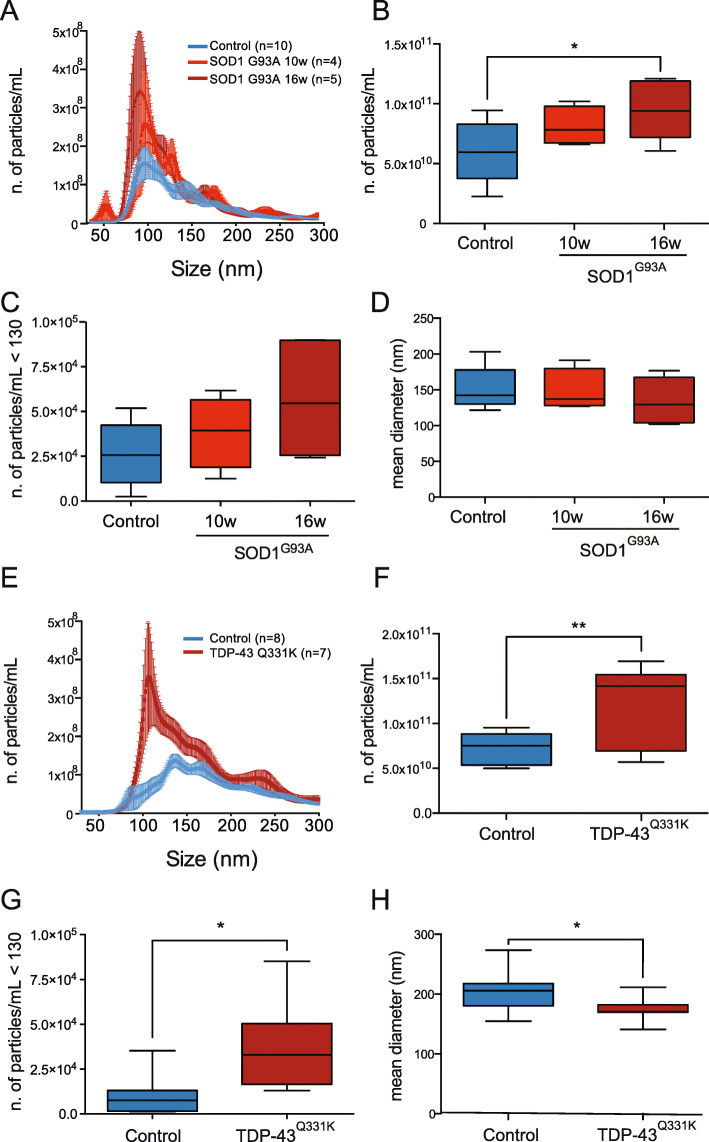
We analyzed plasma-derived EVs of ALS patients (n = 106) and controls (n = 96), and SOD1 and TDP-43 mouse models of ALS. We purified plasma EVs by nickel-based isolation, characterized their EV size distribution and morphology respectively by nanotracking analysis and transmission electron microscopy, and analyzed EV markers and protein cargos by Western blot and proteomics. We used machine learning techniques to predict diagnosis and prognosis.
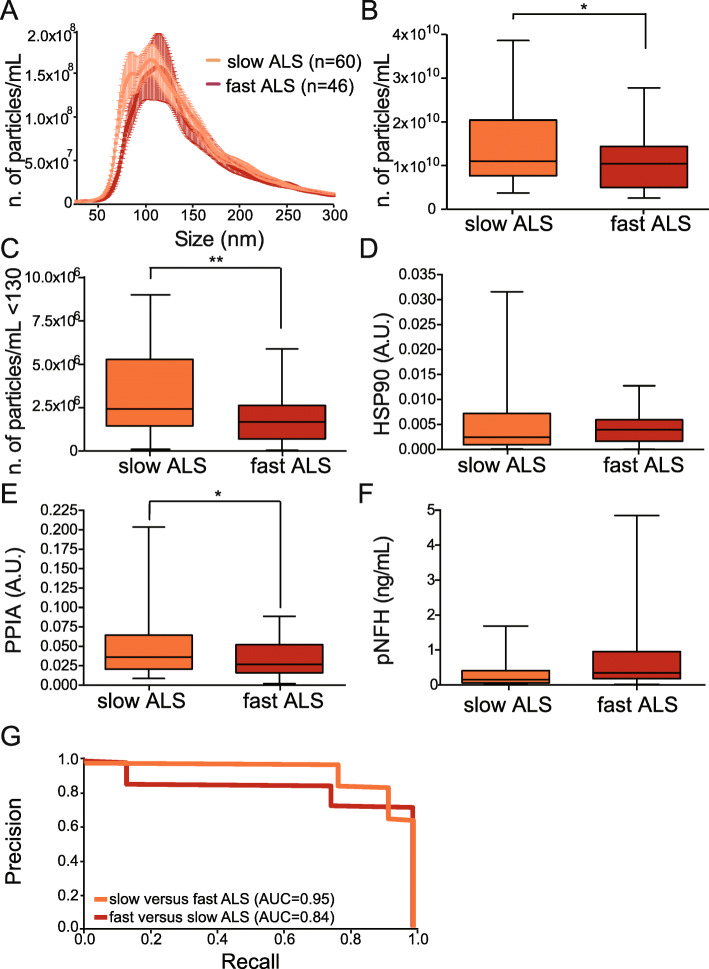
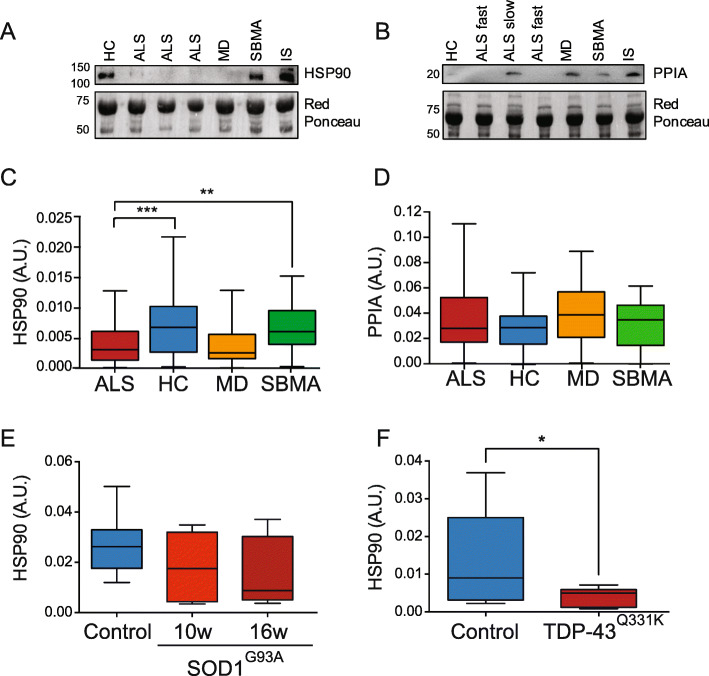
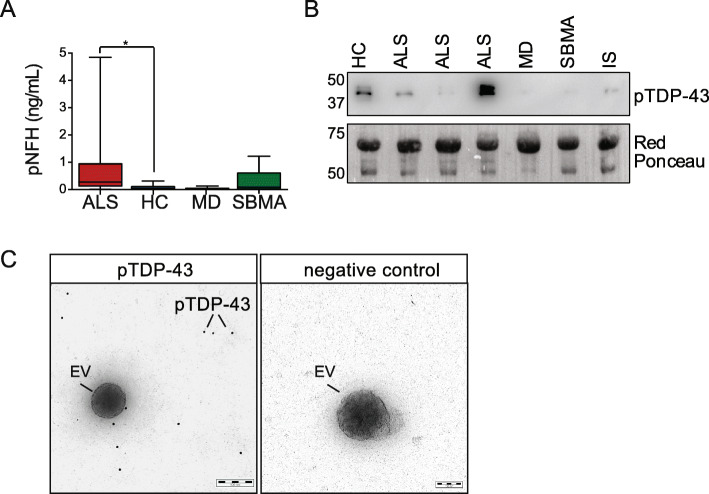
Our procedure resulted in high-yield isolation of intact and polydisperse plasma EVs, with minimal lipoprotein contamination. EVs in the plasma of ALS patients and the two mouse models of ALS had a distinctive size distribution and lower HSP90 levels compared to the controls. In terms of disease progression, the levels of cyclophilin A with the EV size distribution distinguished fast and slow disease progressors, a possibly new means for patient stratification. Immuno-electron microscopy also suggested that phosphorylated TDP-43 is not an intravesicular cargo of plasma-derived EVs.
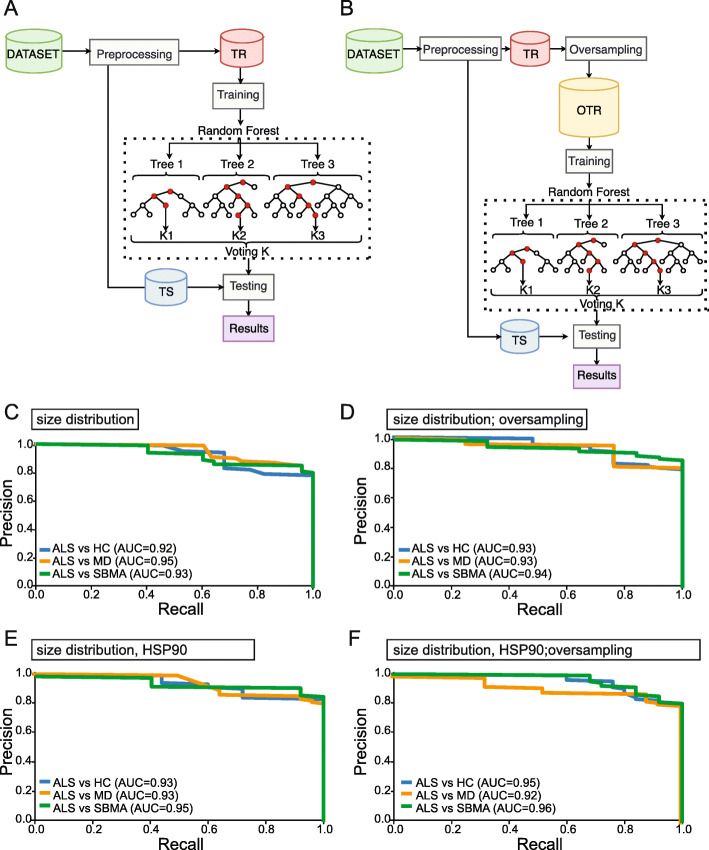
Our analysis unmasked features in plasma EVs of ALS patients with potential straightforward clinical application. We conceived an innovative mathematical model based on machine learning which, by integrating EV size distribution data with protein cargoes, gave very high prediction rates for disease diagnosis and prognosis.
肌萎缩侧索硬化症(ALS)是一种多因素、多系统运动神经元疾病,目前尚无有效治疗方法。迫切需要鉴定生物标志物来应对疾病的复杂性,并有助于早期诊断、预后和治疗。细胞外囊泡(EVs)是由任何细胞类型释放到体液中的纳米结构。它们的生物物理和生化特征随亲本细胞的生理和病理状态而变化,使它们成为多维数据的有吸引力来源,可用于患者分类和分层。
我们分析了 106 例 ALS 患者和 96 例对照者的血浆衍生 EVs,以及 SOD1 和 TDP-43 两种 ALS 小鼠模型的 EVs。我们通过镍基分离法纯化血浆 EVs,通过纳米跟踪分析和透射电子显微镜分别对其 EV 大小分布和形态进行了表征,并通过 Western blot 和蛋白质组学分析了 EV 标志物和蛋白 cargos。我们使用机器学习技术来预测诊断和预后。
我们的程序导致了高产量分离完整且多分散的血浆 EVs,脂蛋白污染最小。与对照组相比,ALS 患者和两种 ALS 小鼠模型的血浆 EVs 具有独特的大小分布和较低的 HSP90 水平。在疾病进展方面,与 EV 大小分布相关的环孢素 A 水平区分了快速和缓慢进展的患者,这可能是一种新的患者分层方法。免疫电子显微镜还表明,磷酸化 TDP-43 不是血浆衍生 EVs 的囊内货物。
我们的分析揭示了 ALS 患者血浆 EVs 的特征,具有潜在的直接临床应用。我们基于机器学习构思了一种创新的数学模型,该模型通过将 EV 大小分布数据与蛋白 cargos 相结合,对疾病诊断和预后具有非常高的预测率。