Student Research Committee, Fasa University of Medical Sciences, Fasa, Iran.
Noncommunicable Diseases Research Center, Fasa University of Medical Sciences, Fasa, Iran.
Sci Rep. 2021 Aug 10;11(1):16249. doi: 10.1038/s41598-021-95796-9.
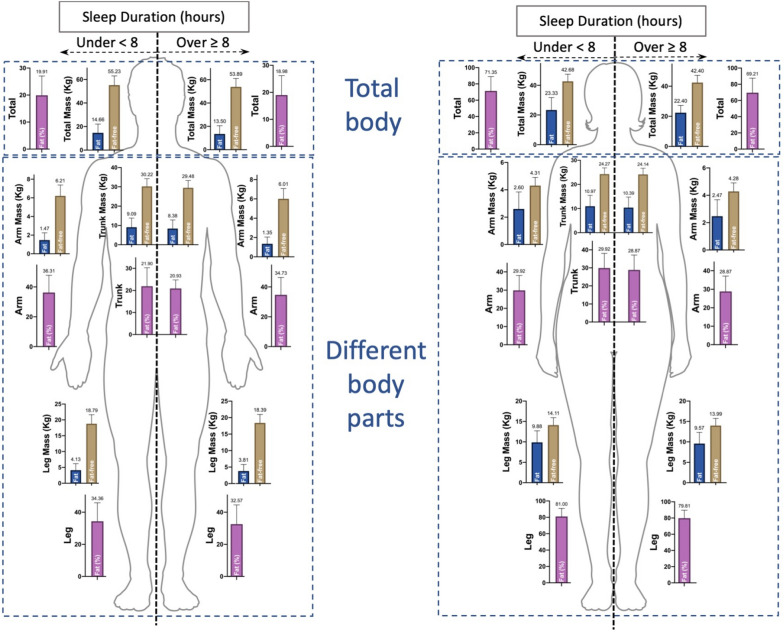
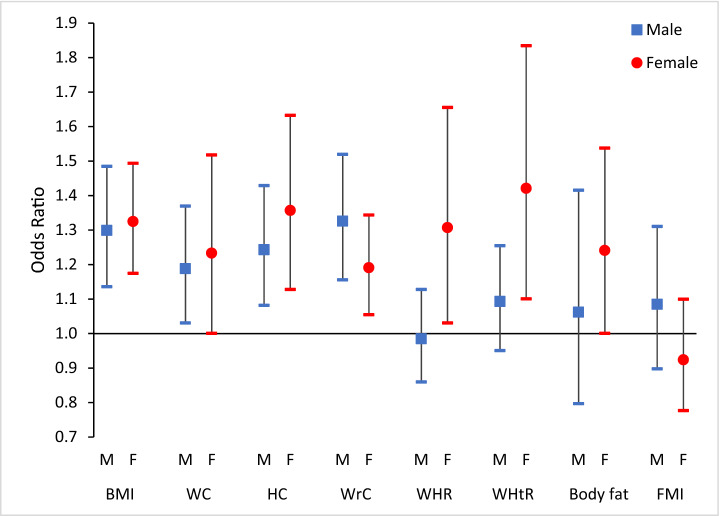
Recent decades have seen a dramatic rise in the prevalence of obesity. While genetic factors can influence obesity, environmental factors and lifestyle may play important roles as well. Sleep can be regarded as one of these factors. This study aimed to examine sleep duration, as a potential risk factor for obesity in an Iranian population. In this cross-sectional study, the Fasa PERSIAN cohort study data was used and 10,136 subjects aged 35-70 were entered. Anthropometrics indices have been measured and the total body fat percentage (BFP) was obtained by Bio-Impedance Analysis. Also, physical activity and dietary intake have been recorded. Sleep duration was obtained and individuals categorized into two groups of "< 8" and "≥ 8" h of sleep. The mean age and sleep duration of the participants were 48.63 ± 9.57 years and 6.92 ± 1.62 h in the total population, respectively. All of the anthropometric indices were significantly higher in the "< 8 h of sleep" group than in the "≥ 8 h of sleep" group. Regarding BFP and fat mass index (FMI) the same results was seen (p-value < 0.05). Body mass index (BMI), Waist and hip circumferences (WC, HC), and waist-to-height ratio (WHtR) were in a significant negative association with night time sleep (p-value < 0.001), while these associations with daytime napping were positive (p-value < 0.001). After multi-variable adjusting, BMI, WC, HC, WHtR, and wrist circumference showed significant negative associations with 24-h sleep duration (p-value < 0.05). This study established the association between nocturnal, daytime napping, 24-h sleep duration and obesity parameters. Daytime napping was positively associated with obesity parameters and short 24-h sleep duration was associated with higher risk of overweight/obesity. These results indicate that insufficient sleep can be a screening indicator for an unhealthy lifestyle and poor health outcomes.
近几十年来,肥胖的患病率急剧上升。虽然遗传因素会影响肥胖,但环境因素和生活方式也可能起到重要作用。睡眠可以被视为这些因素之一。本研究旨在检查伊朗人群中睡眠持续时间作为肥胖的潜在危险因素。在这项横断面研究中,使用了法萨波斯尼亚语人群队列研究的数据,共纳入了 10136 名年龄在 35-70 岁的受试者。测量了人体测量学指标,并通过生物阻抗分析获得了体脂肪百分比(BFP)。此外,还记录了身体活动和饮食摄入情况。睡眠时间并将个体分为两组:"<8"和"≥8"小时睡眠。在总人群中,参与者的平均年龄和睡眠时间分别为 48.63±9.57 岁和 6.92±1.62 小时。在"<8 小时睡眠"组中,所有人体测量学指标均显著高于"≥8 小时睡眠"组。关于 BFP 和脂肪质量指数(FMI),也观察到了相同的结果(p 值<0.05)。体重指数(BMI)、腰围和臀围(WC、HC)以及腰高比(WHtR)与夜间睡眠时间呈显著负相关(p 值<0.001),而与日间小睡的相关性呈正相关(p 值<0.001)。经过多变量调整后,BMI、WC、HC、WHtR 和腕围与 24 小时睡眠时间呈显著负相关(p 值<0.05)。本研究确立了夜间、日间小睡、24 小时睡眠时间与肥胖参数之间的关系。日间小睡与肥胖参数呈正相关,24 小时睡眠时间较短与超重/肥胖的风险增加相关。这些结果表明,睡眠不足可能是不健康生活方式和不良健康结果的筛查指标。