Aldejohann Alexander Maximilian, Herz Michaela, Martin Ronny, Walther Grit, Kurzai Oliver
Institute for Hygiene and Microbiology, University of Würzburg, Würzburg, Germany.
National Reference Center for Invasive Fungal Infections, Leibniz Institute for Natural Product Research and Infection Biology- Hans Knoell Institute, Jena, Germany.
JAC Antimicrob Resist. 2021 Aug 7;3(3):dlab122. doi: 10.1093/jacamr/dlab122. eCollection 2021 Sep.
is the second leading fungal pathogen causing candidaemia and invasive candidiasis in Europe. This yeast is recognized for its rapid ability to acquire antifungal drug resistance.
We systematically evaluated 176 isolates submitted to the German National Reference Center for Invasive Fungal Infections (NRZMyk) between 2015 and 2019 with regard to echinocandin and fluconazole susceptibility.
Susceptibility testing was performed using a reference protocol (EUCAST) and a range of commercial assays. Hot spot regions of the echinocandin target genes were sequenced using Sanger sequencing.
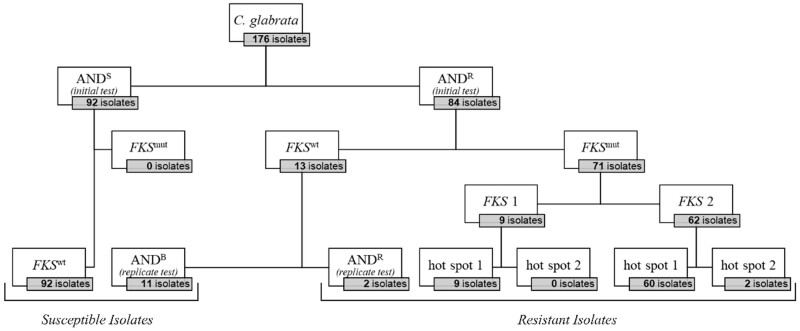
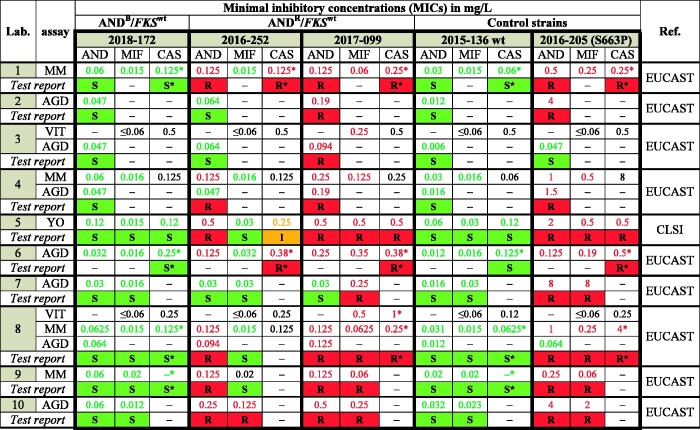
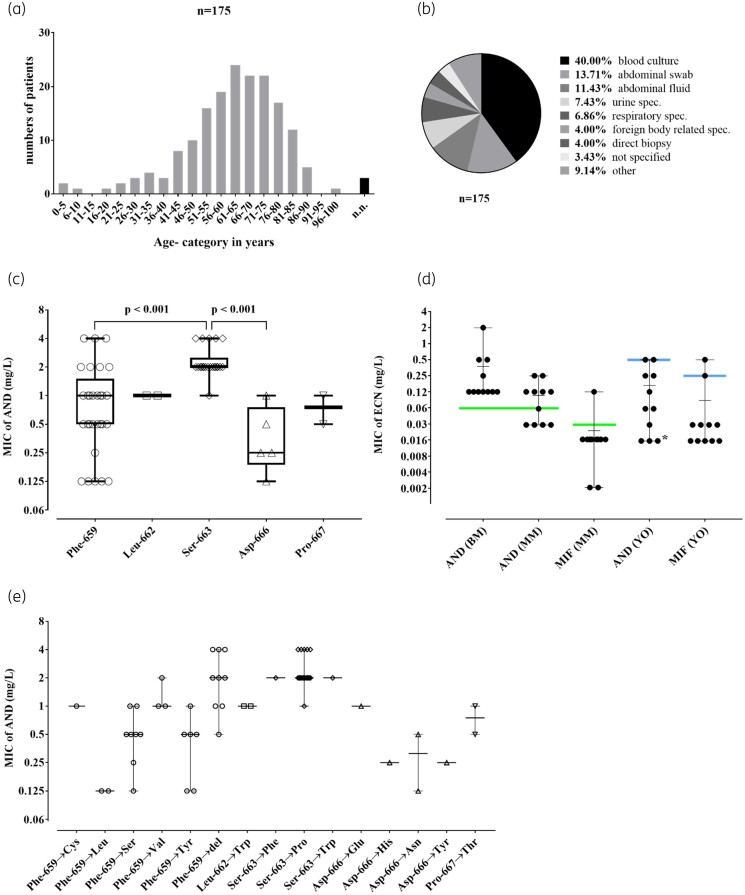
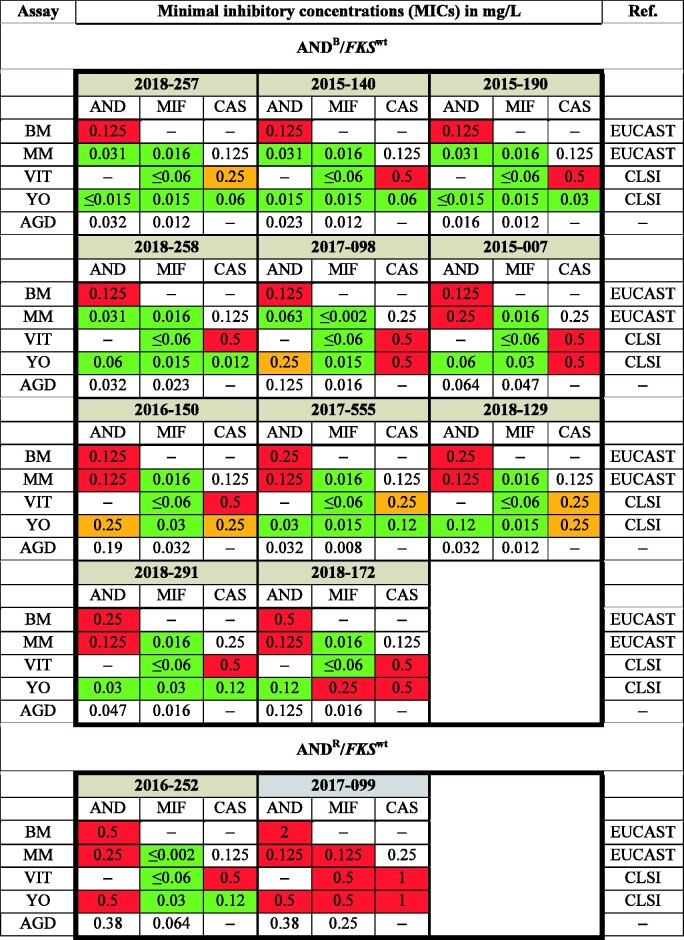
In total, 84 of 176 isolates were initially classified as anidulafungin-resistant based on EUCAST testing. Of those, 71 harboured mutations in the glucan synthase encoding genes (13% in , 87% in 2). Significant differences in anidulafungin MICs were found between distinct mutation sites. 11 wild-type (WT) isolates initially classified as resistant exhibited anidulafungin MICs fluctuating around the interpretation breakpoint upon re-testing with multiple assays. Two WT isolates consistently showed high anidulafungin MICs and thus must be considered resistant despite the absence of target gene mutations. Over one-third of echinocandin-resistant strains displayed concomitant fluconazole resistance. Of those, isolates linked to bloodstream infection carrying a change at Ser-663 were associated with adverse clinical outcome.
Resistant strains are emerging in Germany. Phenotypic echinocandin testing can result in misclassification of susceptible strains. genotyping aids in detecting these strains, however, echinocandin resistance may occur despite a wild-type genotype.
在欧洲,[该真菌名称未给出]是引起念珠菌血症和侵袭性念珠菌病的第二大主要真菌病原体。这种酵母菌以其快速获得抗真菌药物耐药性的能力而闻名。
我们系统评估了2015年至2019年间提交给德国国家侵袭性真菌感染参考中心(NRZMyk)的176株分离株对棘白菌素和氟康唑的敏感性。
使用参考方案(EUCAST)和一系列商业检测方法进行药敏试验。使用桑格测序法对棘白菌素靶基因的热点区域进行测序。
根据EUCAST检测,176株分离株中共有84株最初被分类为对阿尼芬净耐药。其中,71株在葡聚糖合酶编码基因中存在突变([具体基因1]中占13%,[具体基因2]中占87%)。在不同突变位点之间发现阿尼芬净MIC存在显著差异。11株最初被分类为耐药的野生型(WT)分离株在使用多种检测方法重新检测时,其阿尼芬净MIC在解释断点附近波动。2株WT分离株始终显示出高阿尼芬净MIC,因此尽管没有靶基因突变,也必须被视为耐药。超过三分之一的棘白菌素耐药菌株同时表现出氟康唑耐药。其中,与血流感染相关且Ser-663发生变化的分离株与不良临床结局相关。
德国正在出现耐药[该真菌名称未给出]菌株。棘白菌素表型检测可能导致易感菌株的错误分类。基因分型有助于检测这些菌株,然而,尽管基因型为野生型,仍可能出现棘白菌素耐药。