Lambert Initiative for Cannabinoid Therapeutics, The University of Sydney, Sydney, New South Wales, Australia.
Discipline of Pharmacology, Faculty of Medicine and Health, The University of Sydney, Sydney, New South Wales, Australia.
Br J Pharmacol. 2021 Dec;178(24):4826-4841. doi: 10.1111/bph.15661. Epub 2021 Sep 30.
Cannabis has been used to treat epilepsy for millennia, with such use validated by regulatory approval of cannabidiol (CBD) for Dravet syndrome. Unregulated artisanal cannabis-based products used to treat children with intractable epilepsies often contain relatively low doses of CBD but are enriched in other phytocannabinoids. This raises the possibility that other cannabis constituents might have anticonvulsant properties.
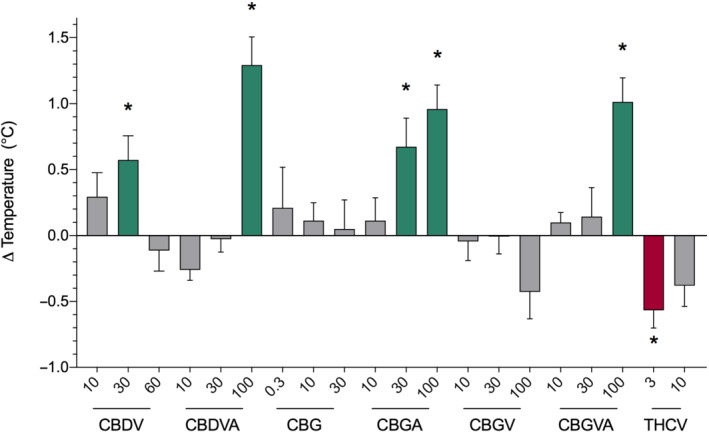
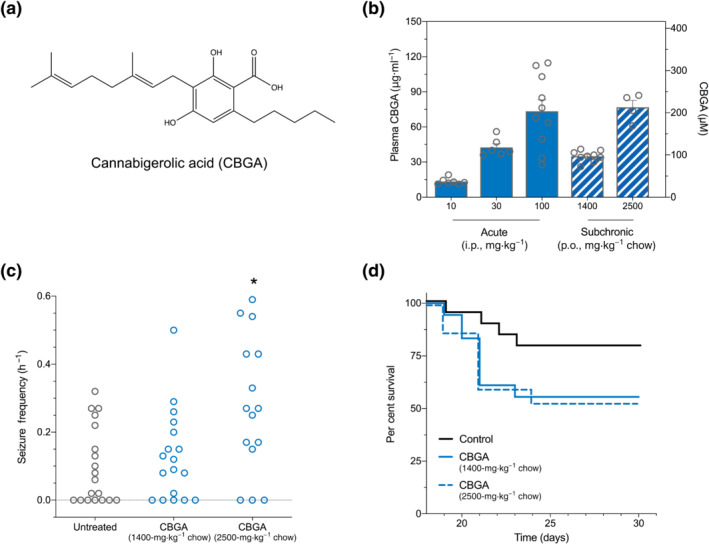
We used the Scn1a mouse model of Dravet syndrome to investigate the cannabis plant for phytocannabinoids with anticonvulsant effects against hyperthermia-induced seizures. The most promising, cannabigerolic acid (CBGA), was further examined against spontaneous seizures and survival in Scn1a mice and in electroshock seizure models. Pharmacological effects of CBGA were surveyed across multiple drug targets.
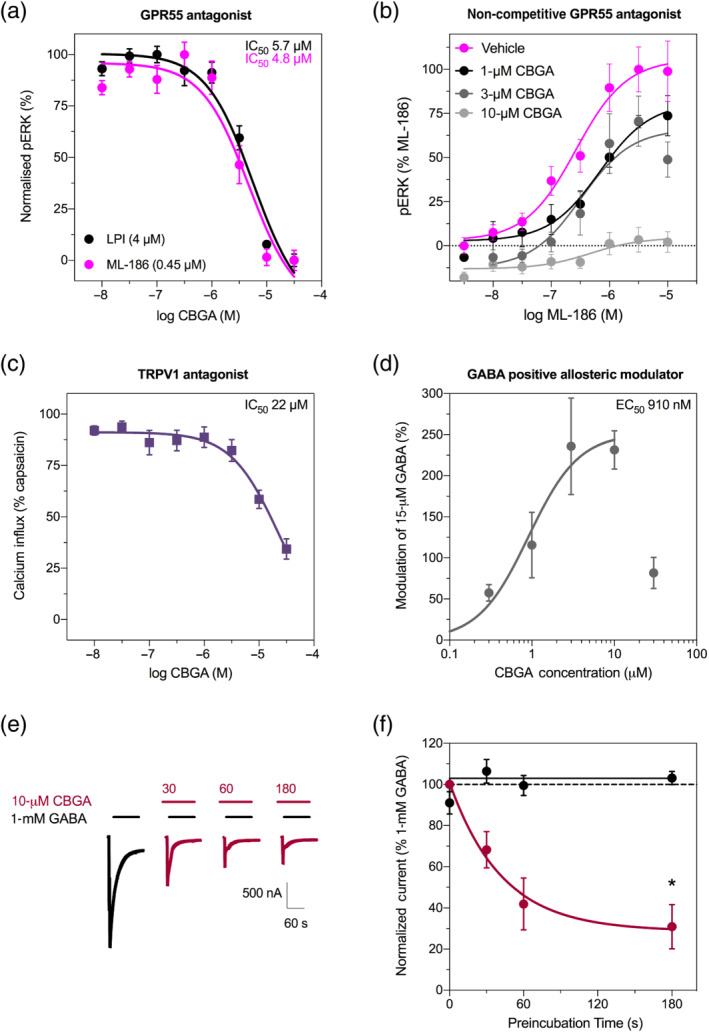
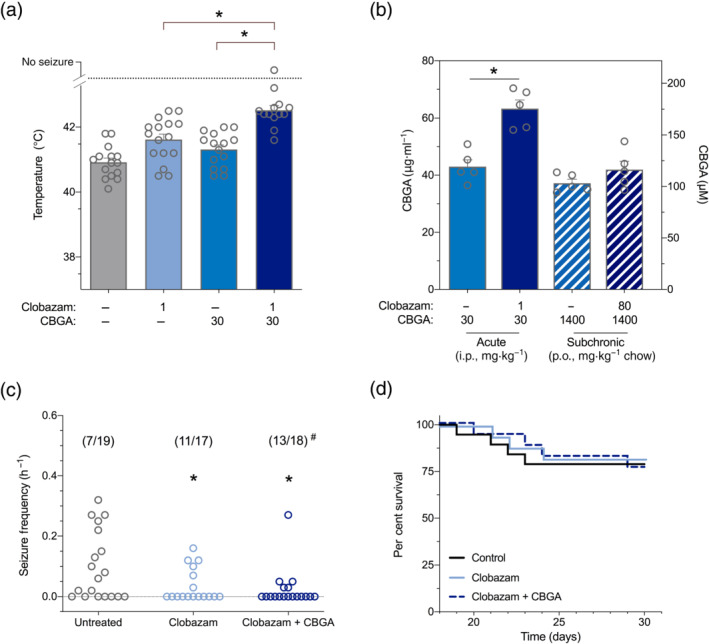
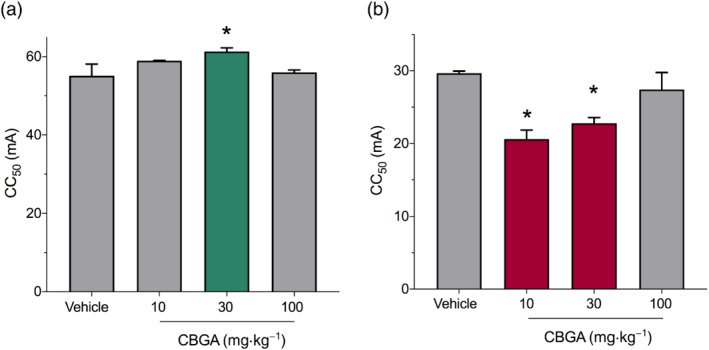
The initial screen identified three phytocannabinoids with novel anticonvulsant properties: CBGA, cannabidivarinic acid (CBDVA) and cannabigerovarinic acid (CBGVA). CBGA was most potent and potentiated the anticonvulsant effects of clobazam against hyperthermia-induced and spontaneous seizures, and was anticonvulsant in the MES threshold test. However, CBGA was proconvulsant in the 6-Hz threshold test and a high dose increased spontaneous seizure frequency in Scn1a mice. CBGA was found to interact with numerous epilepsy-relevant targets including GPR55, TRPV1 channels and GABA receptors.
These results suggest that CBGA, CBDVA and CBGVA may contribute to the effects of cannabis-based products in childhood epilepsy. Although these phytocannabinoids have anticonvulsant potential and could be lead compounds for drug development programmes, several liabilities would need to be overcome before CBD is superseded by another in this class.
大麻被用于治疗癫痫已有数千年的历史,其使用得到了对德拉维特综合征的大麻二酚(CBD)的监管批准的验证。用于治疗难治性癫痫儿童的未经监管的手工制作的大麻基产品通常含有相对较低剂量的 CBD,但富含其他植物大麻素。这就提出了这样一种可能性,即其他大麻成分可能具有抗惊厥特性。
我们使用德拉维特综合征的 Scn1a 小鼠模型来研究大麻植物中的植物大麻素,以寻找具有抗高热诱导性癫痫发作的抗惊厥作用的植物大麻素。最有前途的大麻素是大麻萜酚酸(CBGA),进一步研究了其对 Scn1a 小鼠自发性癫痫发作和生存的影响,以及对电休克癫痫模型的影响。调查了 CBGA 对多种药物靶点的药理作用。
初步筛选确定了三种具有新型抗惊厥特性的植物大麻素:CBGA、大麻二酚酸(CBDVA)和大麻色烯酸(CBGVA)。CBGA 最为有效,可增强氯巴占对高热诱导和自发性癫痫发作的抗惊厥作用,并且在 MES 阈值测试中具有抗惊厥作用。然而,CBGA 在 6-Hz 阈值测试中具有促惊厥作用,高剂量会增加 Scn1a 小鼠自发性癫痫发作的频率。发现 CBGA 与许多与癫痫相关的靶点相互作用,包括 GPR55、TRPV1 通道和 GABA 受体。
这些结果表明,CBGA、CBDVA 和 CBGVA 可能有助于大麻基产品在儿童癫痫中的作用。尽管这些植物大麻素具有抗惊厥潜力,并且可能成为药物开发计划的先导化合物,但在 CBD 被该类别的另一种药物取代之前,还需要克服几个缺点。