Department of Haematology, University of Cambridge, Cambridge Institute for Medical Research, Cambridge, UK.
Department of Scientific Computing, Science and Technologies Facilities Council, UK Research and Innovation, Oxfordshire, Didcot, UK.
Proteins. 2021 Dec;89(12):1752-1769. doi: 10.1002/prot.26214. Epub 2021 Aug 21.
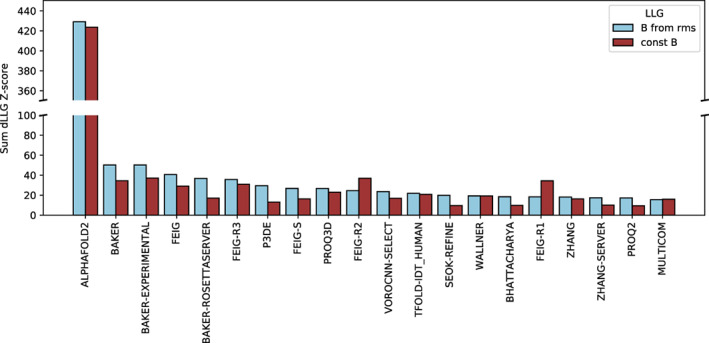
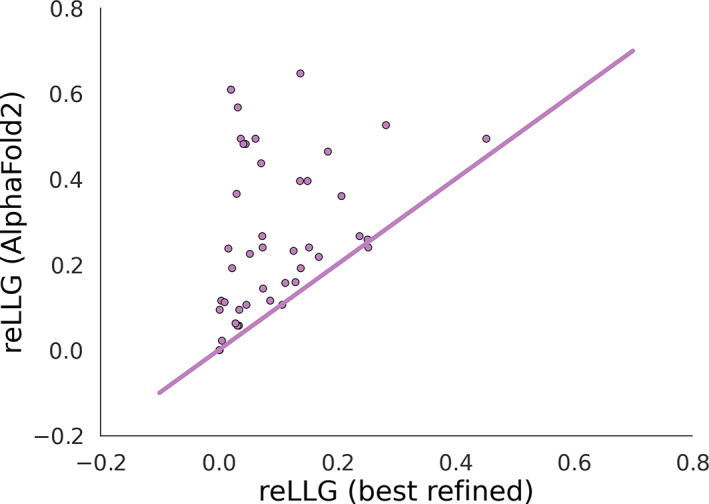
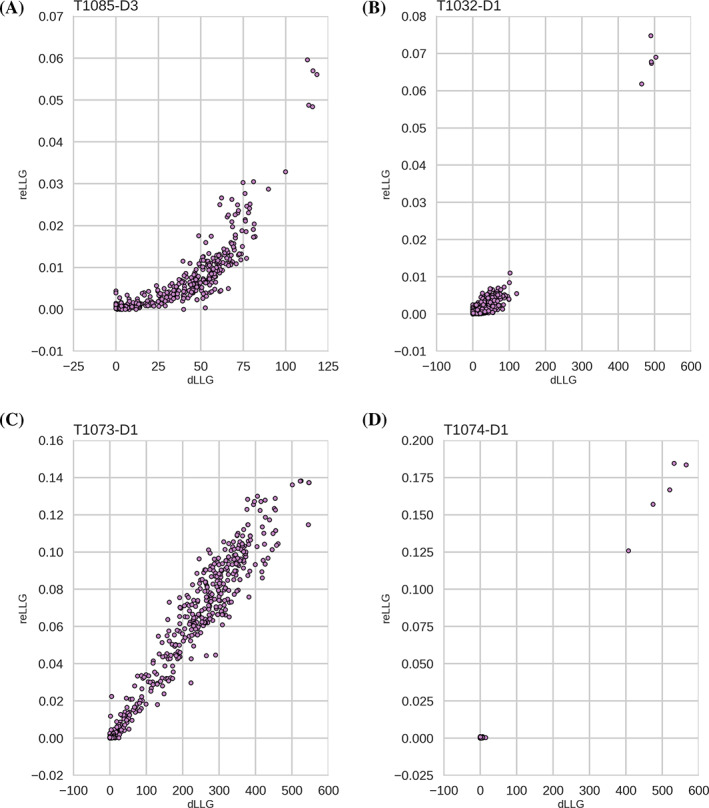
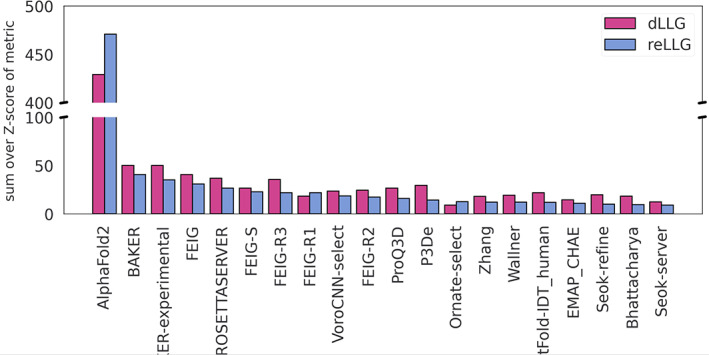
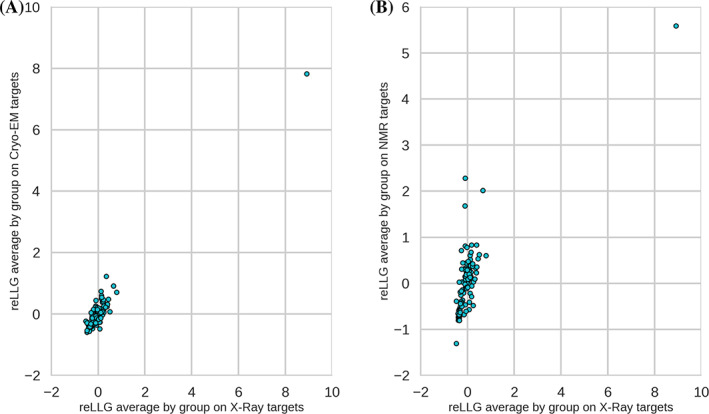
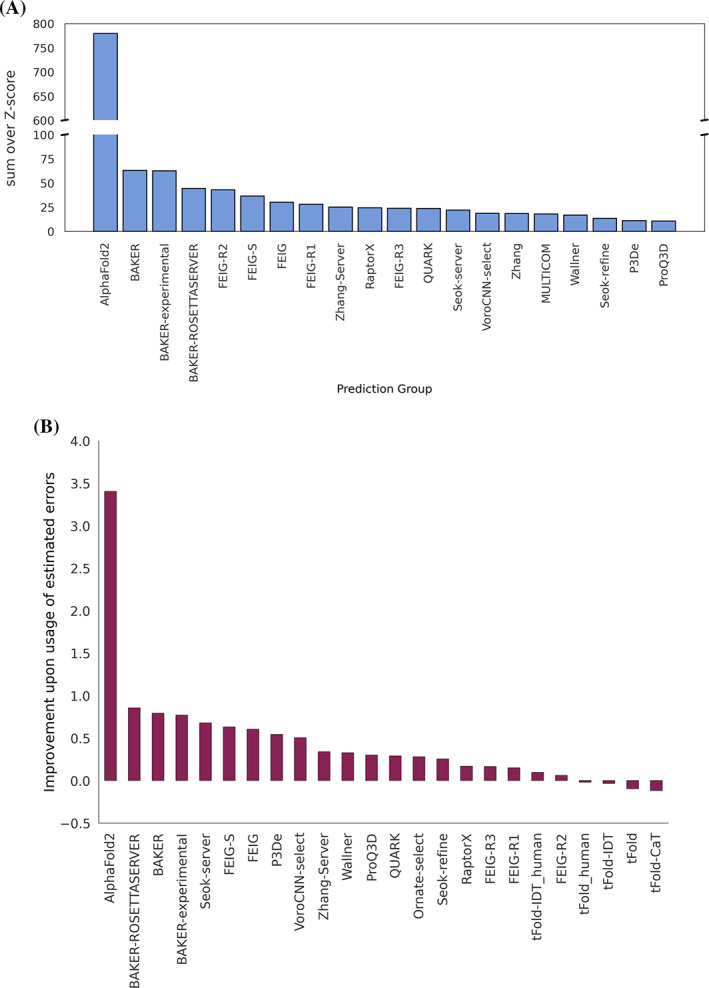
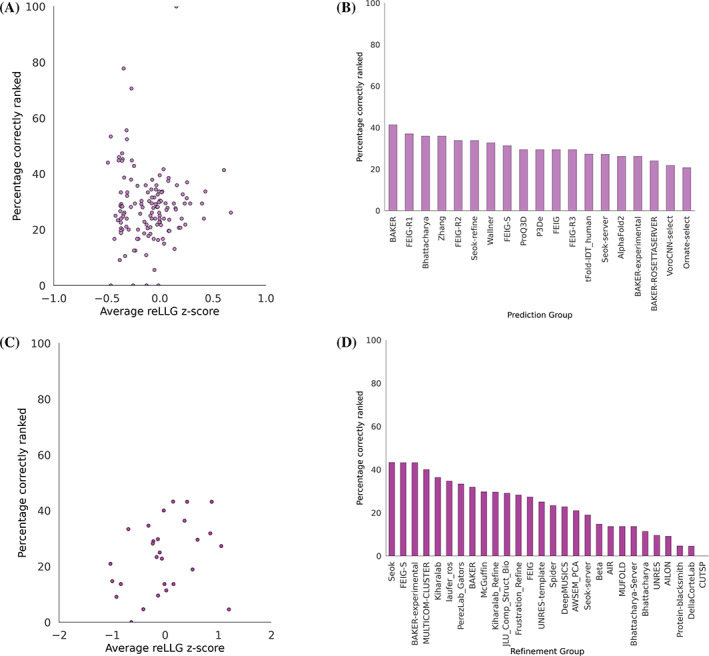
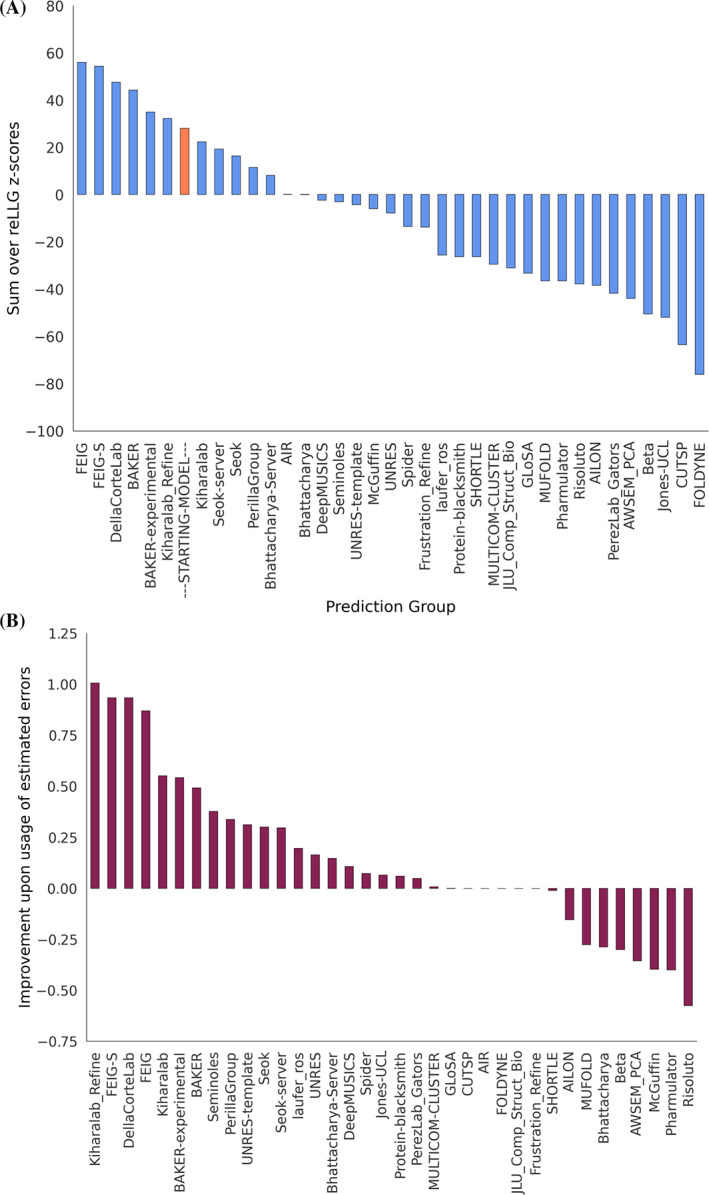
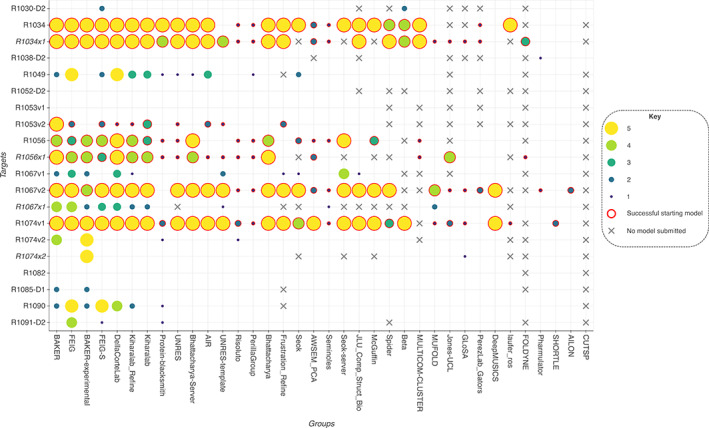
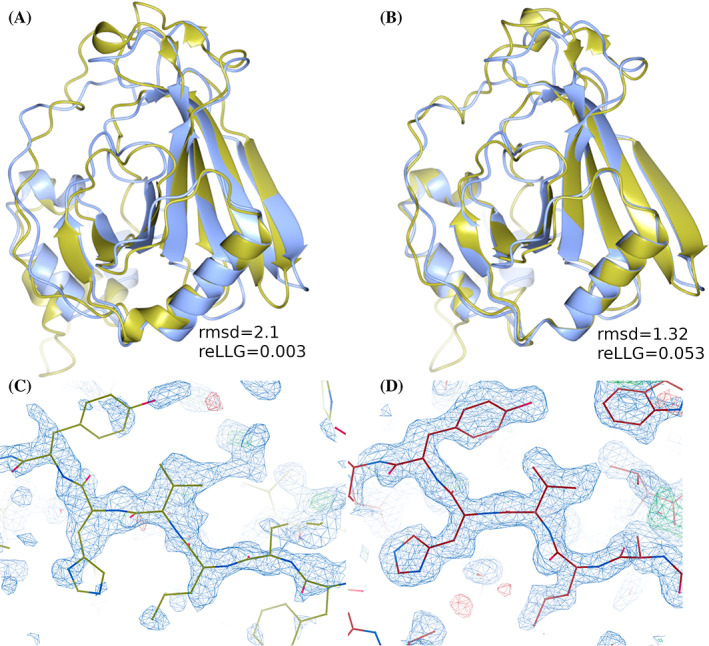
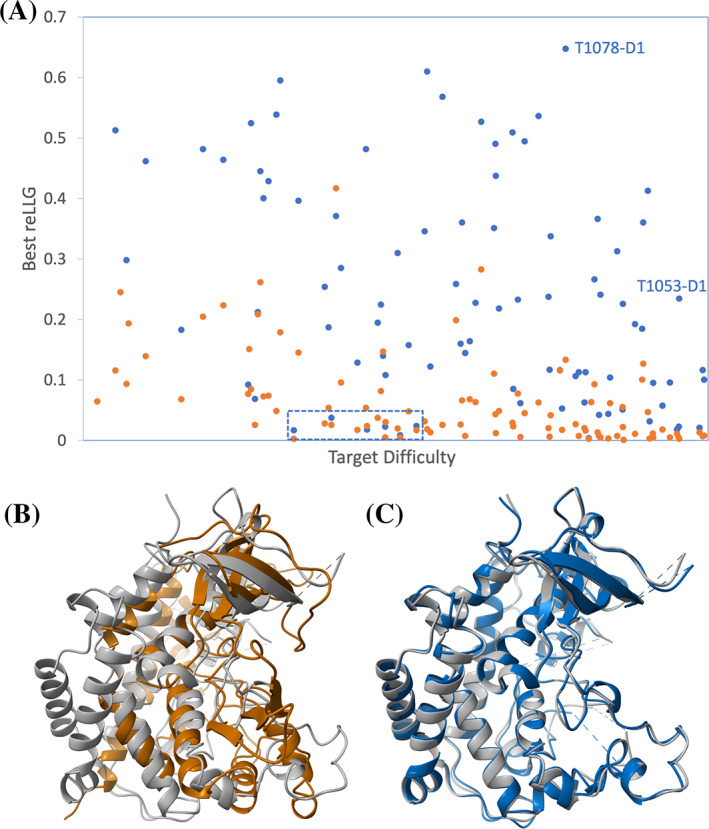
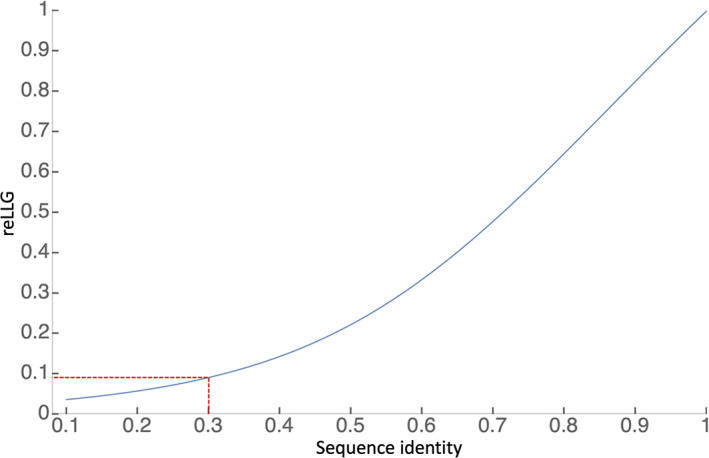
The assessment of CASP models for utility in molecular replacement is a measure of their use in a valuable real-world application. In CASP7, the metric for molecular replacement assessment involved full likelihood-based molecular replacement searches; however, this restricted the assessable targets to crystal structures with only one copy of the target in the asymmetric unit, and to those where the search found the correct pose. In CASP10, full molecular replacement searches were replaced by likelihood-based rigid-body refinement of models superimposed on the target using the LGA algorithm, with the metric being the refined log-likelihood-gain (LLG) score. This enabled multi-copy targets and very poor models to be evaluated, but a significant further issue remained: the requirement of diffraction data for assessment. We introduce here the relative-expected-LLG (reLLG), which is independent of diffraction data. This reLLG is also independent of any crystal form, and can be calculated regardless of the source of the target, be it X-ray, NMR or cryo-EM. We calibrate the reLLG against the LLG for targets in CASP14, showing that it is a robust measure of both model and group ranking. Like the LLG, the reLLG shows that accurate coordinate error estimates add substantial value to predicted models. We find that refinement by CASP groups can often convert an inadequate initial model into a successful MR search model. Consistent with findings from others, we show that the AlphaFold2 models are sufficiently good, and reliably so, to surpass other current model generation strategies for attempting molecular replacement phasing.
评估 CASP 模型在分子置换中的实用性是衡量其在有价值的实际应用中的应用的一种方法。在 CASP7 中,分子置换评估的指标涉及基于全似然的分子置换搜索;然而,这限制了可评估的目标仅为不对称单位中只有一个目标副本的晶体结构,并且限制了搜索找到正确构象的目标。在 CASP10 中,全分子置换搜索被基于 LGA 算法的将模型叠加到目标上的基于似然的刚体精修所取代,指标是精修后的对数似然增益(LLG)得分。这使得可以评估多拷贝目标和非常差的模型,但仍然存在一个重要问题:评估需要衍射数据。我们在这里引入相对预期 LLG(reLLG),它不依赖于衍射数据。该 reLLG 也不依赖于任何晶体形式,可以计算,而不管目标的来源是 X 射线、NMR 还是 cryo-EM。我们通过 CASP14 中的目标对 reLLG 进行校准,表明它是模型和组排名的可靠衡量标准。与 LLG 一样,reLLG 表明准确的坐标误差估计为预测模型增加了很大的价值。我们发现,CASP 组的精修通常可以将不充分的初始模型转换为成功的 MR 搜索模型。与其他人的发现一致,我们表明 AlphaFold2 模型足够好,并且可靠,足以超越其他当前的模型生成策略,以尝试分子置换相。