Microbiologie Fondamentale et Pathogénicité, UMR 5234, Bordeaux University, CNRS, Bordeaux, France.
Centre de Résonance Magnétique des Systèmes Biologiques, UMR 5536, Bordeaux University, CNRS, Bordeaux, France.
PLoS Biol. 2021 Aug 13;19(8):e3001359. doi: 10.1371/journal.pbio.3001359. eCollection 2021 Aug.
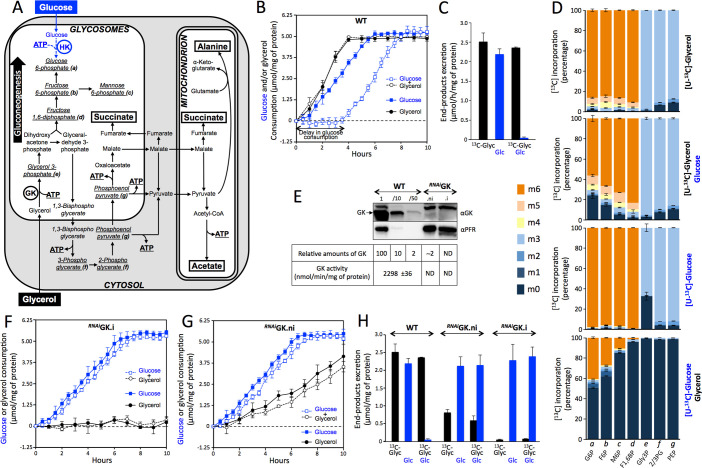
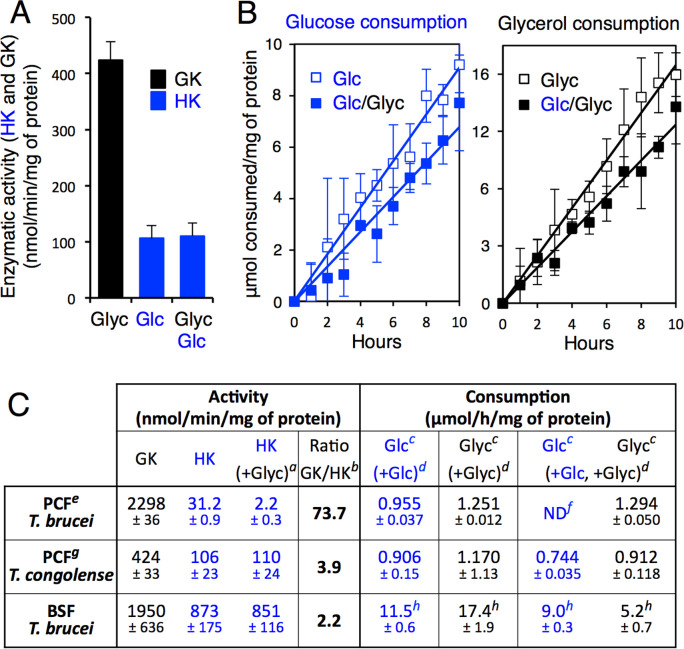
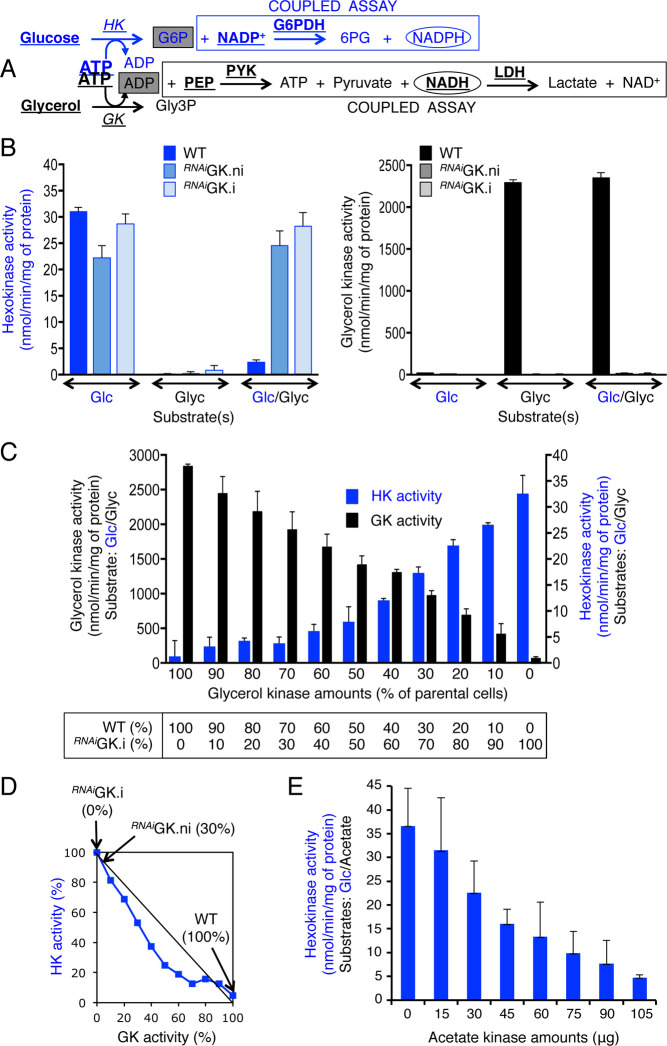
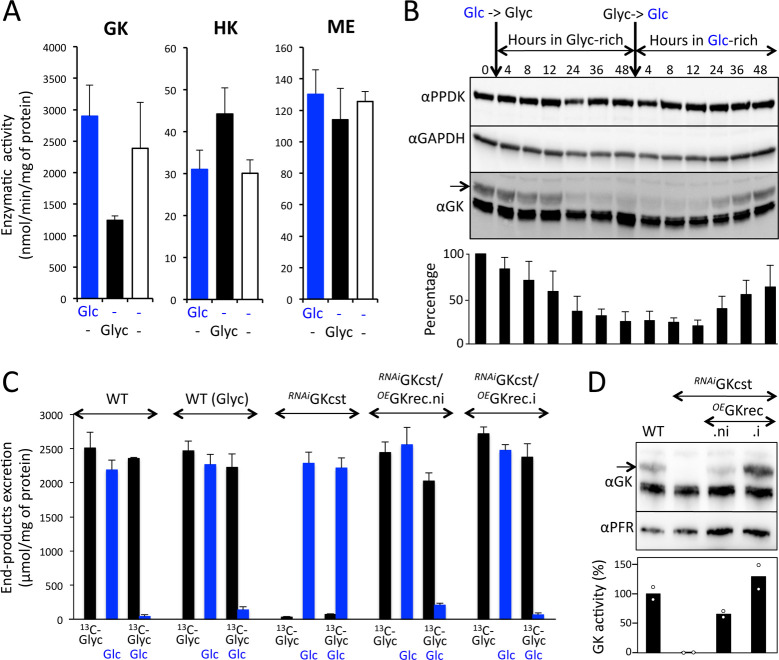
Microorganisms must make the right choice for nutrient consumption to adapt to their changing environment. As a consequence, bacteria and yeasts have developed regulatory mechanisms involving nutrient sensing and signaling, known as "catabolite repression," allowing redirection of cell metabolism to maximize the consumption of an energy-efficient carbon source. Here, we report a new mechanism named "metabolic contest" for regulating the use of carbon sources without nutrient sensing and signaling. Trypanosoma brucei is a unicellular eukaryote transmitted by tsetse flies and causing human African trypanosomiasis, or sleeping sickness. We showed that, in contrast to most microorganisms, the insect stages of this parasite developed a preference for glycerol over glucose, with glucose consumption beginning after the depletion of glycerol present in the medium. This "metabolic contest" depends on the combination of 3 conditions: (i) the sequestration of both metabolic pathways in the same subcellular compartment, here in the peroxisomal-related organelles named glycosomes; (ii) the competition for the same substrate, here ATP, with the first enzymatic step of the glycerol and glucose metabolic pathways both being ATP-dependent (glycerol kinase and hexokinase, respectively); and (iii) an unbalanced activity between the competing enzymes, here the glycerol kinase activity being approximately 80-fold higher than the hexokinase activity. As predicted by our model, an approximately 50-fold down-regulation of the GK expression abolished the preference for glycerol over glucose, with glucose and glycerol being metabolized concomitantly. In theory, a metabolic contest could be found in any organism provided that the 3 conditions listed above are met.
微生物必须做出正确的营养选择以适应不断变化的环境。因此,细菌和酵母已经开发出涉及营养感应和信号传递的调节机制,称为“分解代谢物阻遏”,从而可以重新引导细胞代谢以最大化利用高效能量的碳源。在这里,我们报道了一种新的调节碳源利用的机制,称为“代谢竞赛”,无需营养感应和信号传递。布氏锥虫是一种单细胞真核生物,通过采采蝇传播,引起人类非洲锥虫病,也称为昏睡病。我们表明,与大多数微生物不同,这种寄生虫的昆虫阶段对甘油表现出偏好,而不是葡萄糖,只有在培养基中耗尽甘油后才开始消耗葡萄糖。这种“代谢竞赛”取决于 3 个条件的结合:(i)将两种代谢途径隔离在同一亚细胞隔室中,这里是称为糖酵解体的过氧化物酶体相关细胞器;(ii)竞争同一底物,这里是 ATP,甘油和葡萄糖代谢途径的第一个酶促步骤都依赖于 ATP(分别是甘油激酶和己糖激酶);(iii)竞争酶之间的活性不平衡,这里甘油激酶的活性大约比己糖激酶的活性高 80 倍。正如我们的模型所预测的,大约 50 倍下调 GK 的表达会消除对甘油的偏好,葡萄糖和甘油会同时被代谢。从理论上讲,只要满足上述 3 个条件,代谢竞赛就可以在任何生物体中找到。