Department of Radiology, Seoul National University Bundang Hospital, 82, Gumi-ro-173-beon-gil, Bundang-gu, Seongnam-si, Gyeonggi-do, 13620, Republic of Korea.
Department of Radiology, Seoul National University College of Medicine, and Institute of Radiation Medicine, Seoul National University Medical Research Center, 101 Daehak-ro, Jongno-gu, Seoul, Republic of Korea.
Eur Radiol. 2022 Feb;32(2):1247-1255. doi: 10.1007/s00330-021-08199-9. Epub 2021 Aug 14.
To compare the dose reduction potential (DRP) of a vendor-agnostic deep learning model (DLM, ClariCT.AI) with that of a vendor-specific deep learning-based image reconstruction algorithm (DLR, TrueFidelity™).
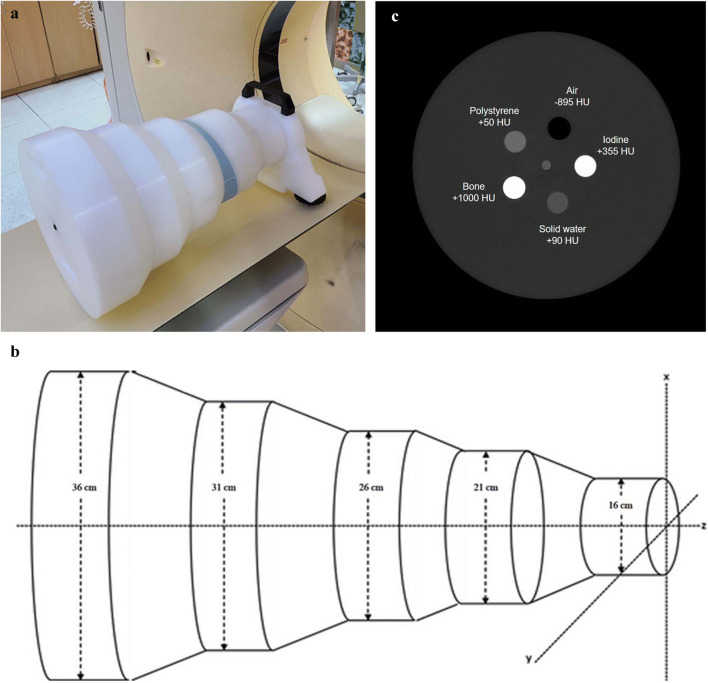
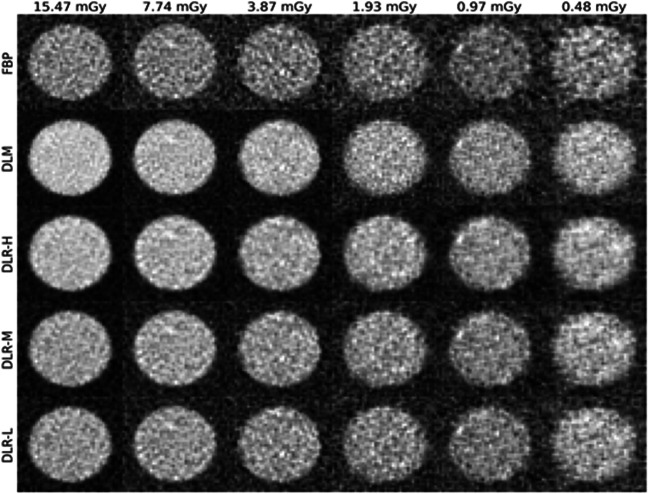
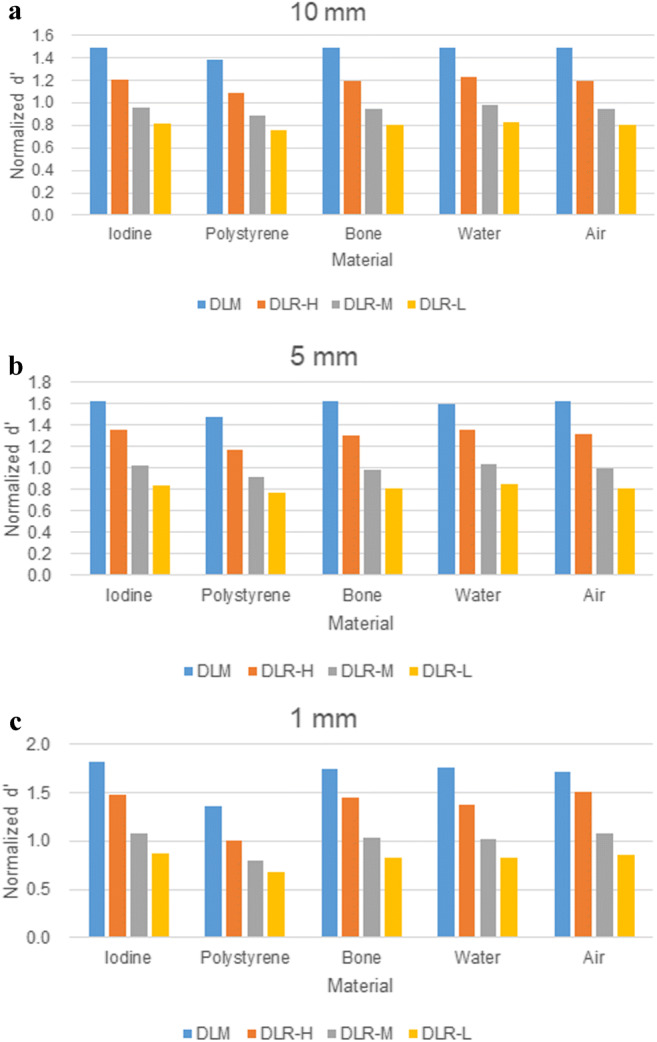
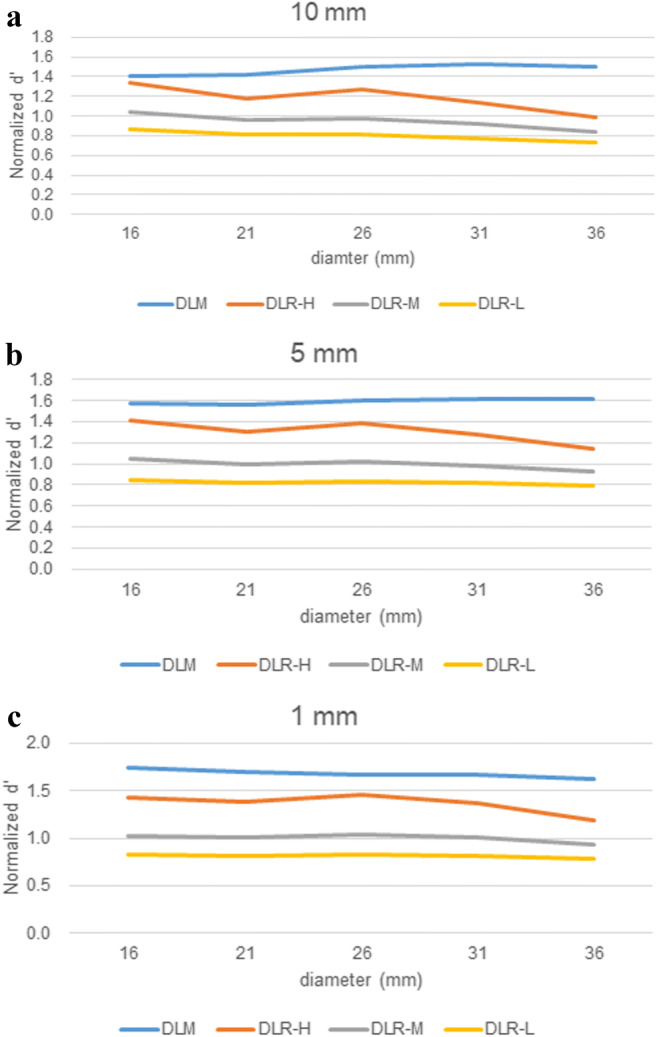
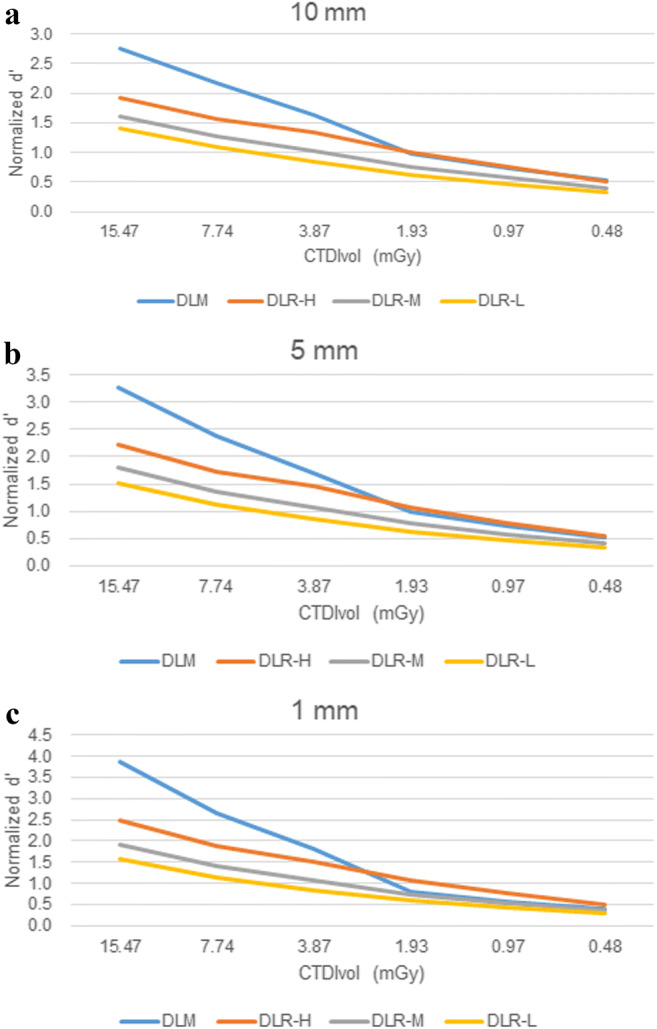
Computed tomography (CT) images of a multi-sized image quality phantom (Mercury v4.0) were acquired under six radiation dose levels (0.48/0.97/1.93/3.87/7.74/15.47 mGy) and were reconstructed using filtered back projection (FBP) and three strength levels of the DLR (low/medium/high). The FBP images were denoised using the DLM. For all DLM and DLR images, the detectability index (d') (a task-based detection performance metric) was obtained, under various combinations of three target sizes (10/5/1 mm), five inlets (CT value difference with the background; -895/50/90/335/1000 HU), five phantom diameters (36/31/26/21/16 cm), and six radiation dose levels. Dose reduction potential (DRP) measures the dose reduction made by using DLM or DLR, while yielding d' equivalent to that of FBP at full dose.
The DRPs of the DLM, DLR-low, DLR-medium, and DLR-high were 86% (81-88%), 60% (46-67%), 76% (60-81%), and 87% (78-92%), respectively. For 10-mm targets, the DRP of the DLM (87%) was higher than that of all DLR algorithms (58-86%). However, for smaller targets (5 mm/1 mm), the DRPs of the DLR-high (89/88%) were greater than those of the DLM (87/84%).
The dose reduction potential of the vendor-agnostic DLM was shown to be comparable to that of the vendor-specific DLR at high strength and superior to those of the DLRs at medium and low strengths.
• DRP of the vendor-agnostic model was comparable to that of high-strength vendor-specific model and superior to those of medium- and low-strength models. • Under various radiation dose levels, the deep learning model shows higher detectability indexes compared to FBP.
比较一种与供应商无关的深度学习模型(DLM,ClariCT.AI)与一种特定于供应商的基于深度学习的图像重建算法(DLR,TrueFidelity™)的剂量降低潜力(DRP)。
在六个辐射剂量水平(0.48/0.97/1.93/3.87/7.74/15.47 mGy)下,使用多尺寸图像质量体模(Mercury v4.0)采集计算机断层扫描(CT)图像,并使用滤波反投影(FBP)和三个强度水平的 DLR(低/中/高)进行重建。使用 DLM 对 FBP 图像进行去噪。对于所有 DLM 和 DLR 图像,在三种目标大小(10/5/1 mm)、五种入口(与背景的 CT 值差异;-895/50/90/335/1000 HU)、五种体模直径(36/31/26/21/16 cm)和六个辐射剂量水平的各种组合下,获得了检测指标(d')(一种基于任务的检测性能指标)。剂量降低潜力(DRP)衡量使用 DLM 或 DLR 降低的剂量,同时产生与全剂量 FBP 等效的 d'。
DLM、DLR-low、DLR-medium 和 DLR-high 的 DRP 分别为 86%(81-88%)、60%(46-67%)、76%(60-81%)和 87%(78-92%)。对于 10-mm 目标,DLM 的 DRP(87%)高于所有 DLR 算法(58-86%)。然而,对于较小的目标(5 毫米/1 毫米),DLR-high(89/88%)的 DRP 大于 DLM(87/84%)。
与特定于供应商的高强度 DLR 相比,与供应商无关的 DLM 的剂量降低潜力被证明是相当的,并且优于中低强度的 DLR。
与供应商无关的模型的 DRP 与高强度供应商特定模型相当,优于中低强度模型。
在各种辐射剂量水平下,深度学习模型与 FBP 相比显示出更高的可检测性指数。