• 文献检索
  • 文档翻译
  • 深度研究
  • 学术资讯
  • Suppr Zotero 插件Zotero 插件
  • 邀请有礼
  • 套餐&价格
  • 历史记录
应用&插件
Suppr Zotero 插件Zotero 插件浏览器插件Mac 客户端Windows 客户端微信小程序
定价
高级版会员购买积分包购买API积分包
服务
文献检索文档翻译深度研究API 文档MCP 服务
关于我们
关于 Suppr公司介绍联系我们用户协议隐私条款
关注我们

Suppr 超能文献

核心技术专利:CN118964589B侵权必究
粤ICP备2023148730 号-1Suppr @ 2026

文献检索

告别复杂PubMed语法,用中文像聊天一样搜索,搜遍4000万医学文献。AI智能推荐,让科研检索更轻松。

立即免费搜索

文件翻译

保留排版,准确专业,支持PDF/Word/PPT等文件格式,支持 12+语言互译。

免费翻译文档

深度研究

AI帮你快速写综述,25分钟生成高质量综述,智能提取关键信息,辅助科研写作。

立即免费体验

基于患者数据的 PixelPrint 体模用于评估深度学习 CT 重建算法的临床成像性能。

Patient-derived PixelPrint phantoms for evaluating clinical imaging performance of a deep learning CT reconstruction algorithm.

机构信息

Department of Radiology, University of Pennsylvania, Philadelphia, PA, United States of America.

Department of Bioengineering, University of Pennsylvania, Philadelphia, PA, United States of America.

出版信息

Phys Med Biol. 2024 May 14;69(11):115009. doi: 10.1088/1361-6560/ad3dba.

DOI:10.1088/1361-6560/ad3dba
PMID:38604190
原文链接:https://pmc.ncbi.nlm.nih.gov/articles/PMC11097966/
Abstract

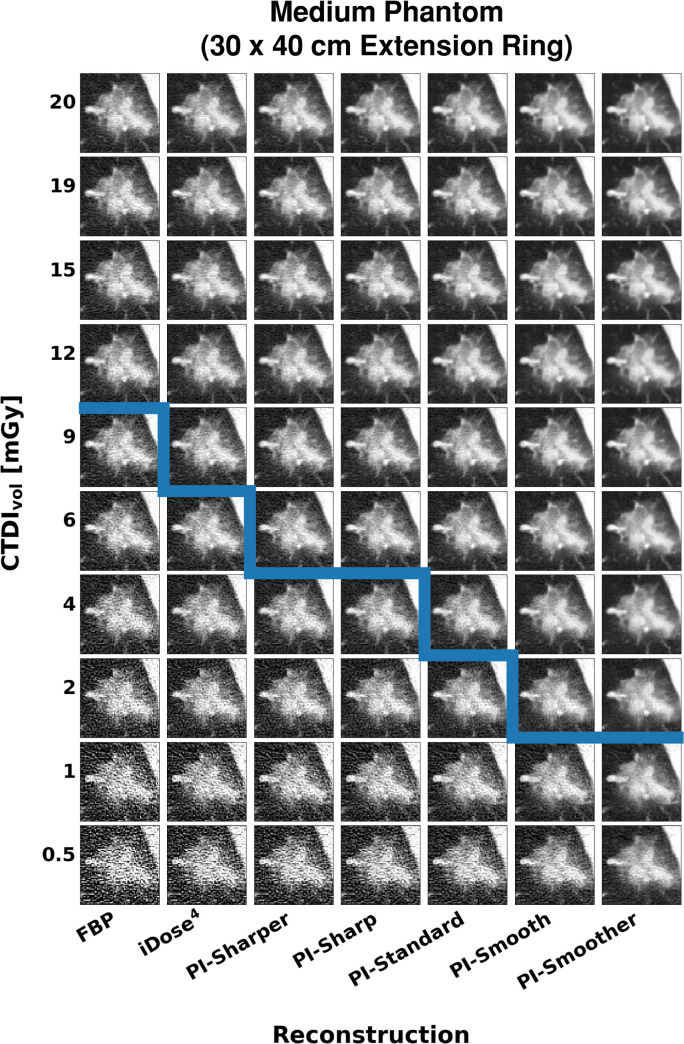
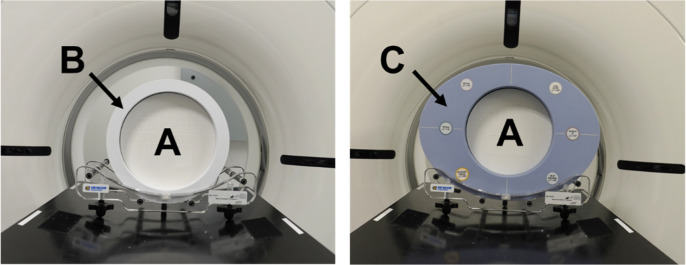
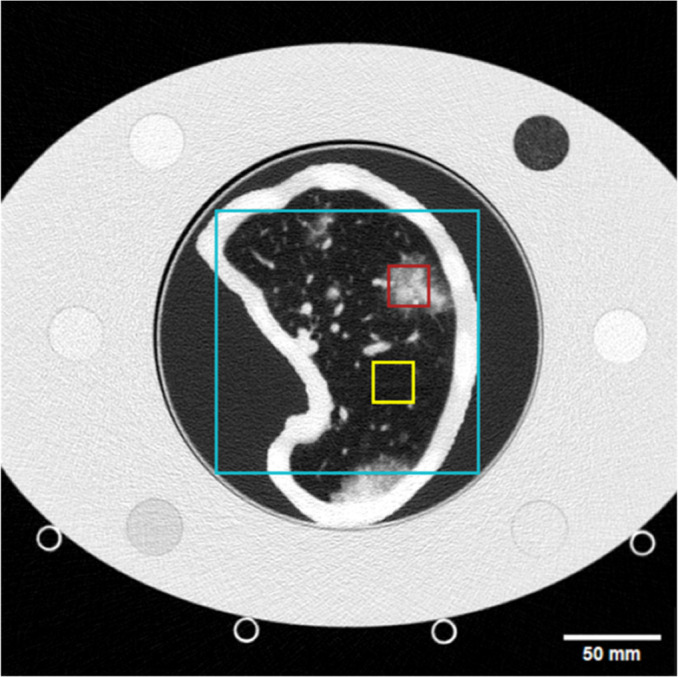
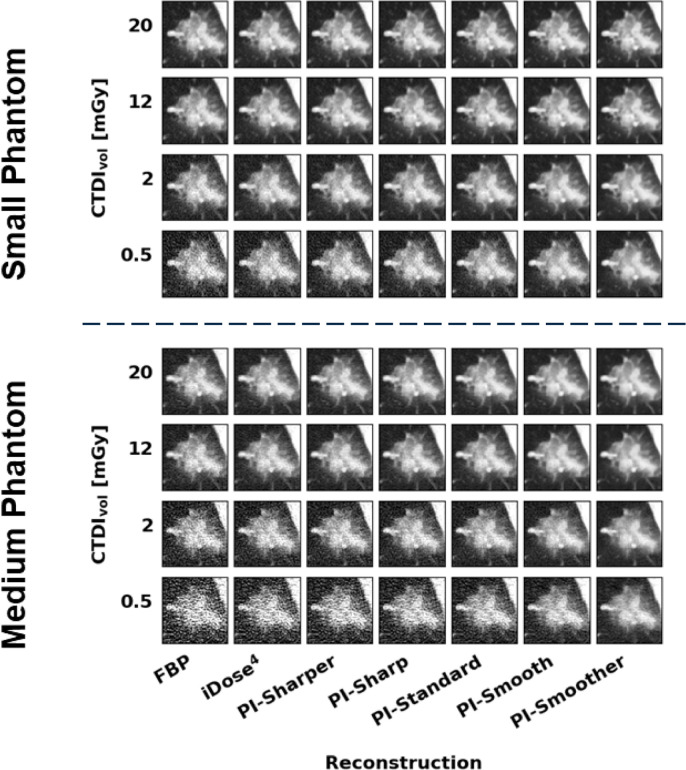
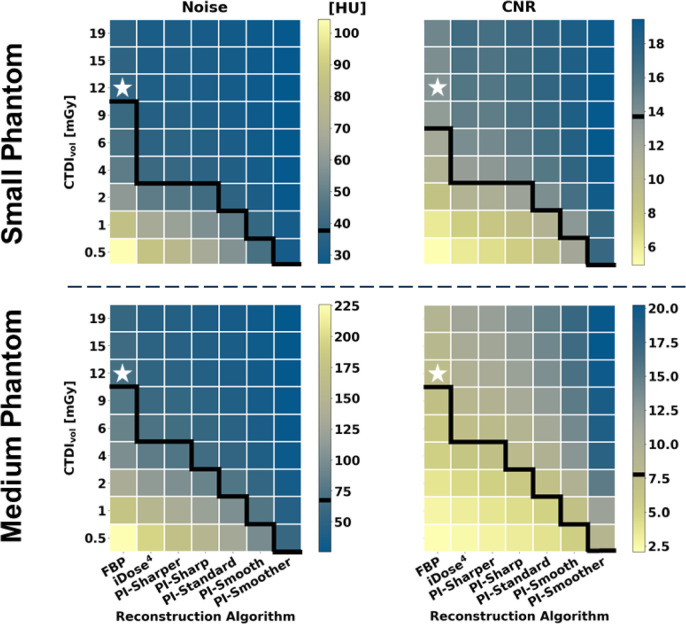
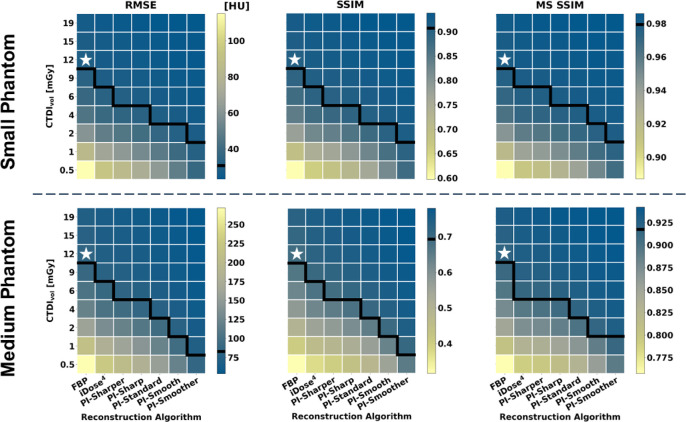
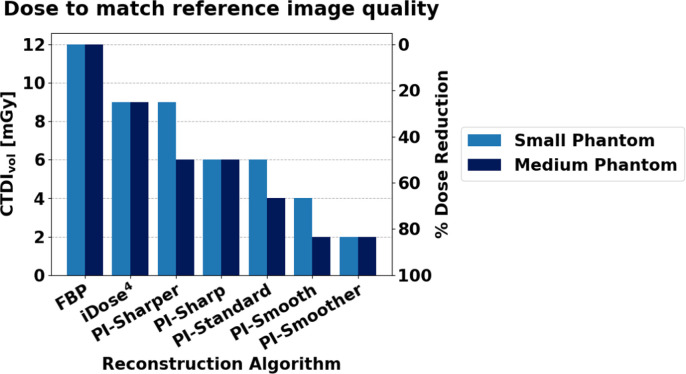
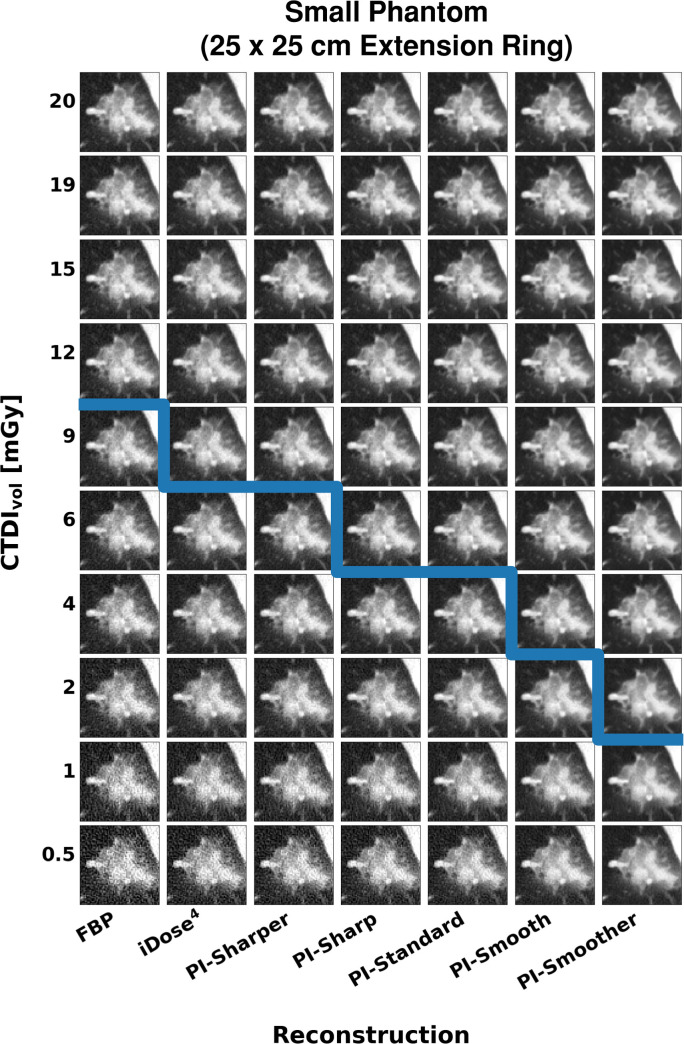
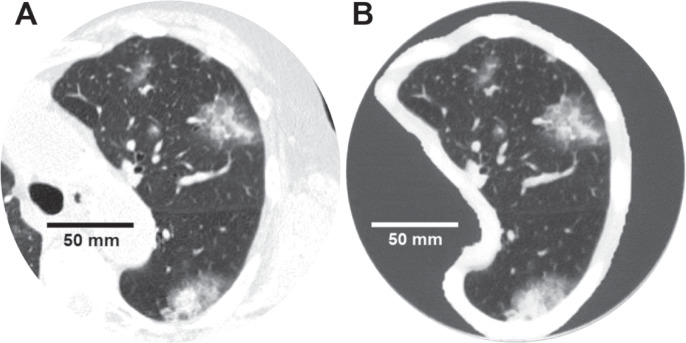
. Deep learning reconstruction (DLR) algorithms exhibit object-dependent resolution and noise performance. Thus, traditional geometric CT phantoms cannot fully capture the clinical imaging performance of DLR. This study uses a patient-derived 3D-printed PixelPrint lung phantom to evaluate a commercial DLR algorithm across a wide range of radiation dose levels.. The lung phantom used in this study is based on a patient chest CT scan containing ground glass opacities and was fabricated using PixelPrint 3D-printing technology. The phantom was placed inside two different size extension rings to mimic a small- and medium-sized patient and was scanned on a conventional CT scanner at exposures between 0.5 and 20 mGy. Each scan was reconstructed using filtered back projection (FBP), iterative reconstruction, and DLR at five levels of denoising. Image noise, contrast to noise ratio (CNR), root mean squared error, structural similarity index (SSIM), and multi-scale SSIM (MS SSIM) were calculated for each image.DLR demonstrated superior performance compared to FBP and iterative reconstruction for all measured metrics in both phantom sizes, with better performance for more aggressive denoising levels. DLR was estimated to reduce dose by 25%-83% in the small phantom and by 50%-83% in the medium phantom without decreasing image quality for any of the metrics measured in this study. These dose reduction estimates are more conservative compared to the estimates obtained when only considering noise and CNR.. DLR has the capability of producing diagnostic image quality at up to 83% lower radiation dose, which can improve the clinical utility and viability of lower dose CT scans. Furthermore, the PixelPrint phantom used in this study offers an improved testing environment with more realistic tissue structures compared to traditional CT phantoms, allowing for structure-based image quality evaluation beyond noise and contrast-based assessments.

摘要

深度学习重建(DLR)算法表现出与物体相关的分辨率和噪声性能。因此,传统的几何 CT 体模不能完全捕捉 DLR 的临床成像性能。本研究使用基于患者胸部 CT 扫描的 3D 打印 PixelPrint 肺体模来评估一种商业 DLR 算法在广泛的辐射剂量水平下的性能。本研究中使用的肺体模基于包含磨玻璃混浊的患者胸部 CT 扫描,并使用 PixelPrint 3D 打印技术制造。体模被放置在两个不同尺寸的延伸环内,以模拟小和中等体型的患者,并在常规 CT 扫描仪上以 0.5 至 20 mGy 的曝光量进行扫描。每个扫描均使用滤波反投影(FBP)、迭代重建和 DLR 在五个噪声水平进行重建。为每个图像计算图像噪声、对比噪声比(CNR)、均方根误差、结构相似性指数(SSIM)和多尺度 SSIM(MS SSIM)。在两种体模尺寸下,对于所有测量指标,DLR 均表现出优于 FBP 和迭代重建的性能,随着去噪水平的提高,性能也越好。对于本研究中测量的所有指标,DLR 估计可使小体模的剂量降低 25%至 83%,使中体模的剂量降低 50%至 83%,而不会降低图像质量。与仅考虑噪声和 CNR 时获得的估计相比,这些剂量减少估计更为保守。DLR 具有在低至 83%的辐射剂量下生成诊断图像质量的能力,这可以提高低剂量 CT 扫描的临床实用性和可行性。此外,与传统 CT 体模相比,本研究中使用的 PixelPrint 体模具有更真实的组织结构,提供了改进的测试环境,允许进行基于结构的图像质量评估,而不仅仅是基于噪声和对比度的评估。
https://cdn.ncbi.nlm.nih.gov/pmc/blobs/3938/11097966/cd732d6c4b2e/pmbad3dbaf9_lr.jpg
https://cdn.ncbi.nlm.nih.gov/pmc/blobs/3938/11097966/13f6fc9c5d10/pmbad3dbaf1_lr.jpg
https://cdn.ncbi.nlm.nih.gov/pmc/blobs/3938/11097966/72c76b7d9b57/pmbad3dbaf2_lr.jpg
https://cdn.ncbi.nlm.nih.gov/pmc/blobs/3938/11097966/db282f46eb76/pmbad3dbaf3_lr.jpg
https://cdn.ncbi.nlm.nih.gov/pmc/blobs/3938/11097966/23b7e9cf9201/pmbad3dbaf4_lr.jpg
https://cdn.ncbi.nlm.nih.gov/pmc/blobs/3938/11097966/ae44a9a8b6c5/pmbad3dbaf5_lr.jpg
https://cdn.ncbi.nlm.nih.gov/pmc/blobs/3938/11097966/0e0bd2d8f020/pmbad3dbaf6_lr.jpg
https://cdn.ncbi.nlm.nih.gov/pmc/blobs/3938/11097966/3a48027d103a/pmbad3dbaf7_lr.jpg
https://cdn.ncbi.nlm.nih.gov/pmc/blobs/3938/11097966/d08ad7762b0e/pmbad3dbaf8_lr.jpg
https://cdn.ncbi.nlm.nih.gov/pmc/blobs/3938/11097966/cd732d6c4b2e/pmbad3dbaf9_lr.jpg
https://cdn.ncbi.nlm.nih.gov/pmc/blobs/3938/11097966/13f6fc9c5d10/pmbad3dbaf1_lr.jpg
https://cdn.ncbi.nlm.nih.gov/pmc/blobs/3938/11097966/72c76b7d9b57/pmbad3dbaf2_lr.jpg
https://cdn.ncbi.nlm.nih.gov/pmc/blobs/3938/11097966/db282f46eb76/pmbad3dbaf3_lr.jpg
https://cdn.ncbi.nlm.nih.gov/pmc/blobs/3938/11097966/23b7e9cf9201/pmbad3dbaf4_lr.jpg
https://cdn.ncbi.nlm.nih.gov/pmc/blobs/3938/11097966/ae44a9a8b6c5/pmbad3dbaf5_lr.jpg
https://cdn.ncbi.nlm.nih.gov/pmc/blobs/3938/11097966/0e0bd2d8f020/pmbad3dbaf6_lr.jpg
https://cdn.ncbi.nlm.nih.gov/pmc/blobs/3938/11097966/3a48027d103a/pmbad3dbaf7_lr.jpg
https://cdn.ncbi.nlm.nih.gov/pmc/blobs/3938/11097966/d08ad7762b0e/pmbad3dbaf8_lr.jpg
https://cdn.ncbi.nlm.nih.gov/pmc/blobs/3938/11097966/cd732d6c4b2e/pmbad3dbaf9_lr.jpg

相似文献

1
Patient-derived PixelPrint phantoms for evaluating clinical imaging performance of a deep learning CT reconstruction algorithm.基于患者数据的 PixelPrint 体模用于评估深度学习 CT 重建算法的临床成像性能。
Phys Med Biol. 2024 May 14;69(11):115009. doi: 10.1088/1361-6560/ad3dba.
2
Patient-derived PixelPrint phantoms for evaluating clinical imaging performance of a deep learning CT reconstruction algorithm.用于评估深度学习CT重建算法临床成像性能的患者源像素打印体模。
medRxiv. 2023 Dec 9:2023.12.07.23299625. doi: 10.1101/2023.12.07.23299625.
3
Lifelike phantoms for assessing clinical image quality and dose reduction capabilities of a deep learning CT reconstruction algorithm.用于评估深度学习CT重建算法的临床图像质量和剂量降低能力的逼真体模。
Proc SPIE Int Soc Opt Eng. 2024 Feb;12925. doi: 10.1117/12.3006547. Epub 2024 Apr 1.
4
Low-contrast lesion detection in neck CT: a multireader study comparing deep learning, iterative, and filtered back projection reconstructions using realistic phantoms.颈部 CT 低对比病灶检测:使用真实体模比较深度学习、迭代和滤波反投影重建的多读者研究。
Eur Radiol Exp. 2024 Jul 24;8(1):84. doi: 10.1186/s41747-024-00486-6.
5
A comparative study based on image quality and clinical task performance for CT reconstruction algorithms in radiotherapy.一项基于图像质量和临床任务表现的放疗中CT重建算法的对比研究。
J Appl Clin Med Phys. 2016 Jul 8;17(4):377-390. doi: 10.1120/jacmp.v17i4.5763.
6
Super-resolution deep-learning reconstruction for cardiac CT: impact of radiation dose and focal spot size on task-based image quality.基于任务的深度学习重建在心脏 CT 中的应用:辐射剂量和焦点尺寸对图像质量的影响。
Phys Eng Sci Med. 2024 Sep;47(3):1001-1014. doi: 10.1007/s13246-024-01423-y. Epub 2024 Jun 17.
7
Deep Learning Reconstruction at CT: Phantom Study of the Image Characteristics.深度学习 CT 重建:图像特征的体模研究。
Acad Radiol. 2020 Jan;27(1):82-87. doi: 10.1016/j.acra.2019.09.008.
8
Deep learning image reconstruction for quality assessment of iodine concentration in computed tomography: A phantom study.用于计算机断层扫描中碘浓度质量评估的深度学习图像重建:一项体模研究。
J Xray Sci Technol. 2023;31(2):409-422. doi: 10.3233/XST-221356.
9
Comparison of two deep learning image reconstruction algorithms in chest CT images: A task-based image quality assessment on phantom data.两种深度学习图像重建算法在胸部 CT 图像中的比较:基于任务的体模数据图像质量评估。
Diagn Interv Imaging. 2022 Jan;103(1):21-30. doi: 10.1016/j.diii.2021.08.001. Epub 2021 Sep 5.
10
Dose reduction potential of vendor-agnostic deep learning model in comparison with deep learning-based image reconstruction algorithm on CT: a phantom study.与基于深度学习的图像重建算法相比,通用深度学习模型在 CT 中降低剂量的潜力:一项体模研究。
Eur Radiol. 2022 Feb;32(2):1247-1255. doi: 10.1007/s00330-021-08199-9. Epub 2021 Aug 14.

引用本文的文献

1
PixelPrint4D: A 3D Printing Method of Fabricating Patient-Specific Deformable CT Phantoms for Respiratory Motion Applications.PixelPrint4D:一种用于呼吸运动应用的定制可变形CT体模的3D打印方法。
Invest Radiol. 2025 Apr 2. doi: 10.1097/RLI.0000000000001182.
2
Lifelike phantoms for assessing clinical image quality and dose reduction capabilities of a deep learning CT reconstruction algorithm.用于评估深度学习CT重建算法的临床图像质量和剂量降低能力的逼真体模。
Proc SPIE Int Soc Opt Eng. 2024 Feb;12925. doi: 10.1117/12.3006547. Epub 2024 Apr 1.

本文引用的文献

1
Deep learning reconstruction CT for liver metastases: low-dose dual-energy vs standard-dose single-energy.深度学习重建 CT 对肝转移瘤的诊断:低剂量双能 CT 与标准剂量单能 CT 比较
Eur Radiol. 2024 Jan;34(1):28-38. doi: 10.1007/s00330-023-10033-3. Epub 2023 Aug 2.
2
First Results of a New Deep Learning Reconstruction Algorithm on Image Quality and Liver Metastasis Conspicuity for Abdominal Low-Dose CT.一种新型深度学习重建算法用于腹部低剂量CT图像质量及肝脏转移瘤显示度的初步结果
Diagnostics (Basel). 2023 Mar 20;13(6):1182. doi: 10.3390/diagnostics13061182.
3
PixelPrint: Three-dimensional printing of patient-specific soft tissue and bone phantoms for CT.
像素打印:用于CT的患者特异性软组织和骨骼模型的三维打印
Proc SPIE Int Soc Opt Eng. 2022 Jun;12304. doi: 10.1117/12.2647008. Epub 2022 Oct 17.
4
Three-dimensional printing of patient-specific computed tomography lung phantoms: a reader study.患者特异性计算机断层扫描肺部模型的三维打印:一项读者研究。
PNAS Nexus. 2023 Feb 1;2(3):pgad026. doi: 10.1093/pnasnexus/pgad026. eCollection 2023 Mar.
5
Deep Learning Image Reconstruction for CT: Technical Principles and Clinical Prospects.深度学习在 CT 图像重建中的应用:技术原理与临床前景。
Radiology. 2023 Mar;306(3):e221257. doi: 10.1148/radiol.221257. Epub 2023 Jan 31.
6
Local Linearity Analysis of Deep Learning CT Denoising Algorithms.深度学习CT去噪算法的局部线性分析
Proc SPIE Int Soc Opt Eng. 2022 Jun;12304. doi: 10.1117/12.2646371. Epub 2022 Oct 17.
7
Improved image quality and dose reduction in abdominal CT with deep-learning reconstruction algorithm: a phantom study.深度学习重建算法在腹部 CT 中的应用:一项体模研究,可提高图像质量并降低剂量。
Eur Radiol. 2023 Jan;33(1):699-710. doi: 10.1007/s00330-022-09003-y. Epub 2022 Jul 21.
8
The evaluation of the reduction of radiation dose via deep learning-based reconstruction for cadaveric human lung CT images.基于深度学习的重建技术降低人体肺部 CT 图像辐射剂量的评估。
Sci Rep. 2022 Jul 20;12(1):12422. doi: 10.1038/s41598-022-16798-9.
9
Impact of an artificial intelligence deep-learning reconstruction algorithm for CT on image quality and potential dose reduction: A phantom study.人工智能深度学习重建算法对 CT 图像质量和潜在剂量降低的影响:一项体模研究。
Med Phys. 2022 Aug;49(8):5052-5063. doi: 10.1002/mp.15807. Epub 2022 Jun 24.
10
Comparison of a Deep Learning-Based Reconstruction Algorithm with Filtered Back Projection and Iterative Reconstruction Algorithms for Pediatric Abdominopelvic CT.基于深度学习的重建算法与滤波反投影和迭代重建算法在小儿腹部盆腔 CT 中的比较。
Korean J Radiol. 2022 Jul;23(7):752-762. doi: 10.3348/kjr.2021.0466. Epub 2022 May 27.